Openers · Oakwood
Chain-Drive Opener Repair in Oakwood
Halfway up, the door lurches.
In plain words
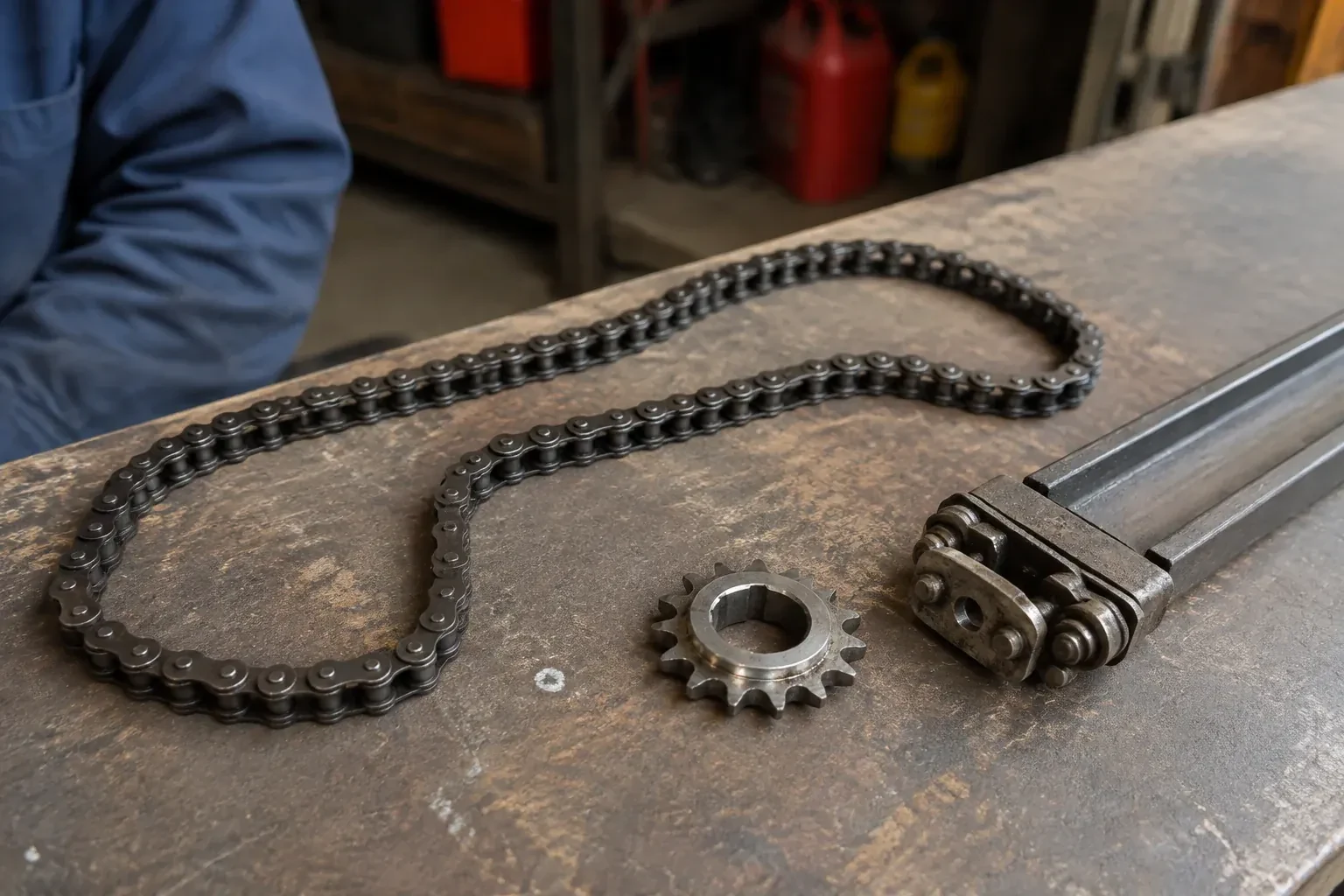
Cold is hard on a chain drive, and a detached or unheated garage shows it first. Grease on the rail and inside the gearbox thickens, a chain with surface rust stiffens link by link, and the operator strains against a door whose bottom seal may also be frozen to the slab. The result is a door that groans, stalls or reverses on the coldest mornings and works by afternoon. The repair frees or replaces a rusted chain, cleans and regreases the rail and gears, and sets force so the operator moves the door in the cold without being pushed past its safety limit.
How the visit goesThe door closes, touches the floor, then climbs straight back up as if it hit something. Nothing is in the way, the sensor lights are steady, and it has been doing this since the weather turned.
Chain-Drive Opener Repair
How the visit goes
Trolley, release lever and the stop bolt
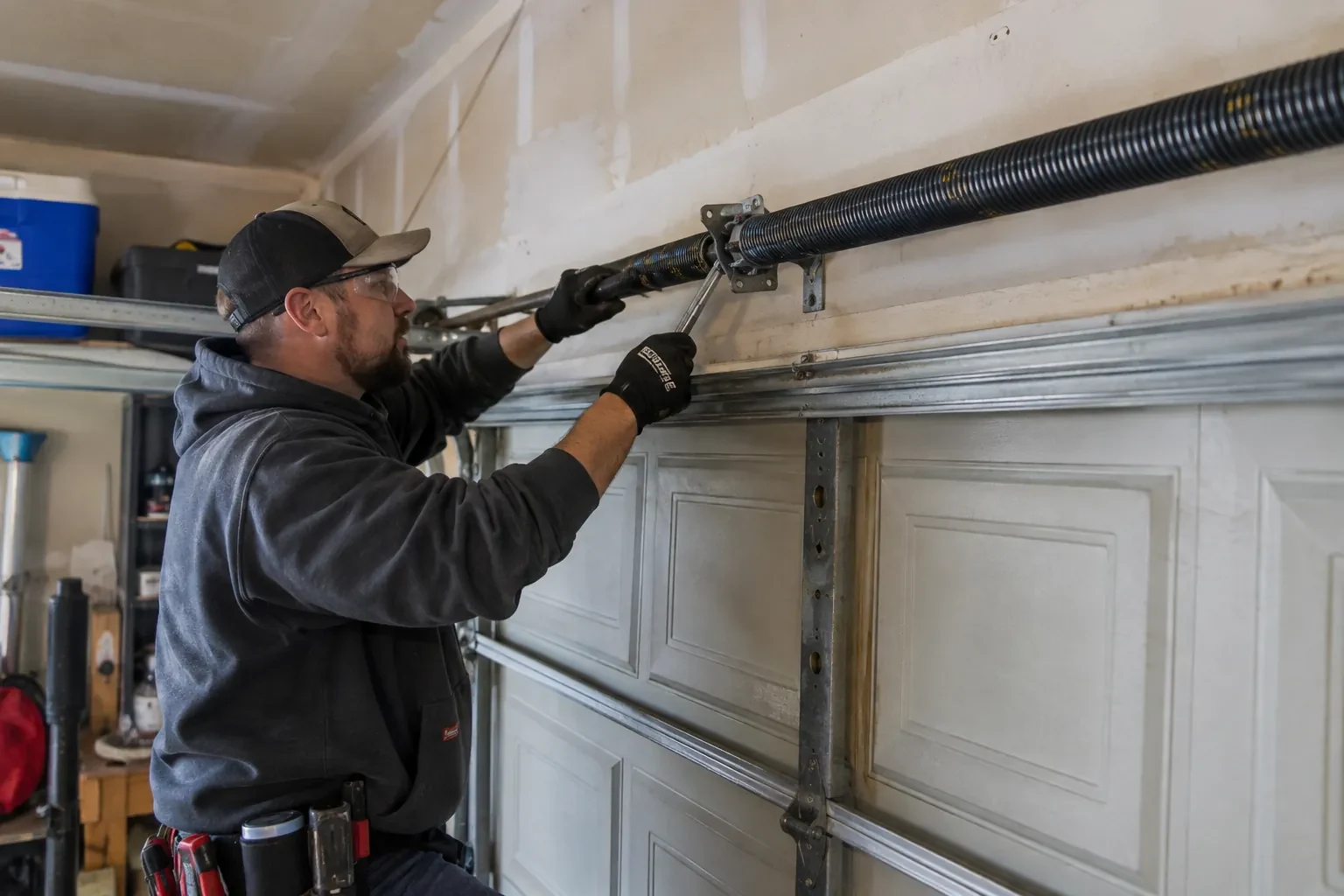
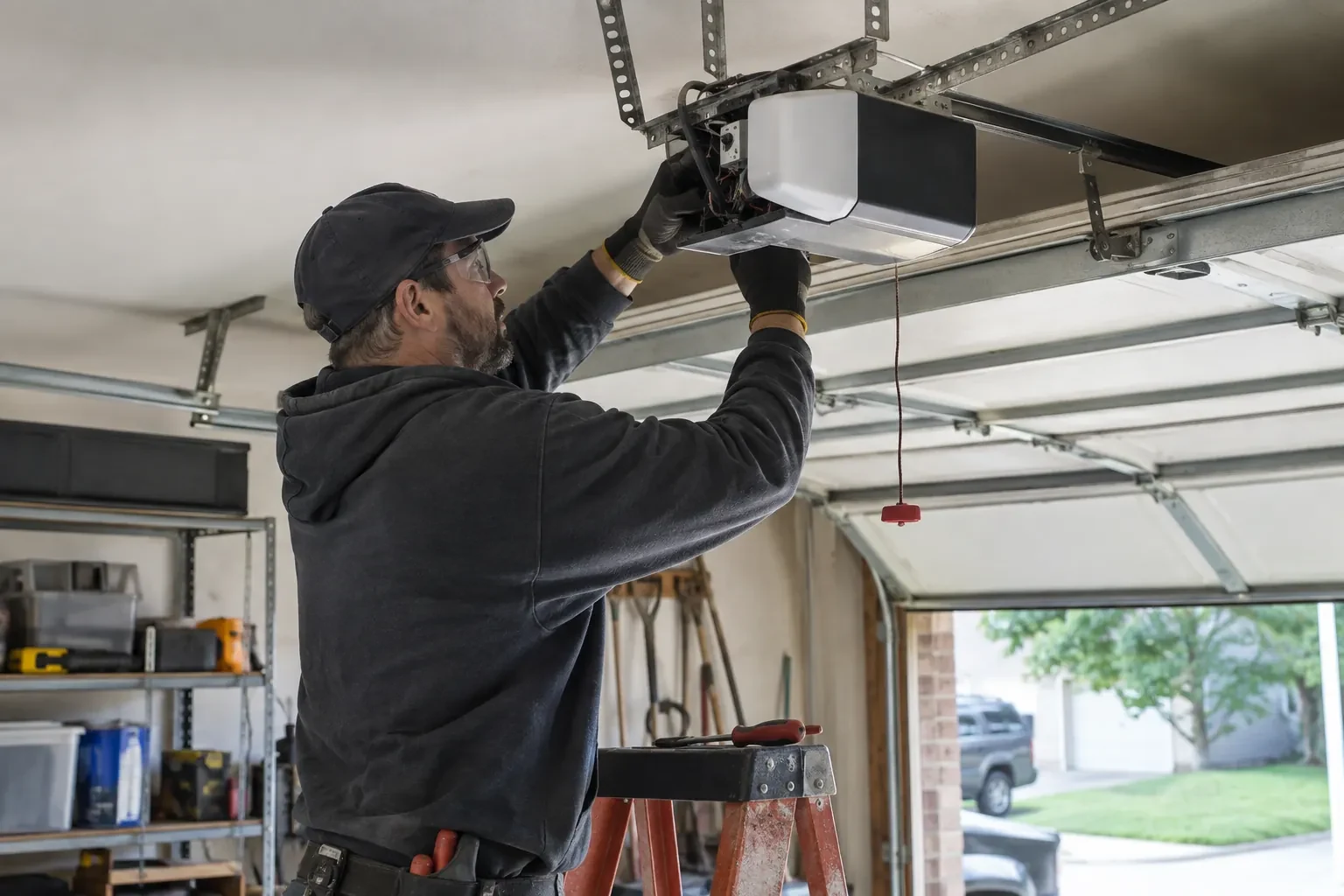
The trolley is looked at in two ways: where it sits and how it is wearing. With the door closed, the trolley should rest near the door end of the rail without touching the stop tab; with the door open, short of the stop bolt near the head. A trolley jammed against either stop explains a humming motor. The release lever is checked for a bent arm or a worn latch that lets the trolley slide past the door arm without picking it up. The technician also confirms the trolley and the motor agree about the door's position, since a chain that was run off the sprocket puts them out of phase and no amount of limit adjustment corrects that.
Proving the reversal before the job is finished
No chain-drive repair ends without the reversal tests, because every adjustment to tension, limits or force can change how the operator senses an obstruction. A 38 mm block, or a 2x4 laid flat, is placed on the floor under the centre of the door and the door is closed from the wall control; on touching it the door must stop and return to fully open. The door is closed again while an object is passed through the photo-eye beam, and it must reverse the same way. Any hesitation sends the technician back to the force setting or the sensors, and the tests are repeated until both pass in front of you.
A record of the drive as it is now
Before leaving, the technician writes down what was found and what was fitted: the operator's model and age, whether the gear kit, sprocket, chain, trolley or rail hardware was replaced, the tension figure set, the limit and force positions, and the results of the reversal tests. The manual is hung near the wall control so the model's own instructions are at hand for the monthly tests. This note makes any future call a short conversation, tells a home inspector what has been done, and gives whoever owns the house next a clear picture of what is hanging over the car.
Chain-Drive Opener Repair
In the van
Rail hangers and header bracket
Chain tensioner nuts and shaft
Inner and outer trolley
Drive gear and worm gear kit
RPM sensor
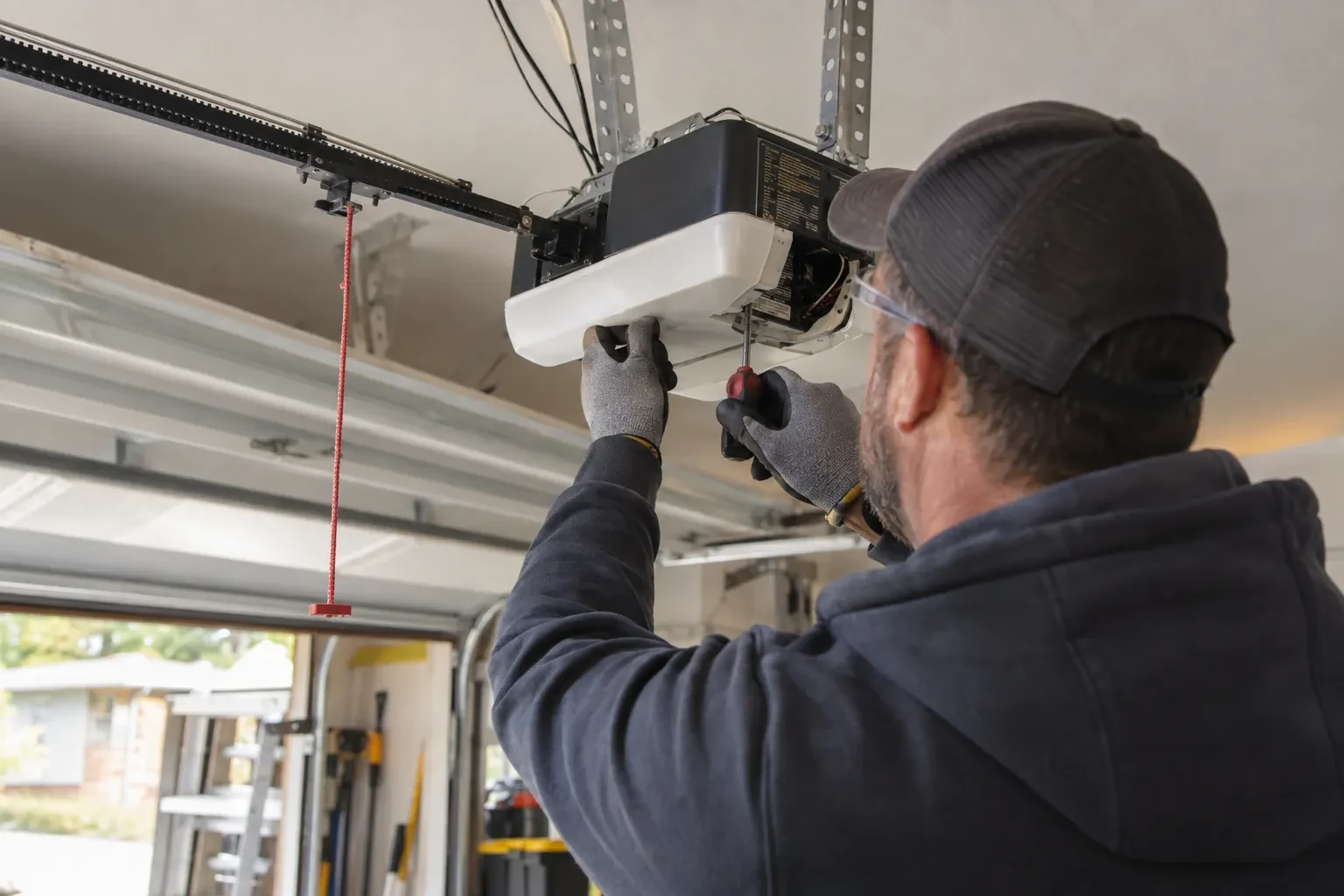
Chain-Drive Opener Repair
What affects the quote
What is known before the visit
A model number and photographs of the head, rail and chain let the technician arrive with the right gear kit or chain, which keeps the job to one visit rather than two.
Trolley and release parts
A worn inner or outer trolley, a cracked latch or a bent release lever are replaced as separate pieces, and whether any of them is needed shows only once the trolley has been run along the rail by hand.
A detached or unheated garage
Cold-rated lubricant, a chain replaced rather than freed, and force set for low temperatures are choices made for a garage that sees winter, and they show in the parts and the time.
What to have ready
- Is the garage attached and heated, or detached and unheated?
- Is the trolley stuck at the very end of the rail, near the motor or near the door?
- Is the chain hanging loose under the rail, or is it rusty or stiff?
Chain-Drive Opener Repair: questions
QuestionsWhy does the door jerk or jump at the same spot every time?
A repeatable jolt at one point on the rail is usually a chain problem meeting a sprocket problem: a stiff link or a spread master link passing over worn sprocket teeth, so the chain rides up and drops a tooth. It can also be a burr or a splice plate on the rail where the trolley catches, or a roller on the door hanging up in the track at that height. The technician runs the door by hand first to tell the two apart.
Why does the door open only partway and stop?
Three causes account for most cases. The up travel limit has drifted short and needs turning out. The door has become heavy or stiff somewhere in its travel, so the operator senses resistance and stops, which points to the springs, rollers or track. Or the chain has slipped out of phase with the motor, in which case the limit screws have no effect and the chain must be re-set on the sprocket with the trolley at the closed position.
Why does the technician lift the door by hand before repairing the opener?
Because the chain only guides a door that the springs already carry. With the operator unplugged and the red handle pulled, a balanced door lifts with moderate effort and holds about a metre off the floor. If it is heavy or sinks, the springs have lost tension and the drive has been hauling weight it was never meant to, which is exactly how gears strip and chains stretch. Correcting the door first means the repaired drive lasts.
Related services
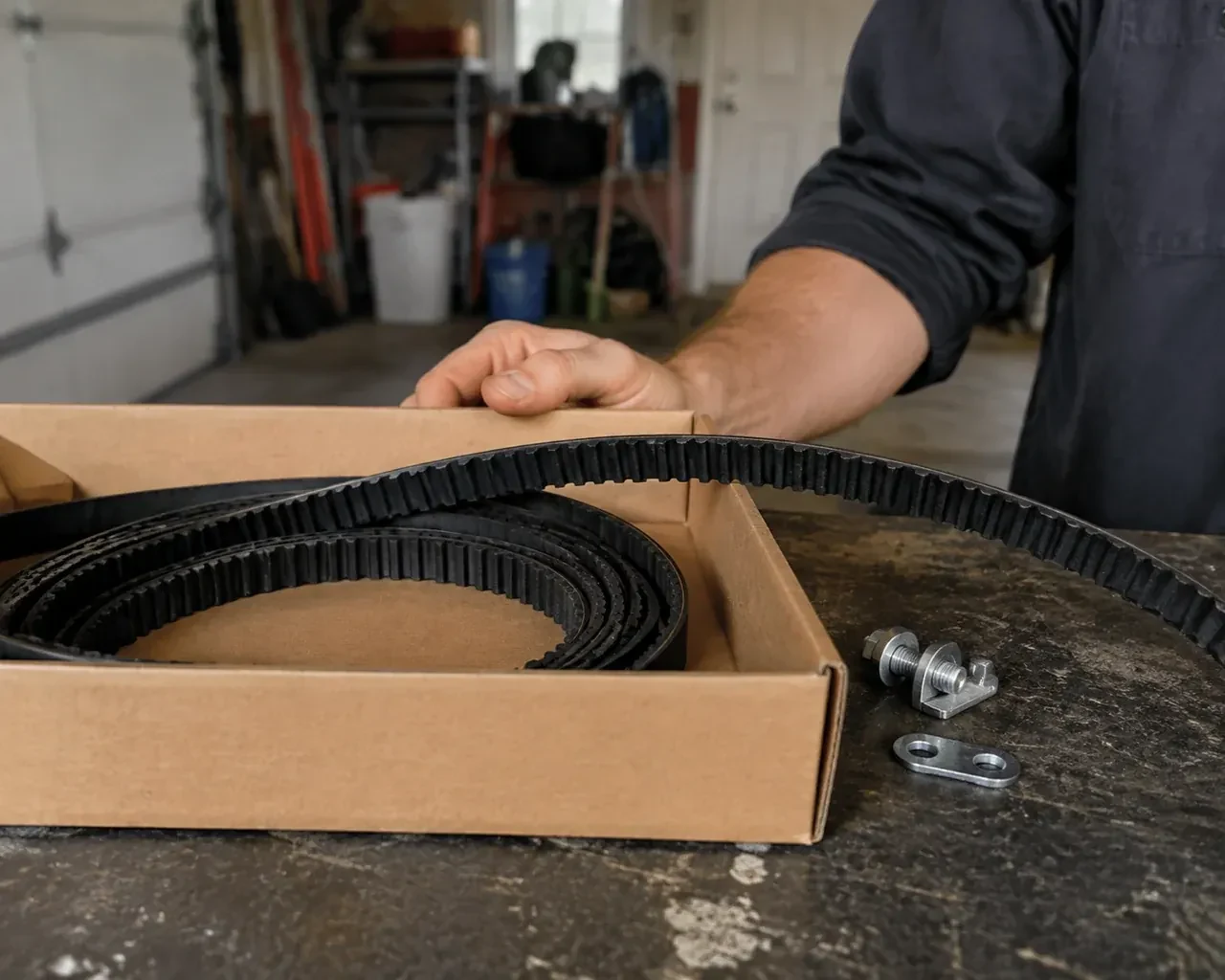
- Belt-Drive Opener RepairSomeone tightened the belt last month to stop the sag.
- Garage Door Opener ReplacementPress the button and the motor hums, but the door stays exactly where it is.
- Photo-Eye Sensor Alignment or ReplacementYou press the remote, the door drops a few centimetres, then climbs straight back to the top while the opener light blinks.