Repairs · Toronto
Garage Door Bottom Seal Replacement
After a spring rain there is a puddle inside the door that reaches the tires.
In plain words
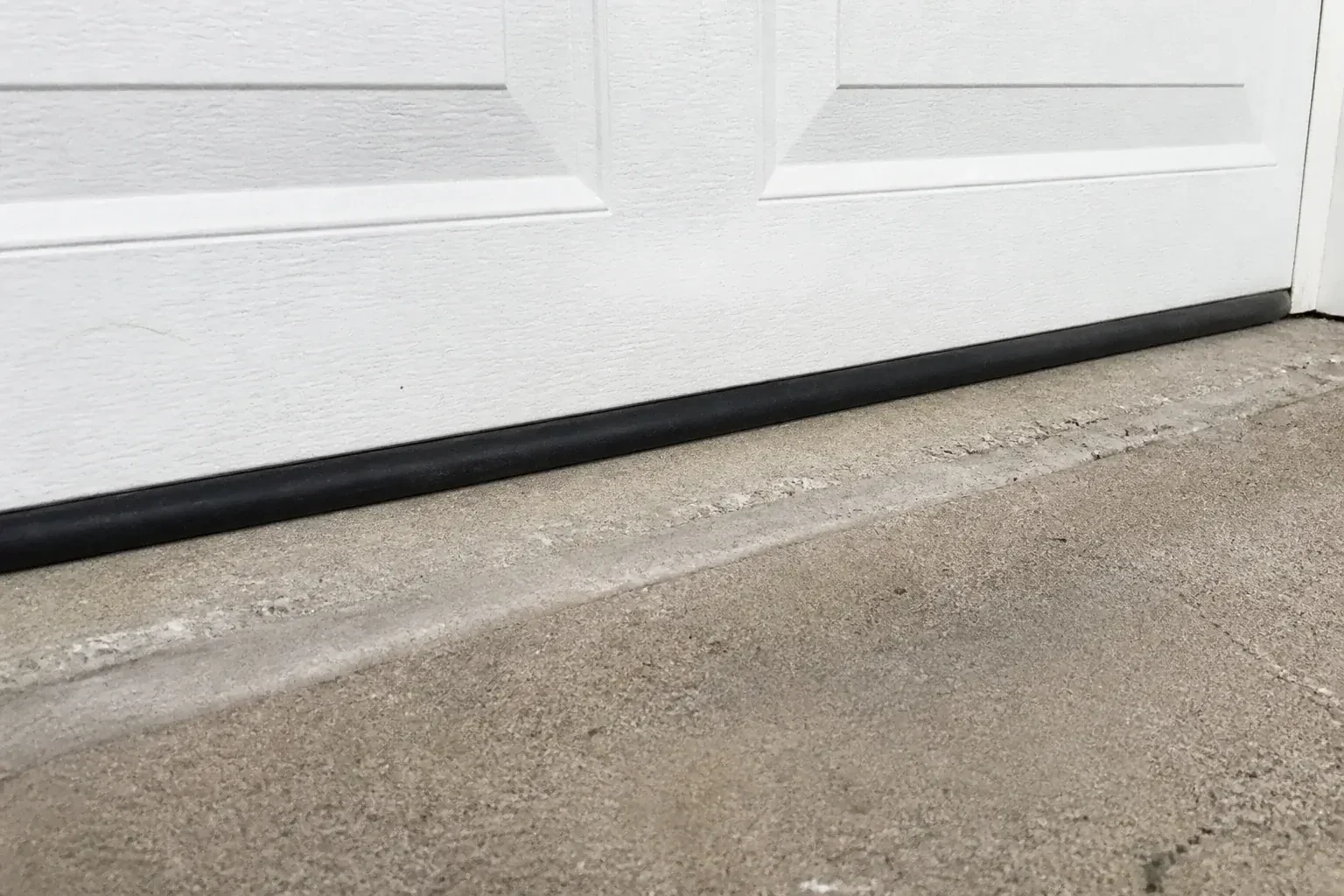
In this climate the bottom seal lives a hard life. Meltwater from the car pools at the threshold and freezes the seal to the slab, and the next press of the remote tears it or drags it out of its channel. Road salt stiffens the vinyl and eats the aluminum retainer; deep cold turns a supple strip rigid. Replacement puts a cold-rated profile on a sound retainer, sized to meet the floor without over-compressing, and the technician shows how a wipe of silicone each autumn and a clear threshold keep the new strip from bonding to the ice. The door closes softly onto rubber again, not onto a frozen ridge.
How the visit goesThere are mouse droppings along the wall behind the recycling bins, and at one bottom corner of the door the vinyl has a neat chewed notch the width of a thumb. Something has found its way in for the winter.
Garage Door Bottom Seal Replacement
How the visit goes
Retainer condition and fasteners
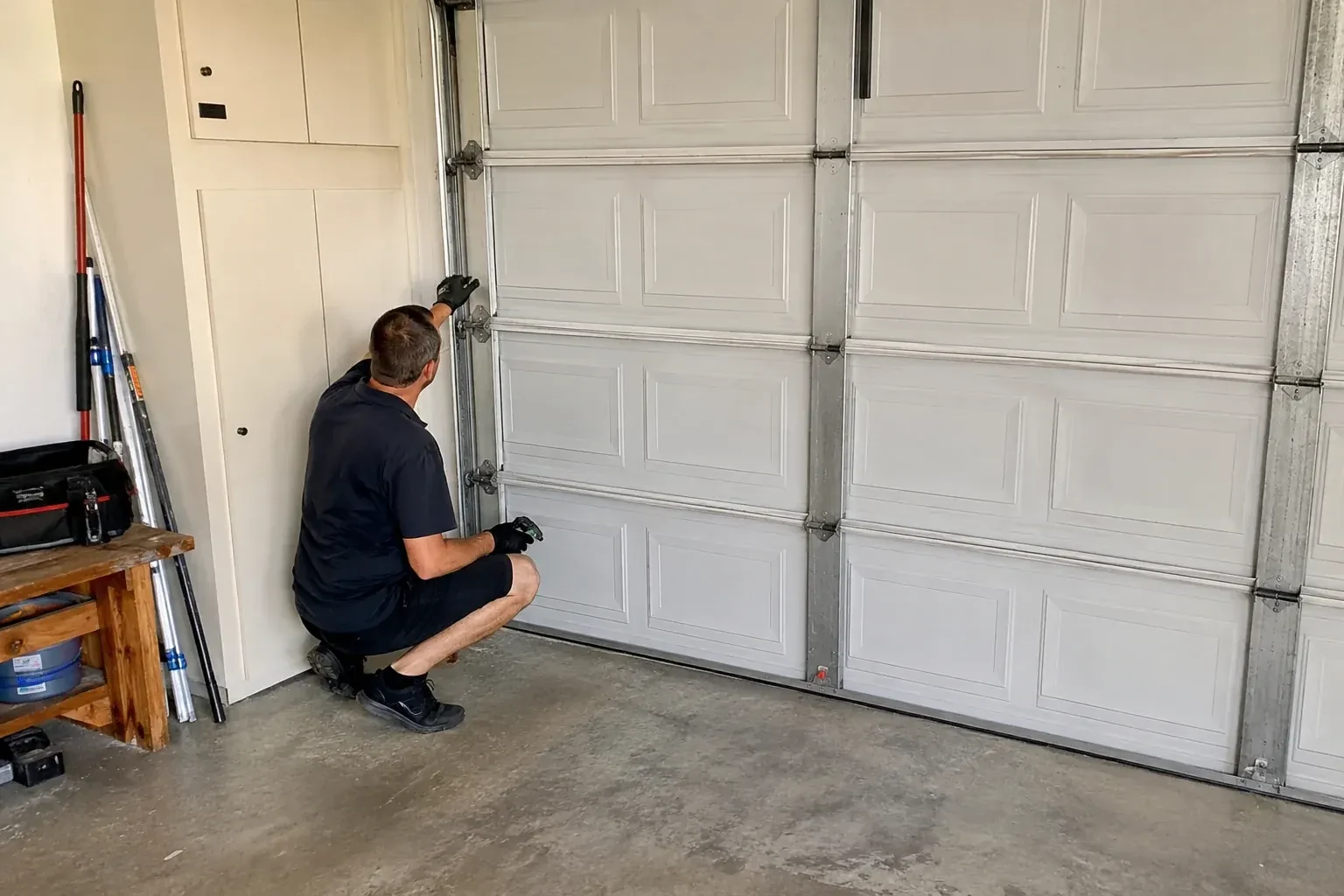
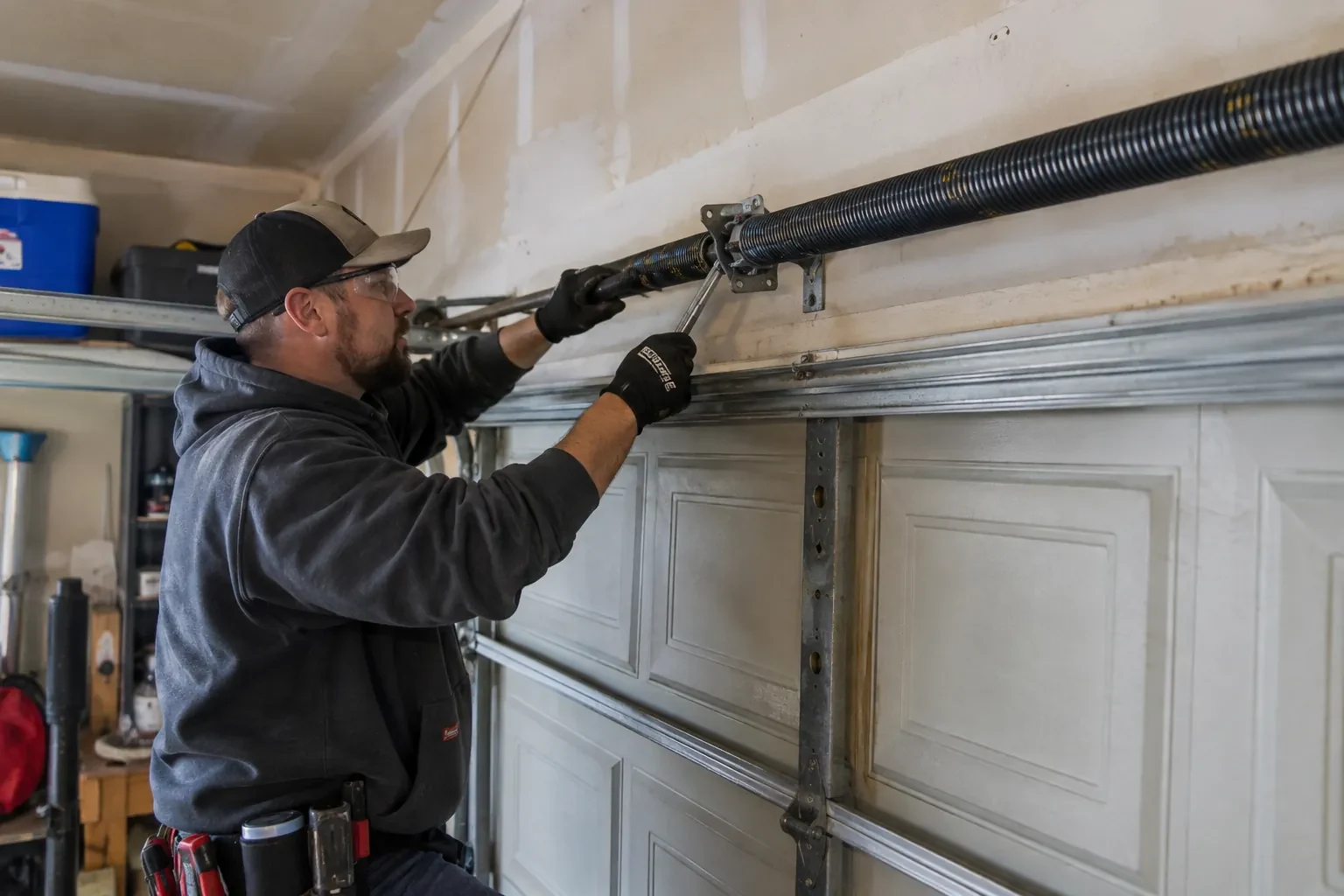
The aluminum or plastic retainer that grips the seal is inspected along its full length. The technician looks for kinks where something struck it, channels that have been spread open, corrosion where salt has sat, and screws that have rusted or pulled loose from the rail. A retainer that is straight and tight is reused; one that is damaged is measured for a matching replacement so both channels line up with the new seal. On doors where the retainer is part of a plastic bottom cap, a cracked cap is noted and a screw-on aluminum retainer is offered as the practical repair.
Taking the old seal out
With the door secured, the ends of the old strip are freed from any caps or folds and the seal is drawn out of its channels from one end. A supple seal slides; a hardened one is coaxed with a flat blade and a little silicone, or cut into short lengths and removed a piece at a time. Old nails come out of a wood rail with a claw. The channels are then cleaned of grit, rust flakes, salt crust and any remnants of the previous strip with a wire brush and a scraper, because a clean channel is what lets the new seal feed through without tearing.
A clear threshold through winter
The seal closes onto whatever is on the floor, so the threshold deserves a moment when you clear the driveway. Push packed snow and the ridge of ice that forms where the door meets the slab away from the opening before running the door, and sweep salt piles and grit clear of the line so they are not ground into the strip. Park a little further in, if the garage allows, so drips from the car fall on the floor rather than at the seal. These are the same habits that protect the bottom brackets and cables in the corners.
Garage Door Bottom Seal Replacement
In the van
Bulb or U-style bottom seal
Track clamps
Bead-style bottom seal
Straightedge and tape measure
Nail-on vinyl strip for wood doors
Garage Door Bottom Seal Replacement
What affects the quote
Door width
A single door takes a shorter length of seal than a double, and the widest doors need more time to feed the strip evenly across. The quote starts from the width measured on the day.
Opener adjustment
Resetting the down limit and force and repeating the reversing test after a taller seal is fitted is a short step that the quote names whenever the door has an opener.
Rodent-resistant seal
A profile with embedded stainless mesh for a garage that has had repeated chewing costs more per length than plain vinyl and is offered where the history calls for it.
What to have ready
- Does the driveway slope toward the garage, or does water pool at the door?
- Are the side and top weather strips also worn or torn?
- Is the door a single or a double, and roughly how wide?
Garage Door Bottom Seal Replacement: questions
QuestionsCan mice get past a garage door bottom seal?
A worn, hardened or chewed seal is one of their favourite routes, and even a small gap at a corner is enough. A fresh, continuous seal sized to the floor removes that route. For a garage with repeated trouble, seals with a stainless mesh embedded in the vinyl are available and resist chewing. Keeping the jamb seals sound at floor level matters just as much, since a gap beside the door serves them equally well.
How do I know which size and type my door takes?
Look at the end of the bottom section for the metal or plastic strip that holds the seal. Count the channels, note whether they are slotted or rounded, and measure the distance between them and the width of the door. A photo of the end of the retainer and one of the seal's cross-section is usually enough for the technician to identify the profile before the visit and bring the right roll.
How do I look after the new seal?
Wipe it clean of salt and grit a few times a year, and give it a light coat of silicone spray each autumn so meltwater has nothing to bond to. Keep petroleum products and solvents away from it, since they soften vinyl. Clear ice and packed snow from the threshold before running the door in winter. Once a season, look under the closed door for daylight. That is the whole routine.
Related services
- Garage Door Tune-UpSince the first cold snap the door has been sluggish.
- Off-Track Garage Door ResetYou tapped the door with the bumper while backing in, barely a nudge, and now the bottom corner has swung inward.
- Garage Door Panel ReplacementAfter an overnight freeze the door stuck to the slab, the opener strained, and something gave.