Repairs · Toronto
Off-Track Garage Door Reset
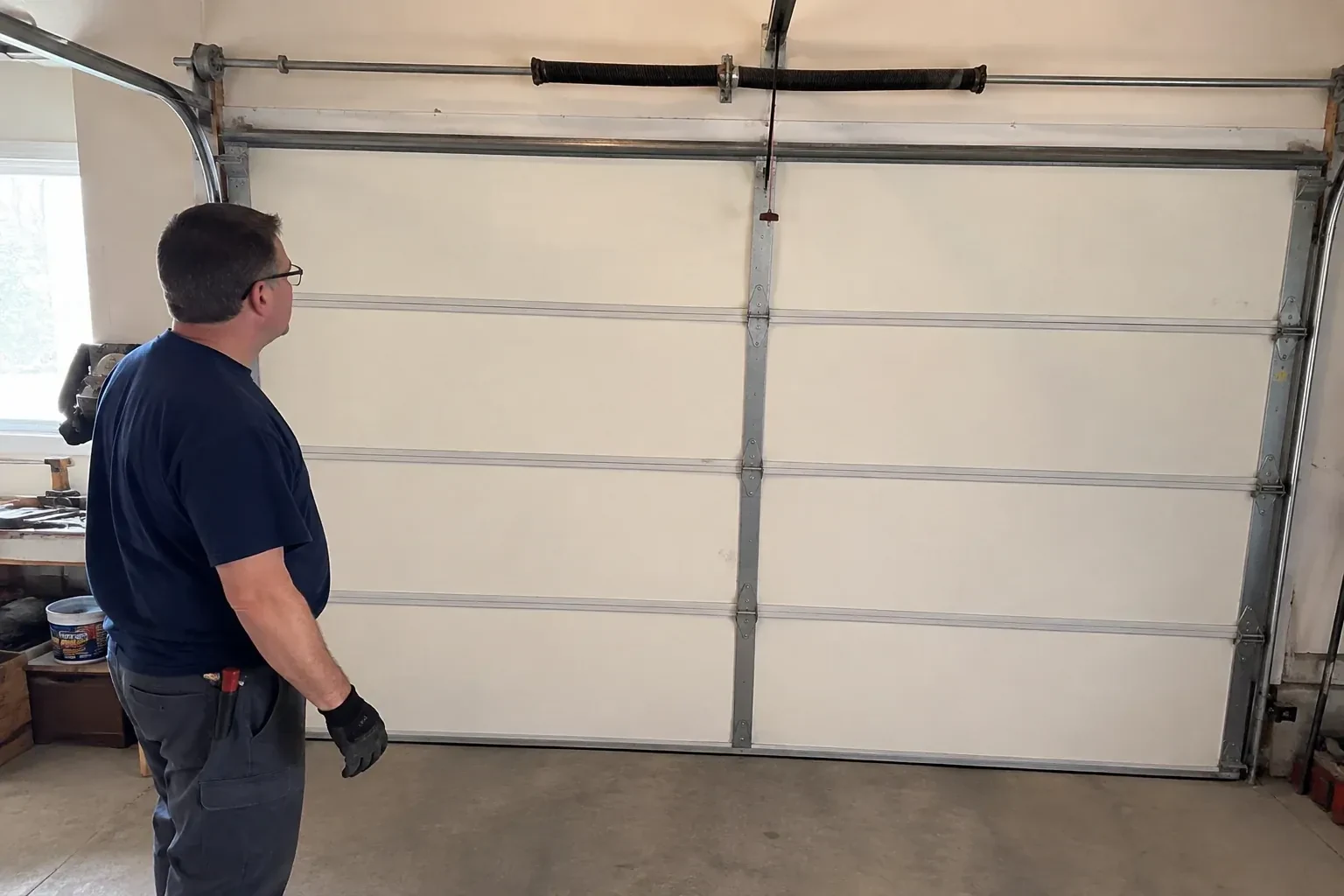
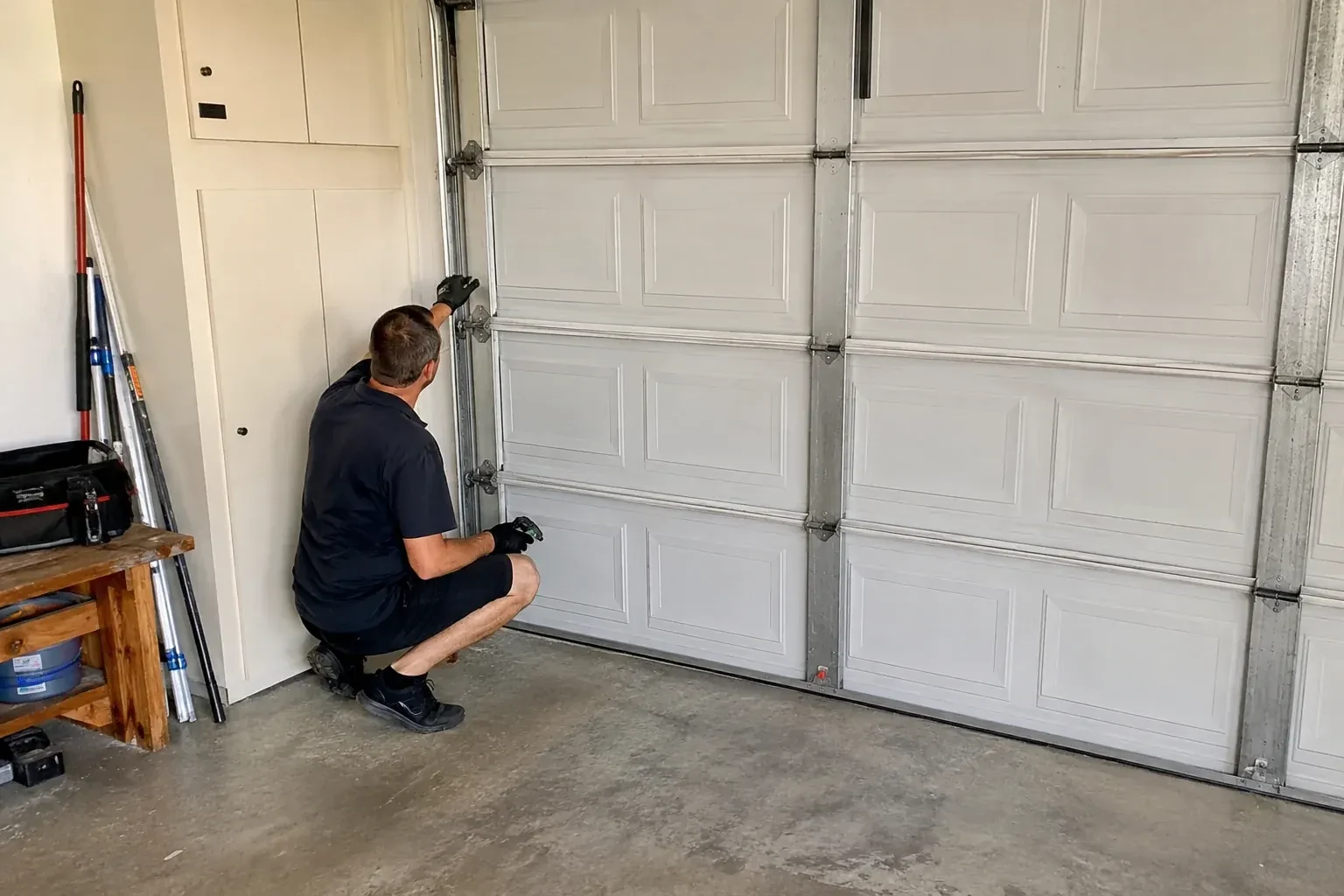
You tapped the door with the bumper while backing in, barely a nudge, and now the bottom corner has swung inward.
In plain words
Older doors and workshop doors tend to come off their tracks for reasons of wear rather than impact. Steel rollers lose their bearings and grind down to the stem, wood jambs dry out and let lag screws spin, back hangs loosen and the horizontal track drifts out of level. A reset on a door like this is partly restoration: worn rollers are replaced as a set, fasteners are moved into sound wood or through-bolted, the horizontal tracks are re-hung square to each other, and hinges that have bent from years of misalignment are swapped. The door comes back quieter and straighter than it has run in years.
How the visit goesThe morning after a thaw the opener groaned, the door stayed stuck to the icy floor for a second, then lurched up crooked. It stopped halfway with a grinding scrape and has not moved since.
Off-Track Garage Door Reset
How the visit goes
Making the door safe before anything is touched
The first job is to stop the door doing anything unexpected. The technician clears people, pets and anything stored near the opening, unplugs the opener or pulls the release cord so the motor cannot be triggered from a remote, and looks at how the door is holding its position. Locking pliers go onto the track below the lowest roller and a support goes under a section that could drop. Only once the door is clamped and steady does the closer look begin. This takes a few minutes and it is what lets the rest of the visit proceed calmly rather than around a door that could shift.
Taking the weight off before moving anything
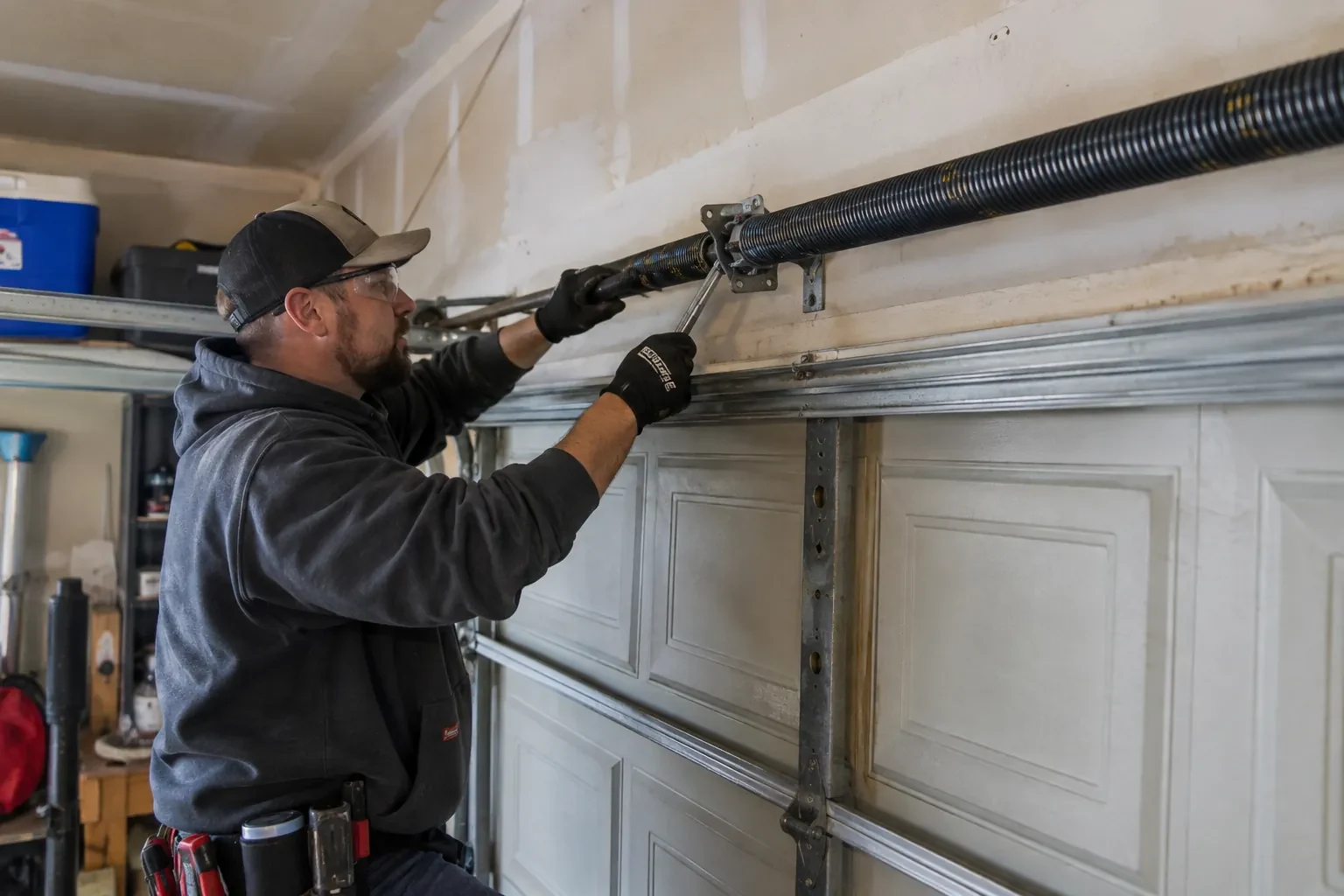
Nothing is pulled or lifted while the door is loaded. On a torsion door the technician may wind the spring tension down with winding bars fitted to the cones, working one quarter turn at a time with the set screws controlled, so the sections can be moved without the springs snatching them. On an extension-spring door the load comes off by raising the door fully and securing it, which relaxes the springs. Clamps and props hold every section in place throughout. With the load off, a section that seemed immovable can be shifted a few centimetres by hand, which is all that is needed to bring a roller back.
Keeping the opener honest
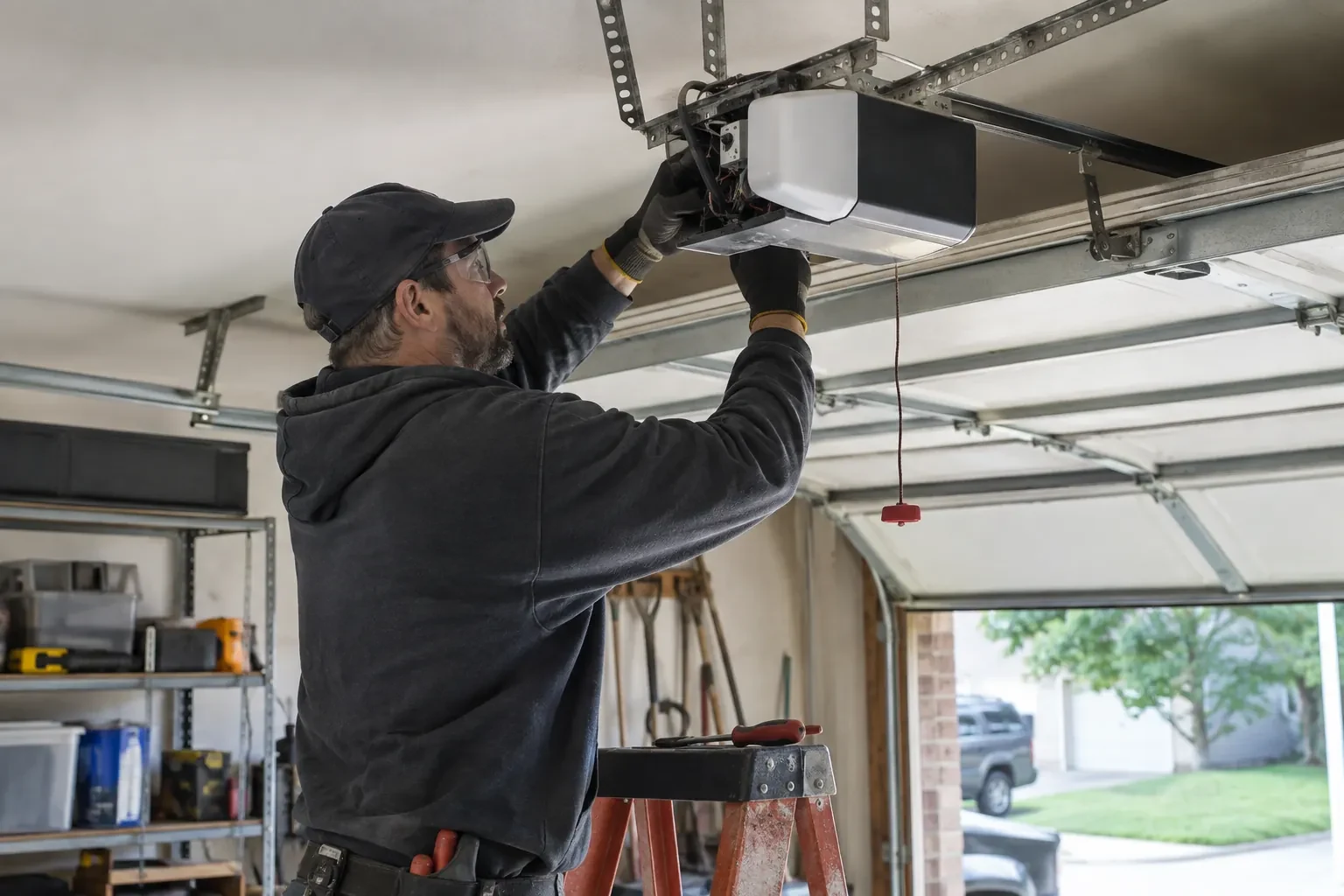
The opener leaves the visit re-taught to the trued door, and a monthly test keeps it that way. Lay a piece of wood about 1.5 inches thick flat on the floor in the door's path and close the door from the wall button: it must touch the block and reverse. Then start the door closing again and pass an object through the photo-eye beam near the floor: it must stop and go back up. If either test fails, unhook the door from the opener and operate it by hand until it has been looked at. A door that reverses properly is one that stops before it can rack itself against an obstruction.
Off-Track Garage Door Reset
In the van
Long lag screws or through-bolts
Jamb and flag brackets
Torsion spring winding bars
Bottom brackets
Replacement rollers, steel or nylon
Off-Track Garage Door Reset
What affects the quote
Spring condition found during the check
If the springs are broken, badly worn or mismatched to the door, they are quoted as their own job. You choose whether to do that in the same visit, and the reset itself stands on its own.
Opener reconnection and adjustment
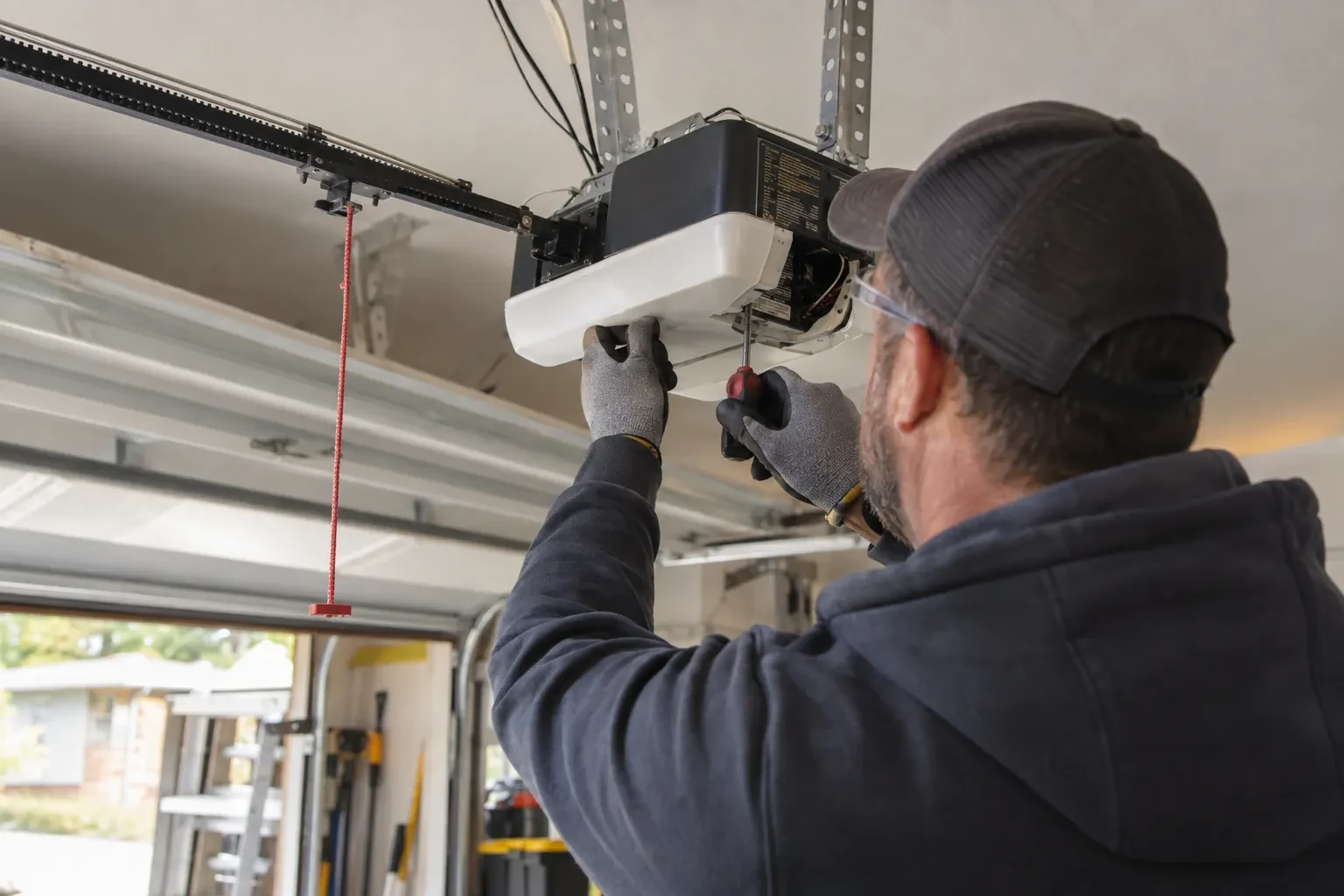
Reconnecting the trolley, resetting travel limits and force, and testing the reversal are normally part of the reset. An opener arm, bracket or reinforcement damaged during the event is an additional item.
Section damage from an impact
A creased or pushed-in panel may still run after the reset or may need replacing. The quote separates the reset from any section work so you can decide on the panel independently.
What to have ready
- Is the door fully open, part way up, or closed and sitting crooked?
- Is a vehicle trapped inside the garage right now?
- Have you unplugged the opener or pulled the red release cord?
Off-Track Garage Door Reset: questions
QuestionsI only tapped the door with the bumper. Why is it off its track?
A sectional door is strong in the direction it travels and surprisingly easy to push sideways at a single roller. A light nudge on the bottom section can flex the track lip enough for the roller to slip out, after which the section twists and the rollers above follow. The good news is that this kind of event usually leaves the cables and springs alone, so the reset is often rollers, a re-formed track lip and a hinge check.
Why do rollers wear out, and how would I know?
Rollers turn thousands of times a year while carrying part of the door's weight, and their small ball bearings wear, fill with grit or fall out. Nylon tires can crack and steel wheels can wear flat spots or grind down to the stem. A worn roller squeals, wobbles in the rail or lets the door shudder at the curve. Replacing them as a set restores a quiet door and removes a common cause of a roller dropping out.
Can a door frozen to the floor really cause this?
Yes, and in winter it is one of the most common causes. Meltwater under the bottom seal refreezes overnight and bonds the door to the slab. The opener pulls, the door stays put, the cables go slack and unwind off their drums, and when the ice lets go the door lurches up unevenly. Freeing the seal by hand before using the opener on icy mornings prevents almost all of these calls.
Related services
- Garage Door Tune-UpSince the first cold snap the door has been sluggish.
- Garage Door Panel ReplacementAfter an overnight freeze the door stuck to the slab, the opener strained, and something gave.
- Garage Door Bottom Seal ReplacementAfter a spring rain there is a puddle inside the door that reaches the tires.