Garage Doors in Toronto, OntarioBumped the doorbacking out?
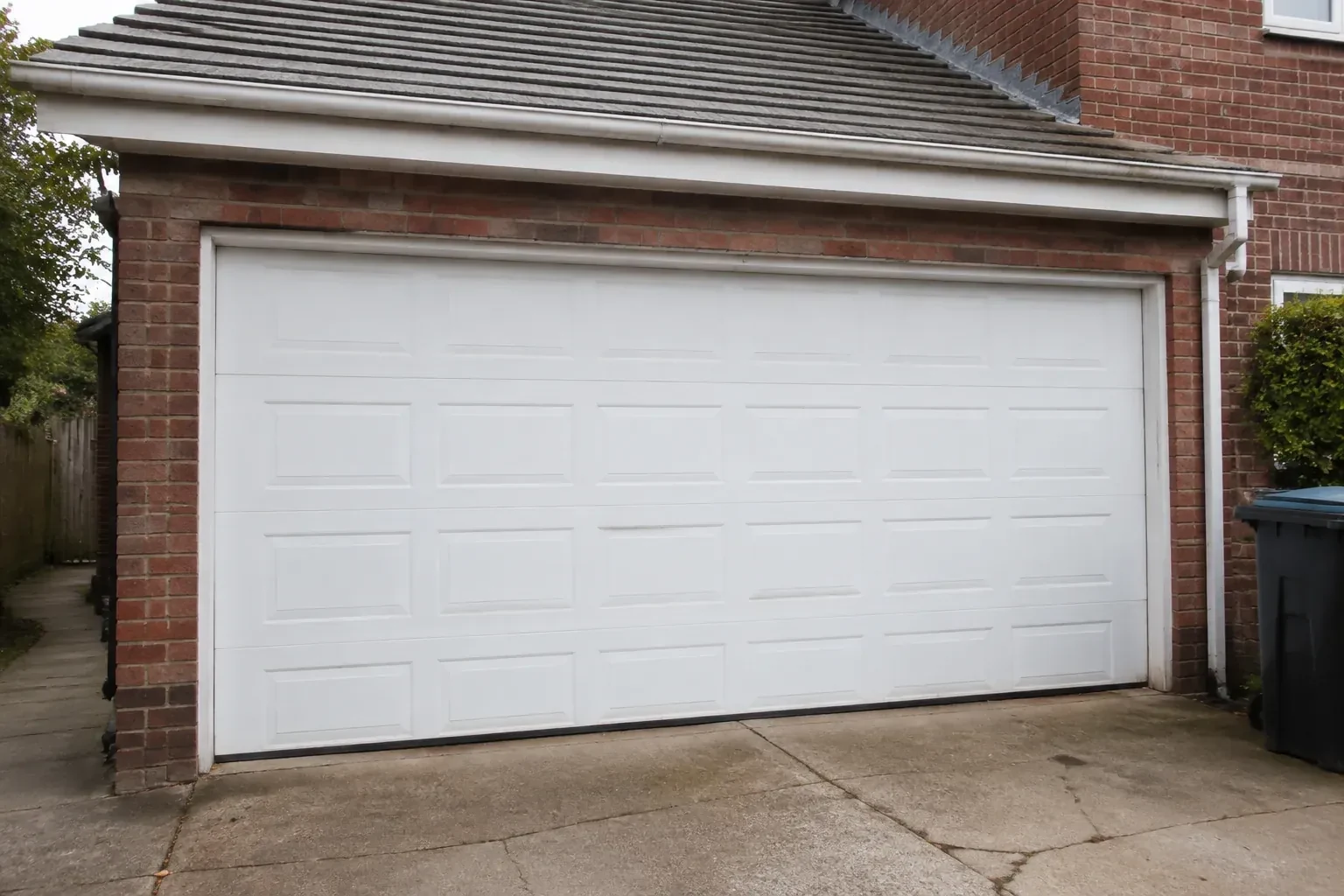
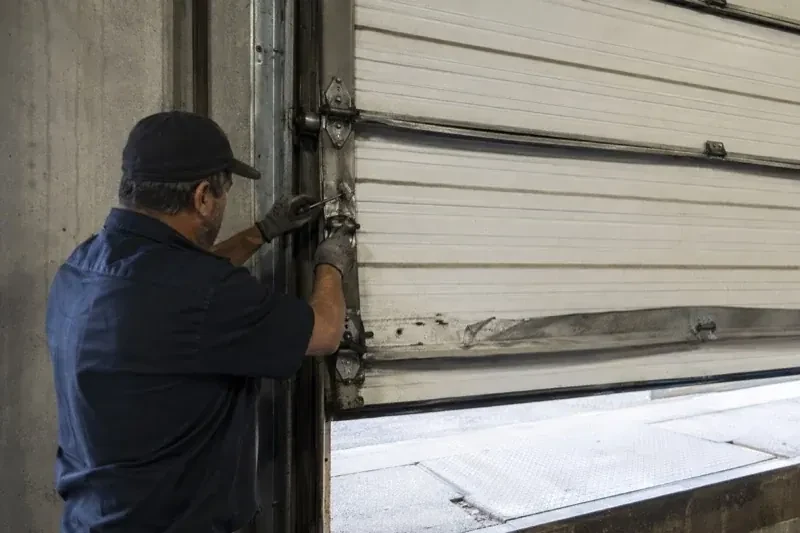
A creased bottom panel is a common sight in Toronto, and it rarely means a whole new door. We check the struts, hinges and track alignment, replace the damaged section when a match is available, and reinforce the panel so the door lifts straight and looks whole again from the street.
A creased bottom panel is a common sight in Toronto, and it rarely means a whole new door. We check the struts, hinges and track alignment, replace the damaged section when a match is available, and reinforce the panel so the door lifts straight and looks whole again from the street.
Balanced, quiet and ready for winter.
For homeowners in Toronto, the visit begins with questions rather than tools: when did the door change, what does it sound like, does the wall button behave differently from the remote? Those answers point the technician to the right part, and the assessment that follows confirms it before any price is discussed.
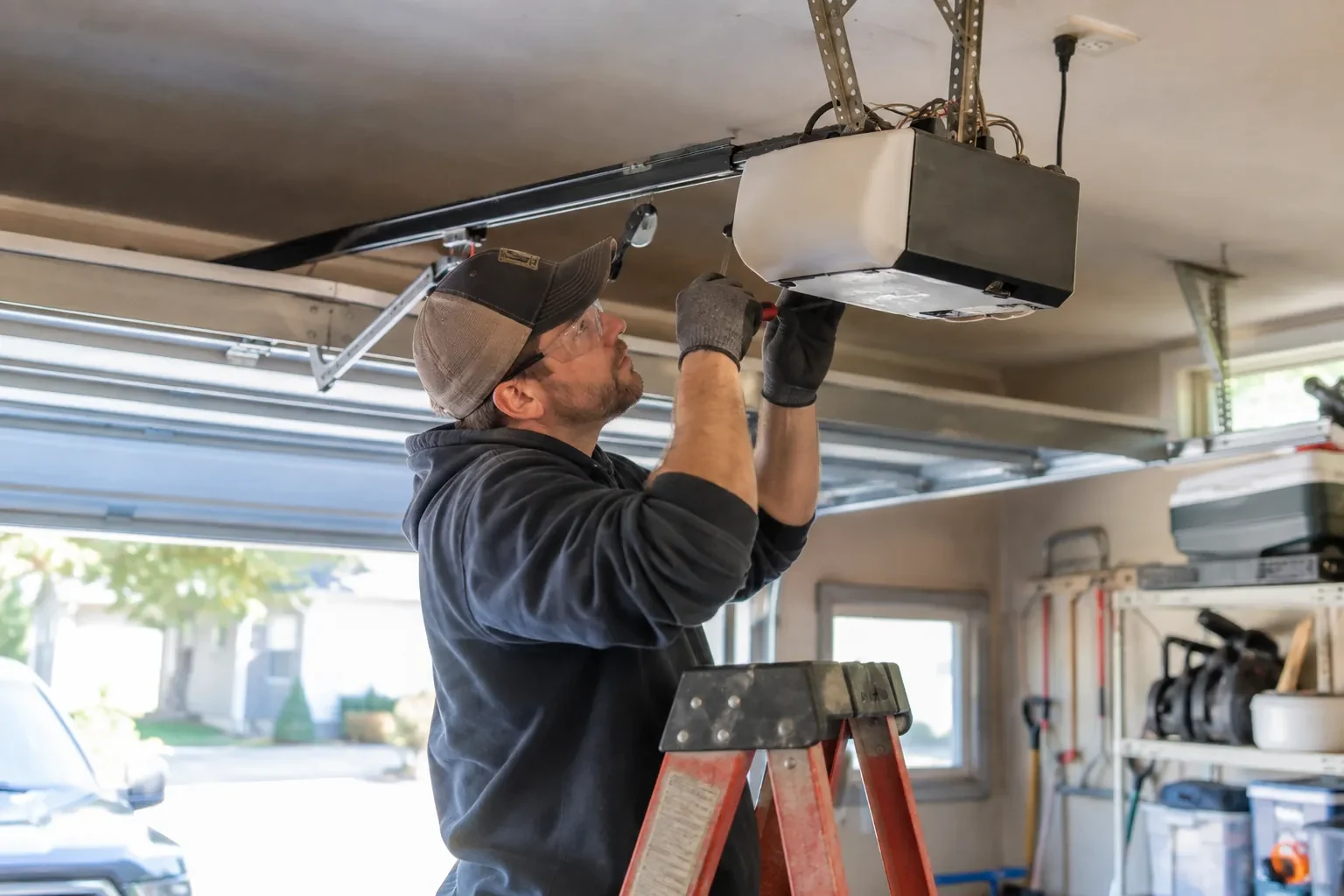
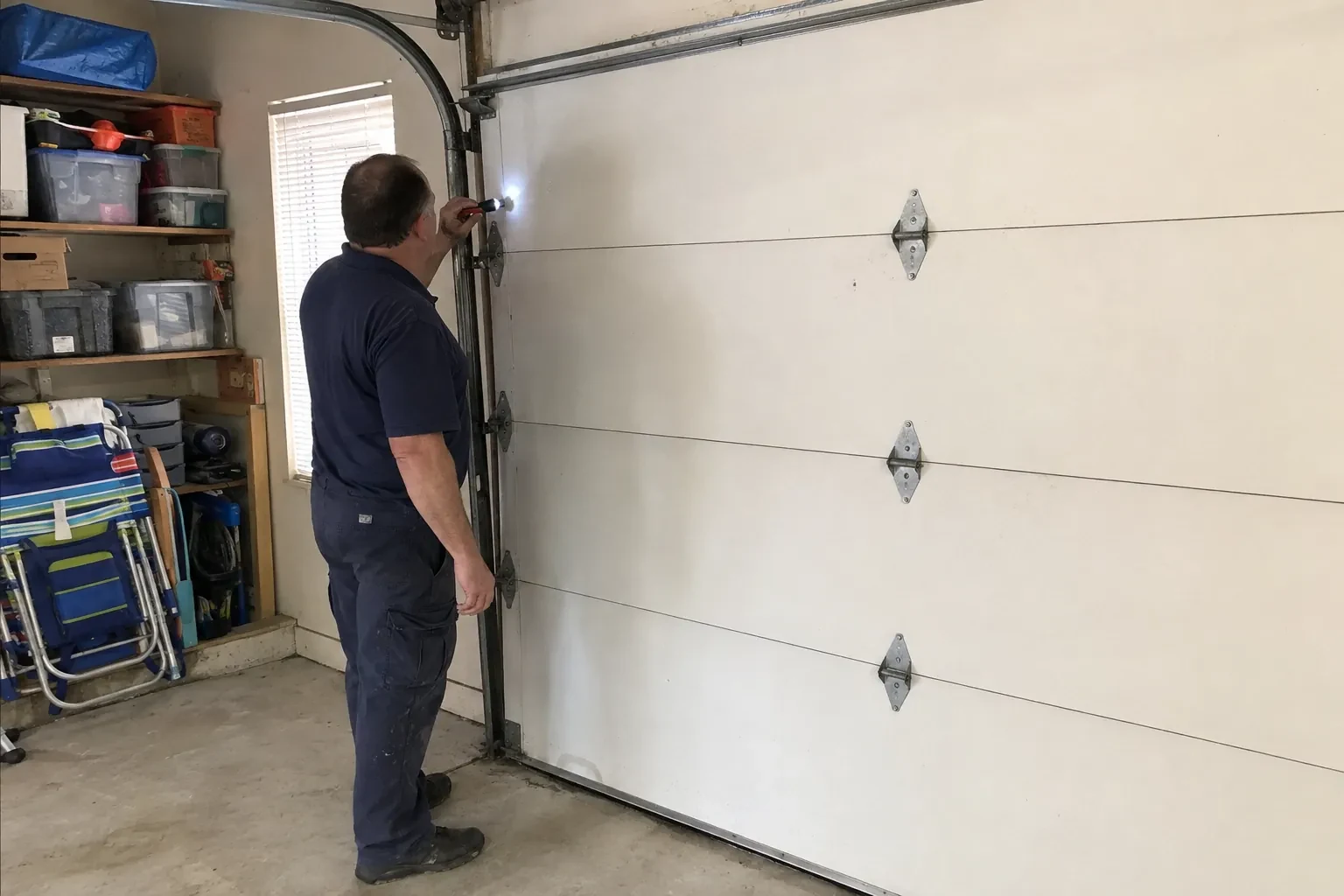
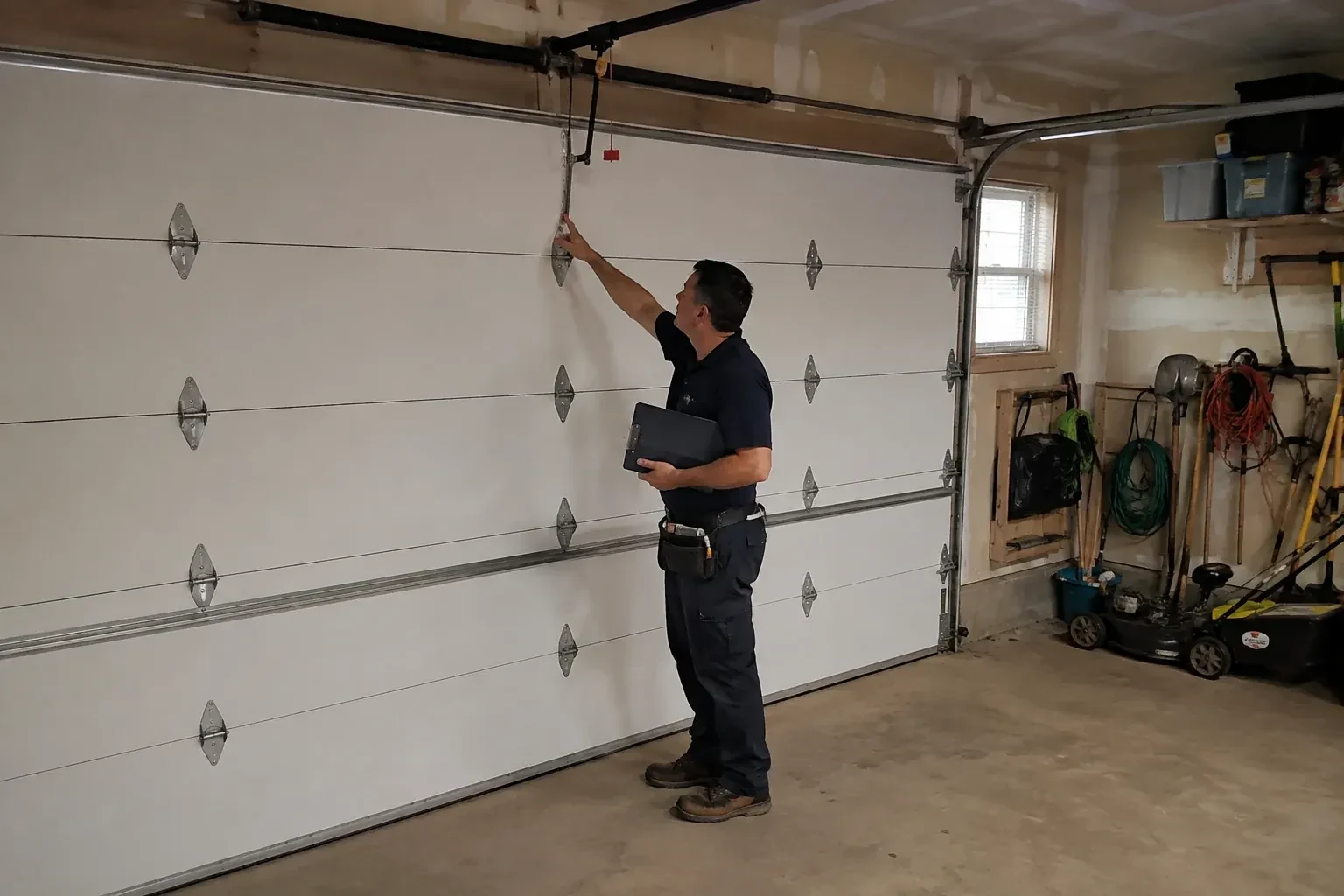
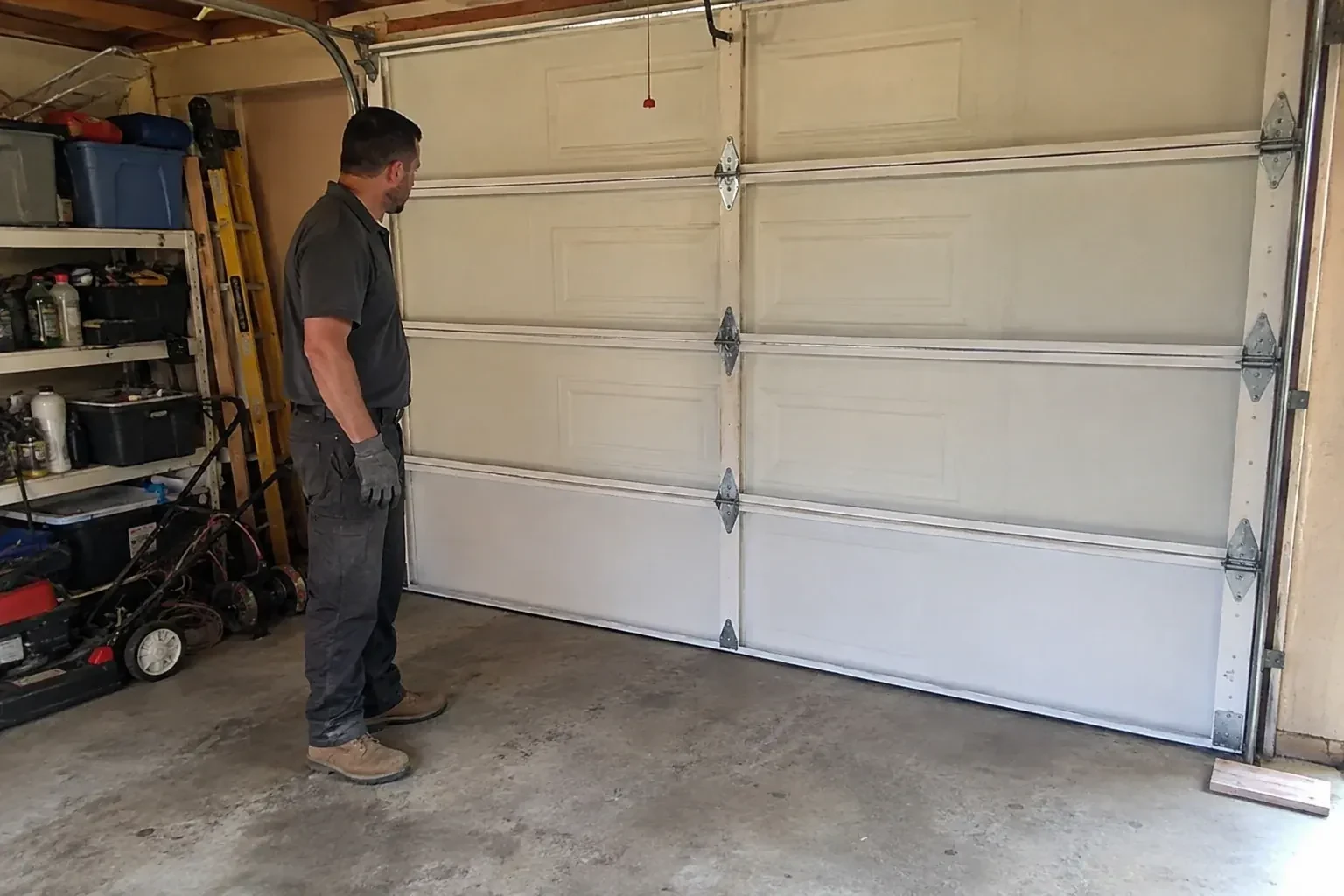
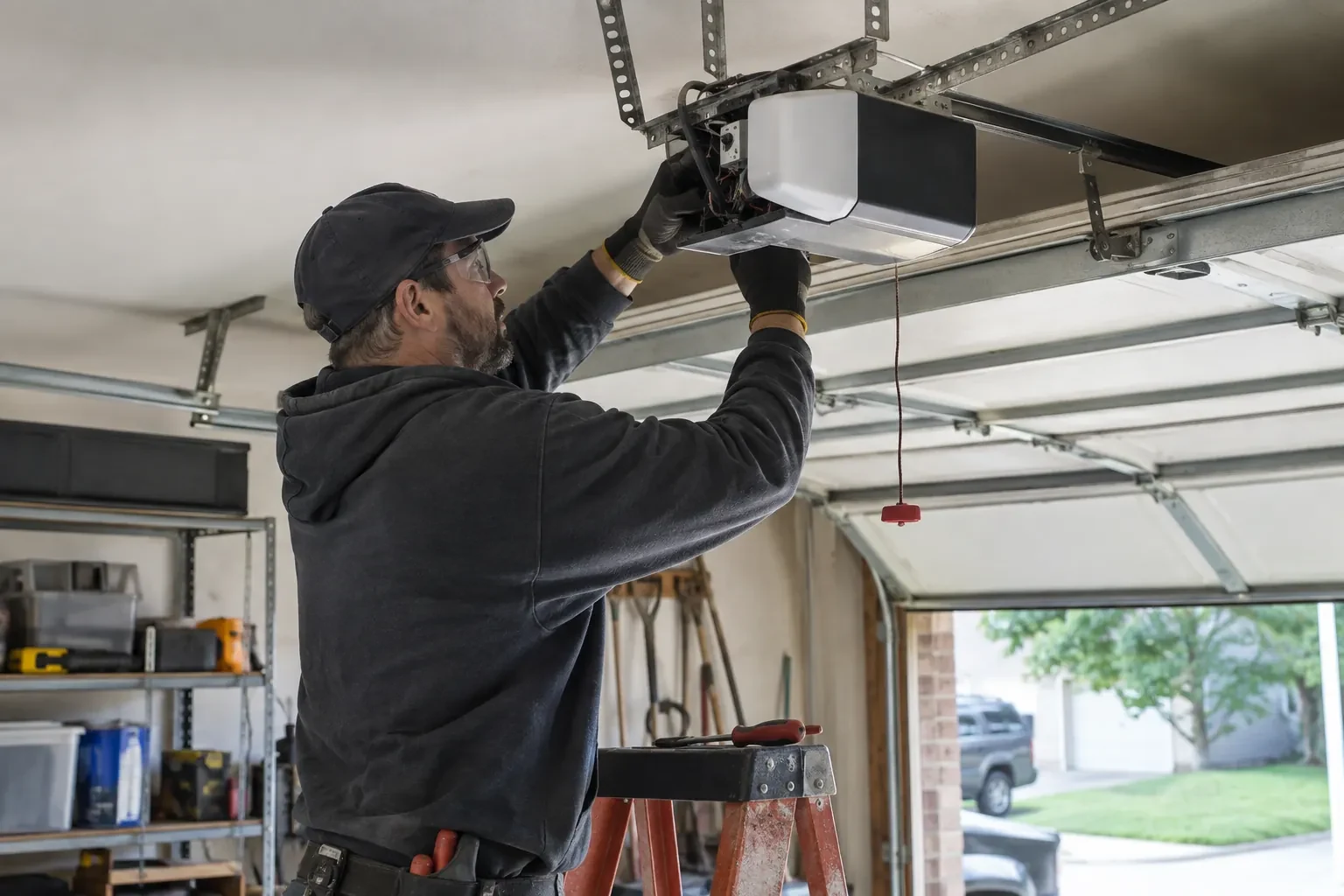
A garage door repair in Toronto begins the way it does everywhere we work: with a full look at the door, top to bottom. Springs, cables, drums, rollers, hinges, track, opener and sensors are all checked, because a fault in one shows up as strain in another. Only then do we talk through the choices, plainly, and get on with the repair you decide on.
26years in business
24/7open every day
Nothing hidden. Every part we replace, you can see. Every adjustment, we explain. If we find something unexpected, we stop and tell you before continuing.
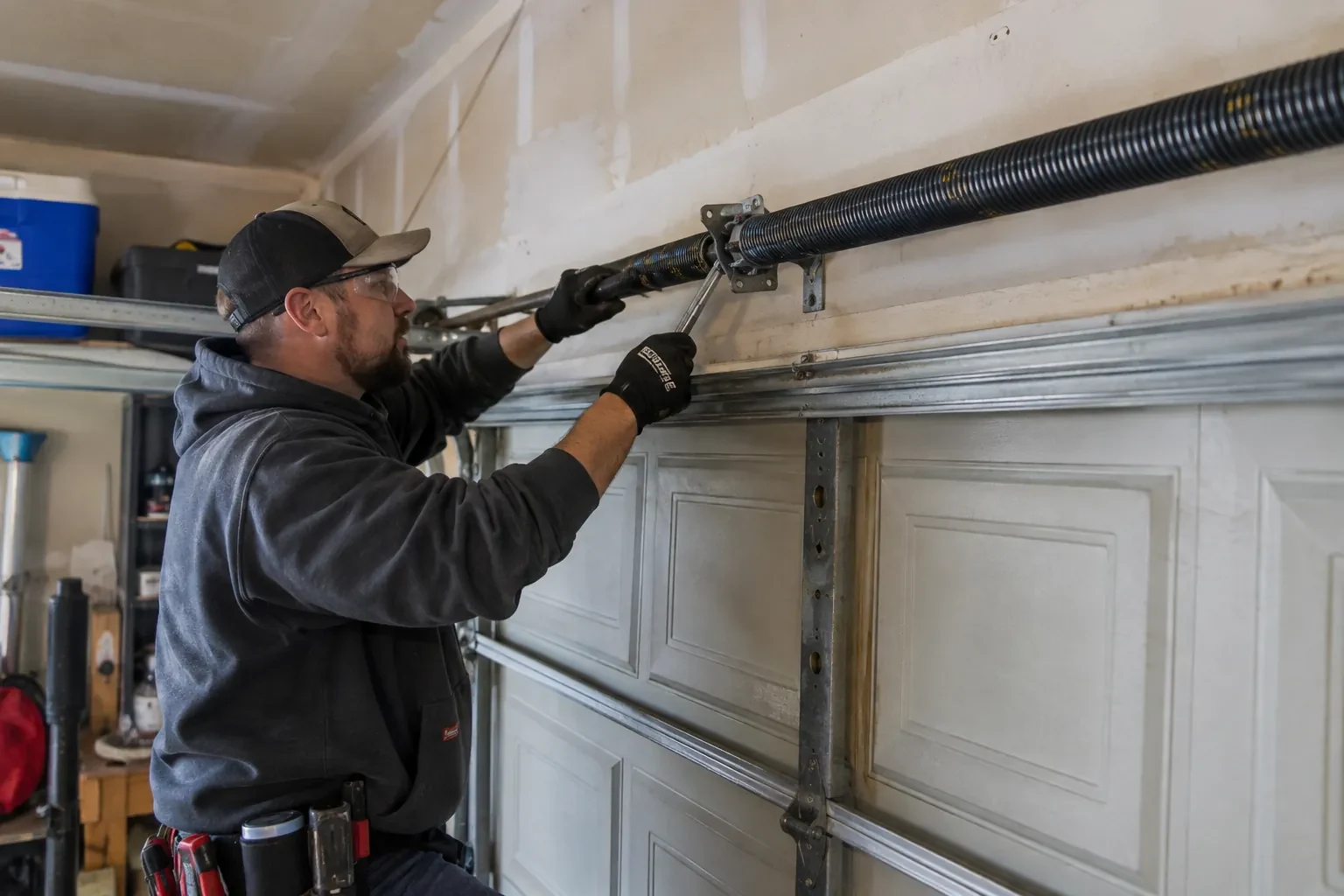
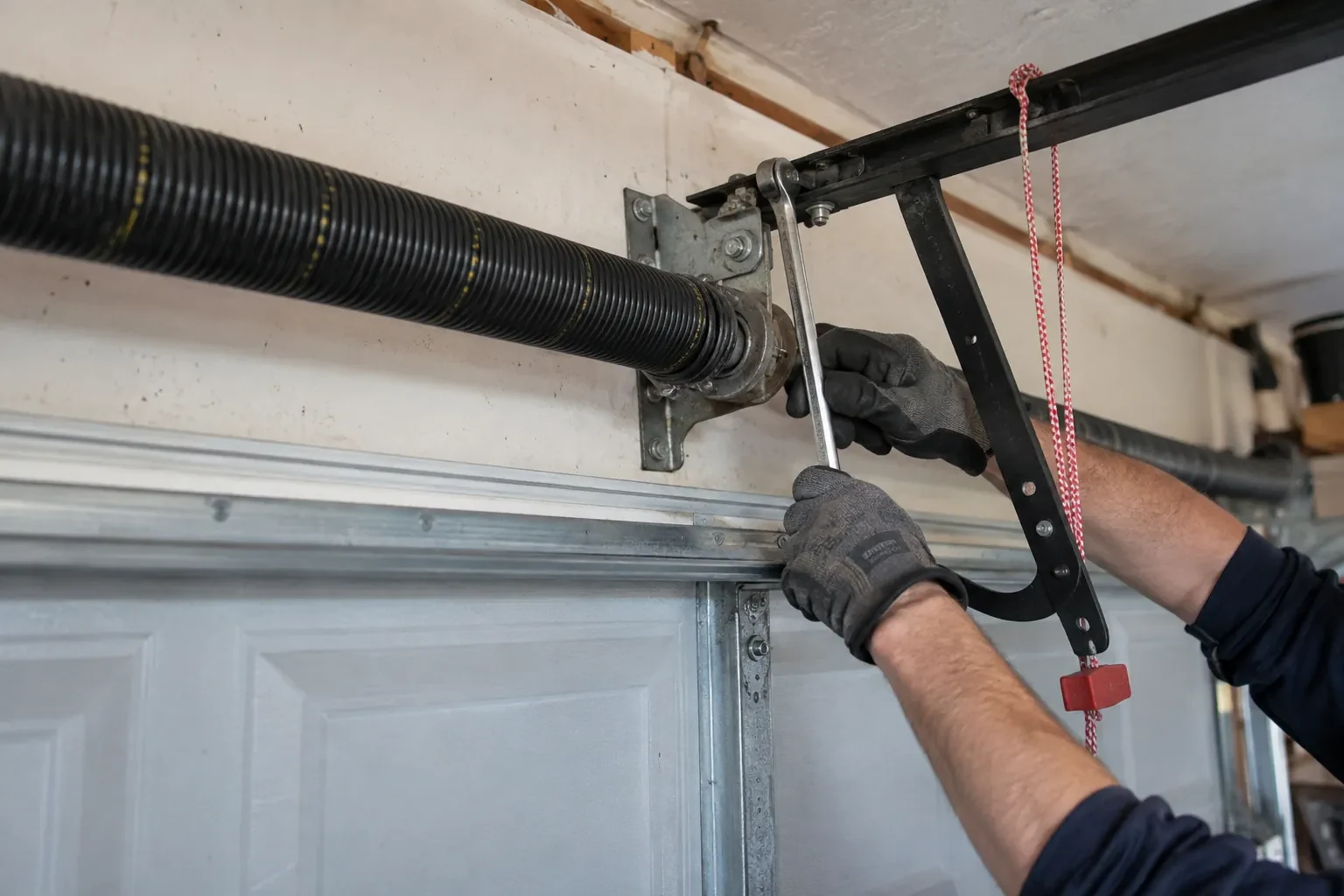
Care with heavy parts. Springs and cables are handled with the right tools and a steady method, and the door is secured before any tension is released.
Clear about what comes next. Before we leave, you know what was done, what to watch for, and when the door might want attention again.
Get your Toronto garage door looked over properly.
Whatever brought you to this page from Toronto, a door that stopped, a noise that started or a plan for a new door, the services below explain what we do about it. Repairs and maintenance, springs and hardware, openers and remotes, and new door installation are each covered in detail.
About 58% of homes in Toronto were built in 1980 or earlier, according to the 2021 Census.
Older homes
Where most houses were built a generation or more ago, a good share of garage doors are still the originals: wood or early steel sections on extension springs. Those doors respond well to fresh pulleys, safety cables and a careful balance, and the technician carries the parts for them.
Single-detached houses make up about 23% of homes in Toronto (2021 Census).
Townhouses built in rows tend to have identical doors from the same builder, so when springs and openers age they do so together along the street. Owners often arrange service for several doors at once, and we can plan a single visit that covers the row.
Older homes often carry extension springs stretched along the tracks; newer ones use a torsion bar above the door. We work on both, and we can convert one to the other when it makes sense.
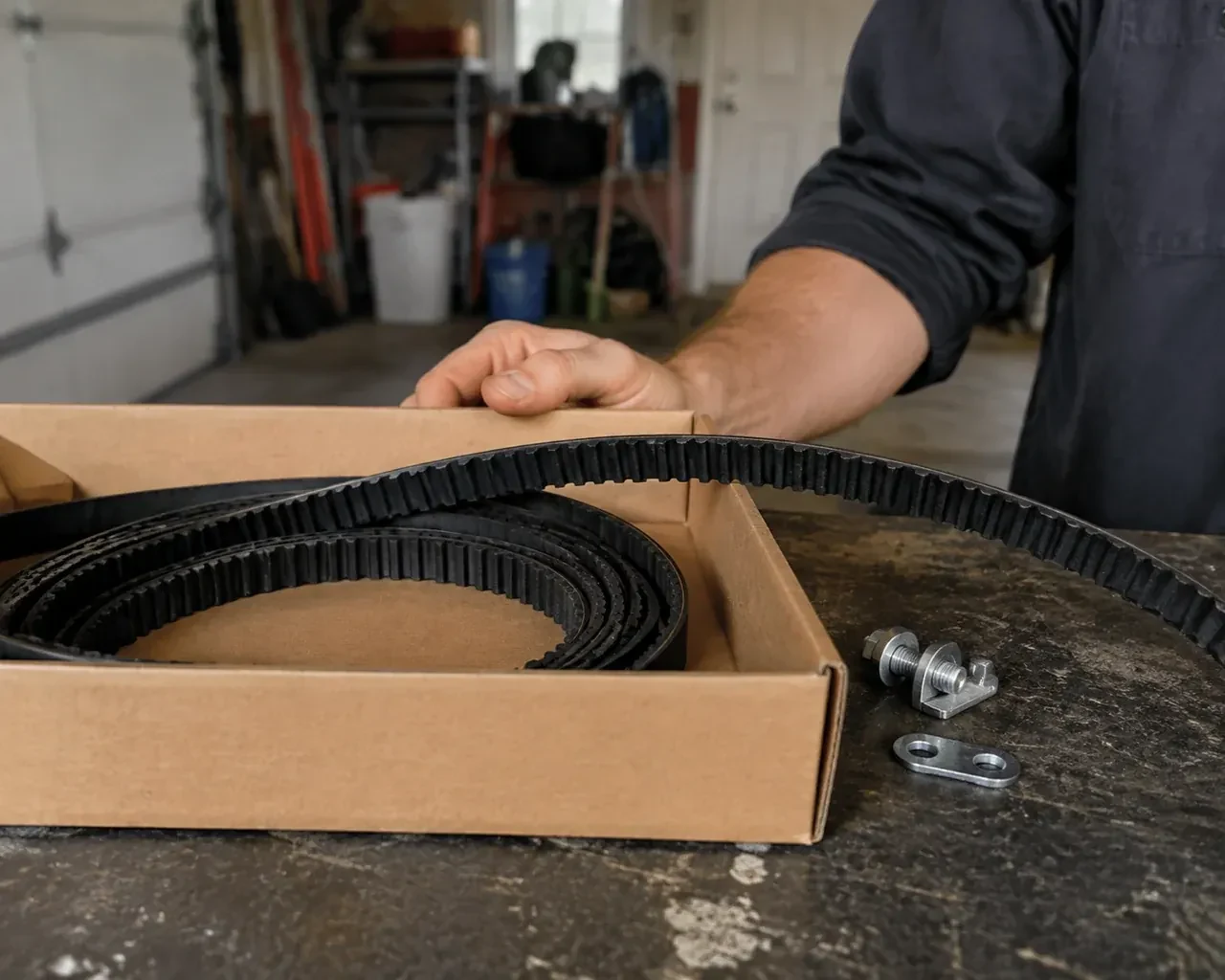
Someone tightened the belt last month to stop the sag. Now the opener sounds like a chain drive, the motor labours on the way up, and the whole rail vibrates under the ceiling.
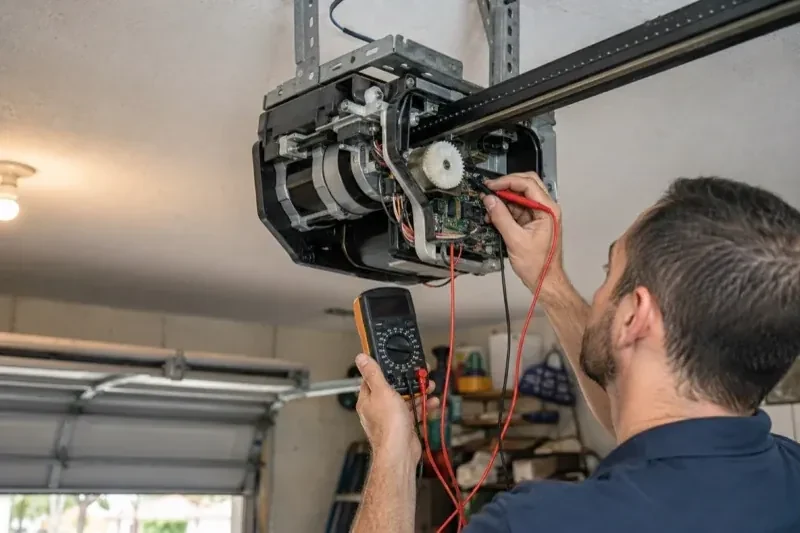
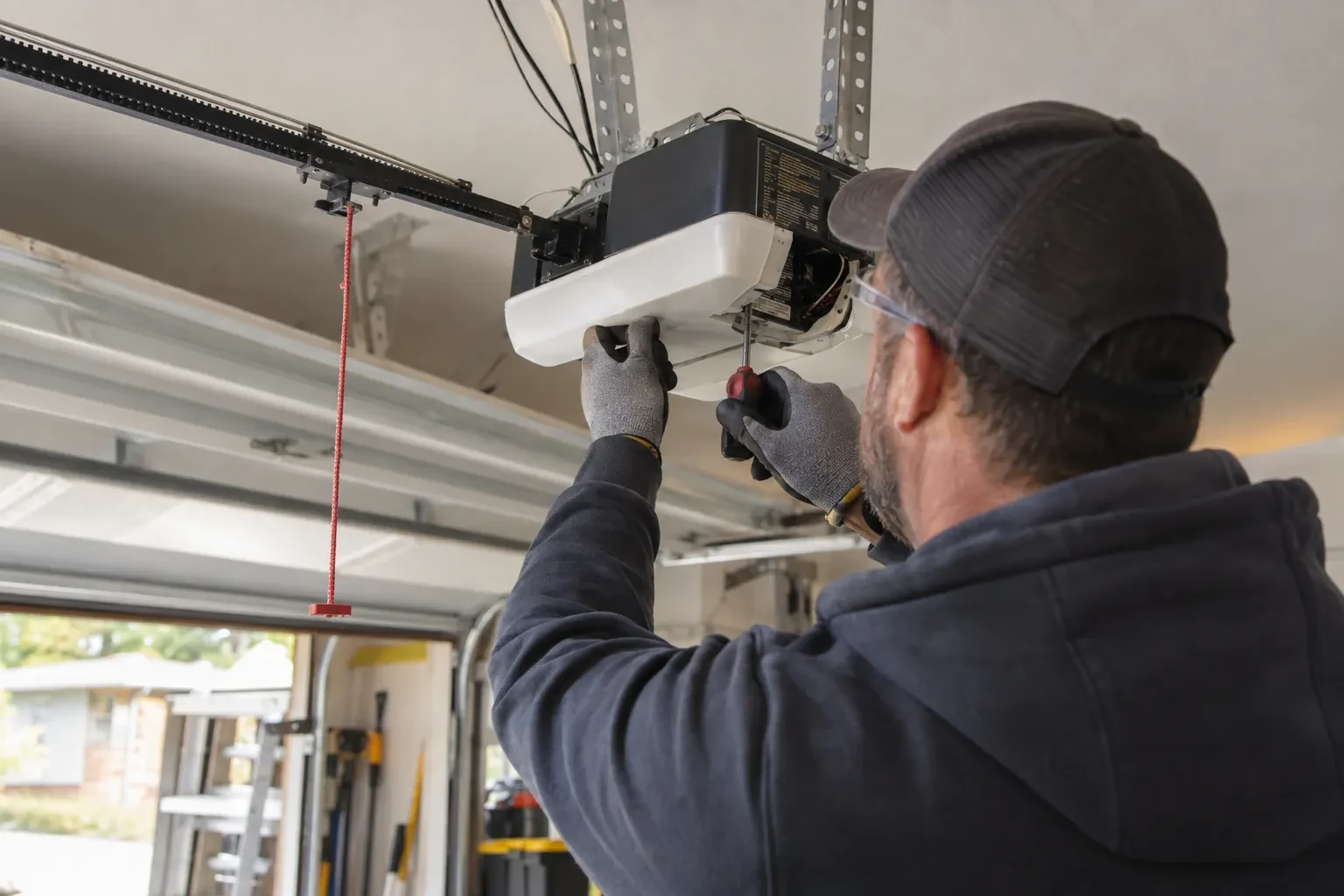
Press the button and the motor hums, but the door stays exactly where it is. Under the housing there is a dusting of white plastic shavings, the sign of a stripped drive gear, and this is the second time it has happened.
It is February. You come down in the morning and the garage door has stood open all night; the car is frosted inside, the furnace has run without a pause, and the pipe in the shared wall is your first worry.
It is the coldest morning of the year. A week of slush and road salt has crusted over the outside release lock, the key will not seat, and the opener inside is silent after the overnight outage.
Which fix fits?
On bright afternoons the door goes down a metre, stops, and climbs back up while the light on the opener blinks.
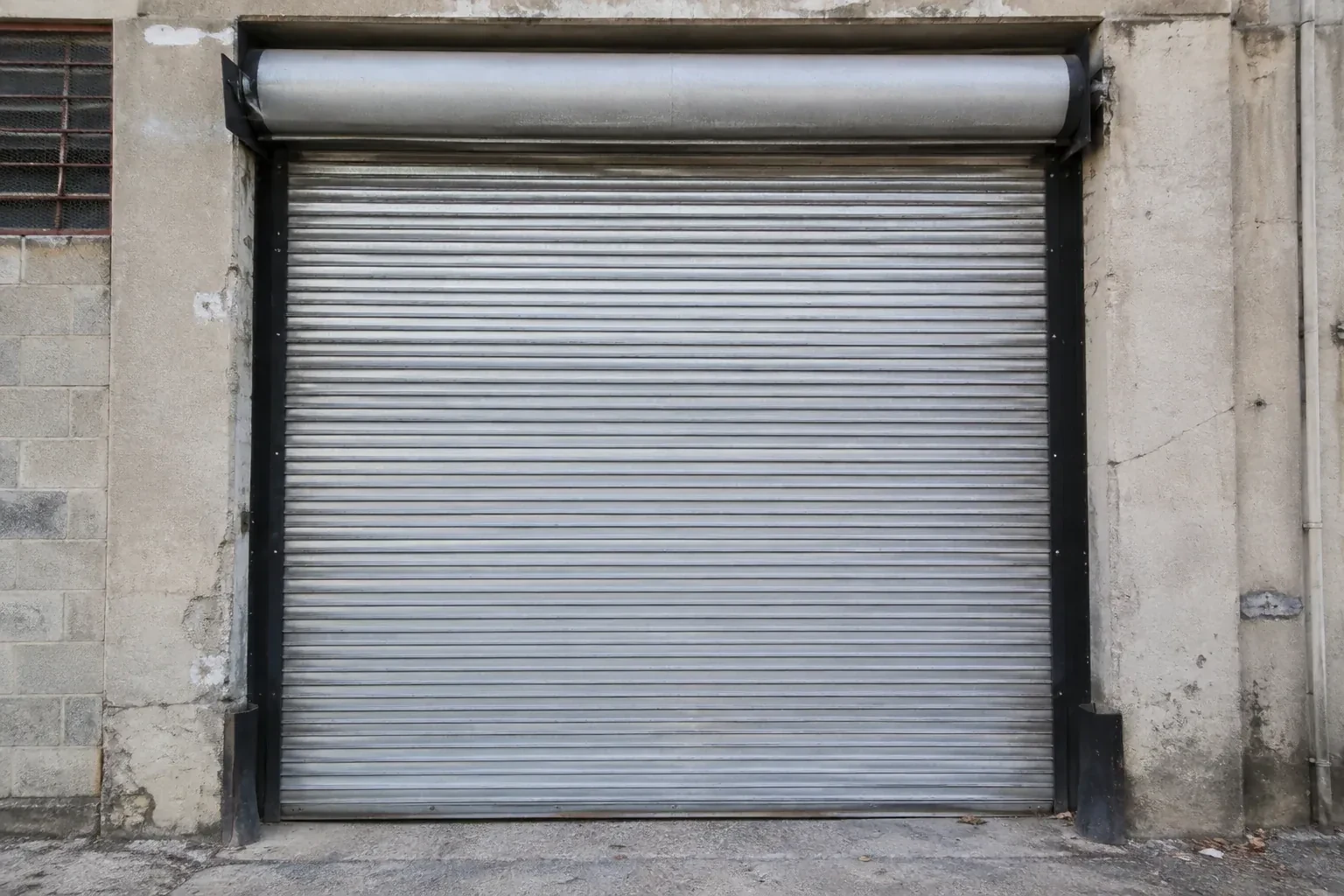
WhyPowered rolling doors add controls and protective devices to the mechanical assembly.
How a visit goes
Describe the property, the hardware and what has changed, and the visit starts from what you have seen.
01
Booking made simple
One call sets the visit. We ask for the door type, the opener if you know it, and whether the door is currently stuck open or shut.
02
A careful look
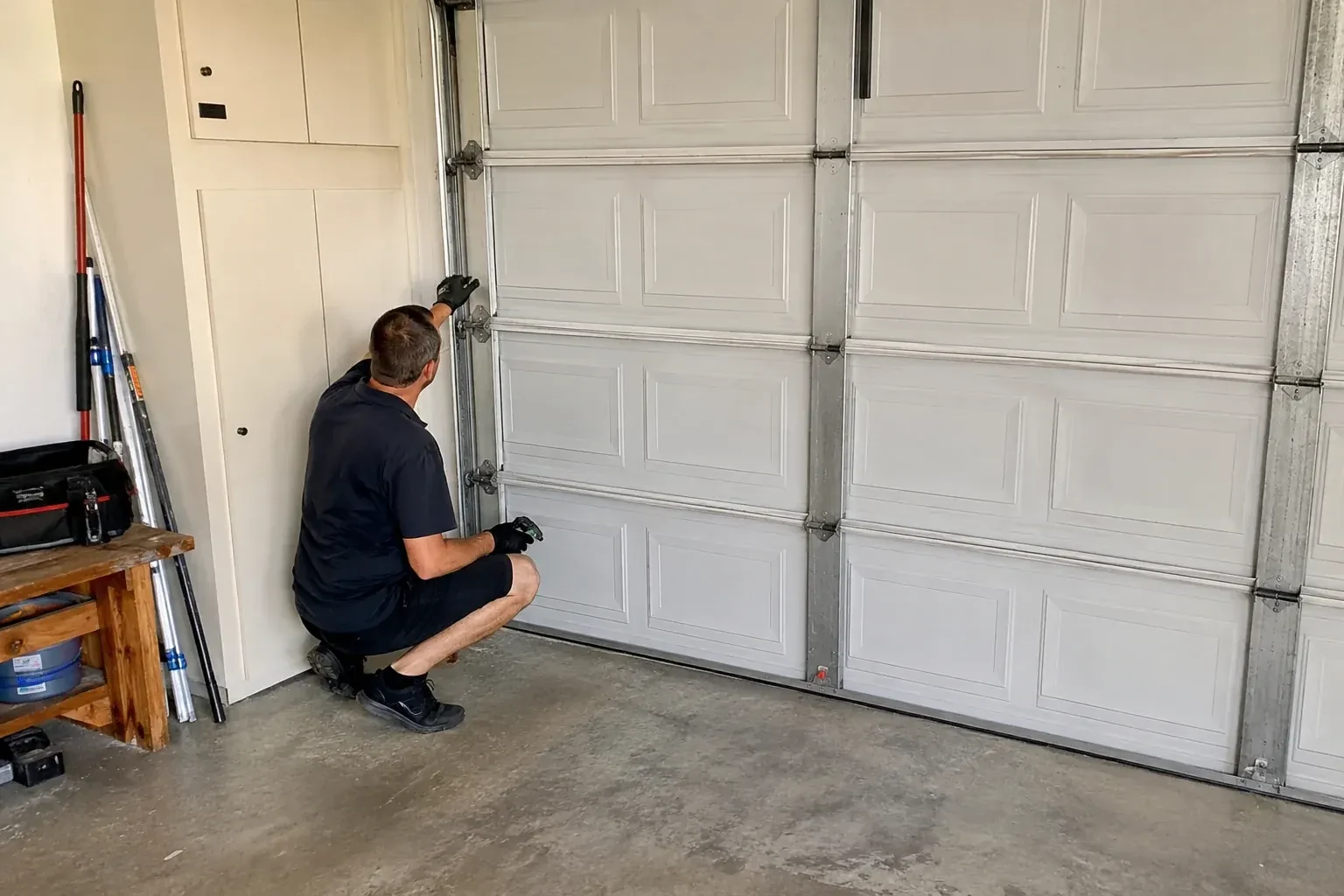
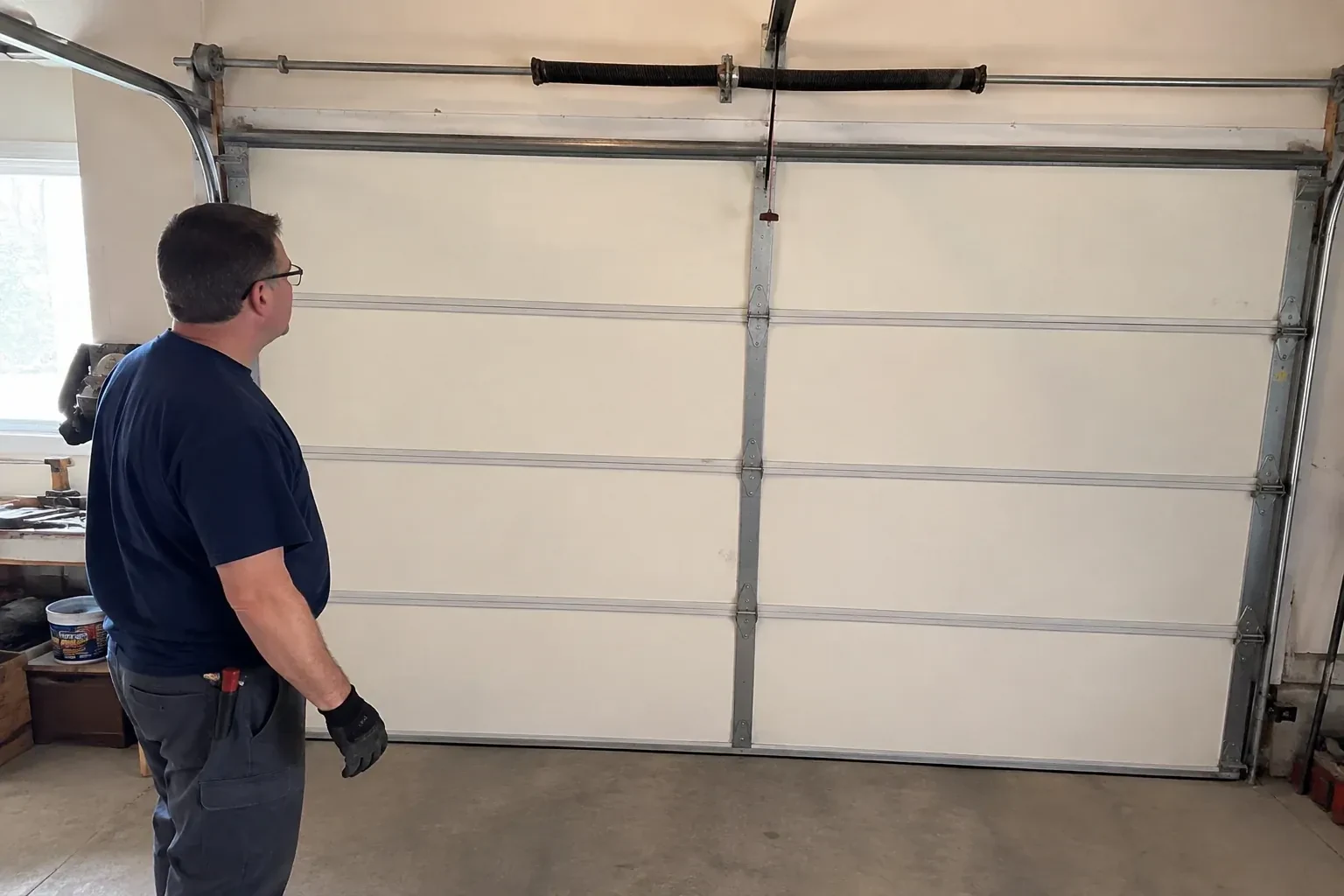
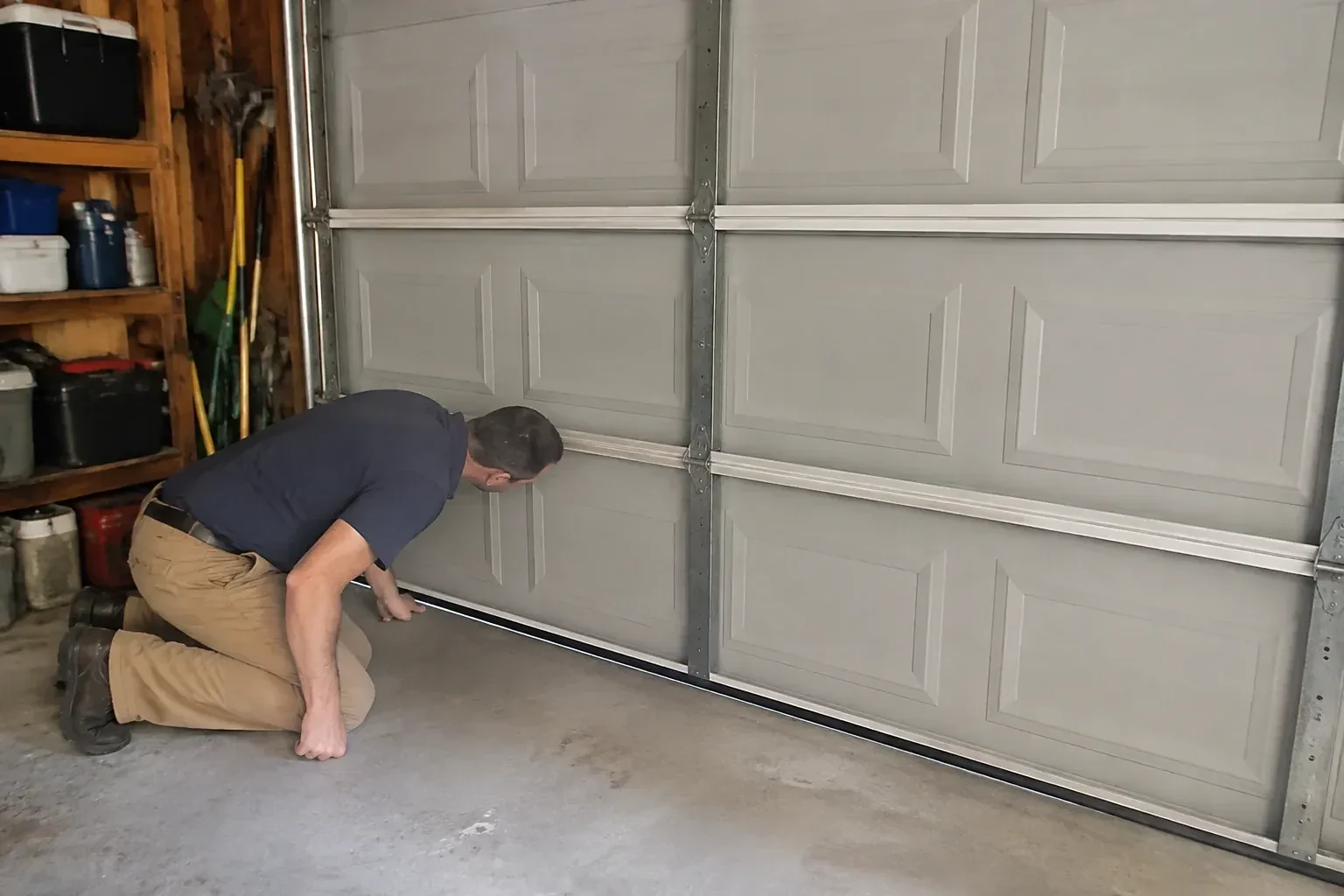
Every visit opens with a full check: balance, spring condition, cable wear, roller state, track alignment and sensor response.
03
Clear choices, careful work
We lay out the options in plain terms, do what you choose with the right tools, and run the door until we are satisfied it is right.
An entrance. Not an afterthought.
1/10Garage Door Safety Inspection
On bright afternoons the door goes down a metre, stops, and climbs back up while the light on the opener blinks. After dark it closes perfectly. Nothing has changed except the weather.
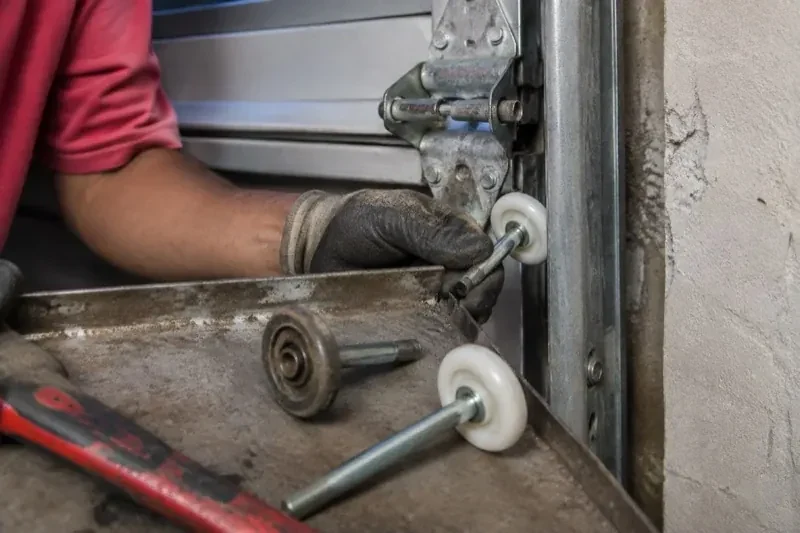
On the old wood door, one hinge has pulled away from the panel, dragging a screw and a chunk of soft timber with it. The panel sags slightly at that joint and the door bumps at the curve instead of gliding.
The car bumper kissed the door on the way in. The bottom panel has a dent, the bracket in that corner sits crooked, and the cable on that side has jumped and gone slack, so the door reverses every time it tries to close.
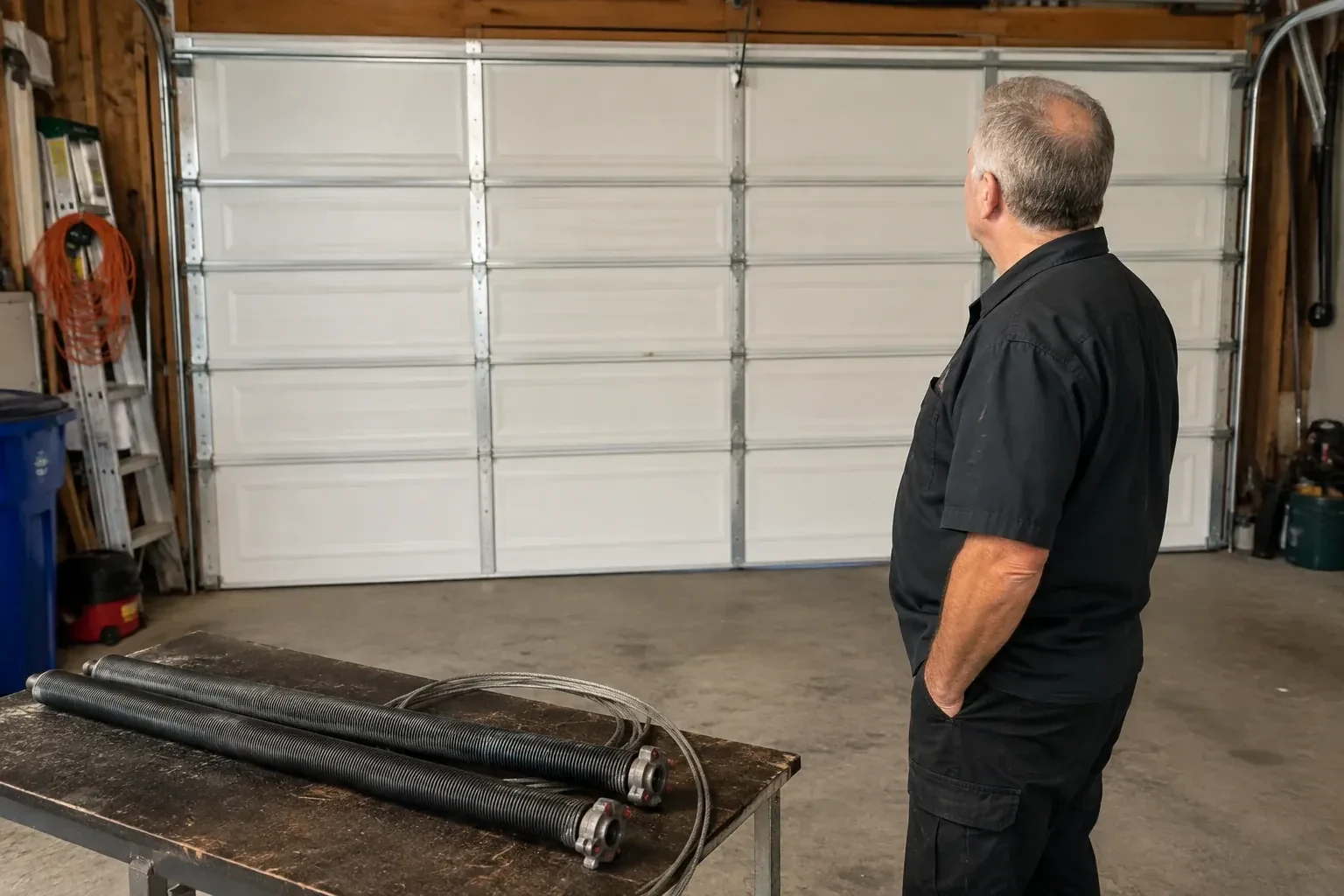
Looking up at the coil above the door, you can see a clean split with a gap of several centimetres between the two halves. The rest of the spring looks fine, but the door has become almost impossible to move by hand.
The motor runs, the chain rattles along the rail, and the door does not move a millimetre. You notice the little carriage sliding back and forth on its own. Last week the power was out and someone pulled the red cord to get the car out.
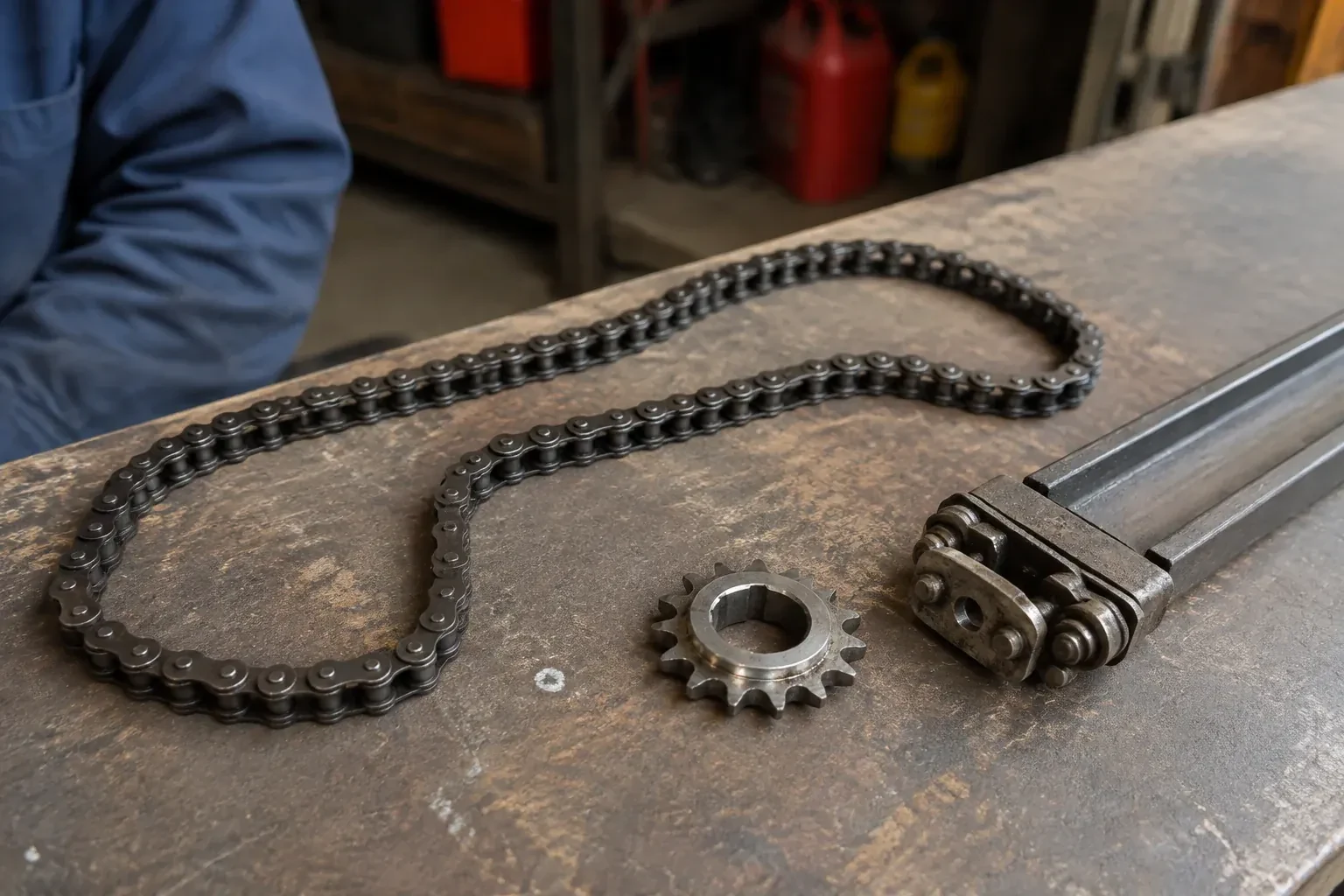
The chain hangs in a loop under the rail and slaps against it on every cycle. It used to sit snug. Now the whole house hears the door leave, and the sound has a metallic clatter it never had before.
The garage becomes notably colder each winter, with drafts around the perimeter and condensation on thin door sections. You want a replacement selected for better sealing and insulation as part of a more comfortable space.
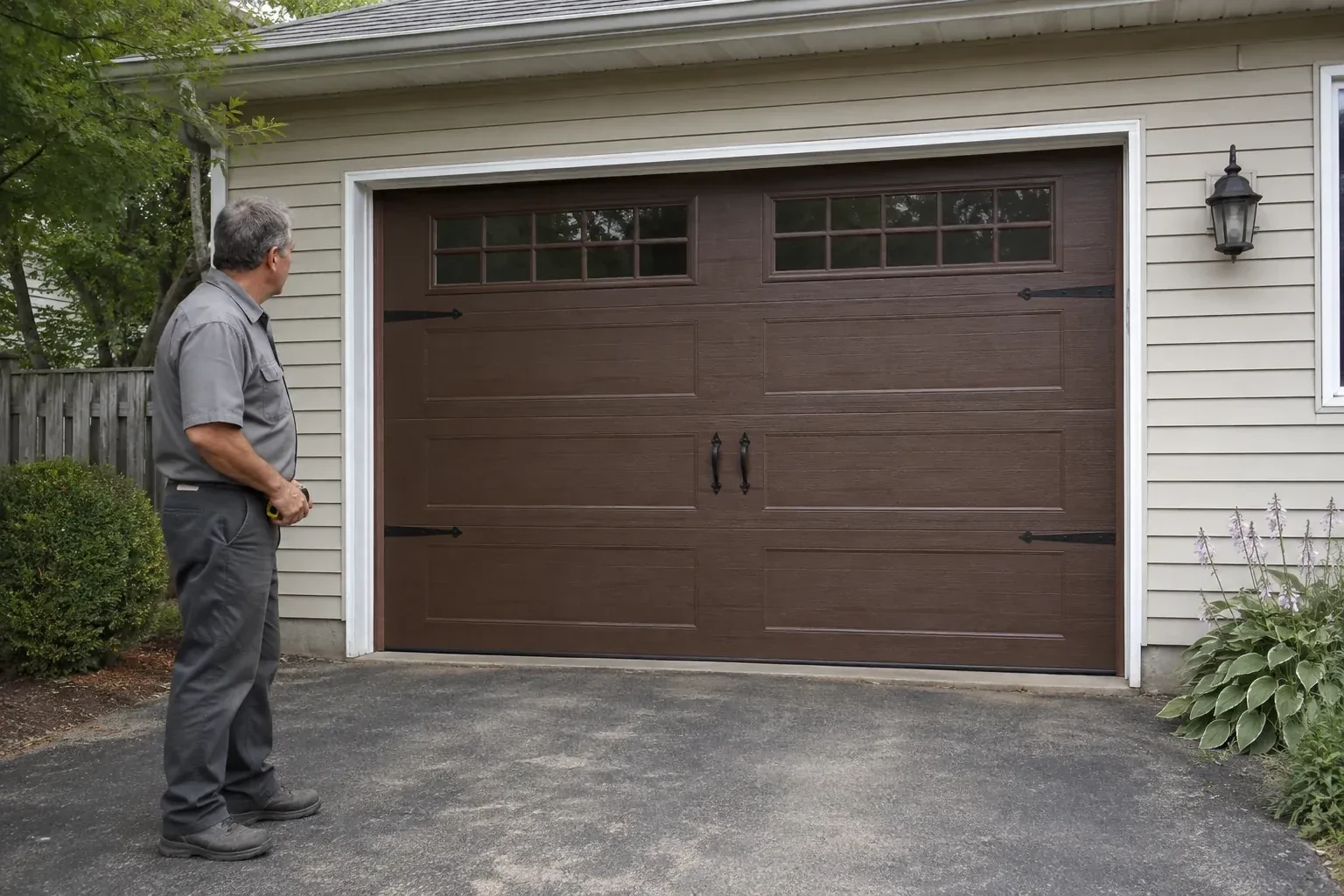
The garage feels dim whenever the overhead door is closed. You want a row of well-positioned windows that introduces daylight, protects privacy and fits naturally into a carriage-inspired panel layout.
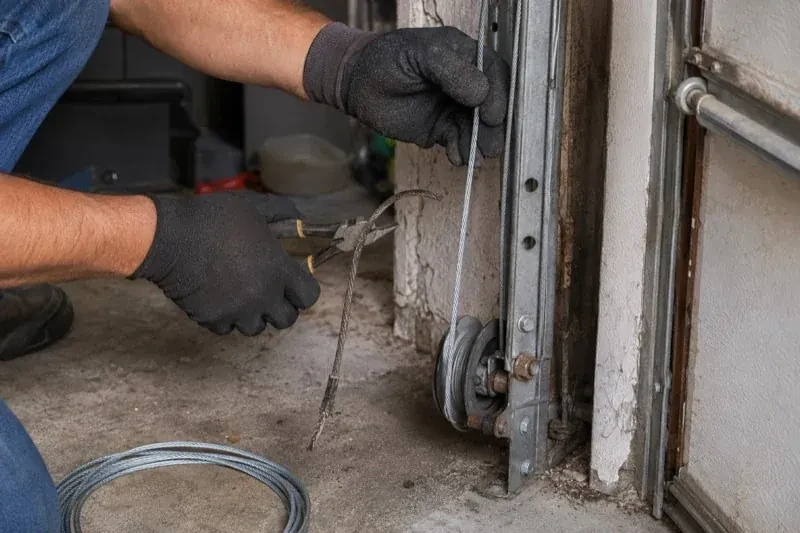
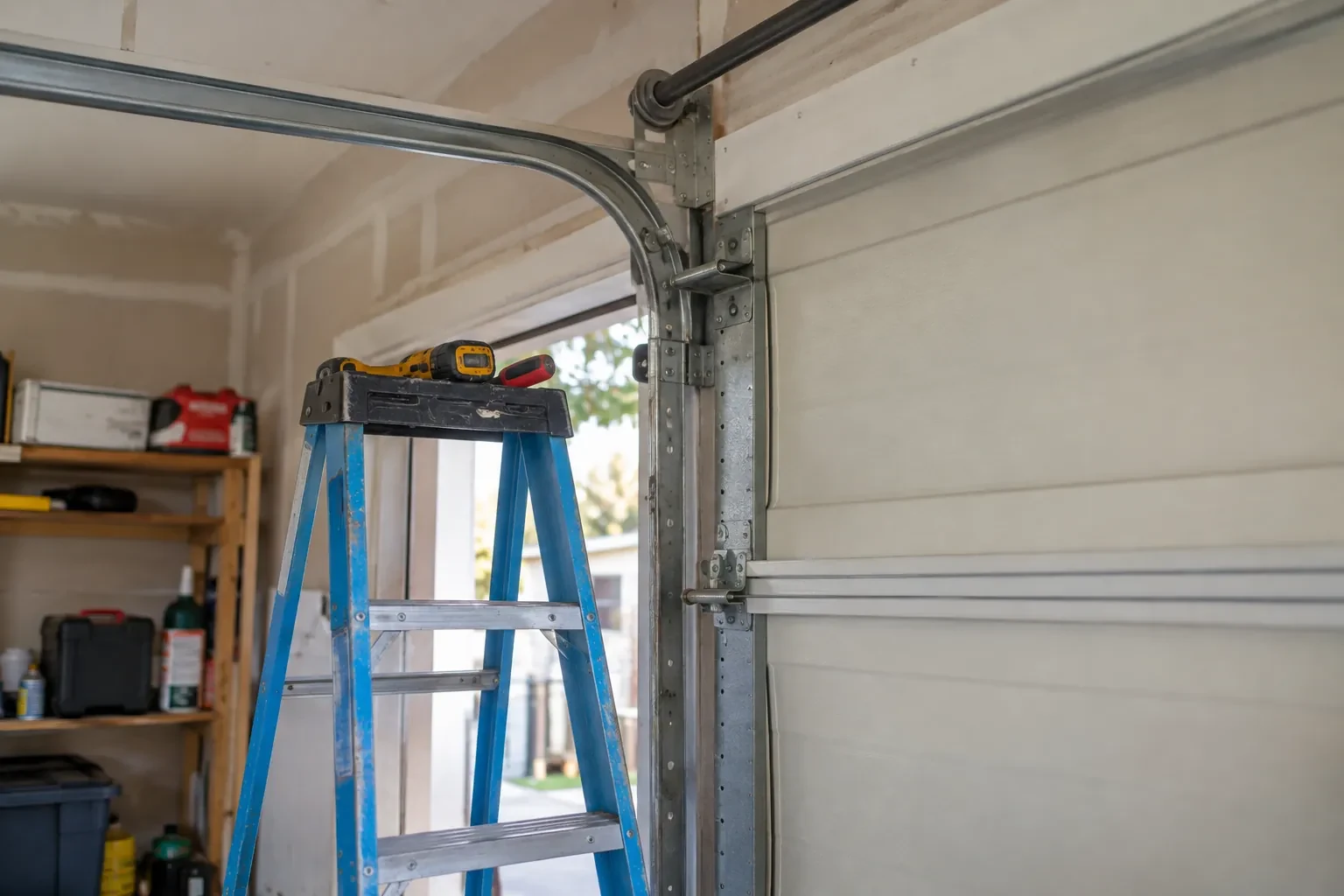
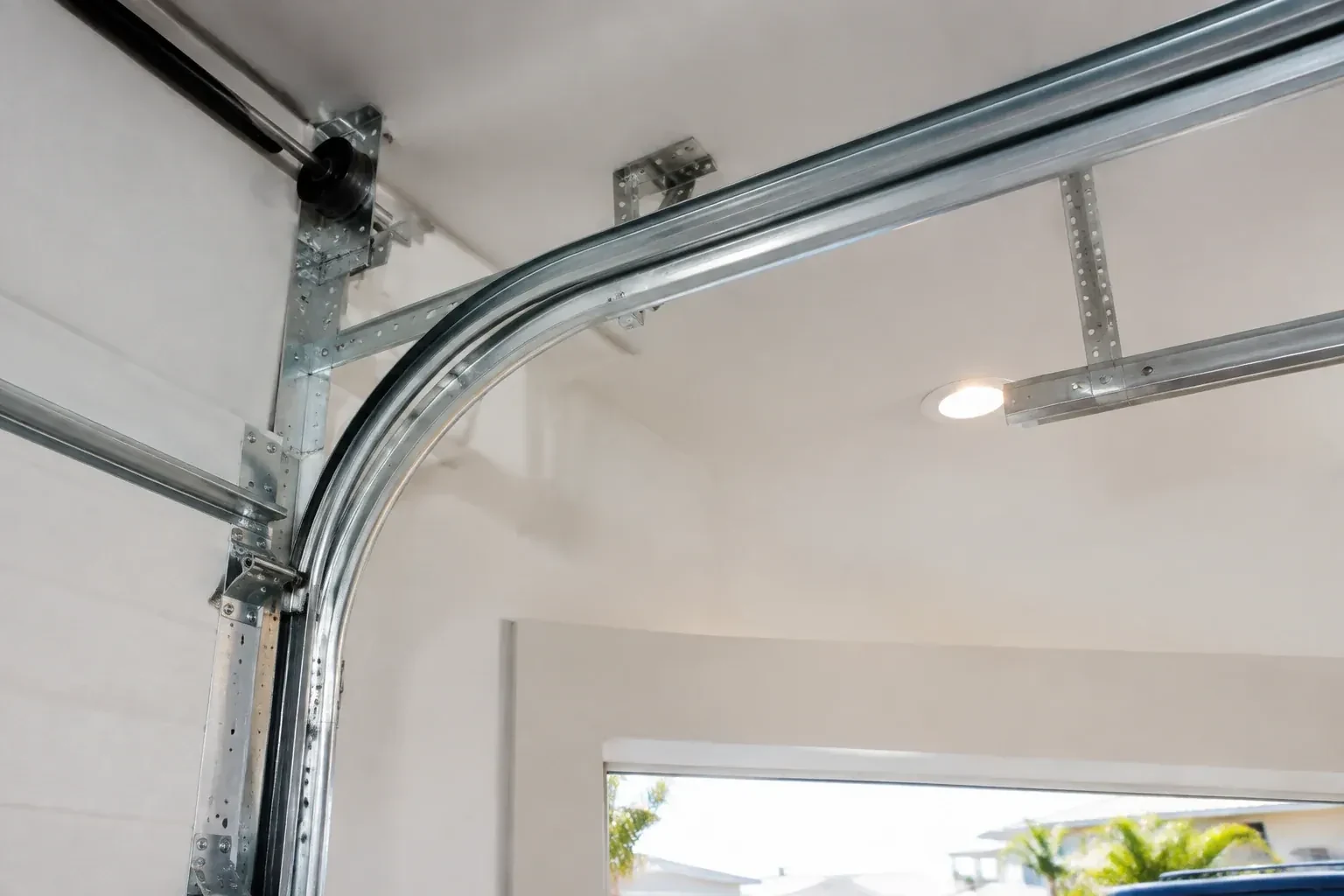
A high-lift door begins smoothly, then a cable loses tension as the top sections change direction. The loose cable no longer follows its drum grooves evenly, leaving the door unreliable at the top of travel.
The hand chain takes far more effort than it did last month. The curtain feels heavy from the first pull, pauses around mid-travel, and settles downward instead of holding a steady position.
Move the car out if you can and clear a metre or so in front of the door and along both tracks so the technician can reach the hinges and brackets. Find the door and opener manuals and any earlier repair paperwork. Have every remote and the keypad code to hand. If something has changed lately, be ready to say when and what you noticed first. If the door looks wrong, leave it where it is.
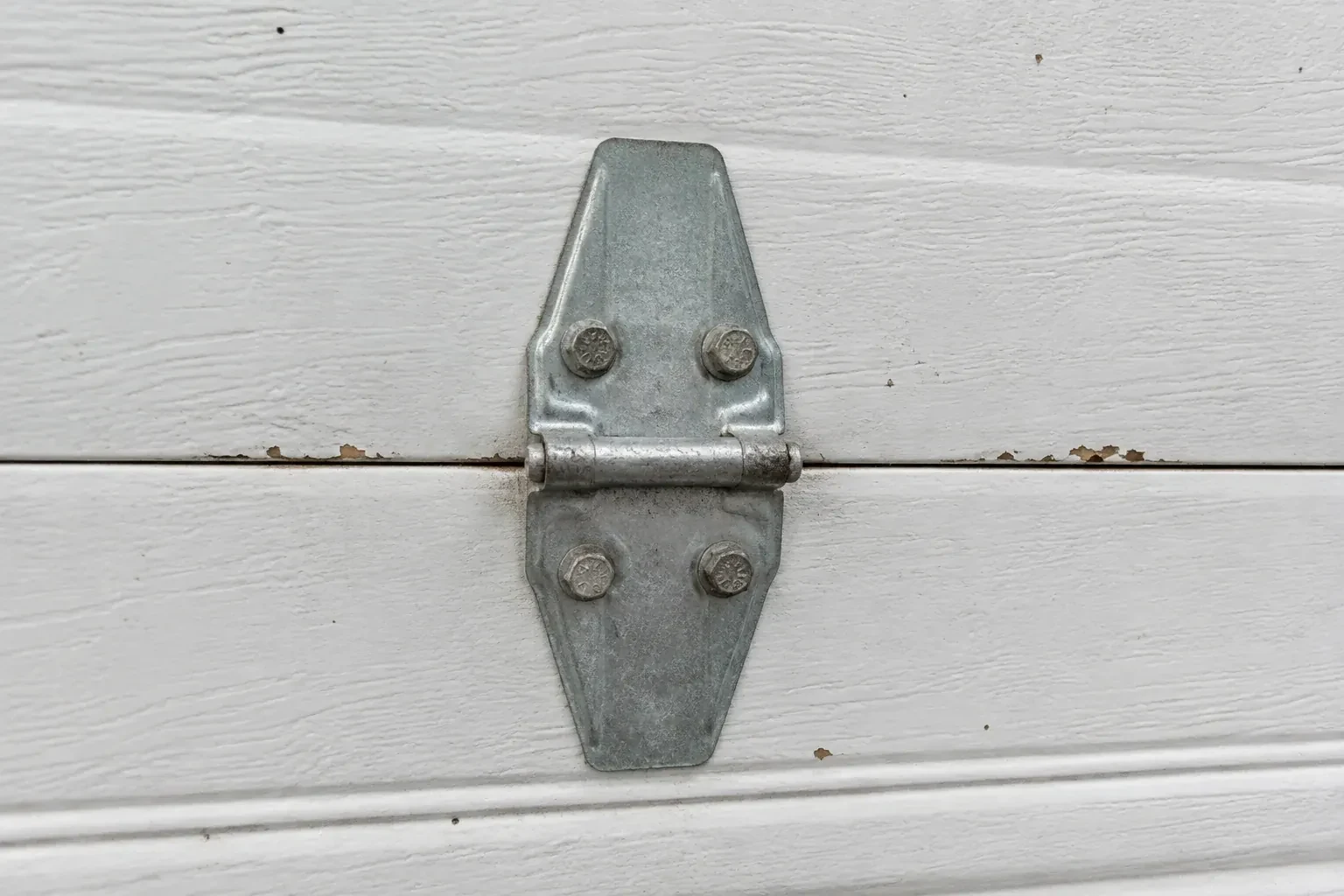
What are the hinges made of?
Stamped galvanized steel, formed into two leaves joined by a pin or a rolled tube. The zinc coating is what resists rust in a garage that sees wet cars and salt, and it is why a scratched or bent hinge starts to brown at the damaged spot. Edge hinges include a tube that holds the roller stem. Thickness is given as a gauge, most residential hinges being 14 or 18.
What stops the door from falling if a cable lets go?
It depends, and not reliably. The other cable and its spring may hold that corner so the door tips and wedges in the track rather than falling square, and the rollers binding can add some resistance, but neither is dependable: the door can still drop unexpectedly on the failed side. Some doors also carry a broken-cable device on the bottom bracket that grips the track if a cable fails. Because the door may not be held at all, the technician clamps and supports it before doing anything else.
What about a garage with very little space above the door?
Low-headroom garages use a different arrangement: the spring assembly may be mounted at the rear of the horizontal tracks, or special low-headroom drums and track bring the door up with less clearance. Replacement follows the same principles, but the drums, cable routing and turn count differ. The technician identifies the system on arrival and brings hardware that suits it, so the door balances correctly in the space available.
How do you tell whether it is the opener or the door?
By separating them. With the door closed, the emergency release is pulled so the opener is out of the picture, and the door is lifted by hand. A balanced door rises without strain, hangs where you leave it around waist height and stays open at the top. If it does, the opener is at fault. If it is heavy, drifts or binds, the door is the cause and the opener was only reporting the strain. This one check prevents a great many wrong repairs.
Why does the door open only partway and stop?
Three causes account for most cases. The up travel limit has drifted short and needs turning out. The door has become heavy or stiff somewhere in its travel, so the operator senses resistance and stops, which points to the springs, rollers or track. Or the chain has slipped out of phase with the motor, in which case the limit screws have no effect and the chain must be re-set on the sprocket with the trolley at the closed position.
What maintenance can I do myself?
Keep the door path and seal contact areas clean, visually observe cables and rollers from a safe position, and use designated handles for occasional manual checks. Test operator safety functions as its instructions describe. Adjustments to springs, cables or bottom fixtures remain technician work because those components carry the counterbalance forces.
Are the decorative handles and strap hinges functional?
On most sectional carriage designs, they are visual accents rather than working swing-door hinges. Their placement still requires care. They must attach where the section construction permits, align evenly across the face and clear trim and joints throughout travel. Some handles can also provide a suitable gripping point for manual movement when their product instructions identify that use.
Can one damaged section be replaced on its own?
Often it can, provided a compatible section is available and the surrounding panels, end stiles and hardware remain serviceable. Matching involves more than width and height: thickness, profile, insulation, joint shape, reinforcement and hinge pattern all matter. The technician also checks whether the impact shifted track or mounting points before deciding that a single-section repair is the right scope.
How can repeated vehicle damage be reduced?
Start with the impact pattern and traffic route. Guide guards, bollards, visible floor markings, mirrors, revised staging, vehicle-detection accessories or a different control position may help, depending on the site. Operators should report contact before more cycles spread a guide or curtain defect. Any protective addition must preserve required clearances and door operation.
Request a visit
For homeowners in Toronto, the visit begins with questions rather than tools: when did the door change, what does it sound like, does the wall button behave differently from the remote? Those answers point the technician to the right part, and the assessment that follows confirms it before any price is discussed.