Springs · Toronto
Garage Door Cable Replacement in Toronto
There was a sharp crack from the garage, and when you went to look the door had dropped on one side and jammed.
In plain words
What you get back is a door that behaves as it did when it was new. Both corners rise and fall together, the bottom seal meets the floor along its whole length, and the opener runs without straining or reversing. Because the cables were set to the same length and the springs re-tensioned to match, the door can be lifted by hand with light effort and will hold steady halfway up. You also leave with a note of the cable specification, drum type and spring turns, which makes any future service simpler, and a few habits that keep the new cables in good shape.
How the visit goesThe car bumper kissed the door on the way in. The bottom panel has a dent, the bracket in that corner sits crooked, and the cable on that side has jumped and gone slack, so the door reverses every time it tries to close.
Garage Door Cable Replacement
How the visit goes
The drums and their set screws
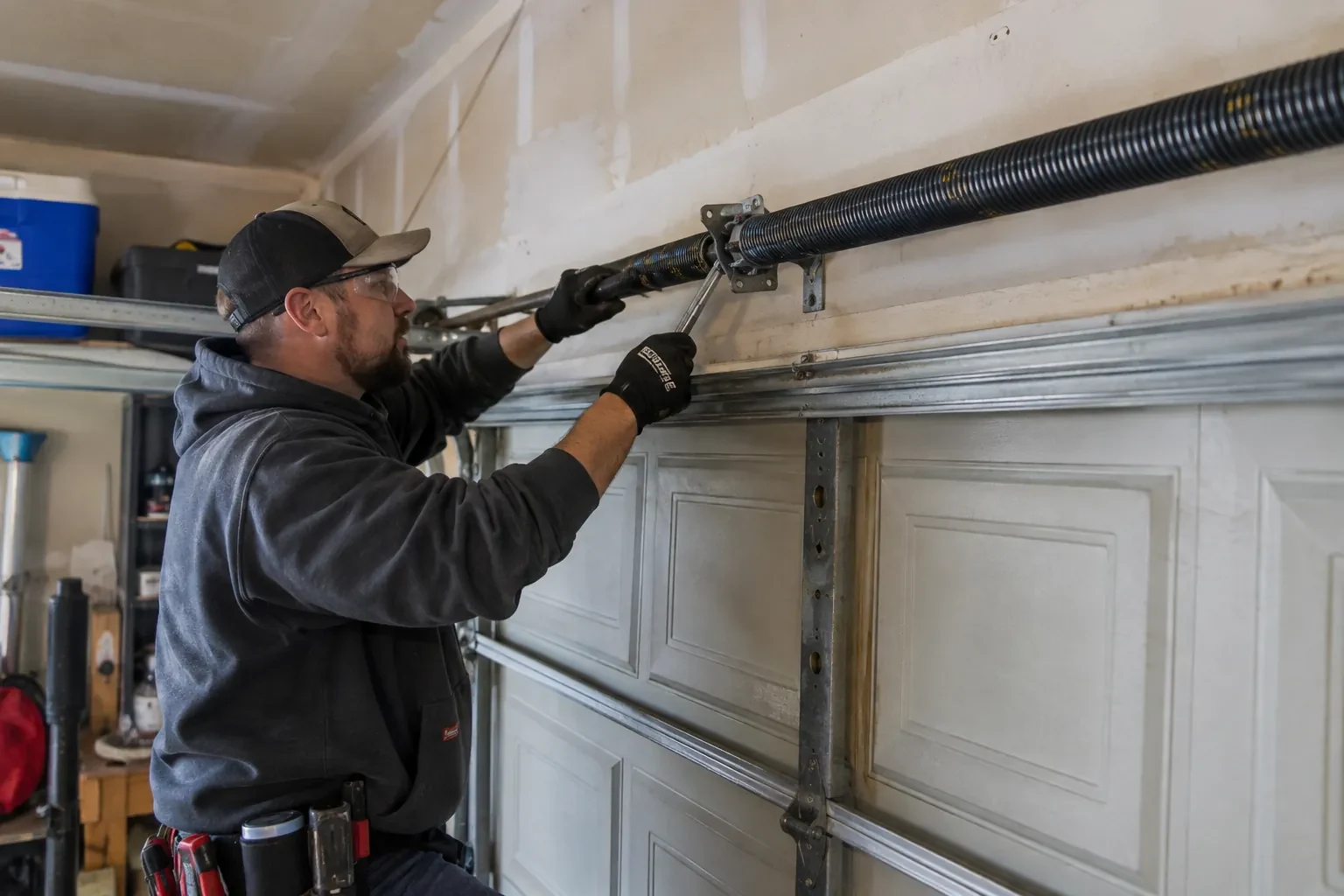
On a torsion door the cable drum is where most trouble starts or shows. The technician checks that each drum is tight on the shaft and that its set screws have not loosened and let it creep, which shortens the effective cable on that side. The groove is inspected for wear ridges, cracks and burrs that would chew through a new cable, and the slot that holds the cable stop is checked for damage. Where the old cable jumped its groove, the drum is examined for the mark it left and for whether the drum or an obstruction under the door was the cause. A worn drum is replaced with its mate.
Removing the old cables
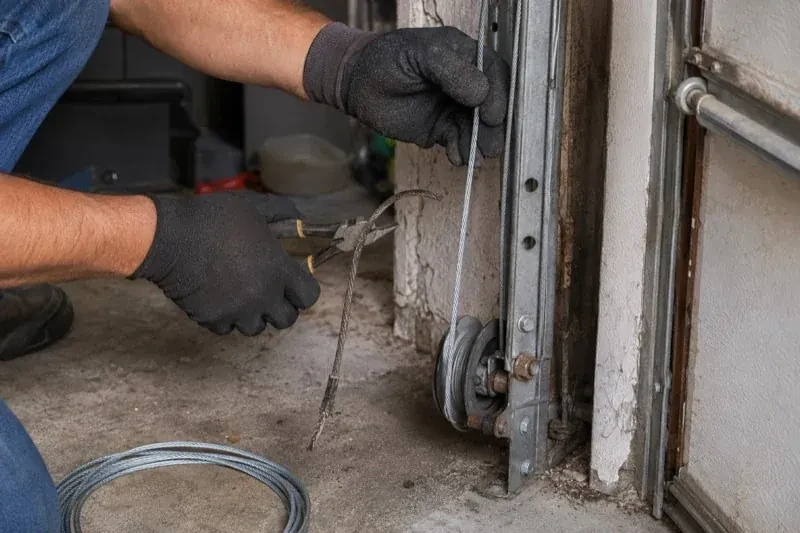
Each drum's set screws are backed off so the drum spins freely on the shaft, and the old cable is unwound from its groove and the stop slipped out of its slot. At the floor, the loop is lifted off the bottom bracket pin, or the clevis pin and cotter pin are withdrawn where the door uses them. The old cable is kept for a moment to measure against its replacement and to show you the wear that caused the call. On an extension door the cable comes off its pulleys and the adjusting clip at the track hanger. Both sides are stripped before anything new goes on.
The record of what was fitted
Before leaving, the technician tells you what went on the door: the cable length and diameter, whether the drums or bottom brackets were renewed, the type of lift hardware, and how many turns the springs carry. It is worth writing this inside the cover of the door manual or on a card taped near the opener, because the next technician, or the same one years from now, can then match parts without measuring everything from scratch. If the springs were left in place, their age and wire size go on the same note so the timing of their eventual replacement is easy to plan.
Garage Door Cable Replacement
In the van
Cable drums, matched pair
Drum set screws
Silicone garage-door lubricant
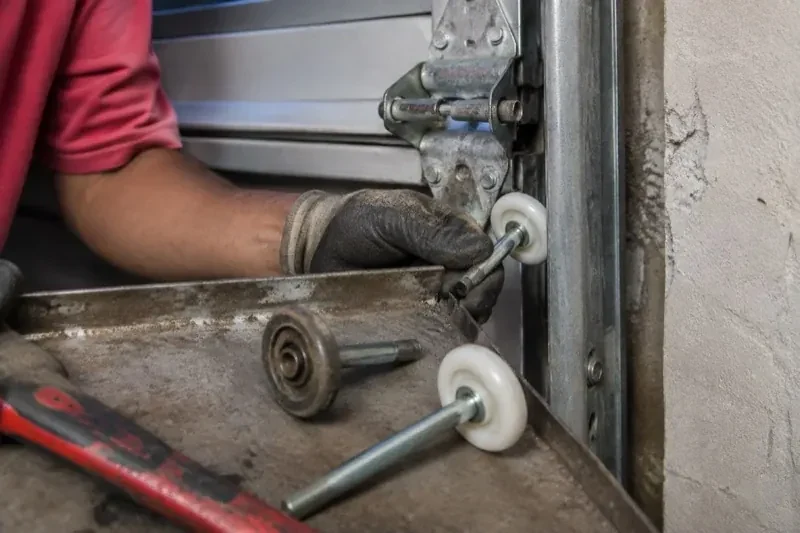
Bottom rollers and hinges
Extension-spring pulleys and sheave forks
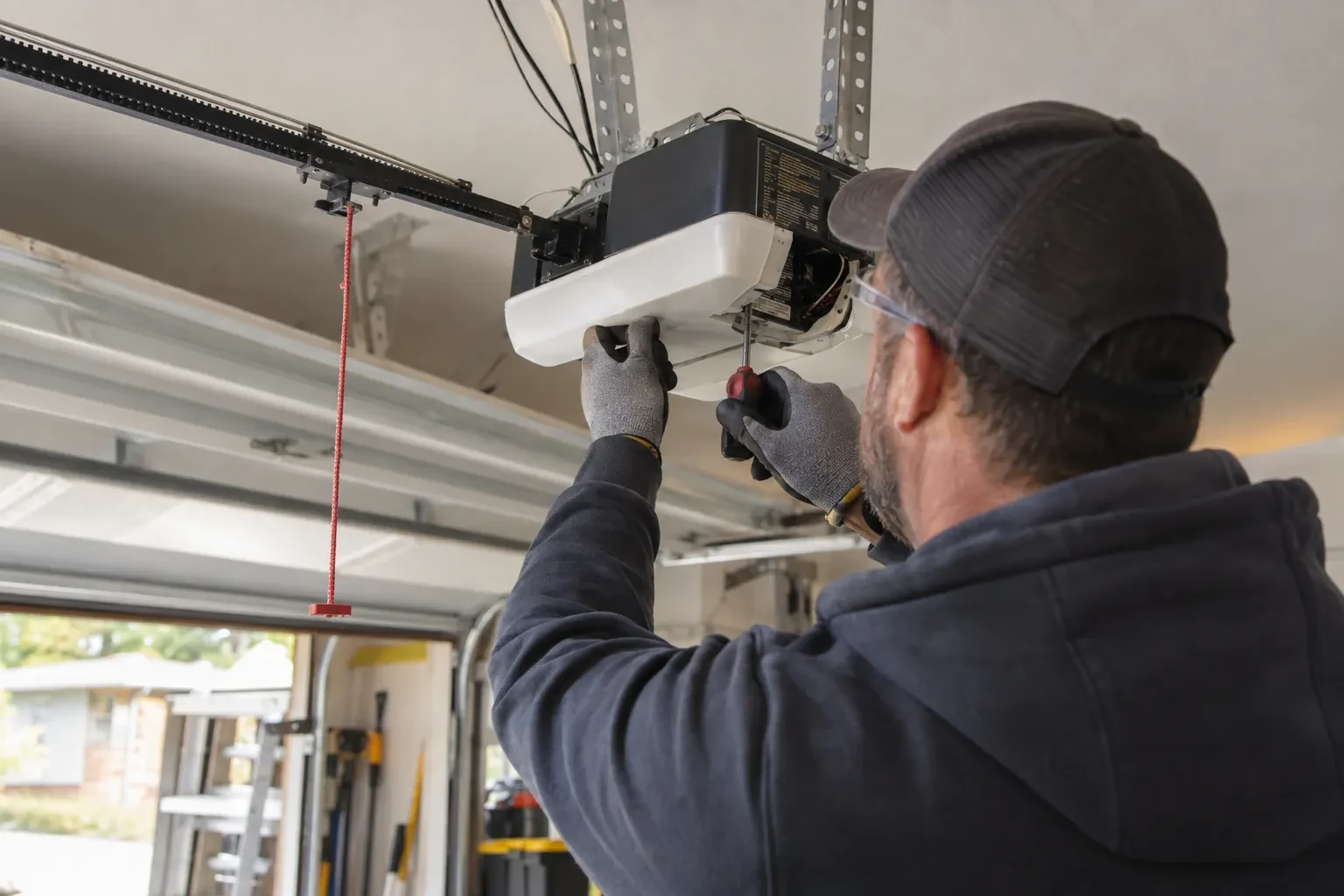
Garage Door Cable Replacement
What affects the quote
Access to the spring shaft
Shelving, storage or a low ceiling around the torsion shaft and drums slows the work. Clearing the area beforehand or a tighter working space both affect the time quoted.
Door weight and width
A heavy insulated double door needs a heavier cable and sometimes different drums than a light single, and the springs behind it take longer to wind down and back up.
Whether a matching part has to be special-ordered
Most drums, brackets and cable sizes are common stock, but an older or uncommon door sometimes needs a part matched to its exact dimensions. When that happens the technician identifies it on the first visit and arranges the part before the return trip.
What to have ready
- Did the door come down on something, or did a vehicle touch it?
- Is the door sitting level, or is one corner higher than the other?
- Can you see a cable hanging loose, frayed, or wound around the shaft?
Garage Door Cable Replacement: questions
QuestionsCan I lift the door by hand while a cable is off?
Leave it. With one cable slack the door is being carried on one side only, so it is unbalanced and may bind or drop unevenly when moved. The technician arrives with clamps and a method for taking the door's weight before anything is moved, and that is the moment to lift it. Until then a stationary door is exactly what you want.
What stops the door from falling if a cable lets go?
It depends, and not reliably. The other cable and its spring may hold that corner so the door tips and wedges in the track rather than falling square, and the rollers binding can add some resistance, but neither is dependable: the door can still drop unexpectedly on the failed side. Some doors also carry a broken-cable device on the bottom bracket that grips the track if a cable fails. Because the door may not be held at all, the technician clamps and supports it before doing anything else.
Should both cables be replaced when only one has failed?
Yes, as a rule. The two cables were fitted together, have flexed around their drums the same number of times and have sat in the same slush, so the survivor is close to the end of its life. A new cable beside a stretched one also makes it harder to set the door level. Two matched cables give an even lift and one visit instead of two.
Related services
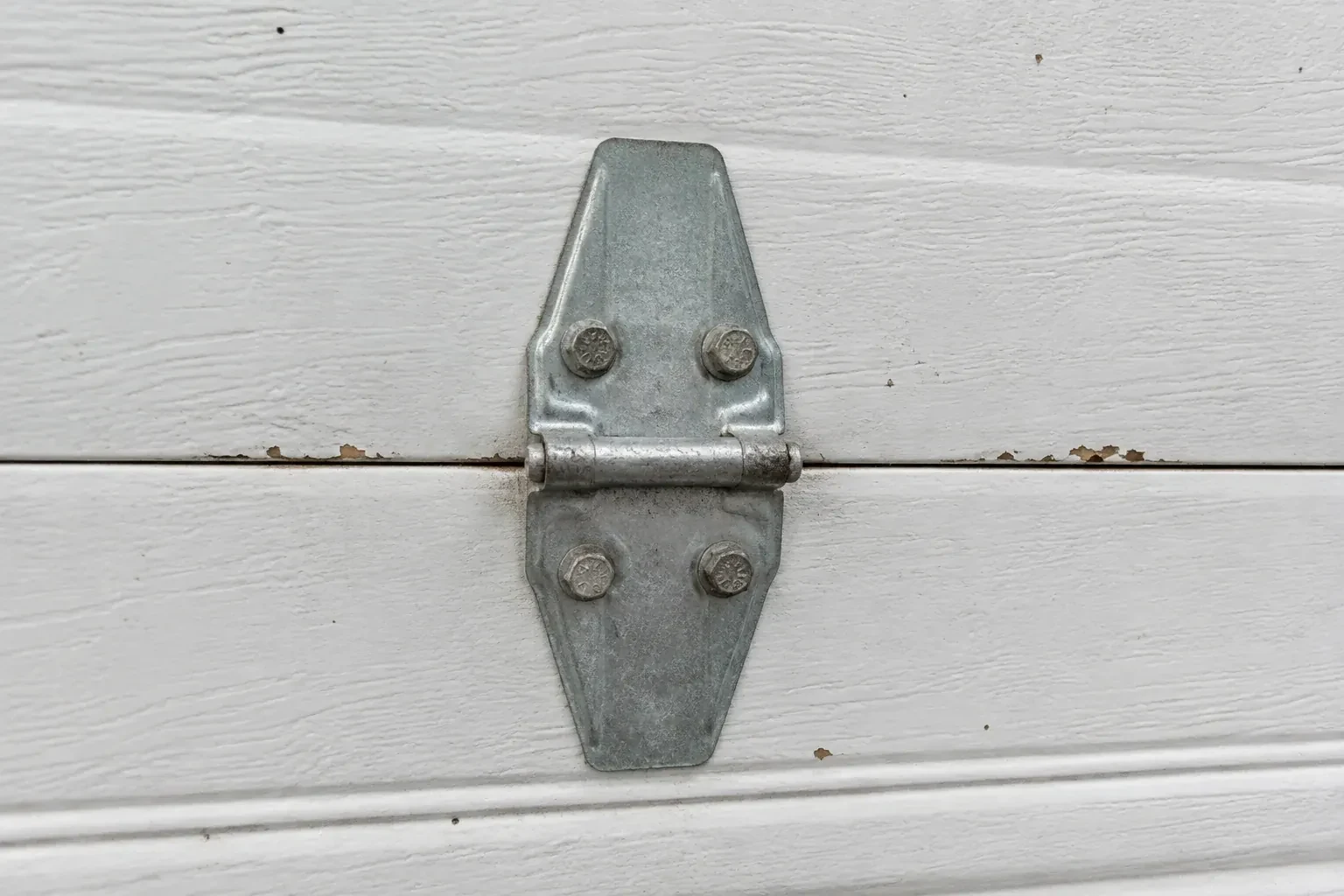
- Garage Door Hinge ReplacementOn the old wood door, one hinge has pulled away from the panel, dragging a screw and a chunk of soft timber with it.
- Garage Door Track Repair or ReplacementHalfway up, the door lurches and one roller rides onto the lip of the channel.
- Torsion Spring ReplacementYou heard a sharp bang from the garage, and now the opener hums for a second and gives up.