Garage Doors in The Annex, OntarioA frayed cableis a warning.
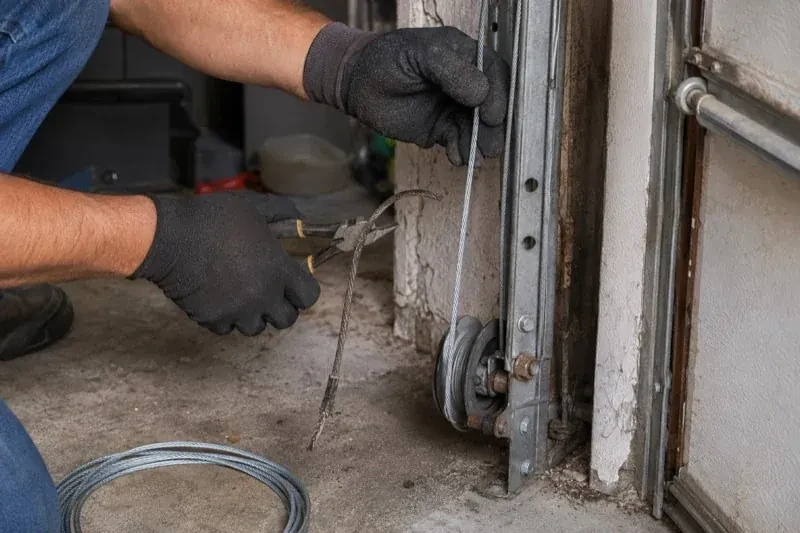
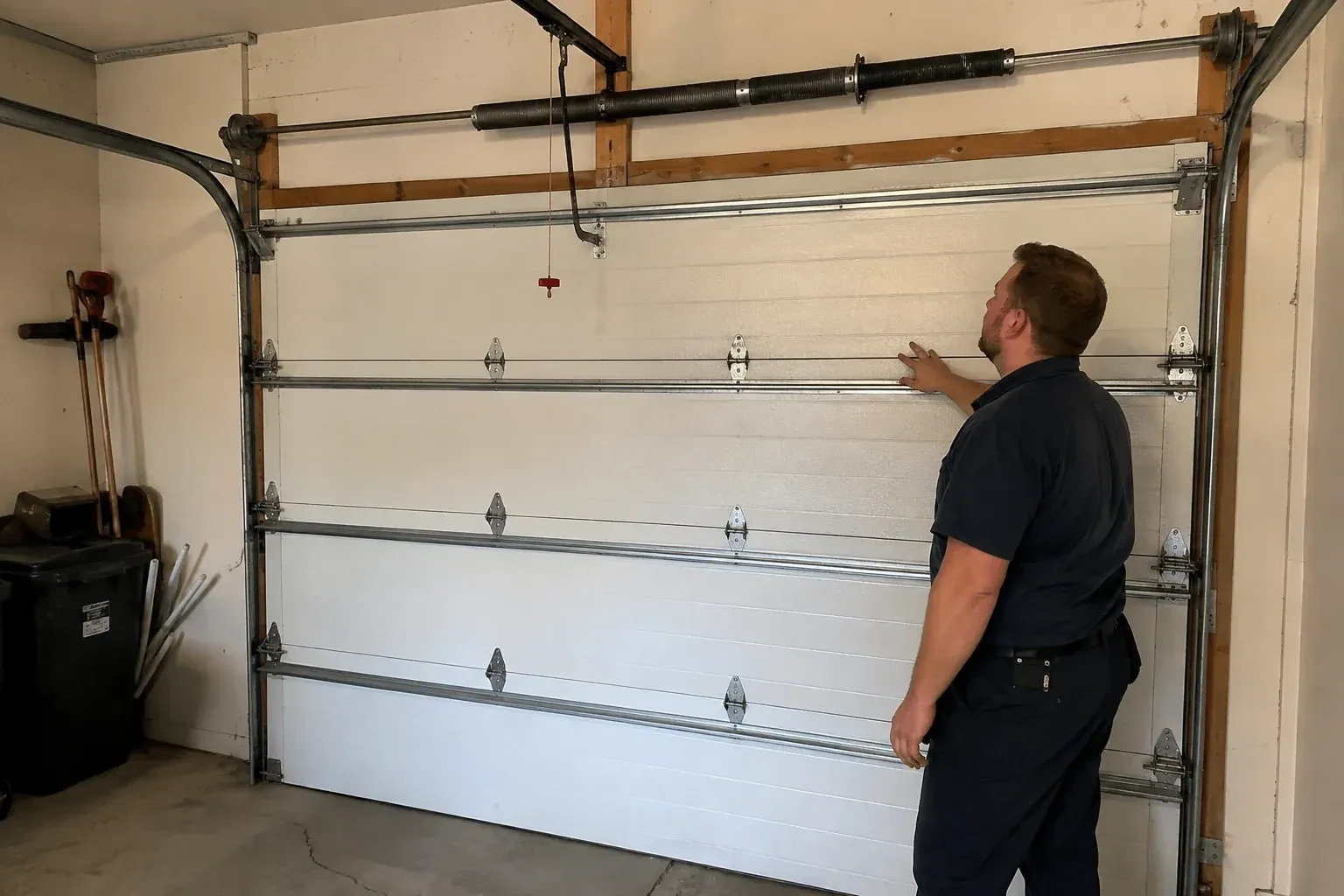
Lifting cables on a door in The Annex show their age as a few broken strands near the bottom bracket, long before they snap. We inspect them on every visit, replace both cables together with new bottom fixtures, and check the drums and bearings that wear alongside them so the door lifts evenly.
Lifting cables on a door in The Annex show their age as a few broken strands near the bottom bracket, long before they snap. We inspect them on every visit, replace both cables together with new bottom fixtures, and check the drums and bearings that wear alongside them so the door lifts evenly.
Balanced, quiet and ready for winter.
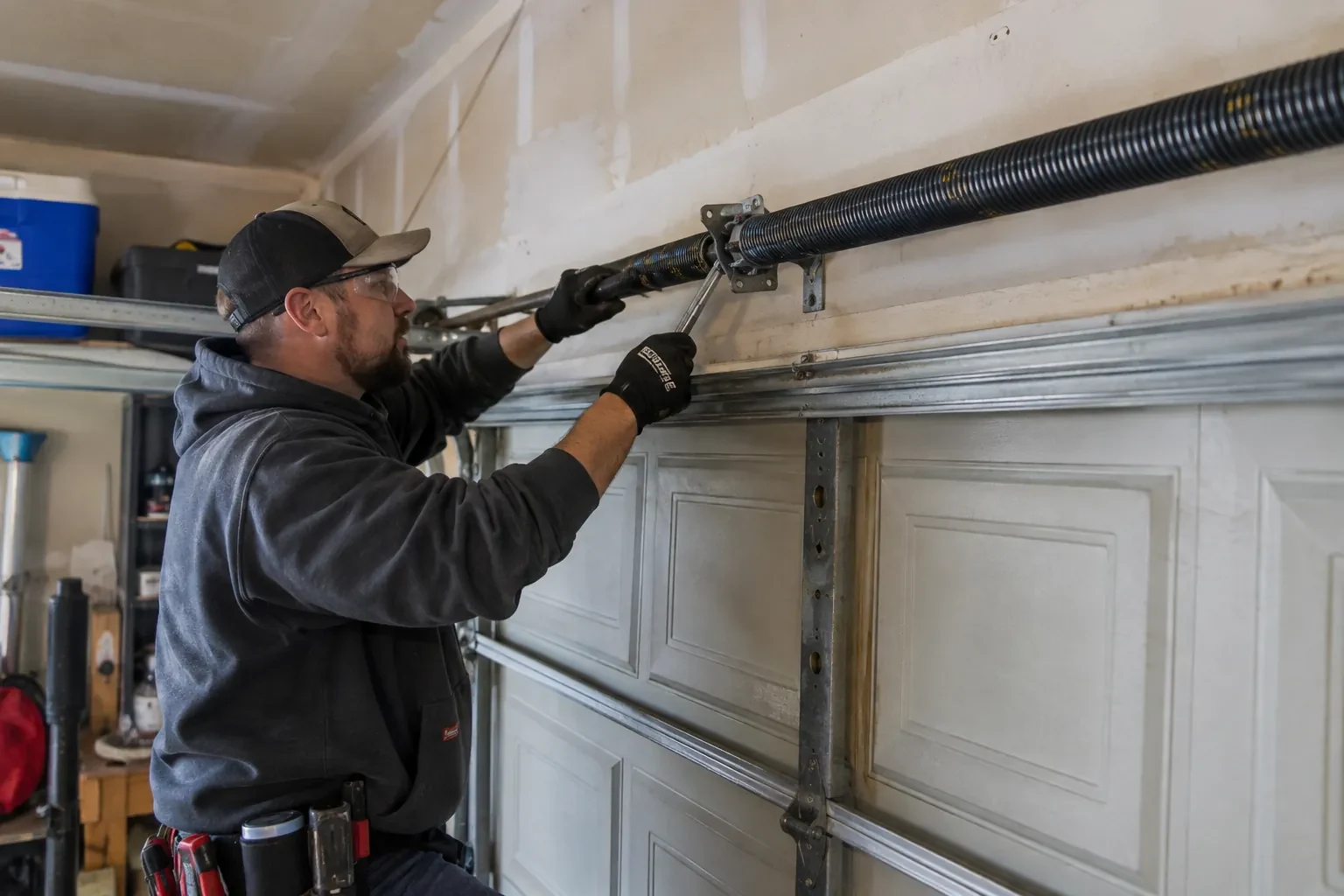
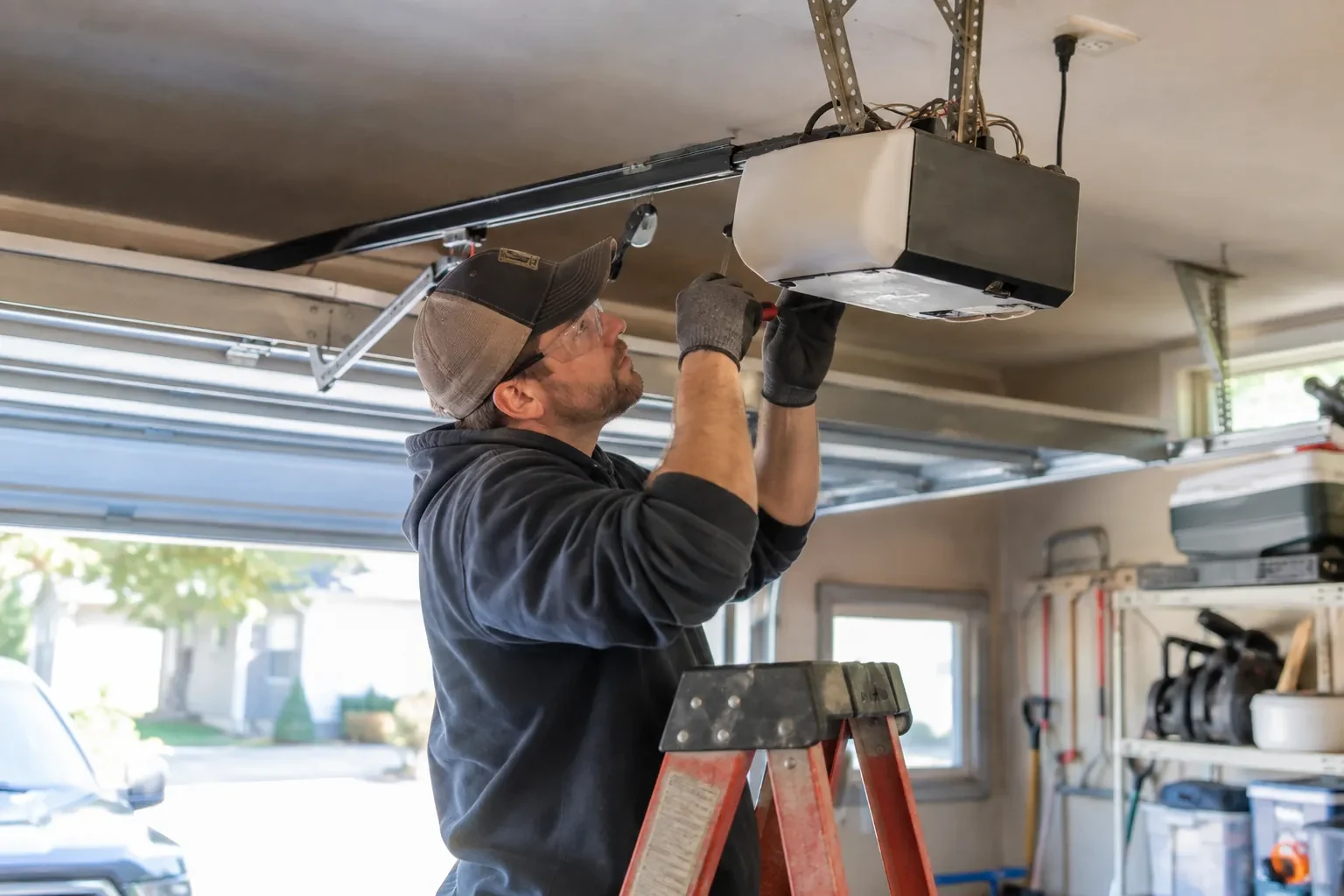
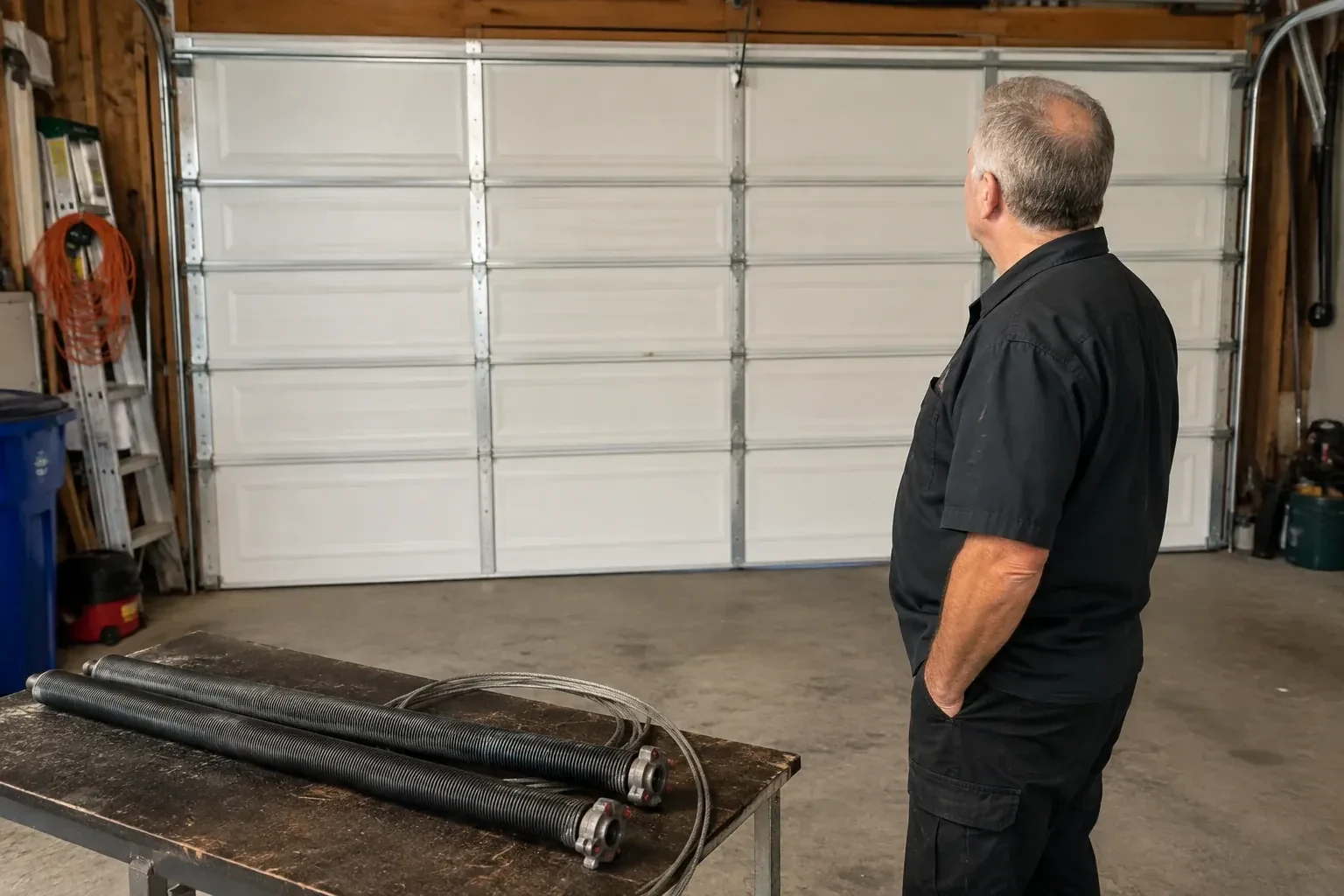
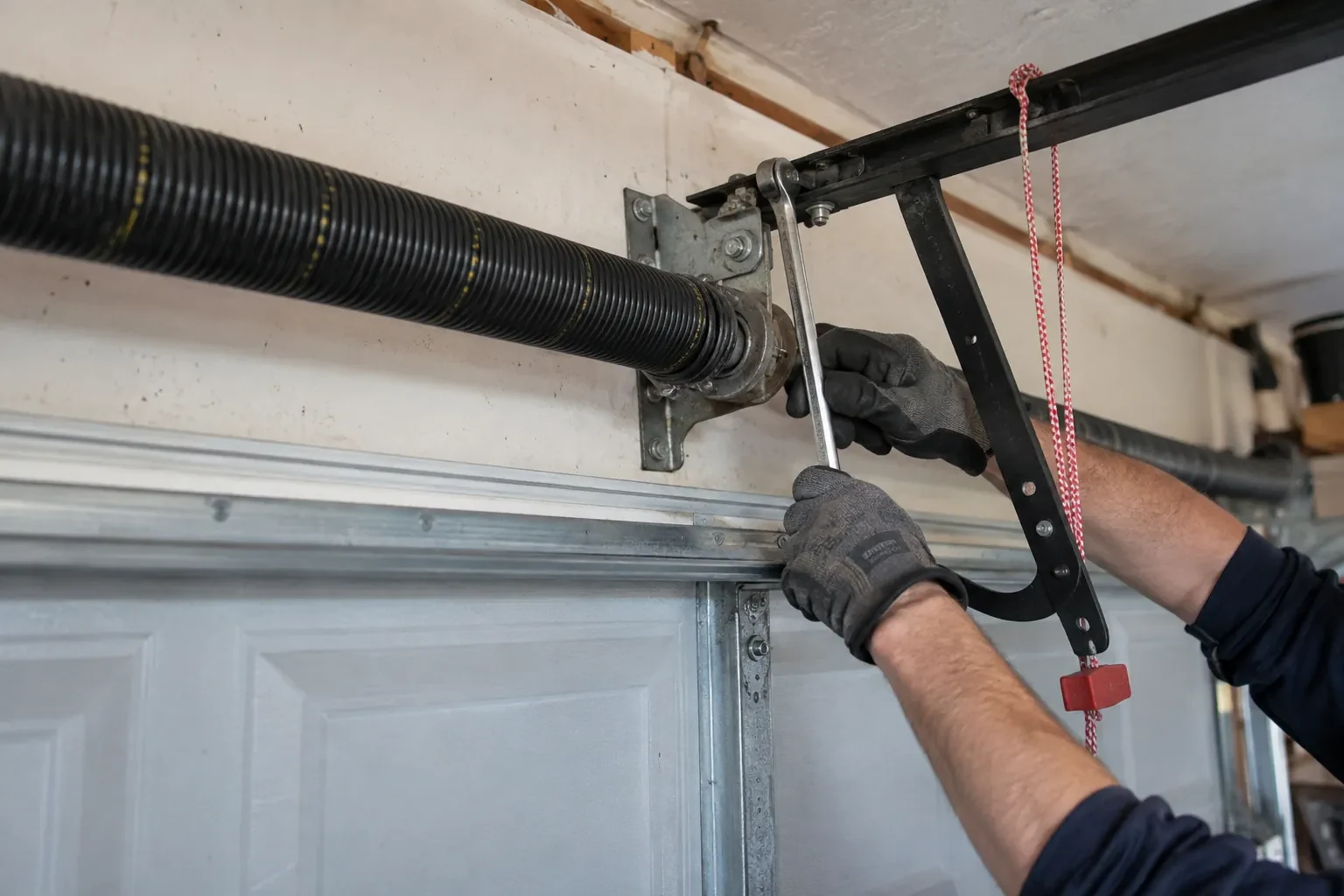
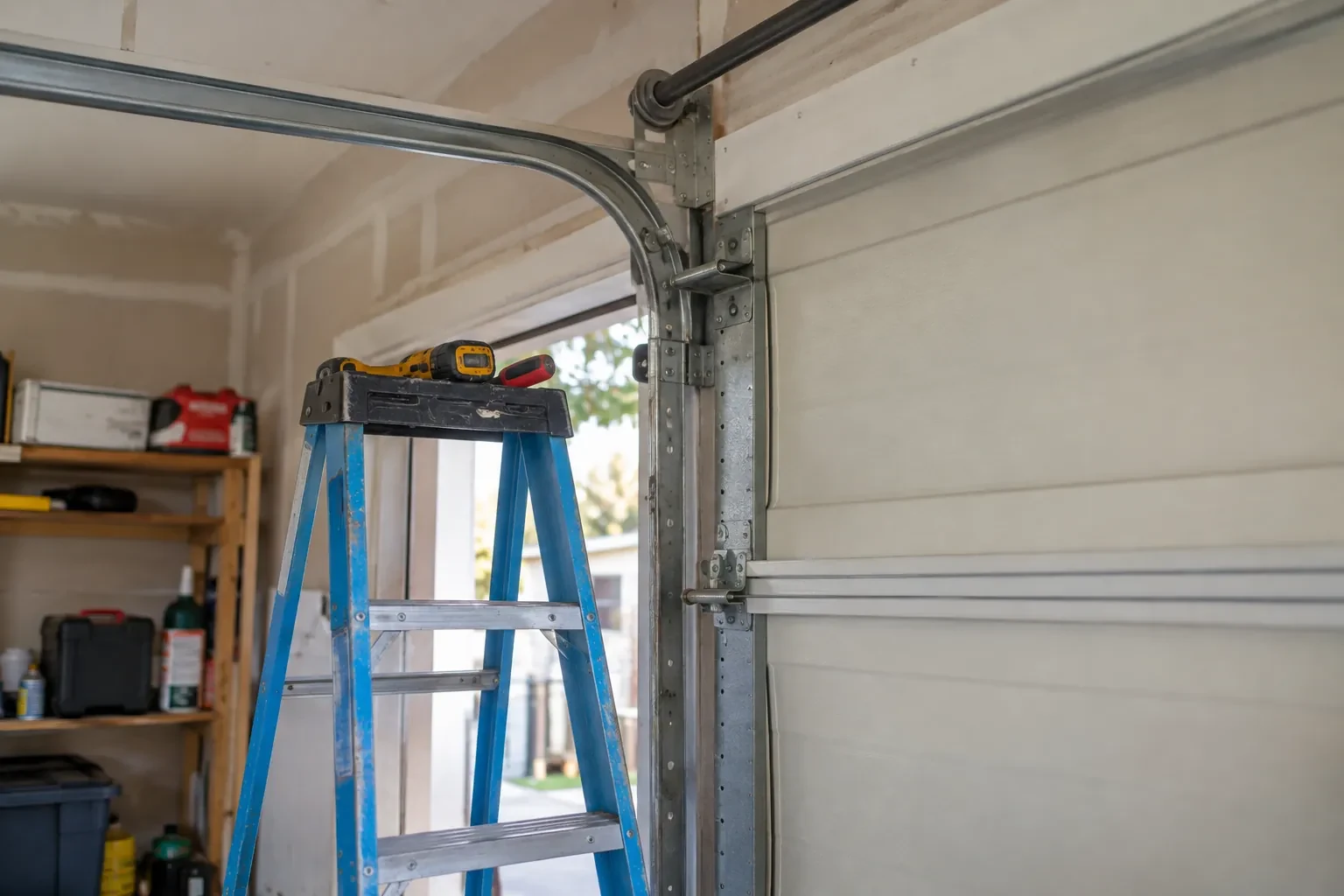
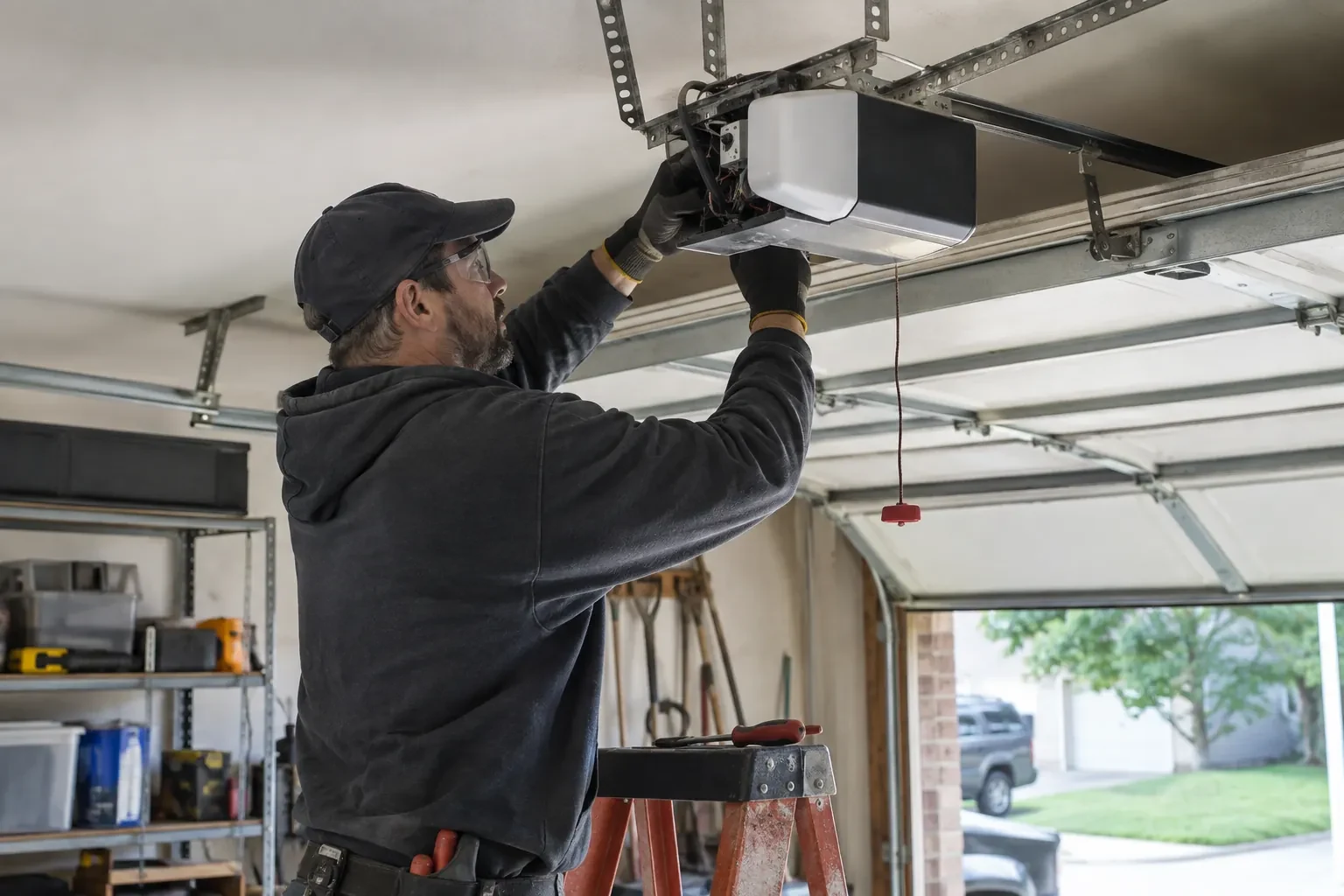
Our technicians in The Annex carry the winding bars, clamps, stands and gauges the work needs and use them every time, on every door. Spring sizes are measured, not guessed; cable lengths are matched to the drums; opener force is set with the door balanced. The result is a door that behaves.
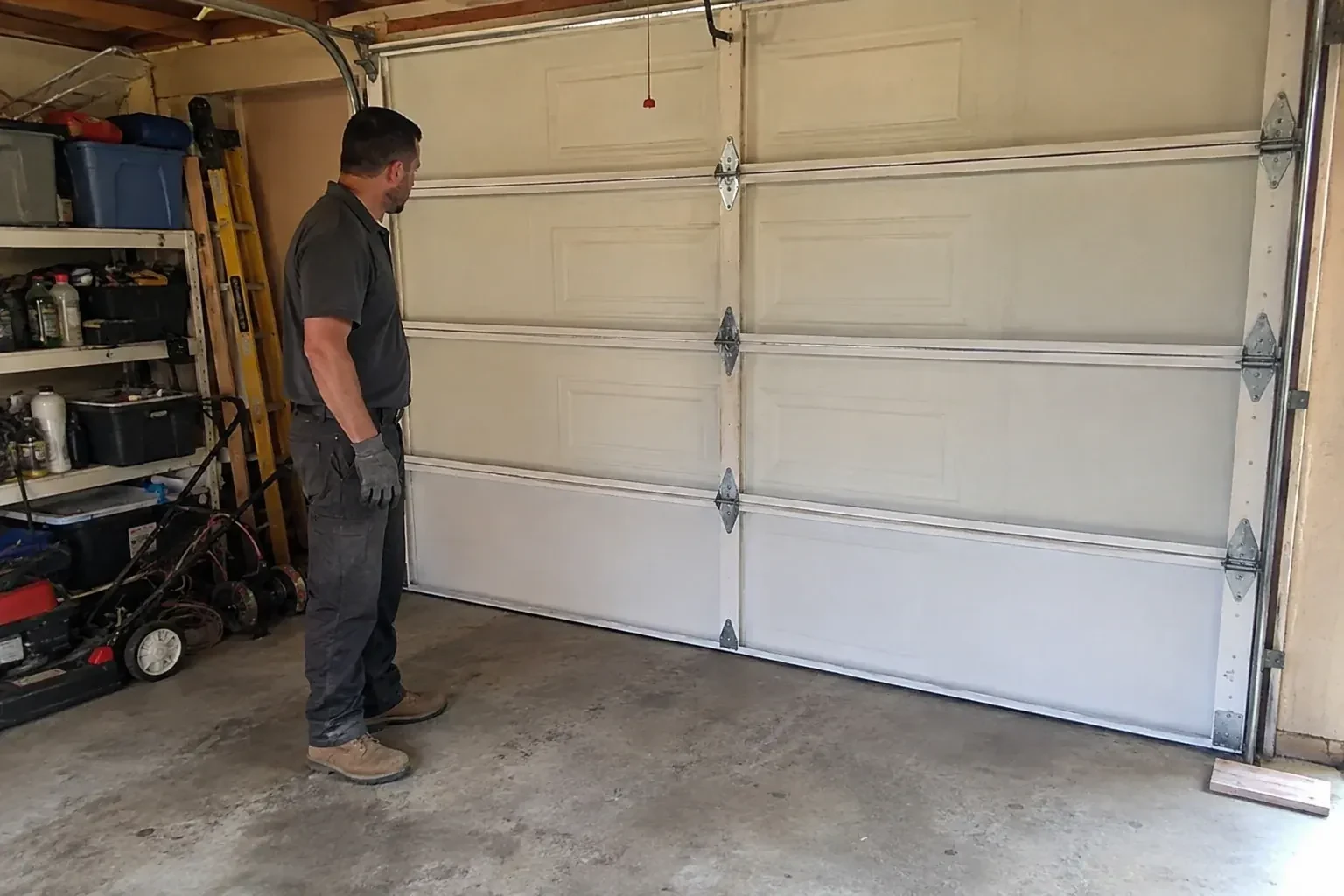
If your garage door in The Annex has started to struggle, rising a little and settling back, groaning on the way up or hanging lower on one side, the cause is usually one of a handful of familiar parts. We diagnose first, show you what we found, and repair it carefully. When a door has genuinely reached the end, we say so and talk through what a replacement involves.
26years in business
24/7open every day
Nothing hidden. Every part we replace, you can see. Every adjustment, we explain. If we find something unexpected, we stop and tell you before continuing.
Care with heavy parts. Springs and cables are handled with the right tools and a steady method, and the door is secured before any tension is released.
Clear about what comes next. Before we leave, you know what was done, what to watch for, and when the door might want attention again.
Arrange a garage door check for your The Annex business.
Whatever kind of door is on your building in The Annex, from a single wood door on an older house to a rolling steel door on a workshop, we have a service that fits it. The pages here explain what gets checked first, how the work proceeds and how to look after the result.
About 58% of homes in Toronto were built in 1980 or earlier, according to the 2021 Census.
Older homes
Hardware on an older door has often been through many winters: hinges with worn pins, rollers with tired bearings, bottom brackets rusted at the floor line. Replacing these in sets restores a smooth lift and takes a surprising amount of noise out of the garage.
Single-detached houses make up about 23% of homes in Toronto (2021 Census).
In condominium communities the outward appearance of a garage door is often set by the corporation's rules, down to colour and panel style. We check what the board expects before ordering a replacement door, so the new one is approved and matches the row without a second conversation.
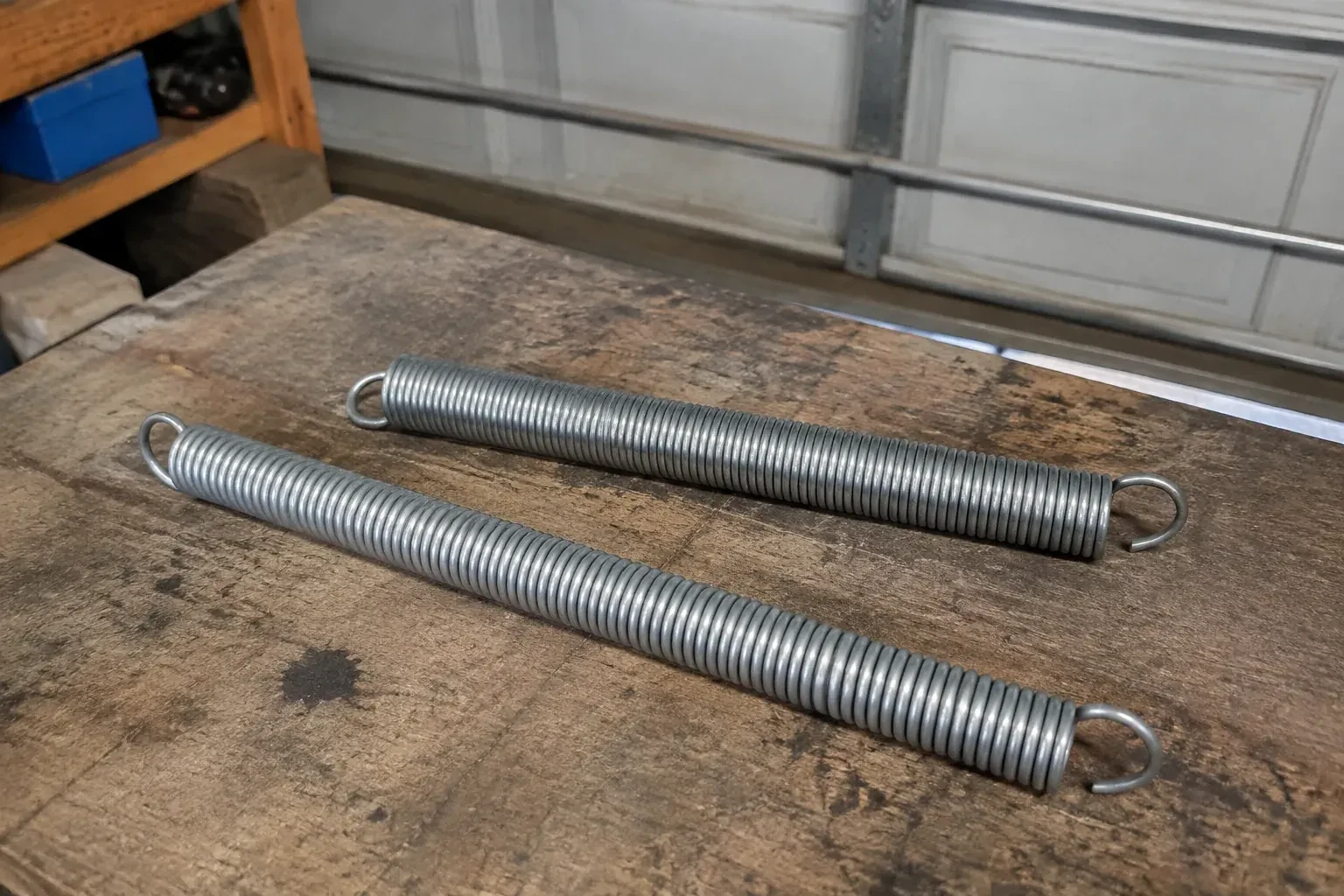
Older homes often carry extension springs stretched along the tracks; newer ones use a torsion bar above the door. We work on both, and we can convert one to the other when it makes sense.
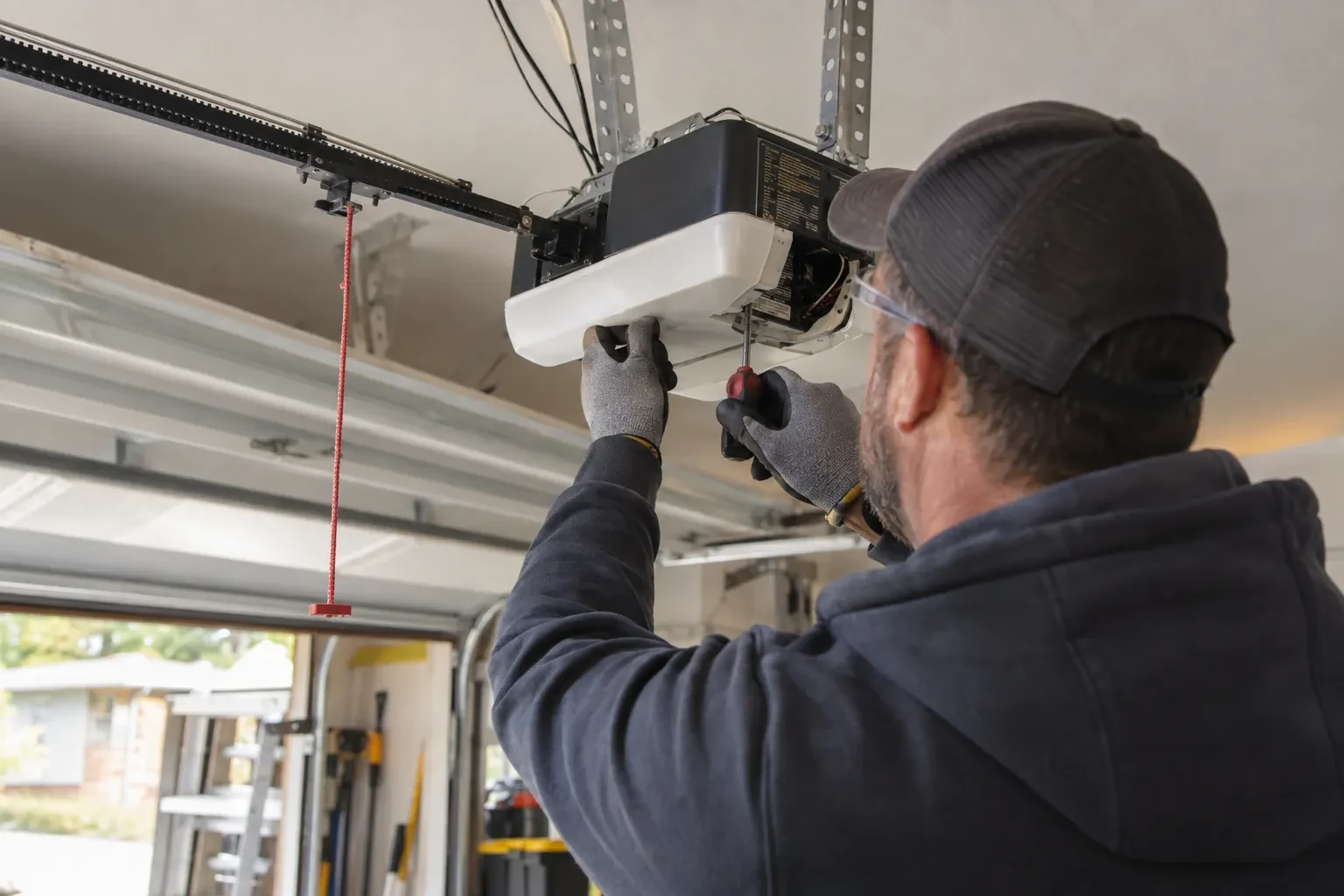
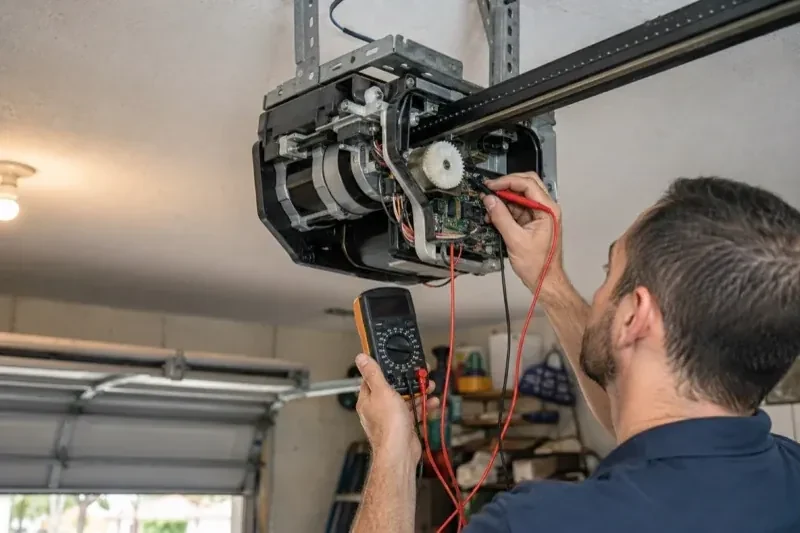
Someone tightened the belt last month to stop the sag. Now the opener sounds like a chain drive, the motor labours on the way up, and the whole rail vibrates under the ceiling.
Press the button and the motor hums, but the door stays exactly where it is. Under the housing there is a dusting of white plastic shavings, the sign of a stripped drive gear, and this is the second time it has happened.
It is February. You come down in the morning and the garage door has stood open all night; the car is frosted inside, the furnace has run without a pause, and the pipe in the shared wall is your first worry.
It is the coldest morning of the year. A week of slush and road salt has crusted over the outside release lock, the key will not seat, and the opener inside is silent after the overnight outage.
Which fix fits?
Since the first cold snap the door has been sluggish.
WhyWhen you move into a house, or a remote goes missing, the question is who else can open the door.
There is a wireless symbol printed on the opener above the car, and the manual mentions an app, but the head unit has never been connected to anything.
WhySmart garage controller setup gives your garage door a place in your phone: open, close, see whether it is up or down, and hear about it when something changes.
The opener strains as the heavy older door starts upward, and manual movement feels uneven.
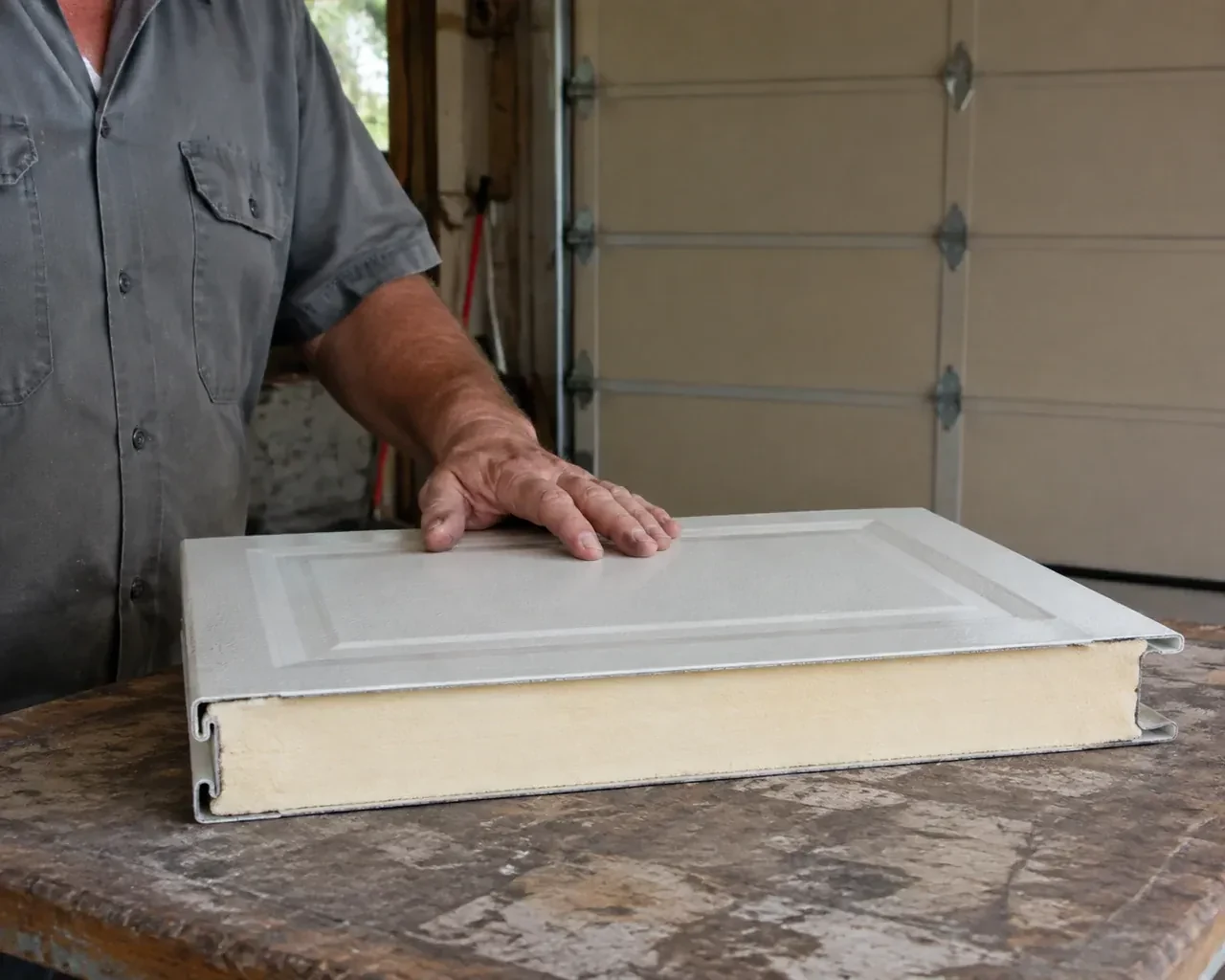
WhyAn insulated steel garage door is a sectional assembly with steel faces and insulating material inside the sections.
How a visit goes
Describe the property, the hardware and what has changed, and the visit starts from what you have seen.
01
Booking made simple
One call sets the visit. We ask for the door type, the opener if you know it, and whether the door is currently stuck open or shut.
02
A careful look
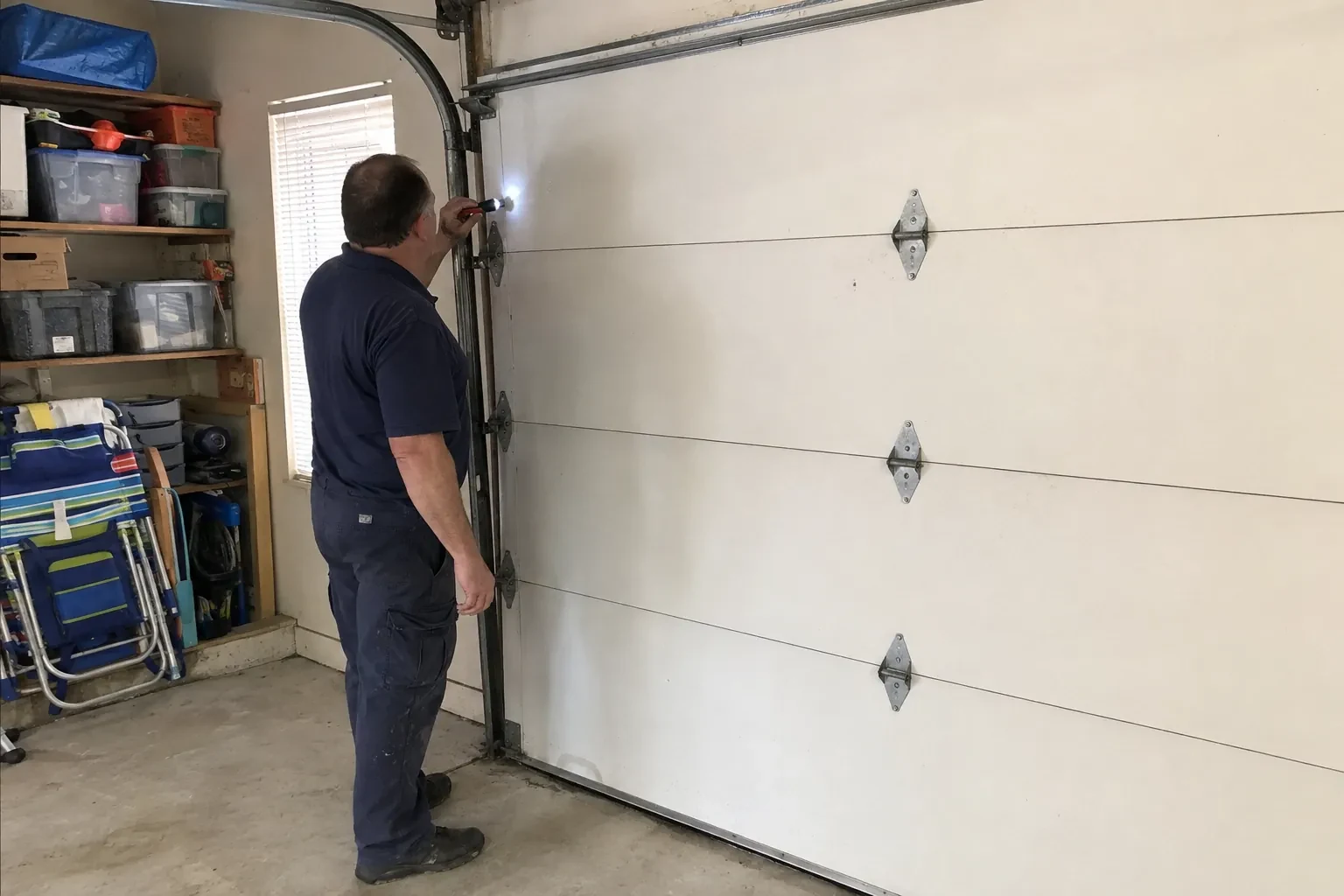
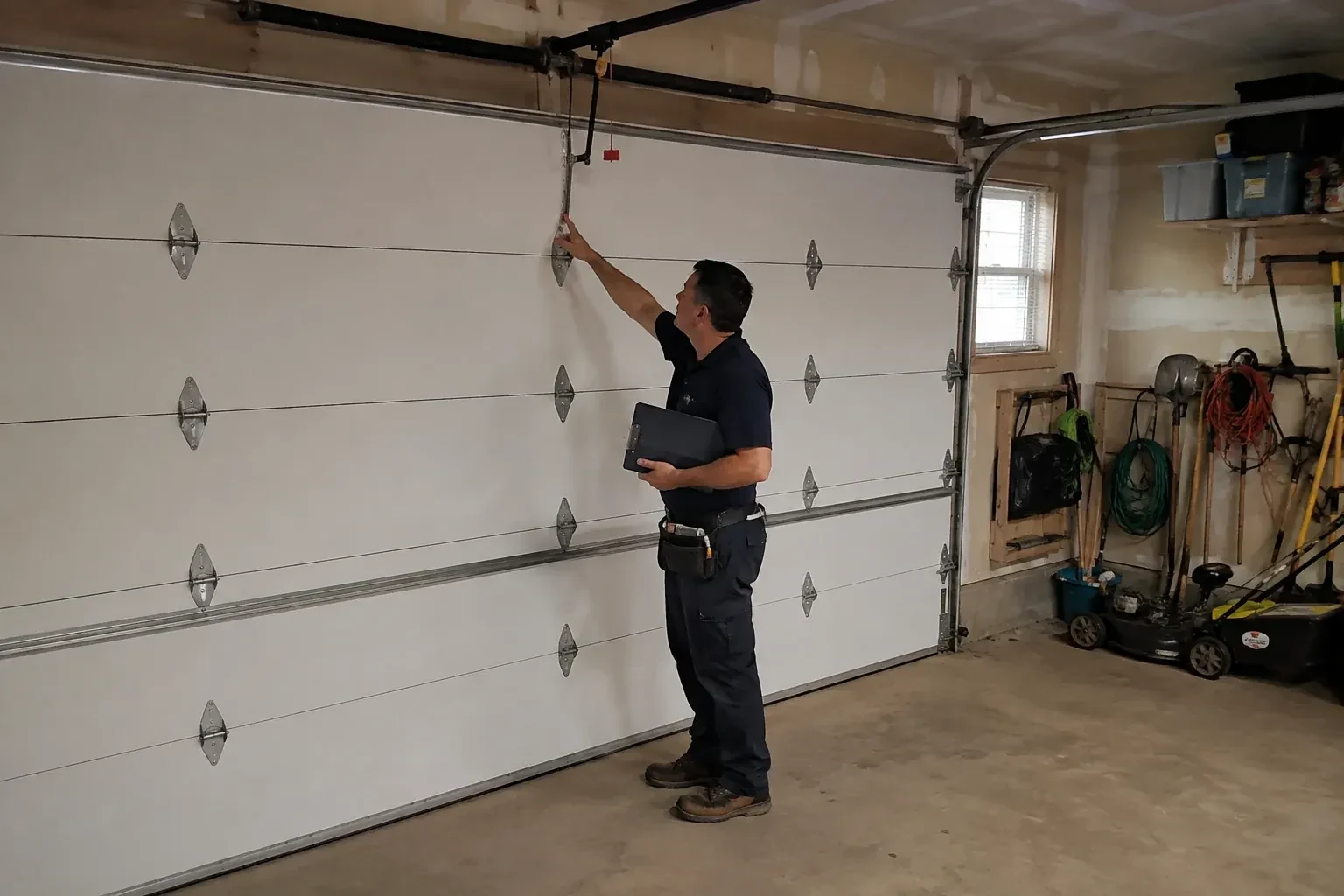
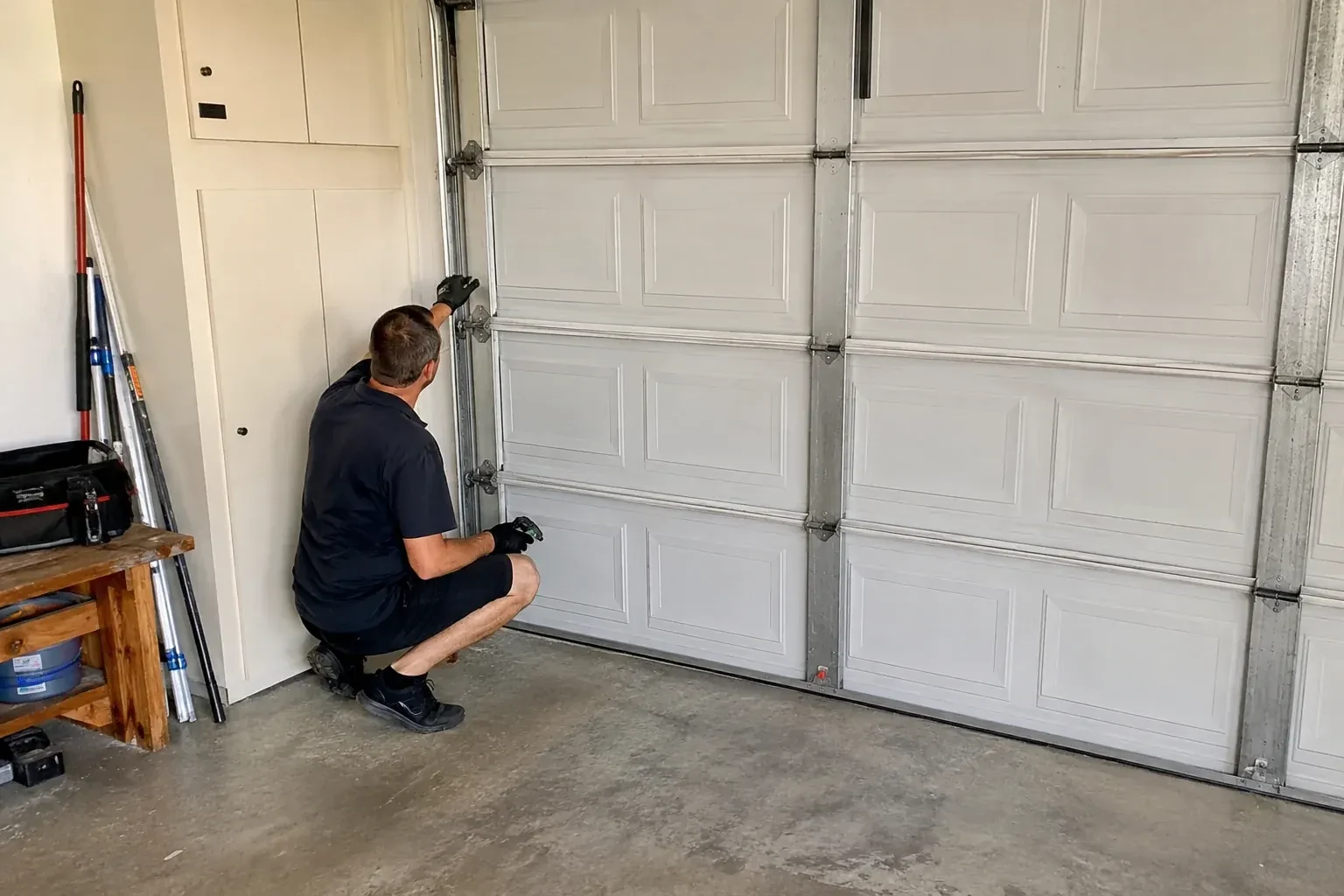
Every visit opens with a full check: balance, spring condition, cable wear, roller state, track alignment and sensor response.
03
Clear choices, careful work
We lay out the options in plain terms, do what you choose with the right tools, and run the door until we are satisfied it is right.
An entrance. Not an afterthought.
1/10Garage Door Tune-Up
Since the first cold snap the door has been sluggish. It climbs slowly, hesitates near the top and the opener motor sounds strained. On the coldest mornings it opens a hand's width, thinks about it, and comes back down.
The morning after a thaw the opener groaned, the door stayed stuck to the icy floor for a second, then lurched up crooked. It stopped halfway with a grinding scrape and has not moved since.
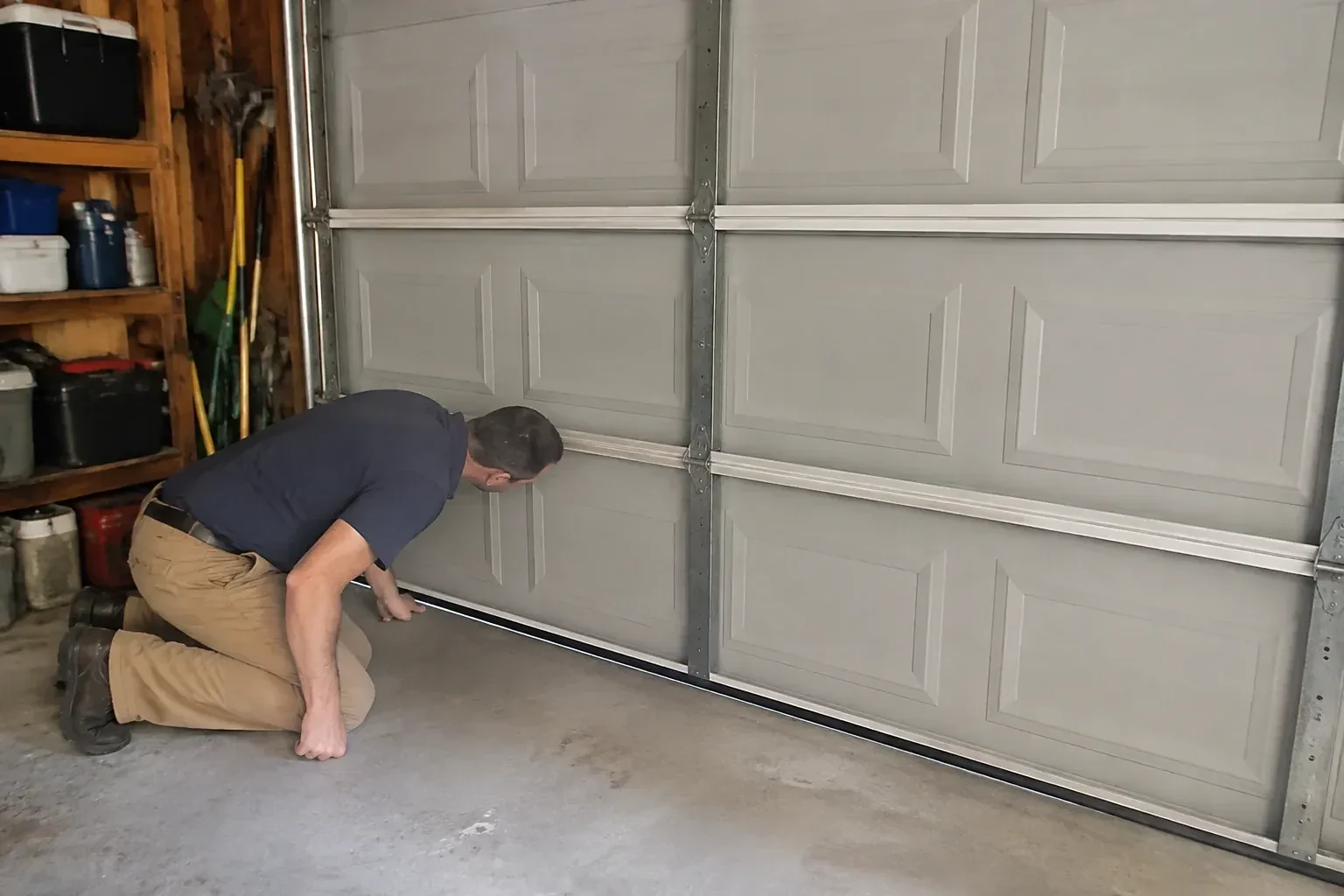
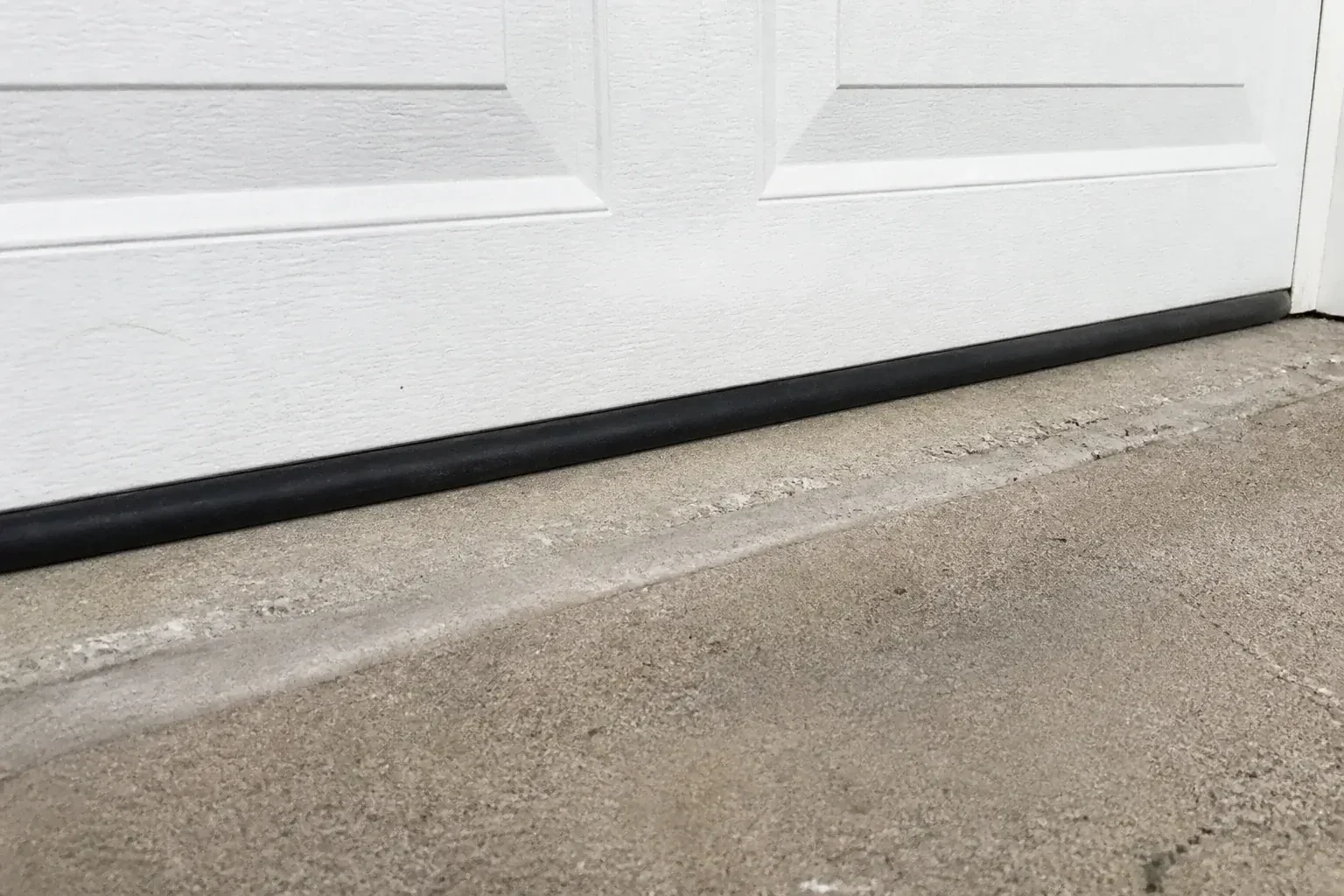
A length of weatherstrip along the right jamb has pulled away, nails and all, and it slaps against the trim every time the wind picks up. The wood behind it is dark and soft where it meets the floor.
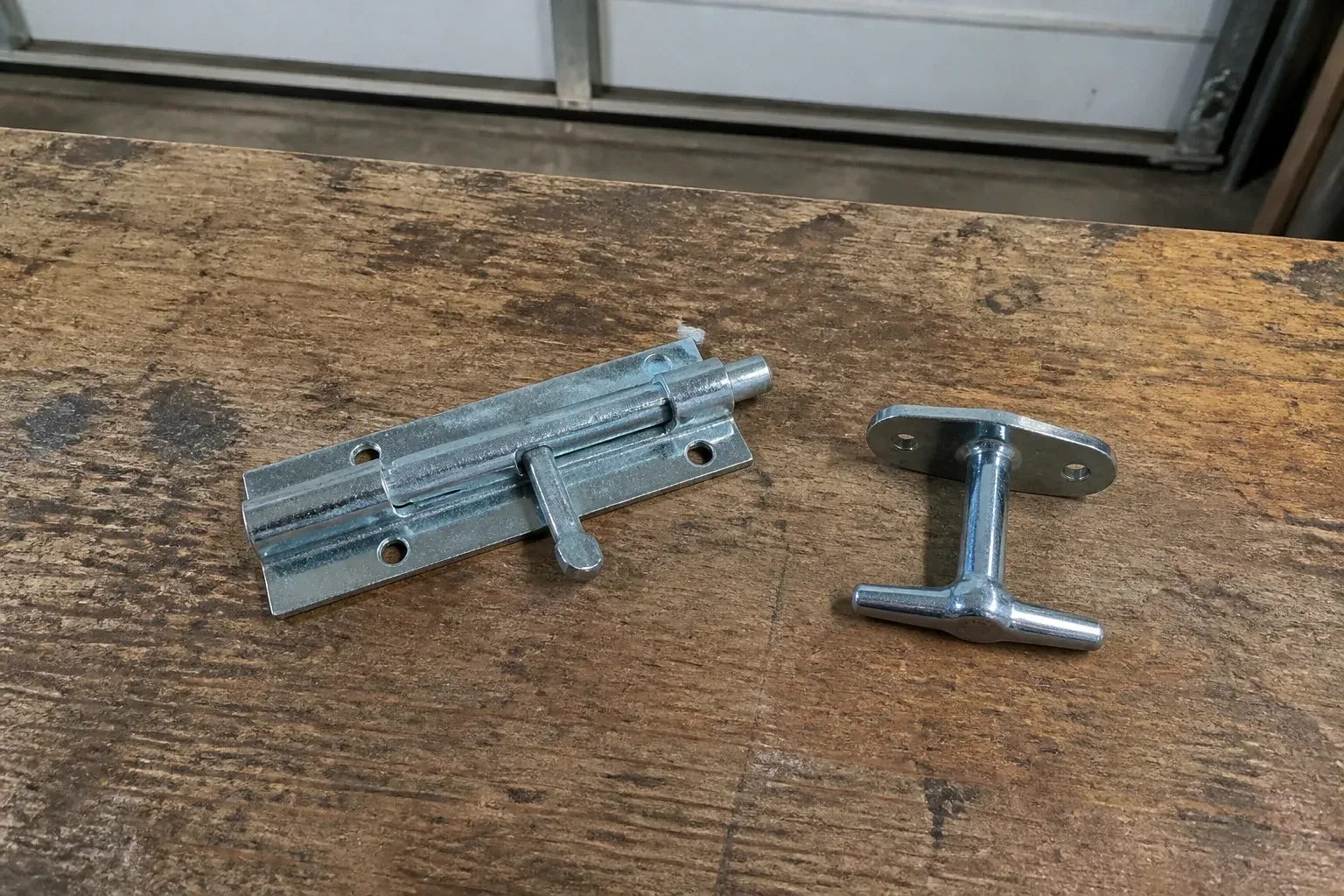
The power is out in a storm, you pulled the red cord and lowered the door by hand, and now you want to lock it. The slide bolt on the inside edge is welded in place by years of rust and refuses to budge.
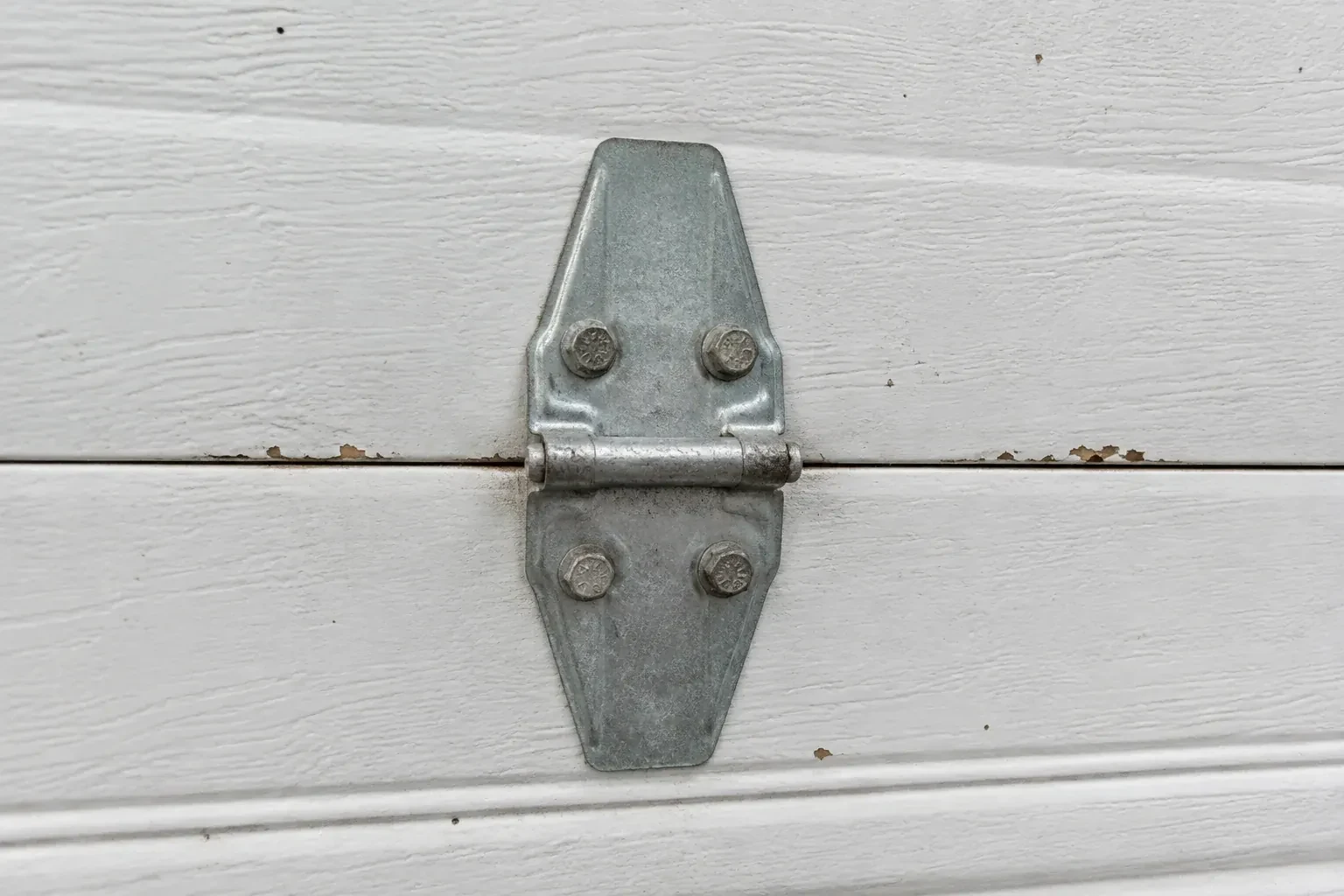
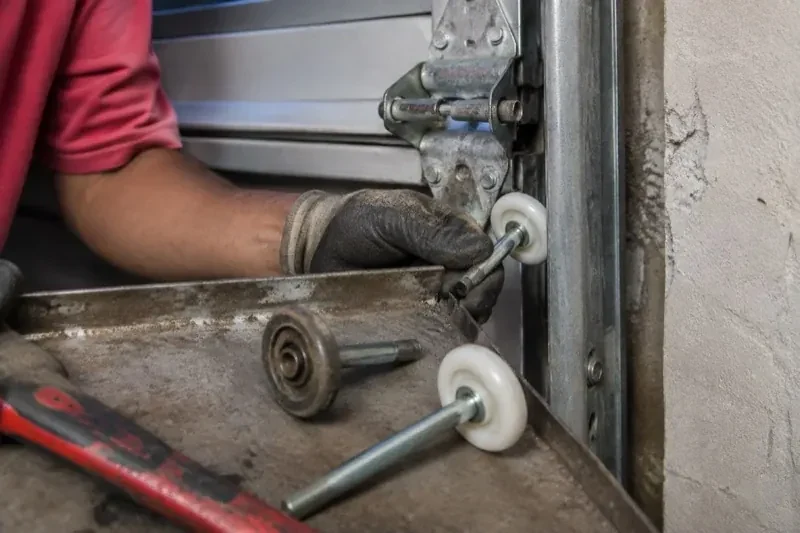
The roller at the top of the second panel is leaning outward and only half of the wheel is still in the track. Behind it, the hinge that should hold it flat against the door has a screw missing and another hanging by a thread.
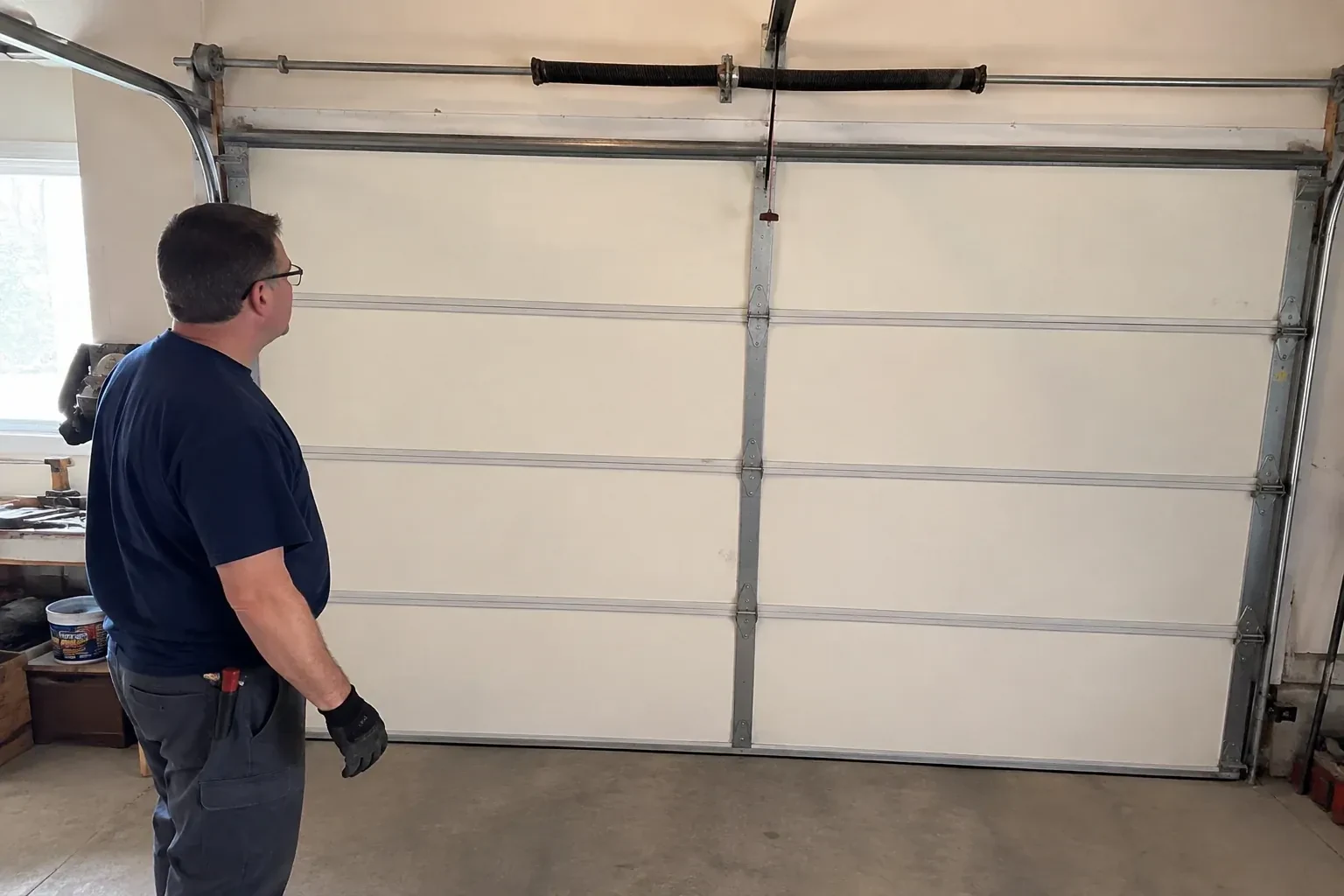
Nothing broke outright, but the door has grown heavier each winter, opens more slowly and squeals as it moves. The springs on an older door have lost tension and the coils show pitting, so the system is asking for attention before it fails.
A bang like a dropped toolbox came from the garage last night. This morning one of the long springs beside the track hangs in two pieces, and the door will only rise a few inches before the opener gives up and stops.
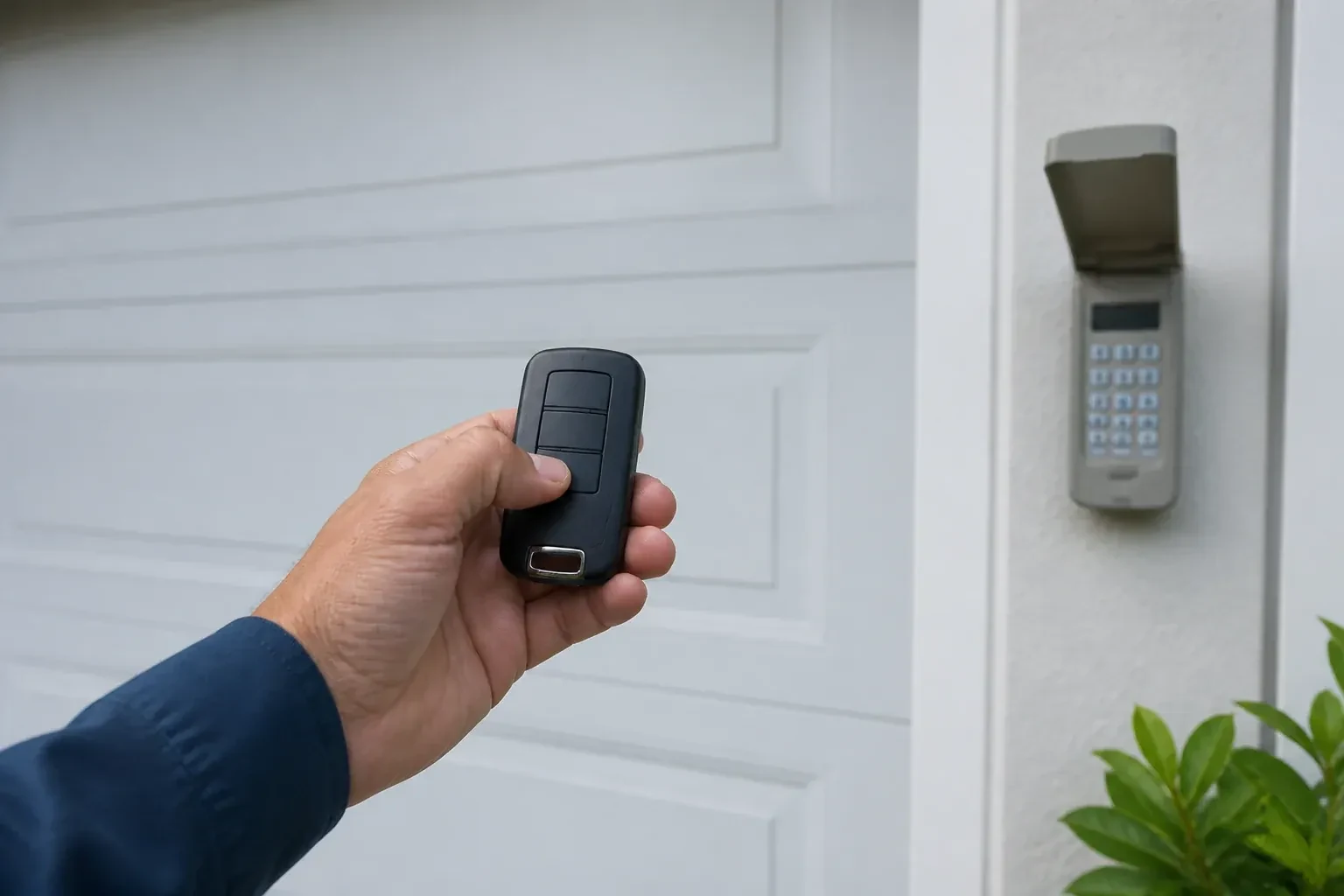
The new car has three buttons in the mirror for garage doors. You held the old remote up to it as the manual said, the light in the car changed, and yet the door ignores it completely. The handheld remote works fine.
There is a wireless symbol printed on the opener above the car, and the manual mentions an app, but the head unit has never been connected to anything. You downloaded the app once, it asked for a serial number and a network, and the moment passed.
The opener strains as the heavy older door starts upward, and manual movement feels uneven. A new insulated assembly calls for counterbalance hardware matched to its actual weight and a compatibility check for the operator.
Small wear items found on the day, such as a roller or a hinge on a middle section, a bottom seal or a few fasteners, can often be replaced during the visit if you agree and the part is on the truck. Larger items, including springs, cables, drums, bottom brackets, a bent track or an opener gear, are written up as separate repairs with their own quote so you can decide with the facts in hand rather than under a raised ladder.
Why do rollers wear out, and how would I know?
Rollers turn thousands of times a year while carrying part of the door's weight, and their small ball bearings wear, fill with grit or fall out. Nylon tires can crack and steel wheels can wear flat spots or grind down to the stem. A worn roller squeals, wobbles in the rail or lets the door shudder at the curve. Replacing them as a set restores a quiet door and removes a common cause of a roller dropping out.
Do you adjust the door as part of the seal work?
Small corrections, yes. If a track bracket needs re-setting or the door needs to come plumb so the fin can meet it evenly, that is done so the new seal is fitted to a door that sits properly. Larger work, such as replacing rollers or a bowed section, is explained and offered as its own job so you can decide on it separately.
How long does a manual lock repair usually take?
An adjustment to a slide bolt or a guide is a short job, while a full T-handle replacement with new bars, a rekey and a door alignment fills a longer visit. Most calls sit somewhere between, and the technician gives you a realistic sense of the time once the door has been looked at, rather than guessing from the phone.
What are the hinges made of?
Stamped galvanized steel, formed into two leaves joined by a pin or a rolled tube. The zinc coating is what resists rust in a garage that sees wet cars and salt, and it is why a scratched or bent hinge starts to brown at the damaged spot. Edge hinges include a tube that holds the roller stem. Thickness is given as a gauge, most residential hinges being 14 or 18.
What about a garage with very little space above the door?
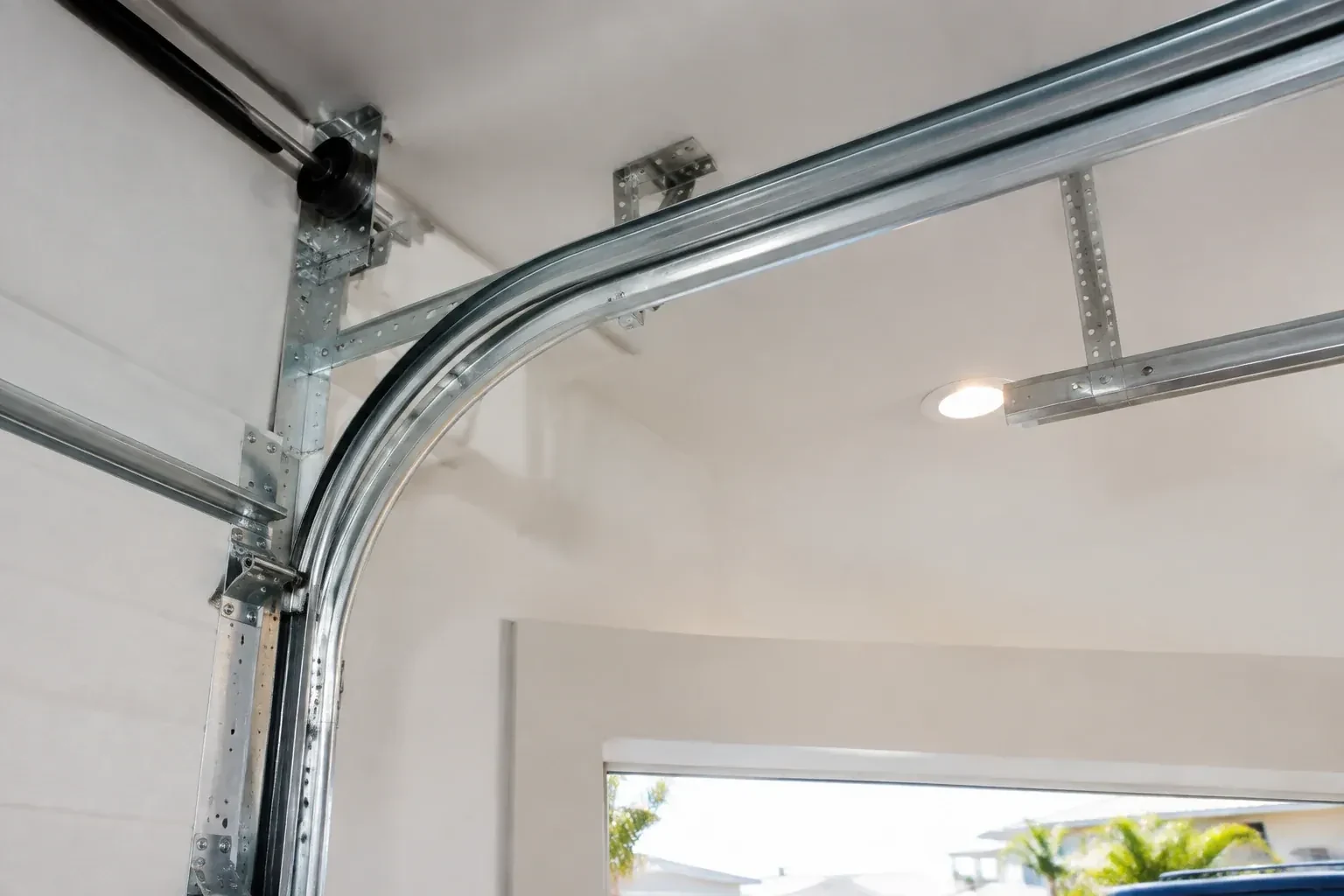
Low-headroom garages use a different arrangement: the spring assembly may be mounted at the rear of the horizontal tracks, or special low-headroom drums and track bring the door up with less clearance. Replacement follows the same principles, but the drums, cable routing and turn count differ. The technician identifies the system on arrival and brings hardware that suits it, so the door balances correctly in the space available.
What are the early signs that the springs are wearing out?
The door starts to feel heavier when lifted by hand and the opener sounds as though it is working harder. Released from the opener, the door sinks from halfway instead of holding. With the door open, gaps show between coils that used to sit tight together, or one spring hangs longer than the other. Rust bloom on the coils and a squeal from a pulley round out the list. Any of these is a good time to call.
How do I program the built-in button in my car?
Often in two steps, on a common HomeLink-style setup. First the car learns a working handheld remote: hold the remote close to the mirror or console and press its button together with the vehicle button until the indicator changes. Then the opener learns the car: press learn on the head unit, walk back to the car within the window that follows, and press the trained button repeatedly until the door responds. Some vehicle systems use a different sequence with no handheld remote, so the vehicle manual is checked first.
Is my garage less secure with a phone controlling it?
Done properly, no. Some hubs pair with the opener as a radio transmitter over the same rolling-code system as your remotes; others connect directly to the wall-control terminals with no such radio link. Either way, the account is protected by a chosen password and two-step verification where offered. The main risk is a shared or reused password, so the account gets its own and the user list is reviewed now and then.
Why are new springs selected for the replacement door?
Counterbalance springs are chosen around the completed door's weight, height, track arrangement and intended travel. Insulation, steel skins, windows and reinforcement all contribute to that load. A spring combination from a different assembly may provide unsuitable torque even when it physically fits. Matching the counterbalance to the ordered door supports manageable manual movement and orderly cable travel.
Request a visit
Our technicians in The Annex carry the winding bars, clamps, stands and gauges the work needs and use them every time, on every door. Spring sizes are measured, not guessed; cable lengths are matched to the drums; opener force is set with the door balanced. The result is a door that behaves.