Repairs · The Annex
Garage Door Tune-Up in The Annex
Since the first cold snap the door has been sluggish.
In plain words
Garage doors here live through a wide swing of seasons, and a tune-up before winter pays for itself in smooth mornings. Cold thickens tired lubricant and stiffens steel, so a door that ran fine in September can groan in January. Rubber seals go hard, meltwater freezes the bottom seal to the slab, and road salt works on the lower hardware. The fall visit replaces old lubricant with a low-temperature product, treats the seals with silicone and checks the threshold, since a door frozen to the slab should be freed and dried rather than forced by the opener.
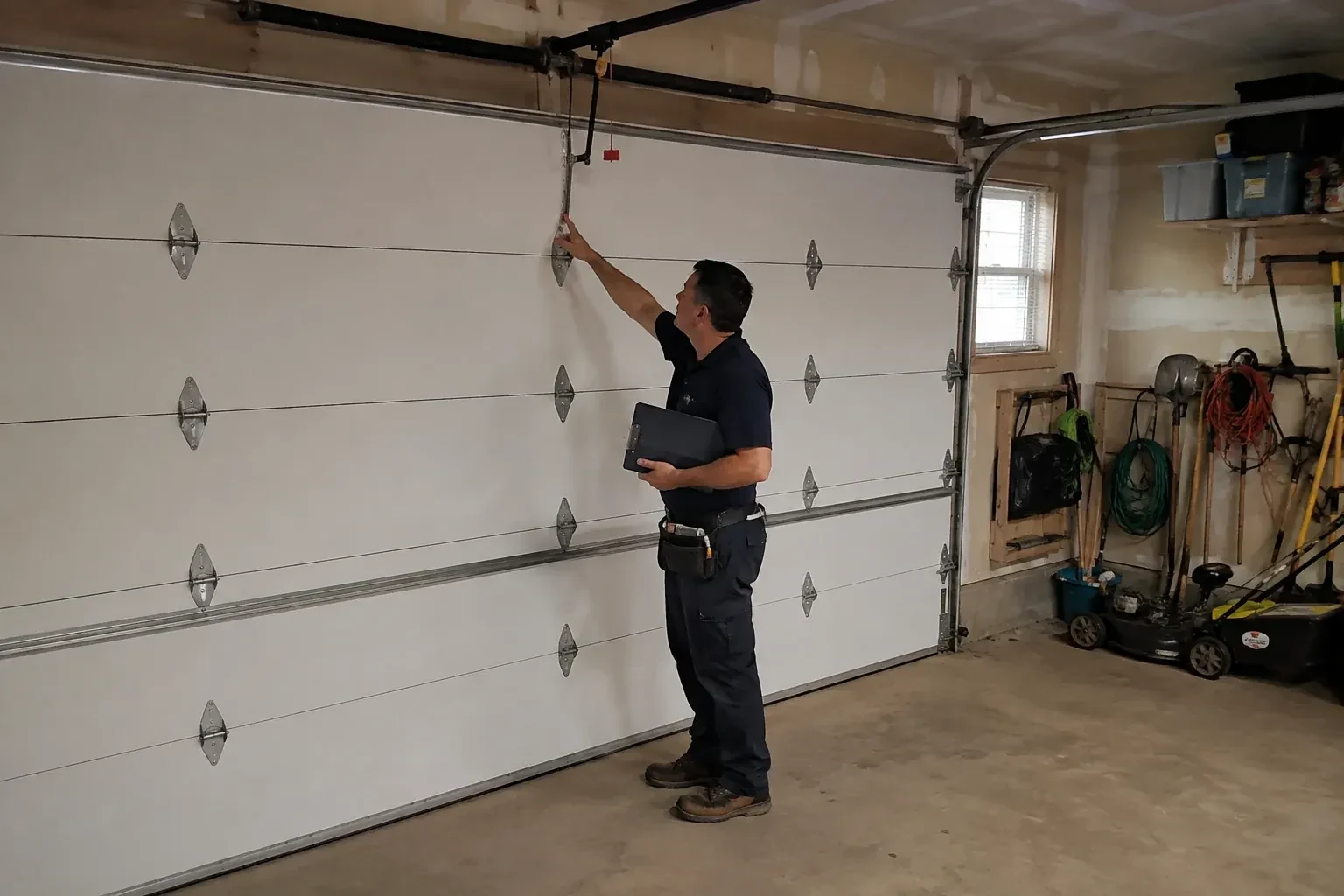
How the visit goesSince the first cold snap the door has been sluggish. It climbs slowly, hesitates near the top and the opener motor sounds strained. On the coldest mornings it opens a hand's width, thinks about it, and comes back down.
Garage Door Tune-Up
How the visit goes
Seals, weatherstrip and the threshold
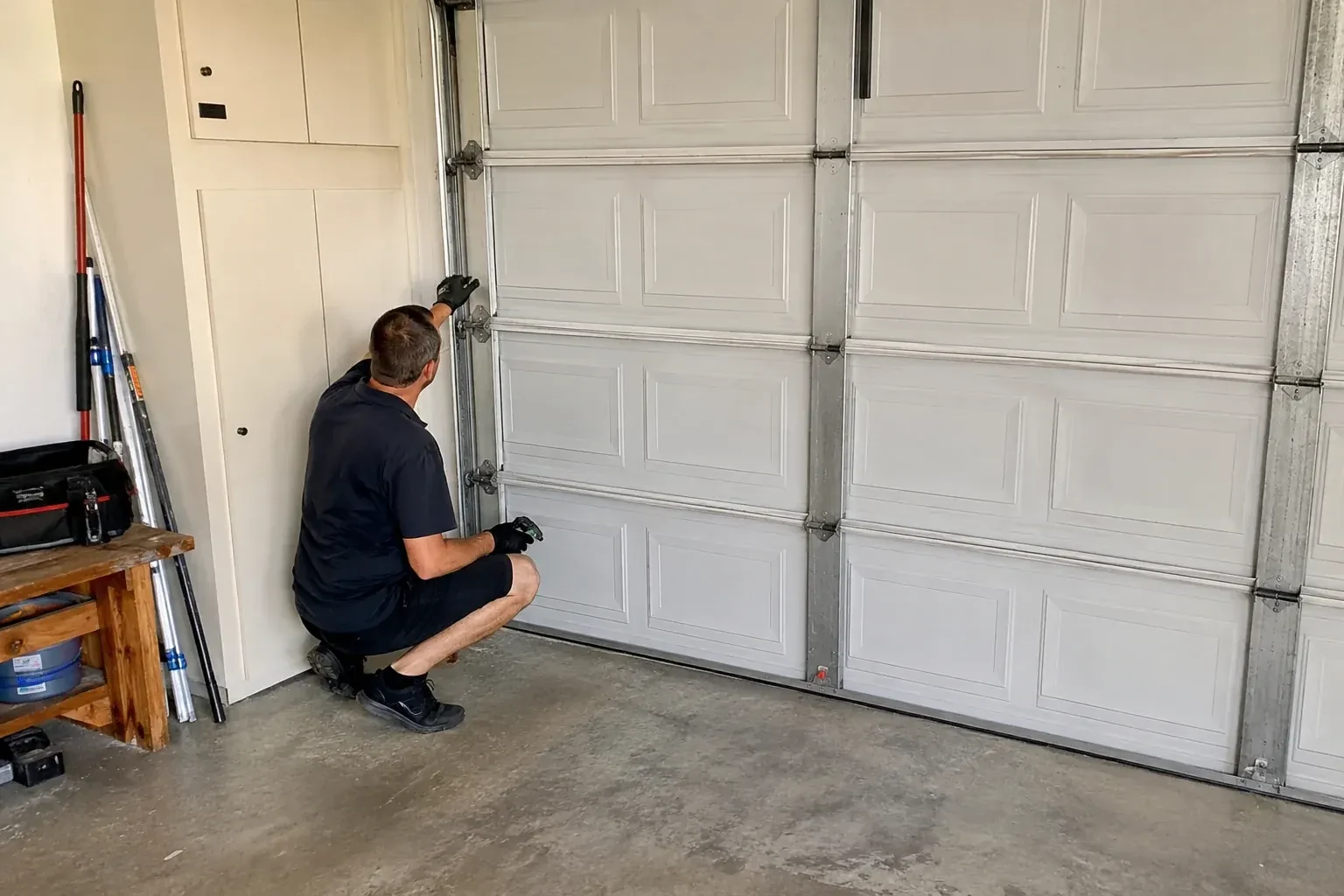
The bottom seal is checked along its whole length for tears, flattening and stiffness, and the threshold is looked at for the low spots where water pools and freezes. The jamb and header weatherstrip are pressed to see whether the rubber or vinyl still flexes or has gone hard, and the technician notes any daylight showing when the door is closed. Because the opener's travel limit decides how firmly the door presses onto its seal, the two are read together: a crushed seal often means the down limit is set too far, and a gap often means the door is stopping early. This part of the check matters most before winter.
Rollers and hinges that have earned attention
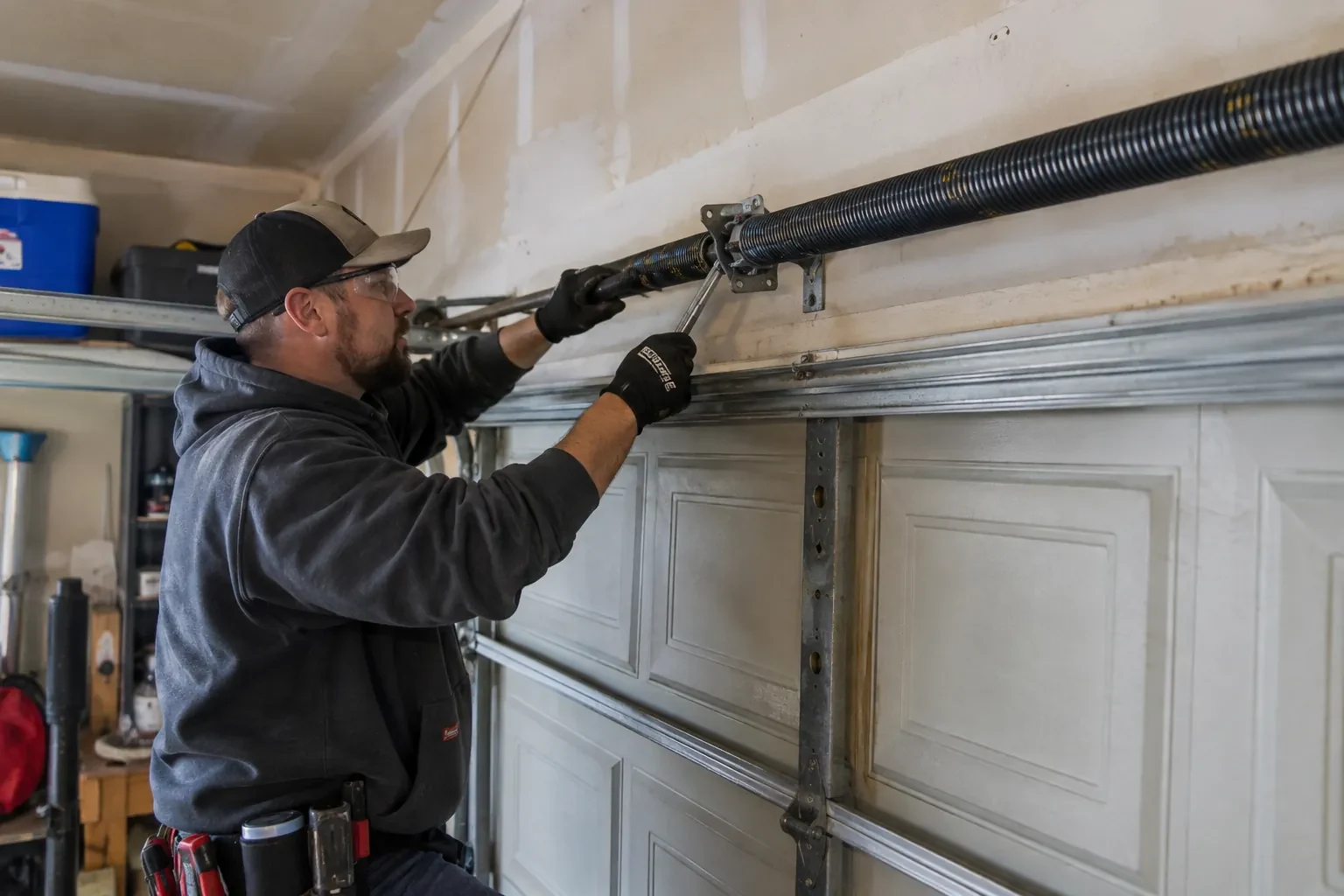
Sometimes the inspection finds a roller with a flat spot, a bearing that grinds even when lubricated, or a hinge with a cracked knuckle, and these are the small parts that make a door loud and rough. Where the customer agrees, a worn roller or hinge on the middle sections can be changed during the visit: the door is clamped to the track so it cannot move, the hinge is unbolted, the roller stem is drawn out and the new part goes in with fresh fasteners. Rollers at the bottom section stay with the tension-bearing hardware and are handled separately. Even a single replaced roller can remove the loudest sound in the cycle.
Balance you can feel with one hand
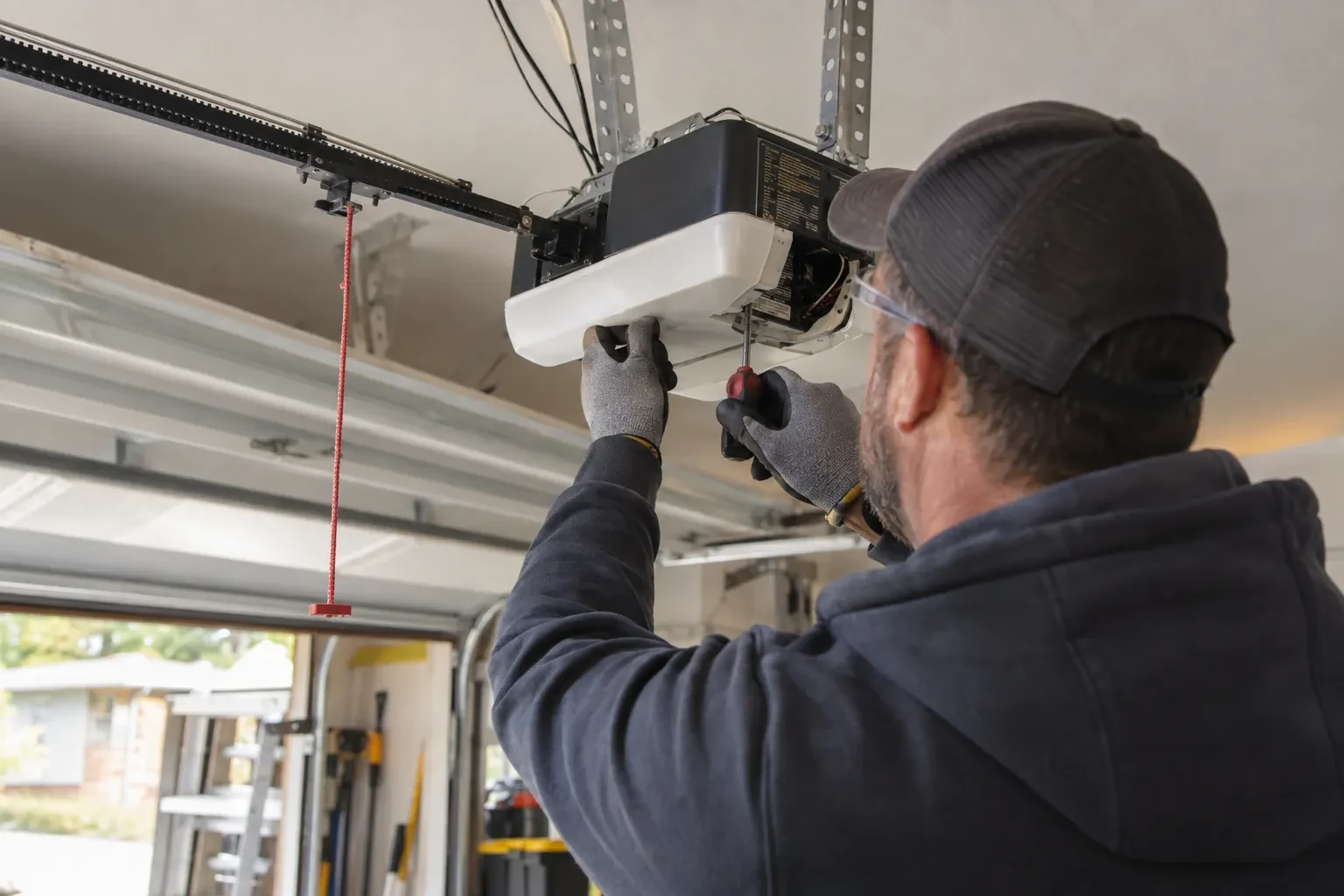
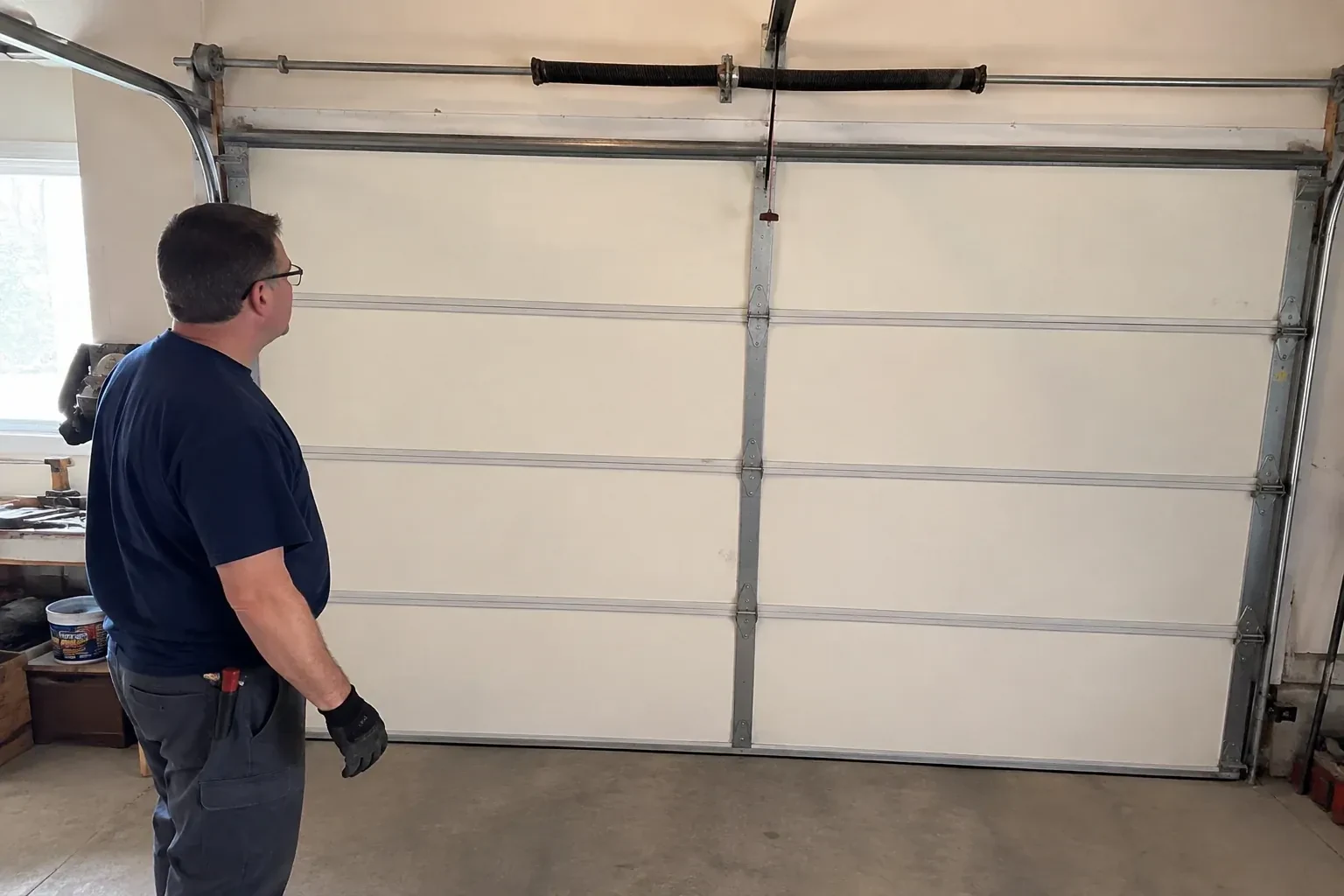
Before leaving, the technician shows you how to check the balance yourself: pull the red release with the door closed, lift the door by its handle, and feel it rise easily, stay open and hold still partway. Knowing what a balanced door feels like is the single most useful thing a homeowner can take from a tune-up, because a door that starts to sink or grow heavy over the coming year is telling you the springs are tiring, long before the opener fails. If the balance was found wanting on this visit, the operator is taken out of service until the spring work is done, and that finding is in your record with a separate quote.
Garage Door Tune-Up
In the van
Silicone spray for seals
Locking pliers or C-clamps
2x4 test block and tape measure
Replacement steel or nylon rollers
Hinge screws and track bolts
Garage Door Tune-Up
What affects the quote
Type of opener
Chain, belt, screw and wall-mounted jackshaft openers each have their own tension checks and lubrication points, and older units take longer to set for travel and force than newer ones.
Height and access
A tall door with the opener and springs high on the header, or a garage packed with storage along the tracks, adds ladder work and time compared with a clear standard-height bay.
Age of the door and opener
Older hardware may need fasteners in sizes no longer standard, and an opener without photo-eyes prompts a conversation about entrapment protection that is quoted separately from the tune-up.
What to have ready
- Are the remotes, wall button and keypad all working as expected?
- Can you lift the door by hand with the opener disconnected, and does it stay up?
- What brand is the opener, and is it a chain, belt, screw or wall-mounted unit?
Garage Door Tune-Up: questions
QuestionsDoes road salt harm the door?
Salt carried in on tires and shovelled snow settles on the lowest hardware: the bottom brackets, the lower track, the bottom roller stems and fixture bolts. Those are the parts that carry the door's weight, so corrosion there matters. Rinsing the lower hardware and the inside face of the bottom section after winter, keeping the floor by the tracks swept, and having the bottom brackets looked at each spring keeps salt from becoming a structural problem.
Will the tune-up include replacing worn parts?
Small wear items found on the day, such as a roller or a hinge on a middle section, a bottom seal or a few fasteners, can often be replaced during the visit if you agree and the part is on the truck. Larger items, including springs, cables, drums, bottom brackets, a bent track or an opener gear, are written up as separate repairs with their own quote so you can decide with the facts in hand rather than under a raised ladder.
What does a garage door tune-up actually include?
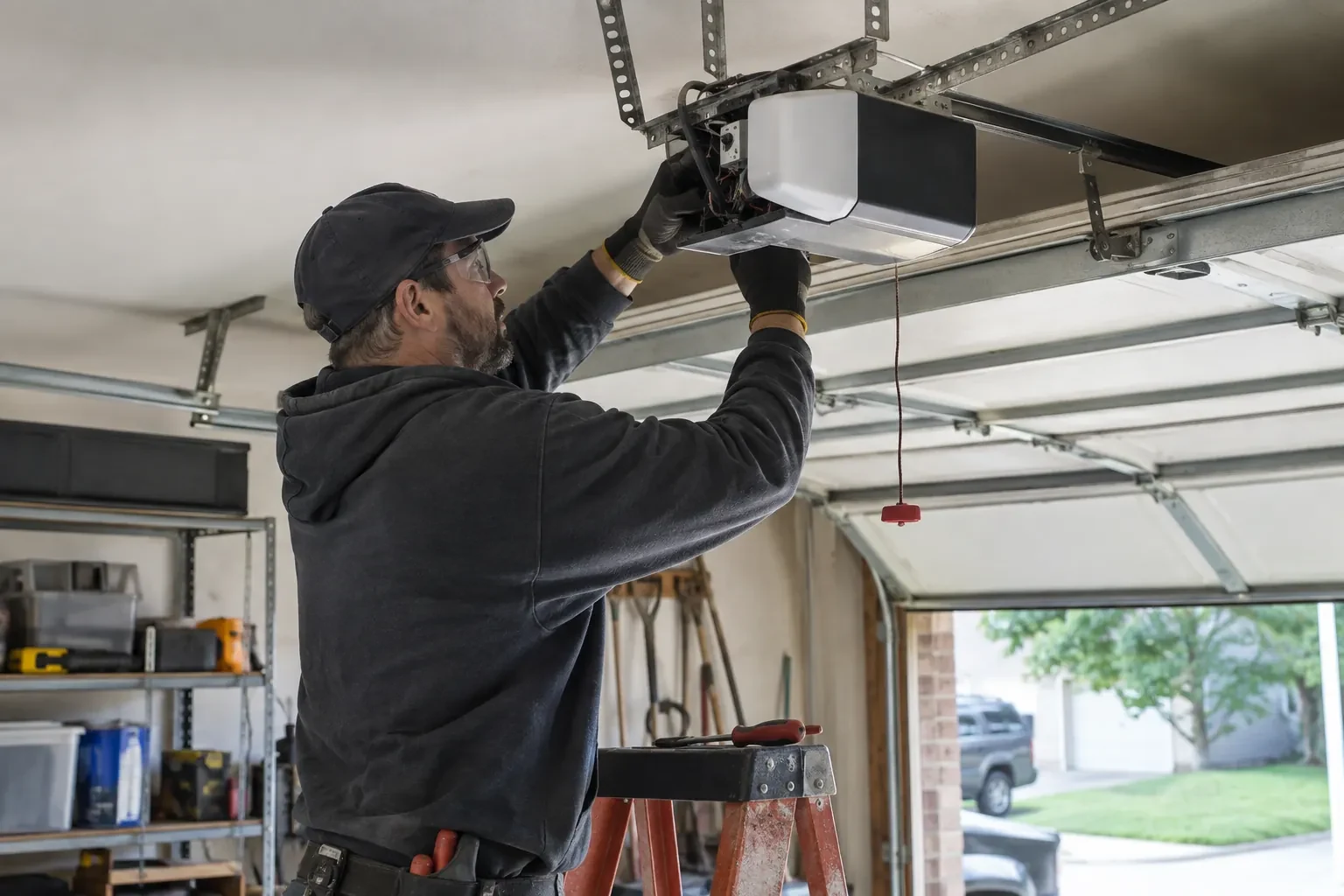
A full cycle observed before any work, a hands-on inspection of hinges, rollers, tracks, springs, cables, drums, brackets and the opener's attachments, tightening of the accessible fasteners, lubrication of the moving points with a garage door lubricant, a balance check with the door disconnected from the opener, adjustment of the opener's travel and force, cleaning and alignment of the photo-eyes, both reversal tests, a look at the seals, and a written record of the findings.
Related services
- Off-Track Garage Door ResetYou tapped the door with the bumper while backing in, barely a nudge, and now the bottom corner has swung inward.
- Garage Door Panel ReplacementAfter an overnight freeze the door stuck to the slab, the opener strained, and something gave.
- Garage Door Bottom Seal ReplacementAfter a spring rain there is a puddle inside the door that reaches the tires.