Repairs · The Annex
Garage Door Perimeter Weatherstrip in The Annex
The new door went in last year and looks perfect, but the old wooden stop and its tired seal were left in place.
In plain words
For an attached garage the perimeter seal does more than keep leaves out. The garage is a buffer between the weather and the house, and drafts around the door cool the wall it shares with the kitchen and the floor of the room above it. Snow blown in melts and refreezes on the slab, and mice follow the warm air in at open corners. A well-fitted side and header seal closes those paths and eases the job of the weatherstripped door between garage and house, though the garage's warmth also depends on the door's own seal, the ceiling and the heating. It is a worthwhile comfort improvement for the house.
How the visit goesA length of weatherstrip along the right jamb has pulled away, nails and all, and it slaps against the trim every time the wind picks up. The wood behind it is dark and soft where it meets the floor.
Garage Door Perimeter Weatherstrip
How the visit goes
What kind of seal is there now
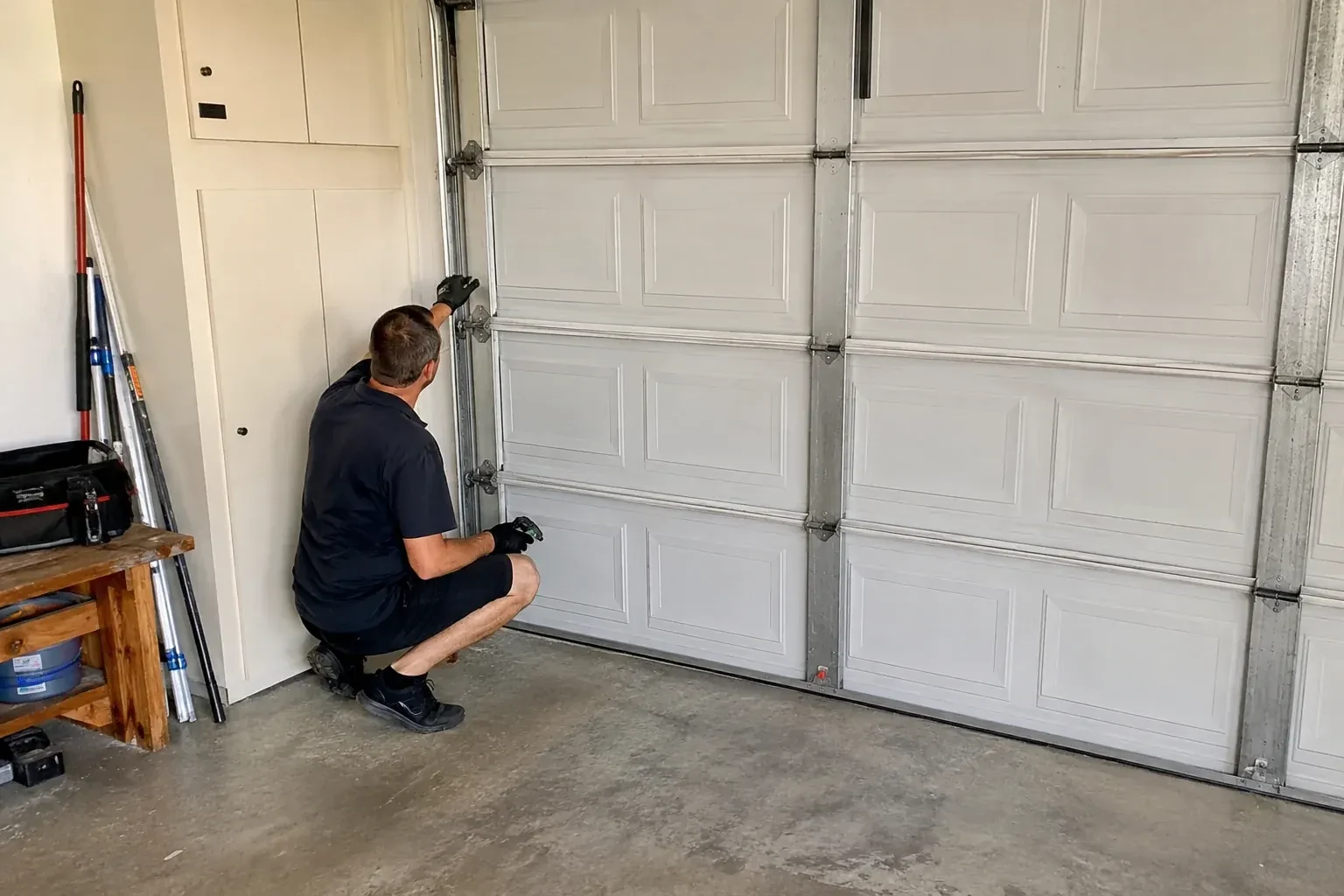
Openings carry different seals depending on their age and who last worked on them. Many older garages have a painted wood stop with a flexible vinyl fin nailed to its face. Newer installations often have a one-piece vinyl stop with the fin moulded in. Some commercial and premium doors use an aluminum retainer with a slide-in rubber insert, or a brush seal. The technician identifies which is present, whether the rigid part is sound enough to keep, and what the fastening was, because that decides whether a new fin goes onto the existing stop or the whole stop is replaced.
Setting the fin against the door
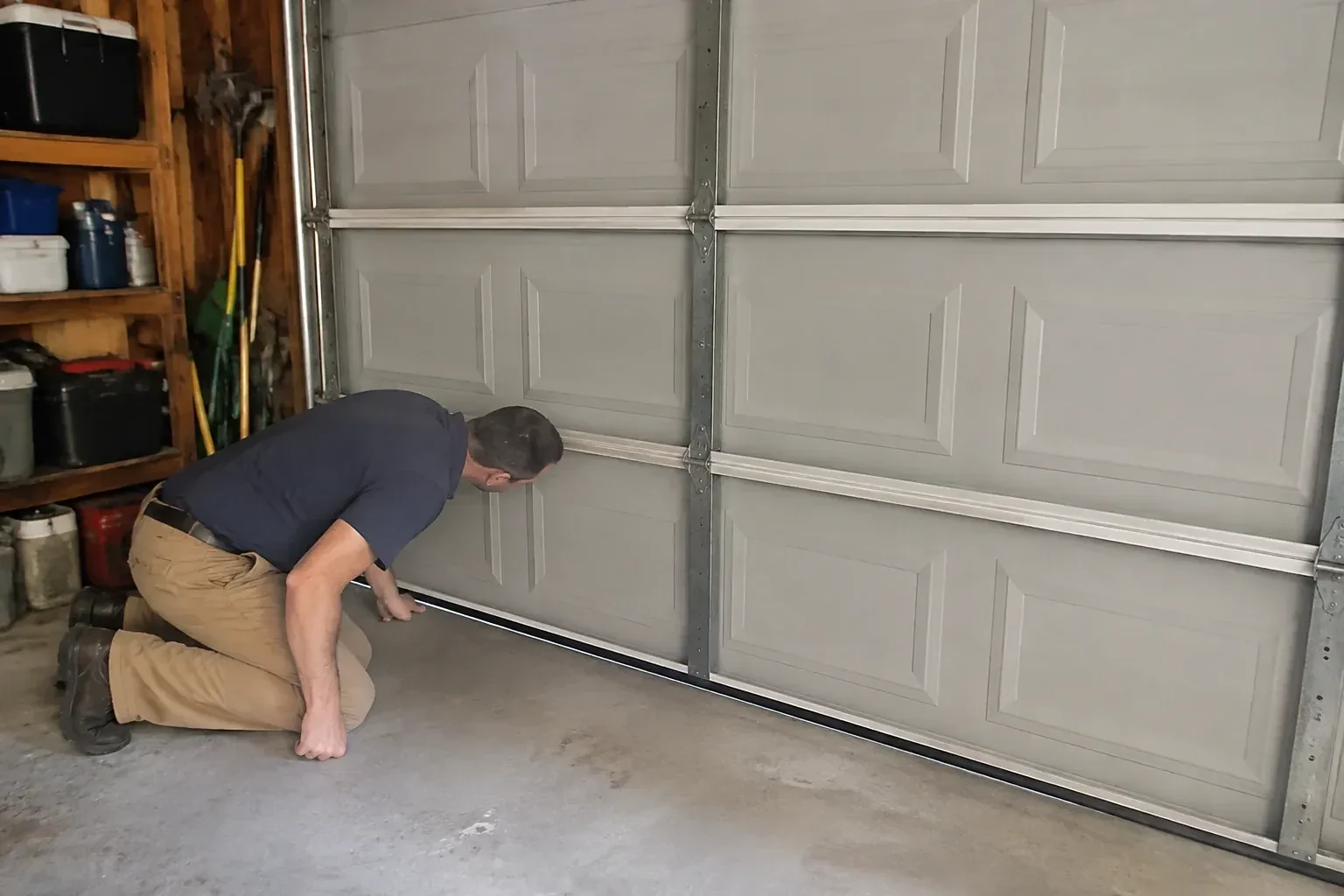
Getting the fin's contact right is the heart of the work. The technician holds each length against the closed door and adjusts it until the fin bends toward the door just enough to seal without pushing back. A fin set too far off leaves a standing gap that shows as daylight; one set too hard drags the door, folds under on the way down and wears through well before its time. Contact is checked at several points along each side, since a jamb is rarely dead straight, and the fastener positions follow the door face rather than the wood behind it.
Slush, salt and the bottom of the jambs
The lowest part of each jamb is where the weather does its work, so a little attention there protects the whole seal. Push slush away from the jambs when clearing the driveway rather than piling it against them, and rinse the salt off the bottom of the stop on a mild day. Keep the joint between the jamb and the sill caulked so meltwater runs off the face instead of behind it. If a section of jamb was replaced, keep its paint or PVC surface intact. A dry jamb base holds its fasteners, and fasteners that hold keep the seal tight.
Garage Door Perimeter Weatherstrip
In the van
Exterior screws and weatherproof staples
Epoxy consolidant and exterior primer
Galvanized or stainless trim nails
Jamb repair lumber or PVC trim
Utility knife and mitre saw
Garage Door Perimeter Weatherstrip
What affects the quote
Jamb material
Wood jambs take nails; steel or aluminum-clad jambs need screws and sometimes a backing piece, and masonry openings need a different fixing altogether, each with its own time and hardware.
Colour and profile
Standard colours and fin widths are carried on the truck. A less common colour, an extra-wide fin or a commercial retainer with insert may be a special order, with the difference noted.
Condition of the jambs
Soft or rotten wood at the base of a jamb is cut out and spliced with new lumber or PVC trim before the seal goes on, and that repair is quoted as its own item.
What to have ready
- Have mice, leaves or water been getting in?
- Has the door recently been replaced or adjusted?
- What colour is the trim around the door?
Garage Door Perimeter Weatherstrip: questions
QuestionsHow should I look after the new seal?
Four times a year, check for daylight from inside with the lights off and press the fin to feel that it is still soft. Wipe the seal with a damp cloth to clear grit and salt, keep paint off the fin, apply a silicone wipe before winter, and keep slush and bins away from the bottom of the jambs. Press any lifted corner back and call if a length has come loose.
Do you adjust the door as part of the seal work?
Small corrections, yes. If a track bracket needs re-setting or the door needs to come plumb so the fin can meet it evenly, that is done so the new seal is fitted to a door that sits properly. Larger work, such as replacing rollers or a bowed section, is explained and offered as its own job so you can decide on it separately.
What is the difference between perimeter weatherstrip and the bottom seal?
The bottom seal is a rubber or vinyl strip fixed to the lower edge of the door itself and presses against the floor. Perimeter weatherstrip is fixed to the frame, running up both jambs and across the header, and the closed door presses against it from inside. They wear differently and are replaced separately, though it is common to renew both in one visit when each is showing its age.
Related services
- Garage Door Tune-UpSince the first cold snap the door has been sluggish.
- Off-Track Garage Door ResetYou tapped the door with the bumper while backing in, barely a nudge, and now the bottom corner has swung inward.
- Garage Door Panel ReplacementAfter an overnight freeze the door stuck to the slab, the opener strained, and something gave.