Springs · The Annex
Garage Door Hinge Replacement in The Annex
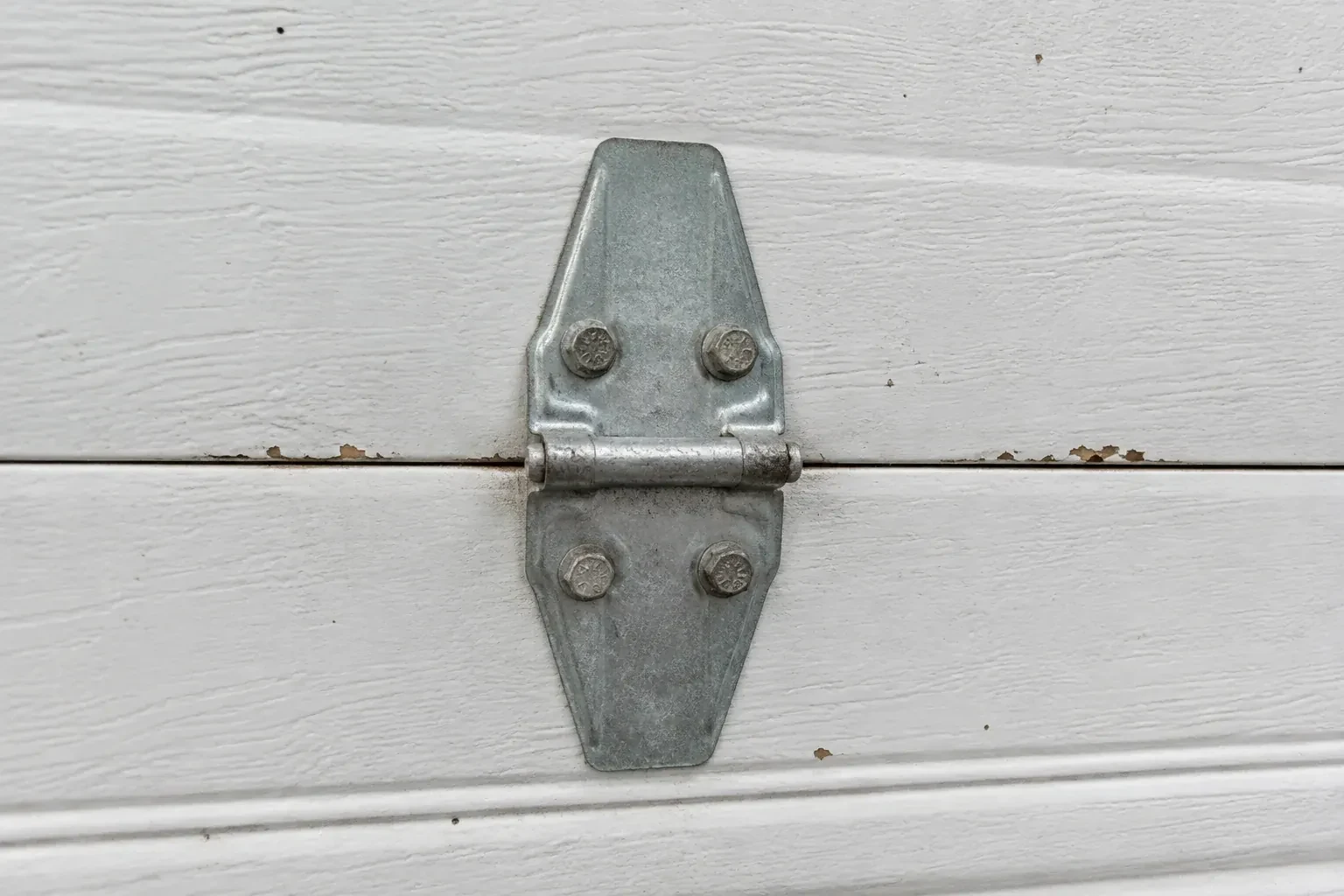
On the old wood door, one hinge has pulled away from the panel, dragging a screw and a chunk of soft timber with it.
In plain words
The hinge is only as good as what it is screwed to. On a steel door the screws bite into the stile, a folded steel channel at the panel edge, sometimes with a support plate behind it; on a wood door they thread into timber. Years of vibration back screws out, and once a hole is stripped the hinge rocks and the joint loosens. Hinge replacement includes fresh fasteners, and where holes have opened up the technician shifts to sound metal, steps up to a larger self-drilling screw, or bolts through the panel with a nut and washer or a backer plate. The new hinge then stays put.
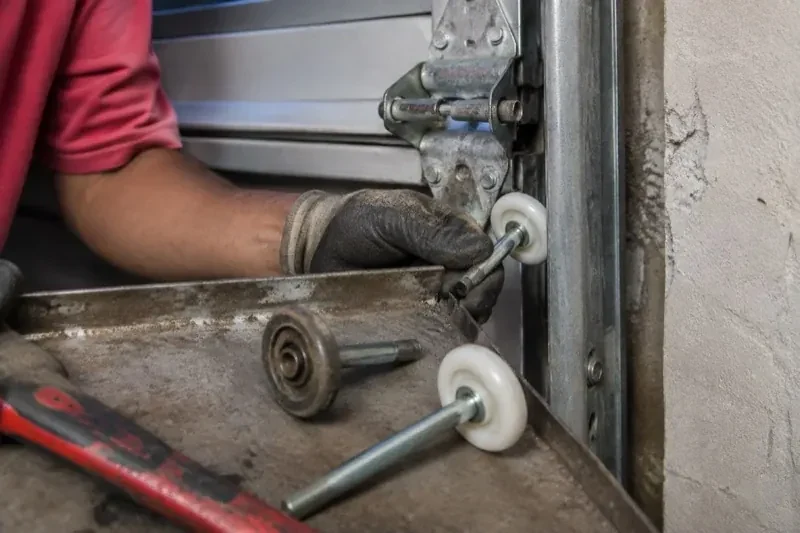
How the visit goesThe roller at the top of the second panel is leaning outward and only half of the wheel is still in the track. Behind it, the hinge that should hold it flat against the door has a screw missing and another hanging by a thread.
Garage Door Hinge Replacement
How the visit goes
Why the hinge gave up
The technician wants the reason as much as the symptom. A door that is out of balance is dragged by the opener, and each hinge takes a share of that force many times a day. A vertical track that has shifted pinches the panels at the curve, and the hinge at that height flexes until it cracks. A bumper touch bends an edge hinge in a way that shows up as rubbing panel edges. Vibration alone works screws loose over the years. You will be asked what the door was doing before the hinge failed, because a stiff, jerky or noisy door before the break points to the cause.
Fresh anchoring for tired holes
Where screws spin or a hole has torn, the fix is a better anchor. The technician chooses from three approaches. First, shift the hinge slightly to sound metal within the stile, where the hole pattern allows it. Second, step up to a larger self-drilling screw that bites fresh threads in the existing hole. Third, drill through the panel and fit a bolt with a nut and washer, or a backer plate across the inside of the stile, so the load spreads across fresh material rather than a torn edge. On a wood door, a split stile is filled or reinforced before the hinge goes back on.
Lubricating the knuckles twice a year
Hinges want a light film of lubricant on the pin where the two leaves meet. Spring and autumn are the natural moments. Use a silicone or white lithium spray made for garage doors, put a short burst on each hinge knuckle and on the roller stems, then run the door a few times to spread it. Heavy grease or general oil holds grit and salt against the steel, so it is avoided. Leave the track itself dry and simply wipe it clean, since lubricant there collects dirt and lets the wheels slide. Ten hinges take about as long as making a coffee.
Garage Door Hinge Replacement
In the van
Heavy-gauge hinges for heavy doors
Carriage bolts, nuts and washers
Socket set and impact driver
Flashlight and level
Numbered galvanized edge hinges
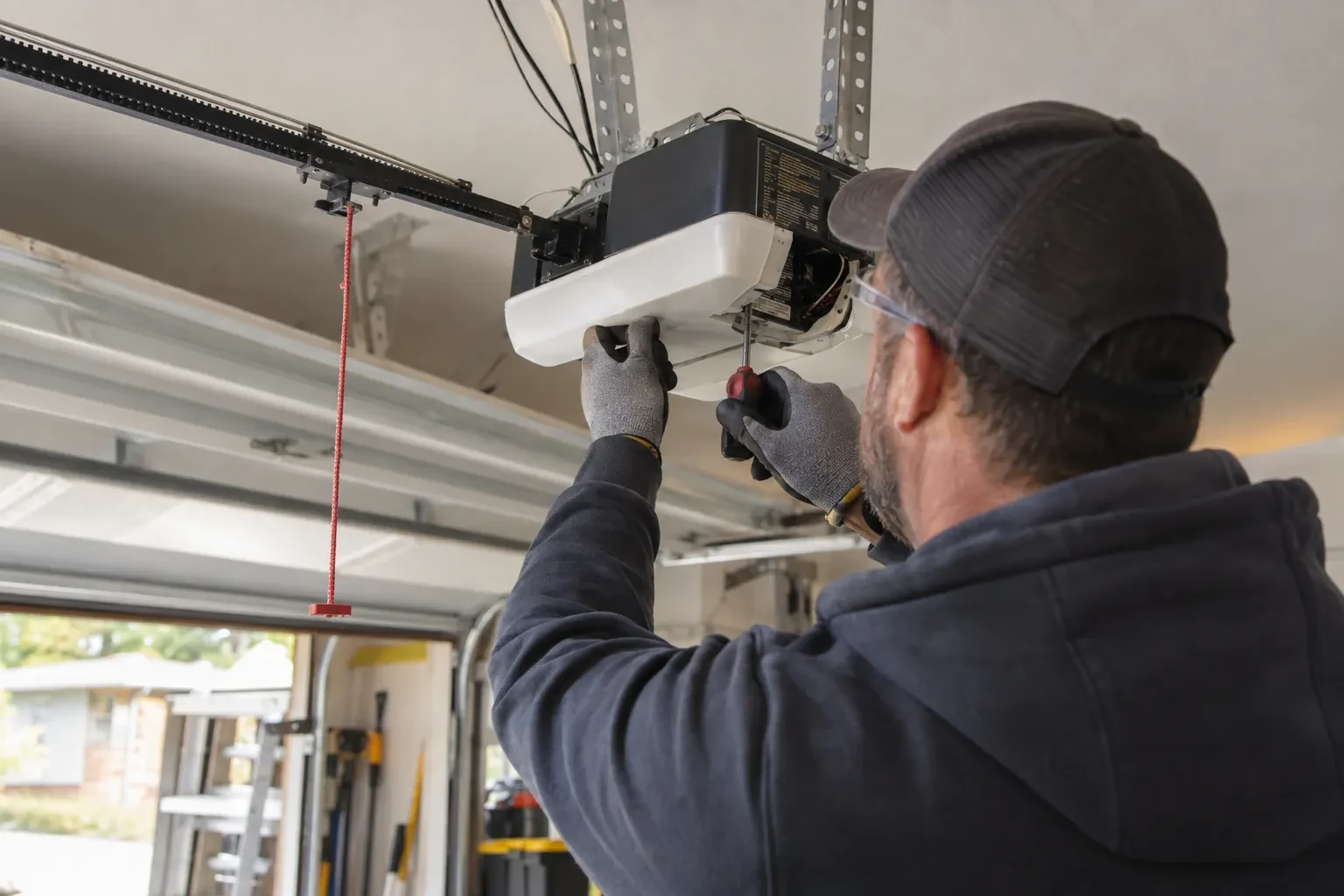
Garage Door Hinge Replacement
What affects the quote
A full hardware tune-up while the technician is there
Some people use the visit to have every hinge screw snugged, all rollers checked and the whole door lubricated. That service is optional and quoted as one line.
Door width and panel count
A tall or double door has more joints and more hinges per joint, so a full-door hinge refresh on a double is a bigger job than the same work on a single.
Edge hinge or centre hinge
A centre hinge unscrews and refits in a few minutes. An edge hinge carries the roller and has to be worked out of the track, so it takes longer and is often paired with a roller.
What to have ready
- Can you read a number stamped on the hinges near the edge?
- Is the loose or broken hinge at the edge of the door or in the middle?
- Is a roller leaning or partly out of the track anywhere?
Garage Door Hinge Replacement: questions
QuestionsWhat do the numbers stamped on garage door hinges mean?
They mark the joint the hinge belongs to, counted from the bottom. A 1 goes at the joint above the bottom panel, a 2 at the next one up, then 3, with 4 and 5 on taller doors. Each higher number stands the roller a little further off the door face, so the door leans into the jambs when closed and follows the track as it climbs. Centre hinges use the geometry of a 1.
What are the hinges made of?
Stamped galvanized steel, formed into two leaves joined by a pin or a rolled tube. The zinc coating is what resists rust in a garage that sees wet cars and salt, and it is why a scratched or bent hinge starts to brown at the damaged spot. Edge hinges include a tube that holds the roller stem. Thickness is given as a gauge, most residential hinges being 14 or 18.
How long do garage door hinges last?
Many hinges last the life of the door. Those that fail early are usually on doors that were out of balance, had seized rollers, saw heavy daily use, or sat in slush and salt through many winters. A light hinge on a heavy door also wears sooner. Rather than a fixed number of years, watch for cracks near the holes, a rocking pin, rust at the knuckle and screws backing out.
Related services
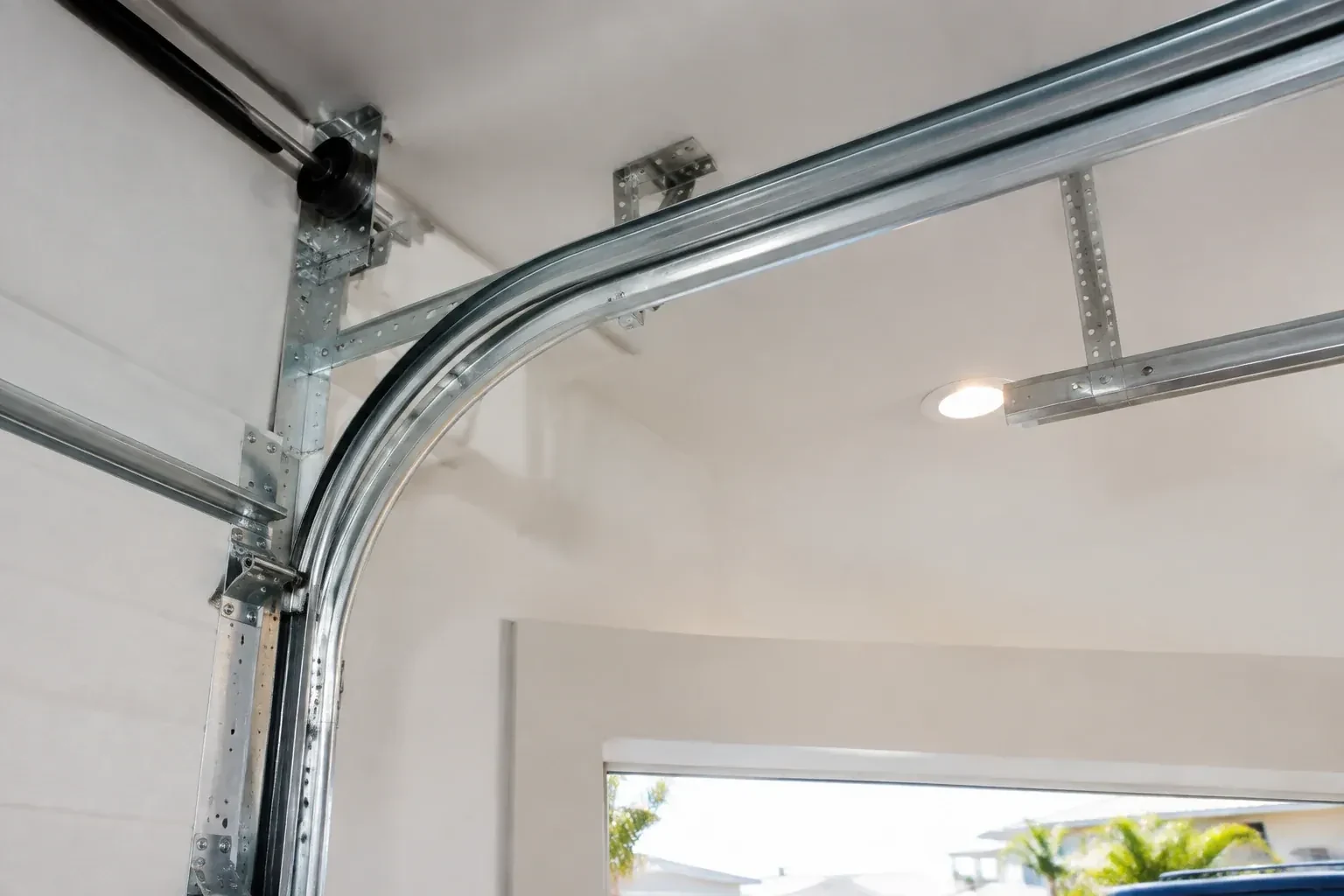
- Garage Door Track Repair or ReplacementHalfway up, the door lurches and one roller rides onto the lip of the channel.
- Garage Door Cable ReplacementThere was a sharp crack from the garage, and when you went to look the door had dropped on one side and jammed.
- Torsion Spring ReplacementYou heard a sharp bang from the garage, and now the opener hums for a second and gives up.