Openers · Toronto
Garage Door Opener Diagnosis and Repair
For a few days there was a grinding sound whenever the door started moving.
In plain words
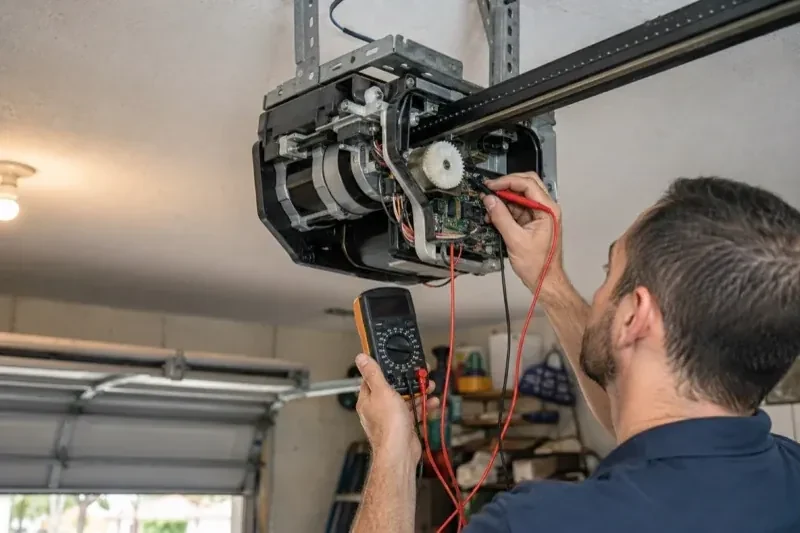
Every diagnosis ends with the same two tests, because an opener that moves the door is only half fixed. First, a length of 2x4 is laid flat on the floor under the centre of the door and the door is closed onto it; it must reverse on contact and return to fully open. Second, with the door closing, an object is passed through the photo-eye beam near the floor; the door must stop and reverse. These tests are how the opener standard defines a working unit, and they are how the technician proves that the fault found was the fault fixed.
How the visit goesThe door goes up perfectly. Coming down is the trouble: partway to the floor it stops, climbs back to the top, and the light on the opener blinks at you. The only way to close it is to stand inside holding the wall button the whole way down.
Garage Door Opener Diagnosis and Repair
How the visit goes
The story before the tools
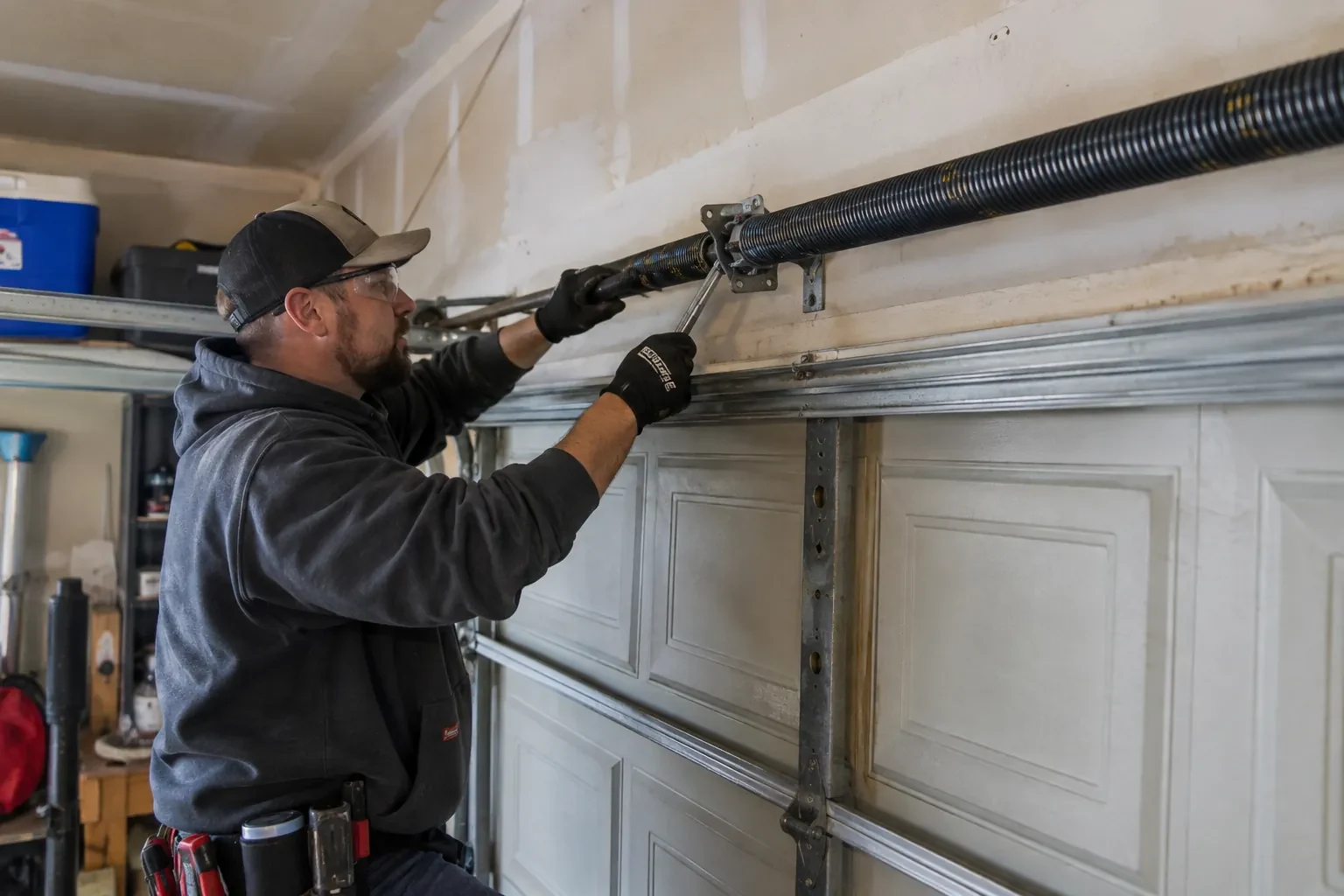
Diagnosis begins with what you saw and heard. When did the door last behave, and what changed between then and now: a power outage, a storm, a new light bulb, a shovel leaning against the sensor, someone pulling the red cord? Does the motor hum, click, run or stay silent? Does the fault follow one control or all of them? Is the door stranded up or stranded down, and does it move at all by hand? A few minutes of this on the phone or at the door points the technician at one part of the system instead of all of it, and often shortens the visit considerably.
Restoring power the right way
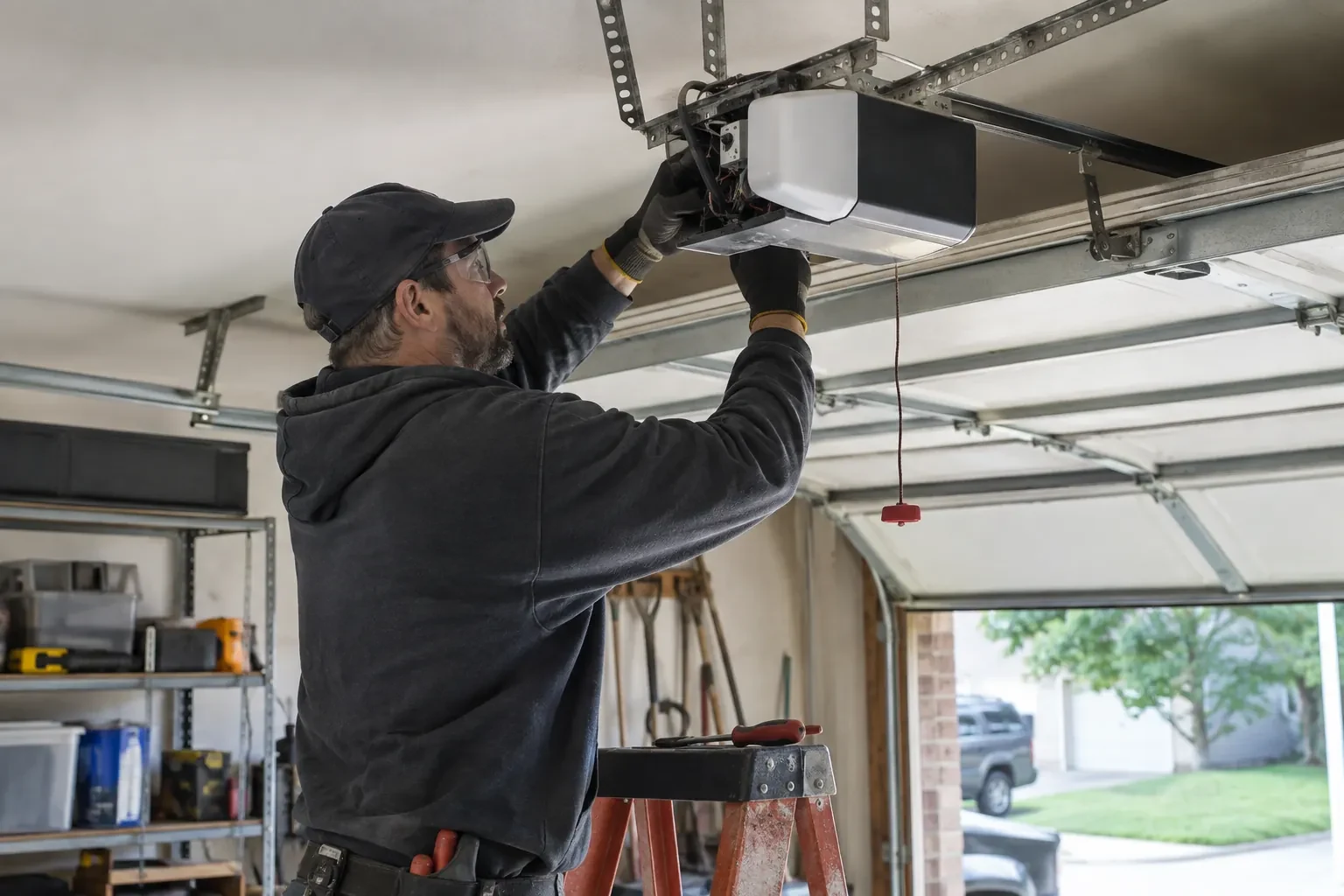
When the fault is electrical supply, the fix is matched to the cause rather than simply reset. A tripped breaker or ground-fault device is reset and then watched through several cycles to be sure it holds; one that trips again points to a damaged cord, a wet outlet or a failing motor. A blown board fuse or a dead transformer is replaced with the part specified for the model. Surge damage after lightning often shows as a board that lights up but ignores every control, and that board is replaced where the model is still supported. New receptacles or hard wiring are referred to an electrical contractor.
Ready for the cold months
After a winter diagnosis the door is set up for the season rather than for the day. The bottom seal has been freed and, if it was tearing, replaced, with a light silicone wipe so it releases from the slab. Moving parts carry a low-temperature lubricant. The photo eyes have been cleaned and, where low sun was blinding one, shaded or swapped side to side. Force has been set for a cold, stiff door without being pushed up to hide one. Keep snow and ice cleared from the threshold and the sensor lenses, and expect the door to be a shade slower on the coldest mornings.
Garage Door Opener Diagnosis and Repair
In the van
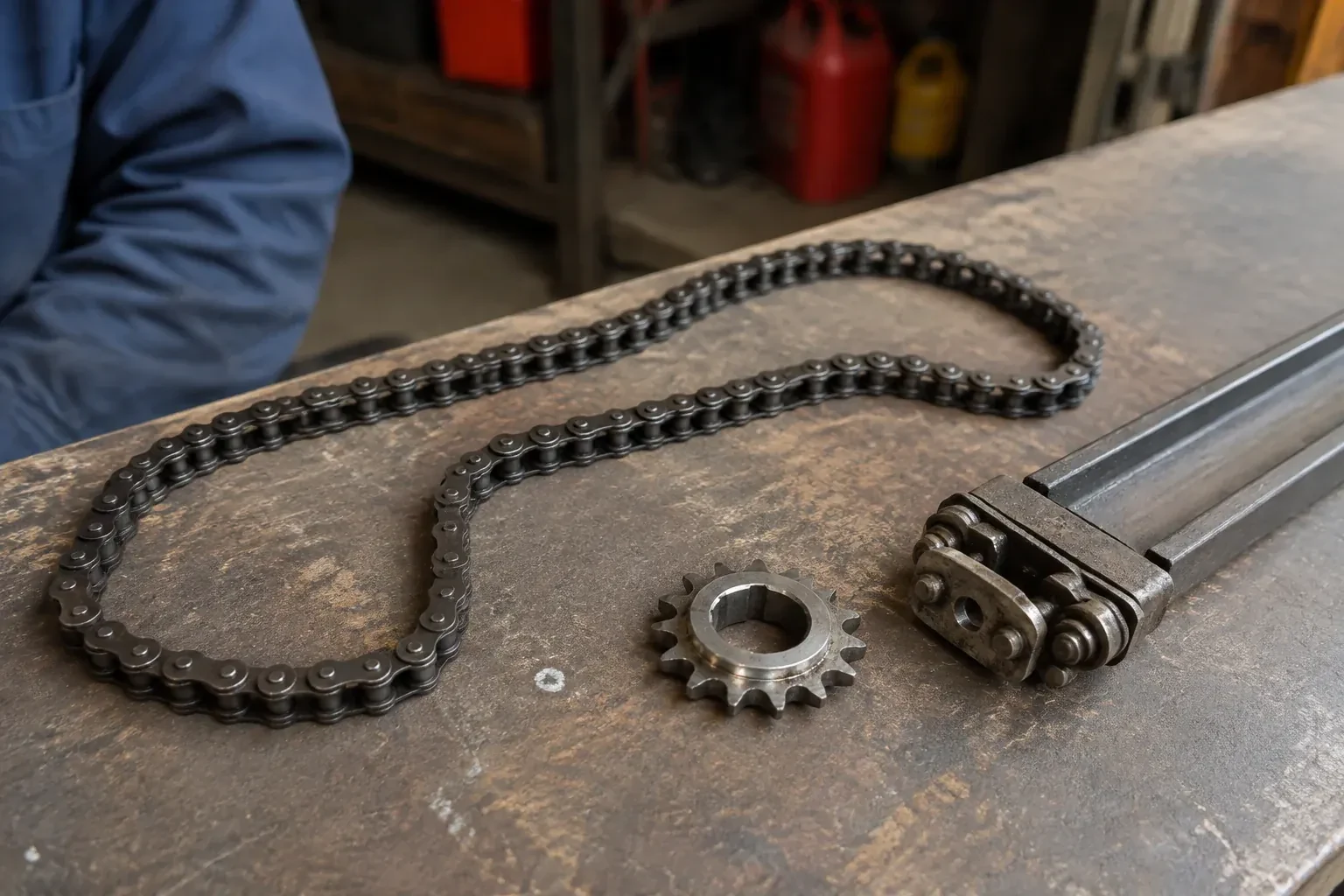
Drive gear and sprocket kit
Wall control
Transformer and board fuse
Bell wire and clips
Photo-eye sensor pair
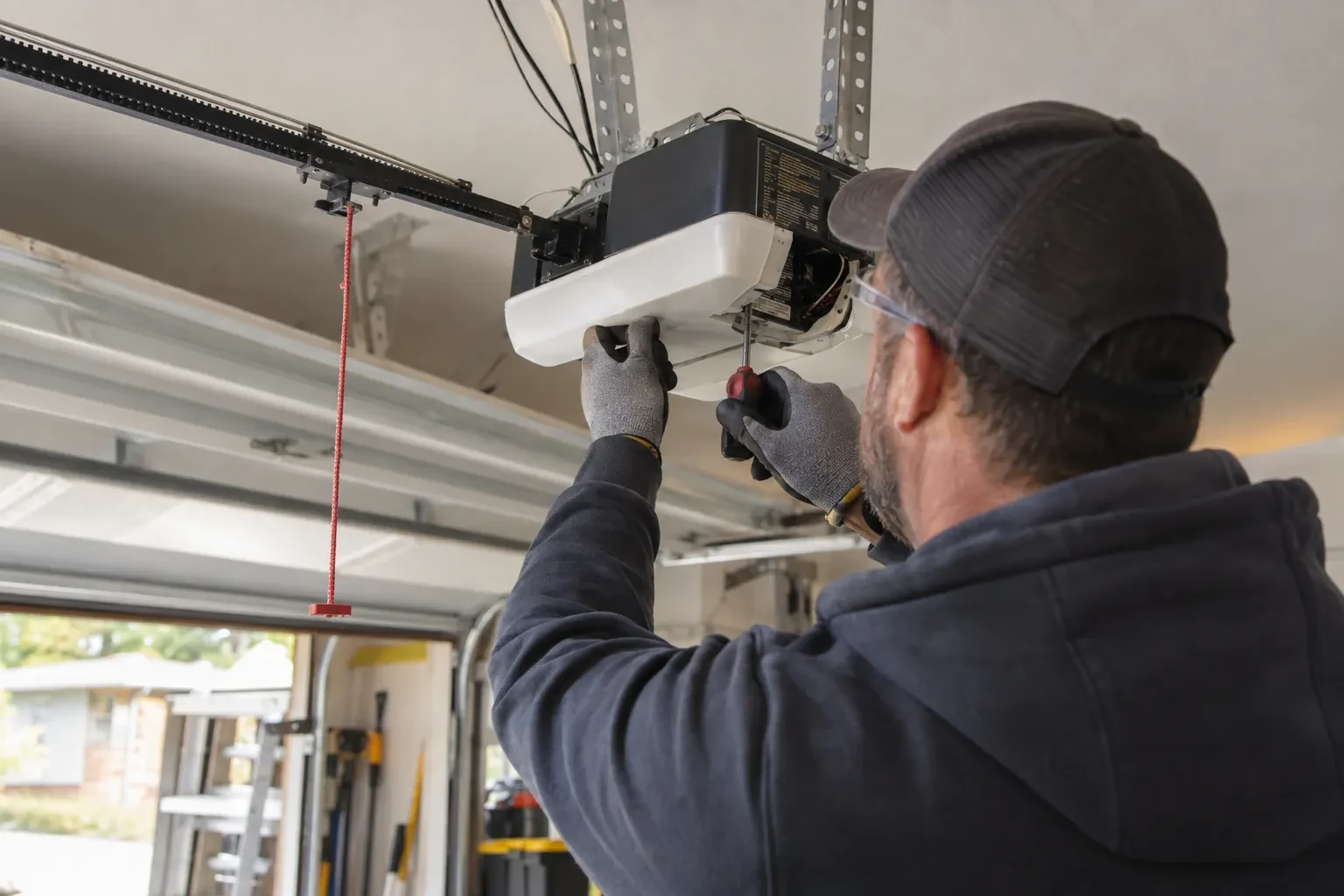
Garage Door Opener Diagnosis and Repair
What affects the quote
Season and weather
A frozen seal, a stiff door and an unheated garage in the cold months add steps to a diagnosis, such as freeing the door and re-lubricating for low temperatures, and the quote allows for them.
Age and model of the unit
Parts availability is checked by exact model and part number rather than assumed from age, since some units even from the last two decades already have a board or component discontinued with nothing to replace it. Sourcing a part, or replacement instead, shapes the quote.
Sensor realignment versus replacement
Straightening a bracket and cleaning a lens is a small task. Replacing the sensor pair and running new wire along the wall and ceiling is a larger one, and the quote names which applies.
What to have ready
- Is the garage connected to the house, or does it have a side door?
- What does the opener do when you press a button: hum, click, run or nothing?
- Has anyone pulled the red emergency release cord recently?
Garage Door Opener Diagnosis and Repair: questions
QuestionsWhat do the blinking lights on the opener mean?
They are a diagnostic code. On openers made in roughly the past fifteen years, the head unit flashes its lights, or a pair of up and down arrows, in a counted pattern such as one flash then five. Each pattern corresponds to a fault family on the maker's chart for that model: sensor circuit obstructed or open, motor commanded but not moving, more force than allowed. The technician reads the pattern, then confirms it by hand, since one fault can imitate another.
How do you tell whether it is the opener or the door?
By separating them. With the door closed, the emergency release is pulled so the opener is out of the picture, and the door is lifted by hand. A balanced door rises without strain, hangs where you leave it around waist height and stays open at the top. If it does, the opener is at fault. If it is heavy, drifts or binds, the door is the cause and the opener was only reporting the strain. This one check prevents a great many wrong repairs.
Why does my garage door open by itself?
A door that opens with nobody pressing anything is usually being told to by a fault in its wiring or a control. A pinched or stapled wire to the wall control can short intermittently and act like a button press; a stuck button on a remote left in a coat pocket does the same; and a neighbour's remote on an old fixed-code opener can occasionally trigger it. The technician isolates each control in turn until the phantom command stops.
Related services
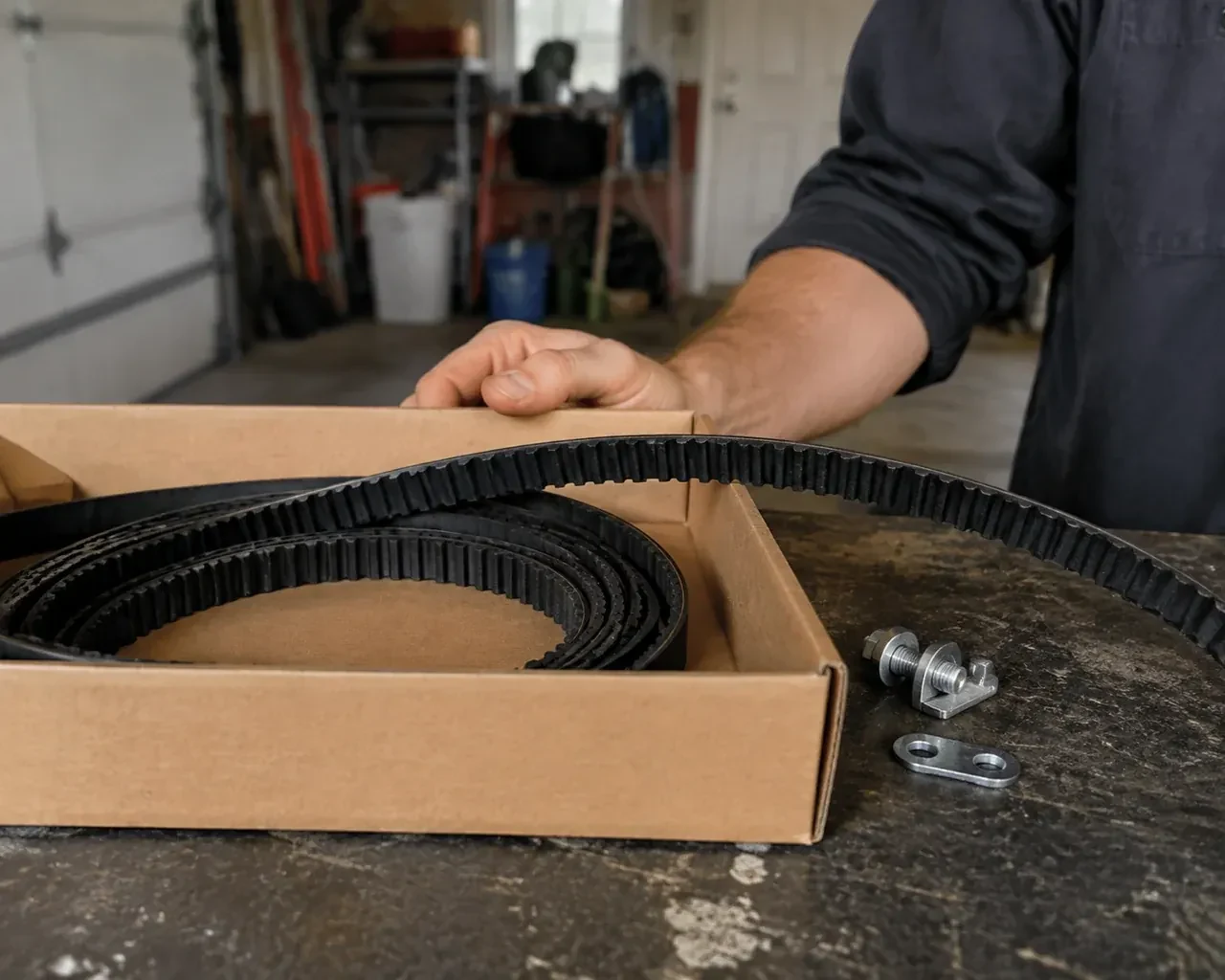
- Belt-Drive Opener RepairSomeone tightened the belt last month to stop the sag.
- Garage Door Opener ReplacementPress the button and the motor hums, but the door stays exactly where it is.
- Photo-Eye Sensor Alignment or ReplacementYou press the remote, the door drops a few centimetres, then climbs straight back to the top while the opener light blinks.