Repairs · Toronto
Garage Door Perimeter Weatherstrip
The new door went in last year and looks perfect, but the old wooden stop and its tired seal were left in place.
In plain words
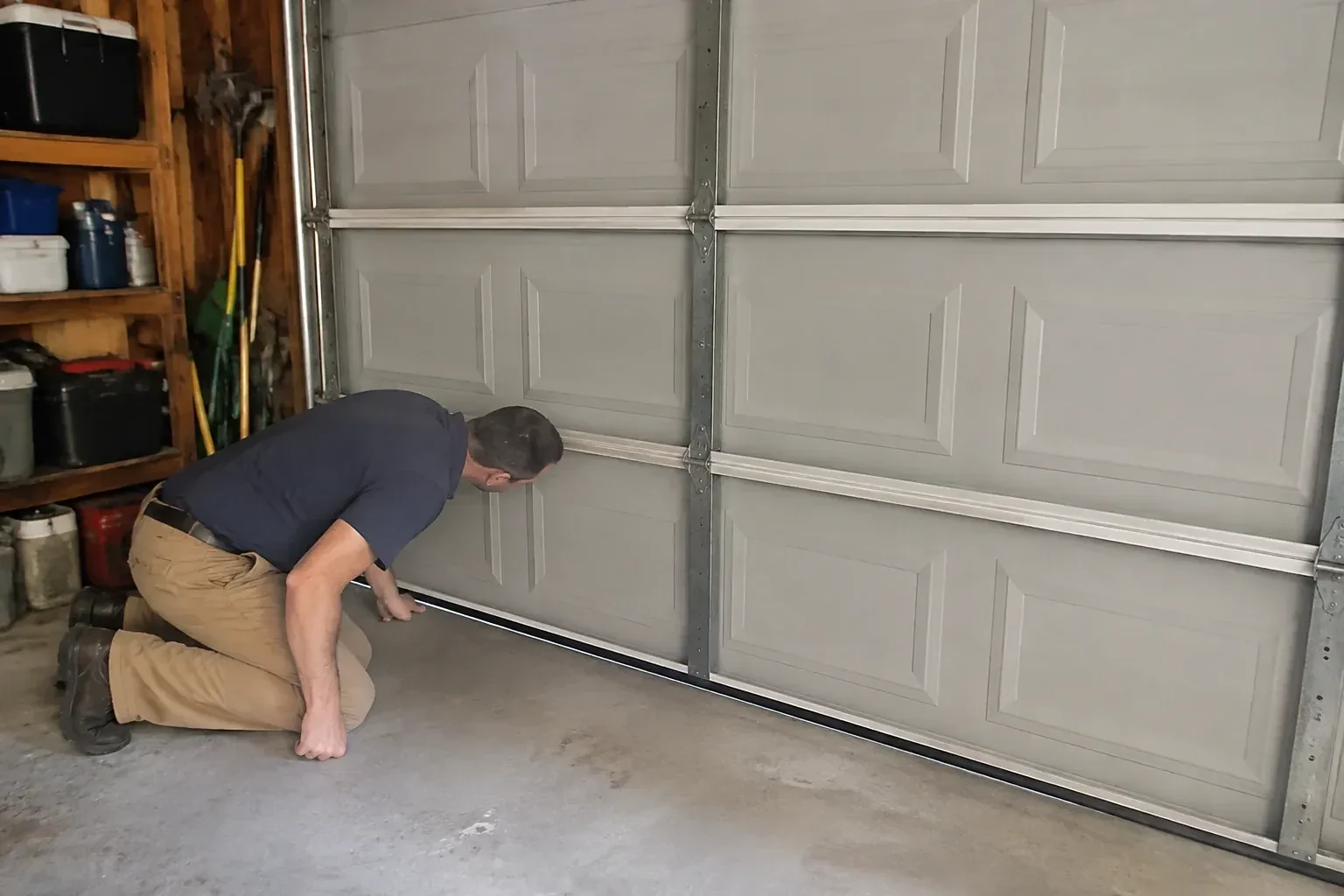
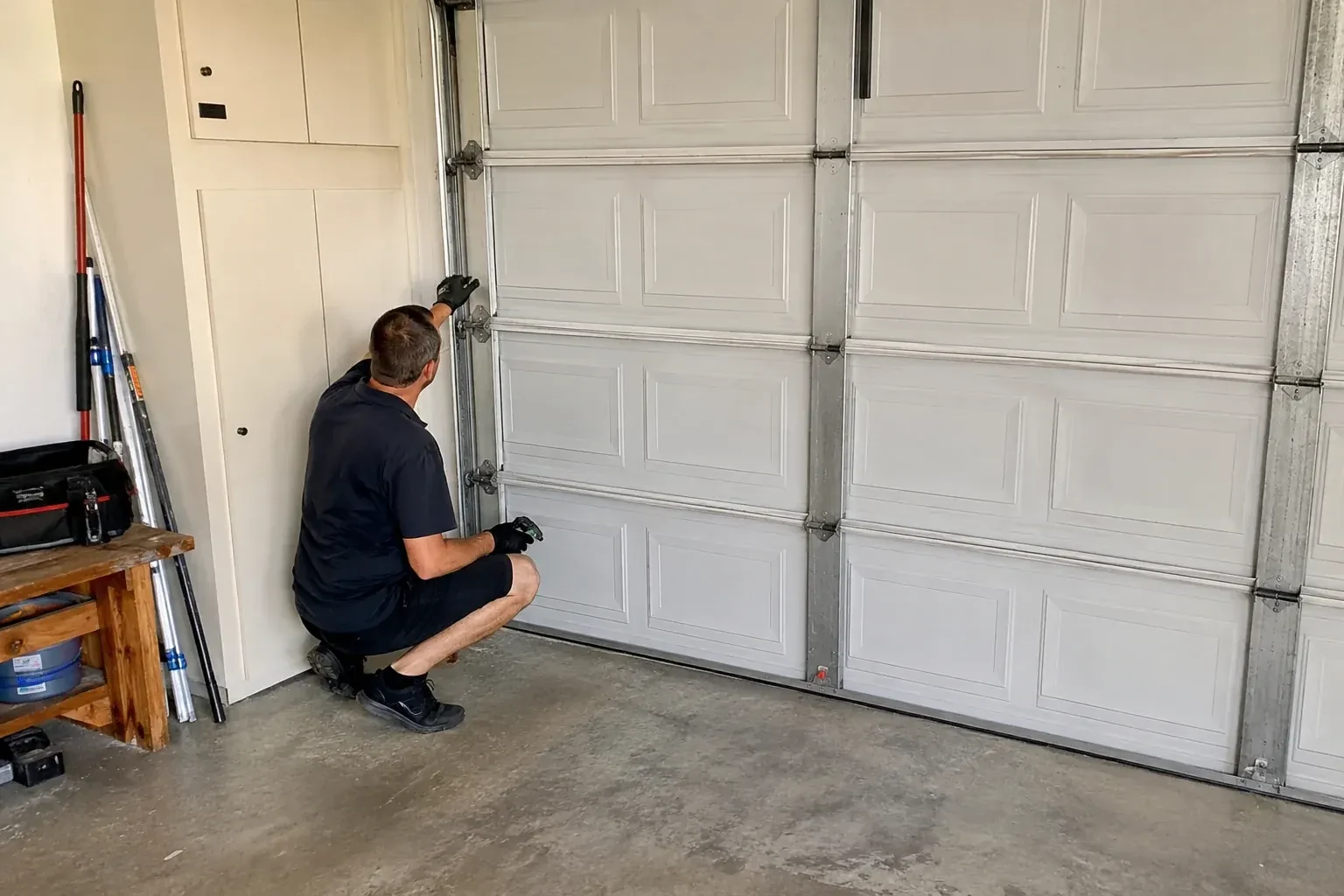
A perimeter seal is only as good as the door it meets, so a technician looks at the door before the seal. If one side shows daylight and the other is tight, the strip may be fine and the door may have drifted: worn rollers, a track bracket that has moved, a top section that bows away from the header. Setting that right first means the new fin can be positioned with the same light contact on every side. Where the door is already square, the seal is fitted straight to it. Either way the result is a door that closes against a continuous line of contact.
How the visit goesA length of weatherstrip along the right jamb has pulled away, nails and all, and it slaps against the trim every time the wind picks up. The wood behind it is dark and soft where it meets the floor.
Garage Door Perimeter Weatherstrip
How the visit goes
Trim, cladding and where water gets behind
The seal shares the jamb with brickmould, siding, capping and old caulking, and water that gets behind any of them ends up in the wood the strip is nailed to. The technician follows the joint between stop and trim looking for cracked or missing caulk, capping that funnels water down the jamb face, and gaps at the sill where meltwater collects. These are small things to correct while the old strip is off and the surface is bare, and they are what stop the fresh wood from going the way of the old. Anything larger, such as damaged siding, is pointed out for a separate decision.
The header piece goes on first
With the door closed, the header length is cut to the full width of the opening and lifted into place, a two-person job on a double door. It is positioned so its fin lies against the top section with a slight, even deflection along the whole width, then fastened from the centre outward with galvanized or stainless nails or exterior screws at regular spacing, which keeps the length straight rather than letting it wander. The ends are left to receive the side pieces beneath them. Fitting the header first means both sides are cut to meet it exactly, and the corners close properly.
A note of what was fitted
Before leaving, the technician tells you what went on: the seal type, the profile and fin width, the colour, and the lengths of the header and sides. It is worth writing this on a card near the opener or in the door's paperwork. If one length is ever damaged, by a ladder or a car mirror, the same profile can be matched and a single piece replaced rather than the whole set. If a jamb was repaired, the note records where and with what, so anyone painting or working on the frame later knows what is behind the finish.
Garage Door Perimeter Weatherstrip
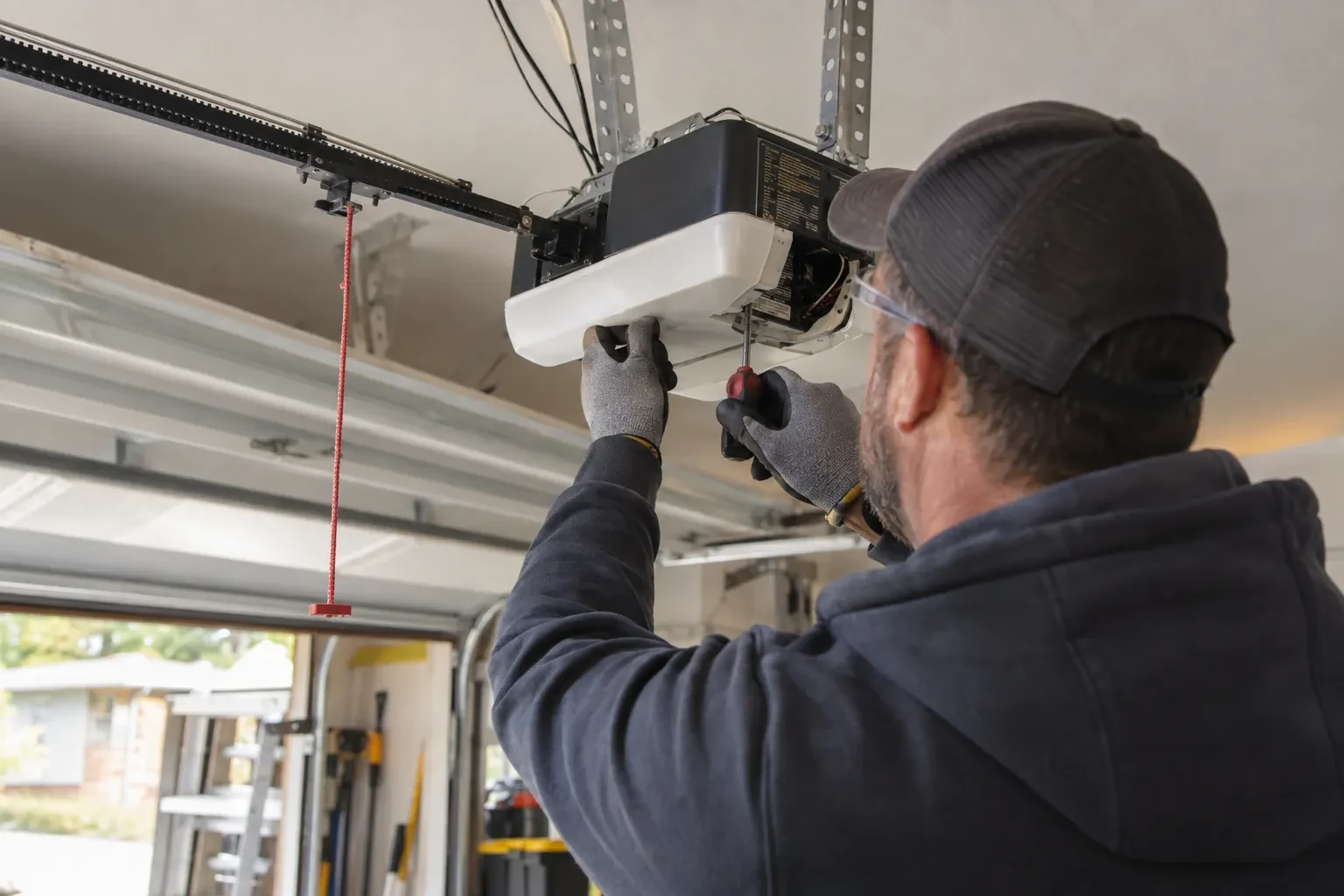
In the van
Exterior screws and weatherproof staples
Epoxy consolidant and exterior primer
Galvanized or stainless trim nails
Jamb repair lumber or PVC trim
Utility knife and mitre saw
Garage Door Perimeter Weatherstrip
What affects the quote
Working height and access
A tall header, a sloped driveway that makes a ladder awkward, shrubs against the jambs or cars and storage close to the door all affect how long the work takes.
Commercial or oversized openings
Wider and taller commercial doors often carry an aluminum retainer with a rubber insert or a brush seal, and the material and fitting time differ from a residential vinyl seal.
Fin on the existing stop or a one-piece vinyl stop
Nailing a new fin to a sound wood stop uses less material than replacing the stop with a one-piece vinyl moulding, which costs more as a part but needs no paint and does not rot.
What to have ready
- Is it a single or double door, and roughly how wide and tall?
- Is the wood around the opening soft or rotten near the floor?
- Is the bottom seal on the door also worn?
Garage Door Perimeter Weatherstrip: questions
QuestionsHow should I look after the new seal?
Four times a year, check for daylight from inside with the lights off and press the fin to feel that it is still soft. Wipe the seal with a damp cloth to clear grit and salt, keep paint off the fin, apply a silicone wipe before winter, and keep slush and bins away from the bottom of the jambs. Press any lifted corner back and call if a length has come loose.
Do you adjust the door as part of the seal work?
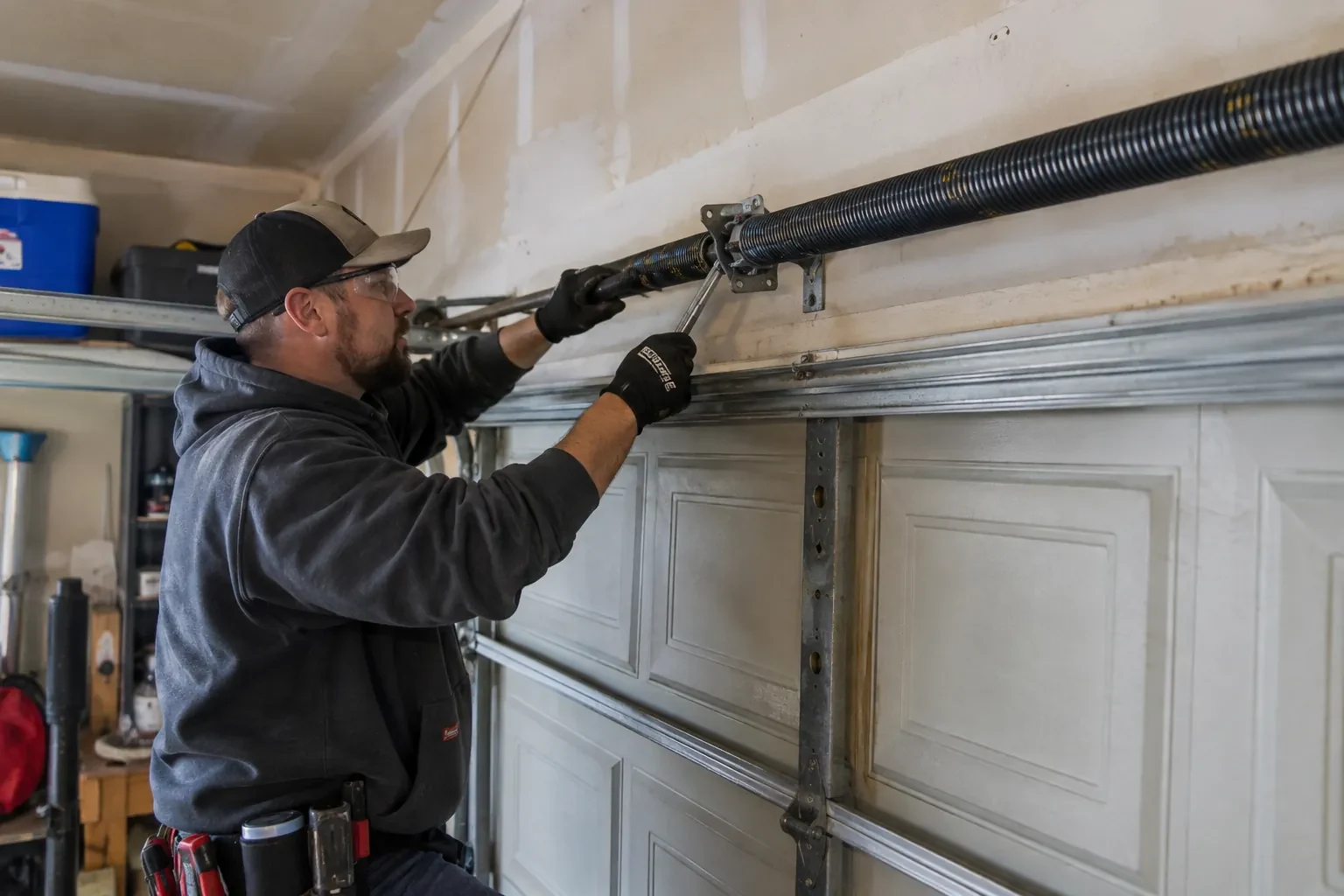
Small corrections, yes. If a track bracket needs re-setting or the door needs to come plumb so the fin can meet it evenly, that is done so the new seal is fitted to a door that sits properly. Larger work, such as replacing rollers or a bowed section, is explained and offered as its own job so you can decide on it separately.
What is the difference between perimeter weatherstrip and the bottom seal?
The bottom seal is a rubber or vinyl strip fixed to the lower edge of the door itself and presses against the floor. Perimeter weatherstrip is fixed to the frame, running up both jambs and across the header, and the closed door presses against it from inside. They wear differently and are replaced separately, though it is common to renew both in one visit when each is showing its age.
Related services
- Garage Door Tune-UpSince the first cold snap the door has been sluggish.
- Off-Track Garage Door ResetYou tapped the door with the bumper while backing in, barely a nudge, and now the bottom corner has swung inward.
- Garage Door Panel ReplacementAfter an overnight freeze the door stuck to the slab, the opener strained, and something gave.