Springs · Toronto
Garage Door Track Repair or Replacement
Halfway up, the door lurches and one roller rides onto the lip of the channel.
In plain words
Track rarely fails on its own; something moves it. A bumper creases the vertical run, vibration works lag screws out of the jamb, slush and salt eat the bottom foot of the channel, worn rollers slowly spread the lip, and a hanger pulling from the ceiling lets the horizontal run sag. Track repair treats the cause with the symptom: the jamb is repaired if it has gone soft, rollers are renewed if they did the spreading, hangers are refixed into joists, and the threshold is checked for ice ridges. Correcting the reason is what keeps the straightened track straight for years.
How the visit goesThe door climbs crooked, one side clearly ahead of the other. Nothing looks broken, but the two tracks sit different distances from the door, and one leans in toward the opening near the top.
Garage Door Track Repair or Replacement
How the visit goes
Jamb brackets, lag screws and the wood behind them
Every fixing along the vertical track is tested by hand and by eye. Jamb brackets that rock, lag screws that turn without tightening, and a continuous angle standing off the wood all mean the track has been free to move. The technician then looks at the jamb itself, probing the bottom foot for softness where splash and salt have soaked in, and checking for splits around the screw holes. In an older garage the wood is often the real fault, and no amount of tightening holds a screw in punky timber. Where that is the case, sistering or replacing the lower jamb goes onto the plan alongside the track.
Replacing a vertical section
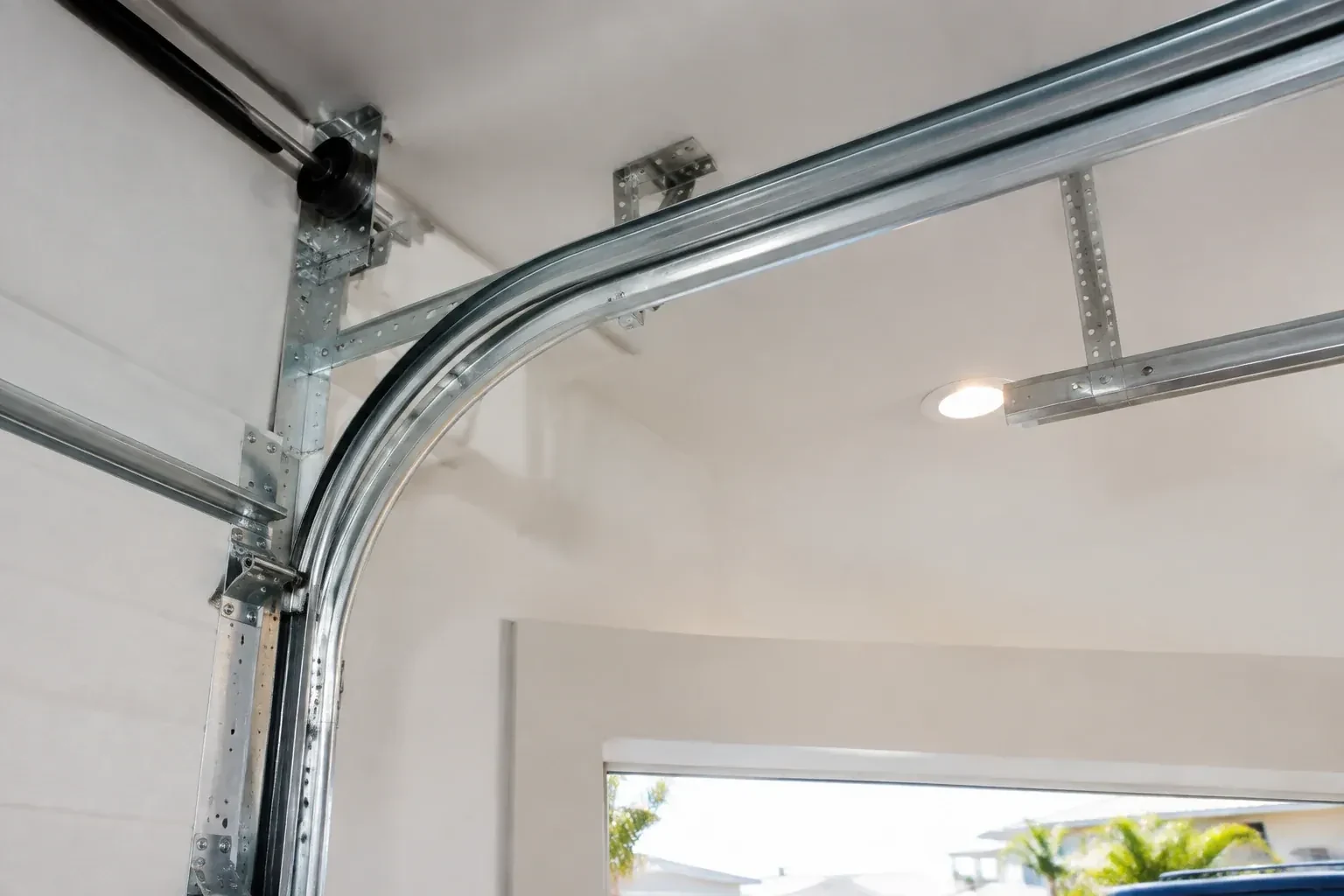
A kinked, cracked or rust-thinned vertical track comes off in one piece. The jamb brackets or continuous angle are unbolted, the old track is lifted clear with the rollers eased out of it, and the new piece, cut or ordered to the same height, profile and mounting style, is bolted to the brackets. The joint with the curve at the flag bracket is aligned so a roller passes with no step, and the track is offered up to the jamb, set plumb with the correct spacing and taper, and lag-screwed into sound wood. The rollers are threaded back in as the door is released from its clamps a little at a time.
Jamb wood that will hold a screw again
If the visit included repairing the jamb, you now have sound timber behind every bracket, and the small habits that keep it that way are simple. Keep the bottom of the jamb dry: slush pushed clear, a bead of exterior caulk where the trim meets the slab, and paint or stain kept up on the exposed face. Look once a year for the tell-tale dark, soft patch at floor level and for screws that seem to have moved. A jamb that stays dry holds lag screws for decades, and with the track now fixed into good wood, the alignment set today has something solid to rest on.
Garage Door Track Repair or Replacement
In the van
Jamb brackets or continuous angle
Lag screws and track bolts
Horizontal track with curve
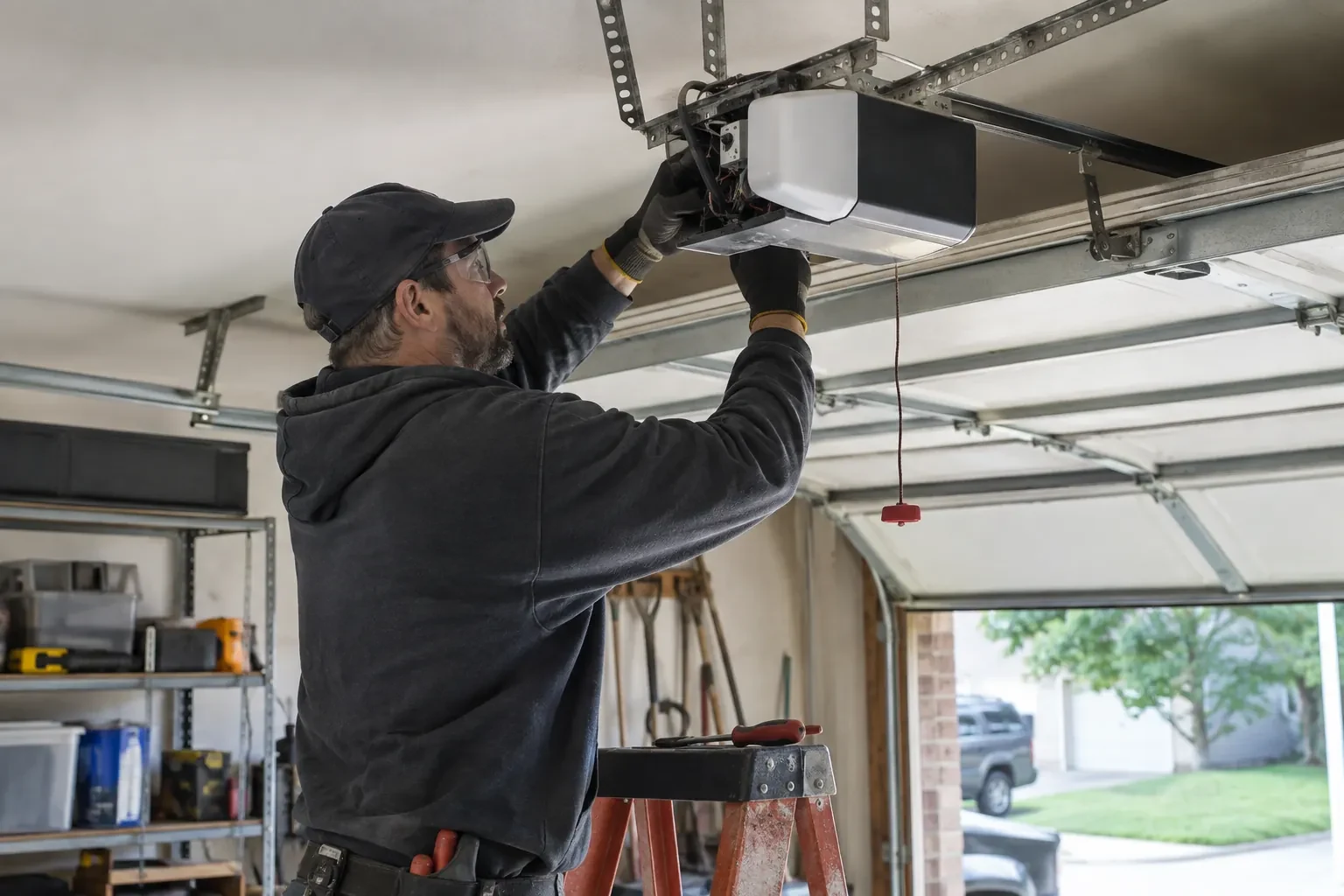
Perforated angle back hangs
Jamb lumber and construction screws
Garage Door Track Repair or Replacement
What affects the quote
Which part of the run
A vertical section below the curve is the simplest change. The curve itself, or the horizontal run overhead, involves the flag bracket and hangers and takes longer to set.
Springs that have to be unloaded
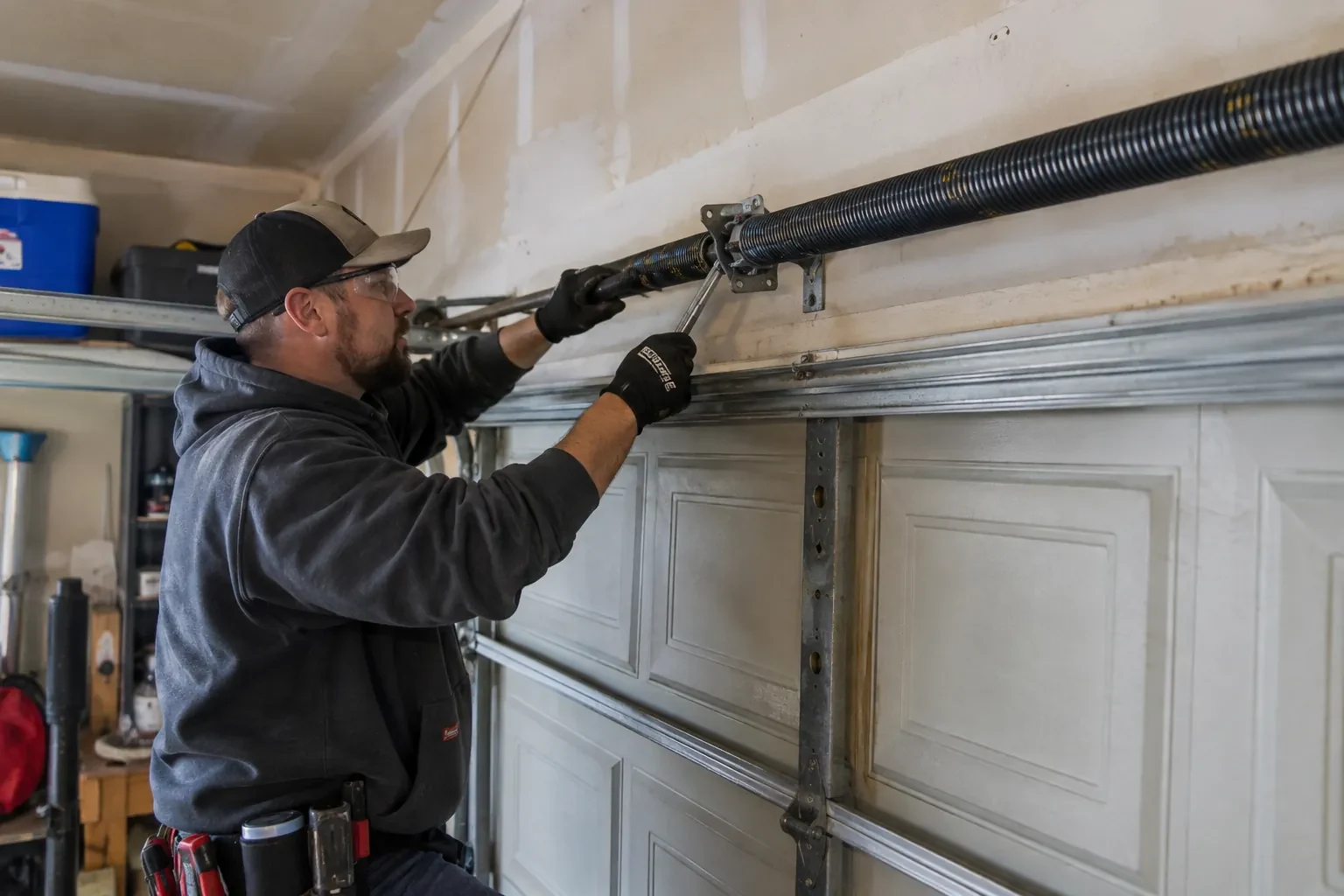
Work at the flag bracket or on the curve means winding the torsion springs down and back up. That adds time, and the quote says whether it applies to your repair.
Low-headroom or high-lift hardware
Changing the layout, rather than repairing the existing one, brings new horizontal track, curve pieces, top fixtures and often drums and spring adjustment, and is quoted as a separate scope.
What to have ready
- Does the door rub the frame or catch at the same spot every time?
- Is the door closed, fully open, or stuck partway?
- Is there one spring above the opening, or springs along the tracks?
Garage Door Track Repair or Replacement: questions
QuestionsCan a low-headroom or high-lift layout be fitted to my existing door?
Often, yes, and it is a track job with a spring job attached. Low-headroom dual track lets a door open under a low ceiling or a beam, while high-lift track carries the door further up the wall to clear a car lift or storage. Each changes the horizontal run, the curve, the top fixtures and usually the cable drums and spring turns. The technician measures headroom, sideroom and backroom first and confirms the door suits the change.
Can worn rollers damage the track?
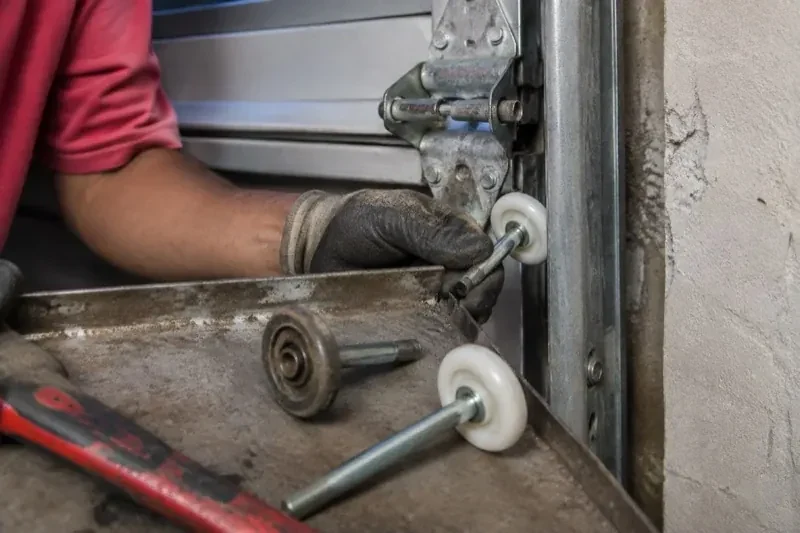
They can, and it is one of the slower ways track goes wrong. A wheel that no longer turns on its bearing skids along one lip of the channel, and over thousands of trips that pressure pries the lip open until a roller can slip out. When a spread section is closed up, the rollers that caused it are replaced at the same time, otherwise the new profile opens again within a season.
The wood behind the track is rotten. Can the track still be fixed?
Yes, and the wood is part of the job. Screws will not hold in soft timber, so the technician cuts back to solid wood and sisters a new length of jamb alongside or replaces the lower section, fastening it through to the framing. The brackets are then lag-screwed into the fresh wood and the track set to the door. In older garages this repair is common, and it is what makes the alignment last.
Related services
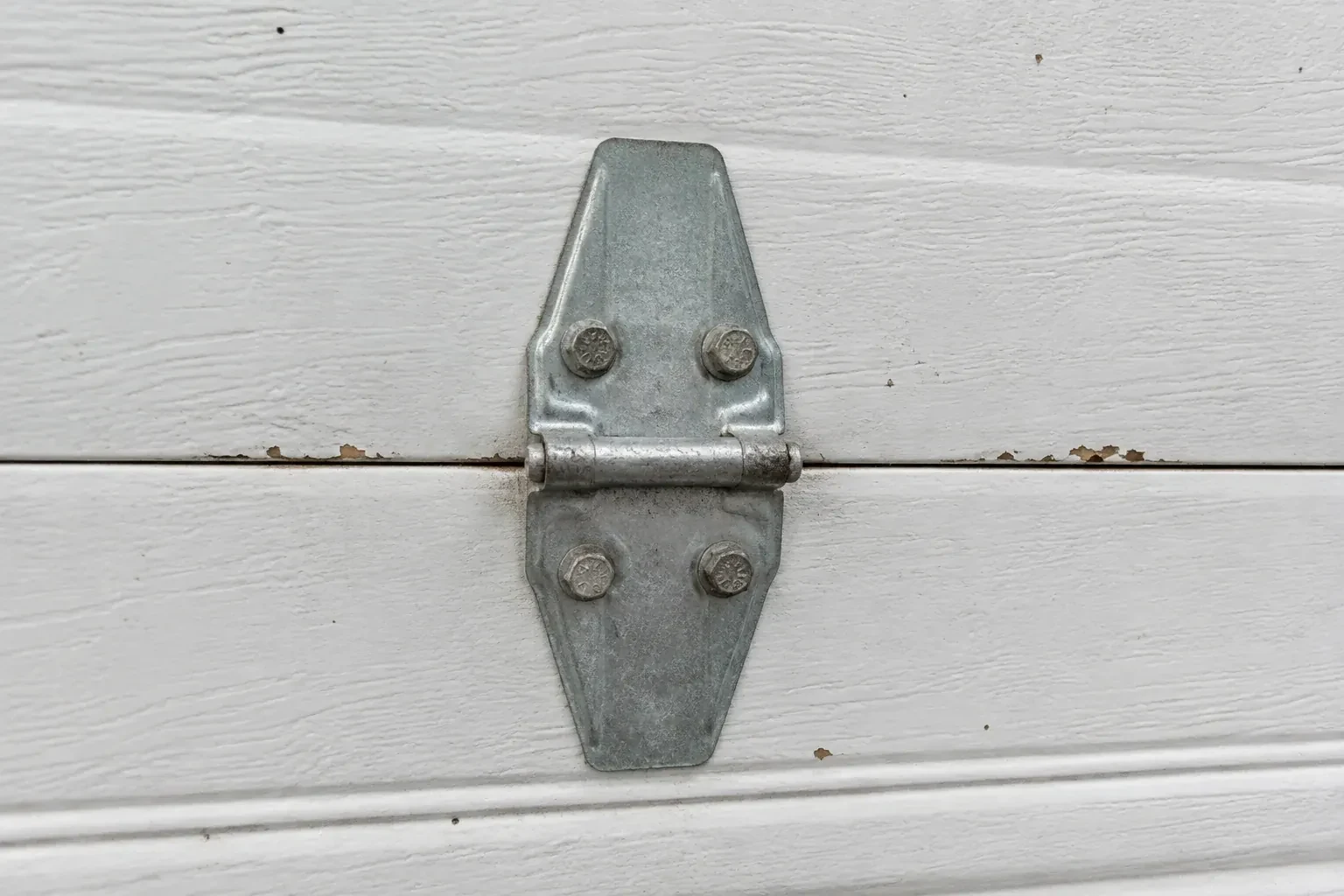
- Garage Door Hinge ReplacementOn the old wood door, one hinge has pulled away from the panel, dragging a screw and a chunk of soft timber with it.
- Garage Door Cable ReplacementThere was a sharp crack from the garage, and when you went to look the door had dropped on one side and jammed.
- Torsion Spring ReplacementYou heard a sharp bang from the garage, and now the opener hums for a second and gives up.