Openers · Toronto
Emergency Release Repair
It is the coldest morning of the year.
In plain words
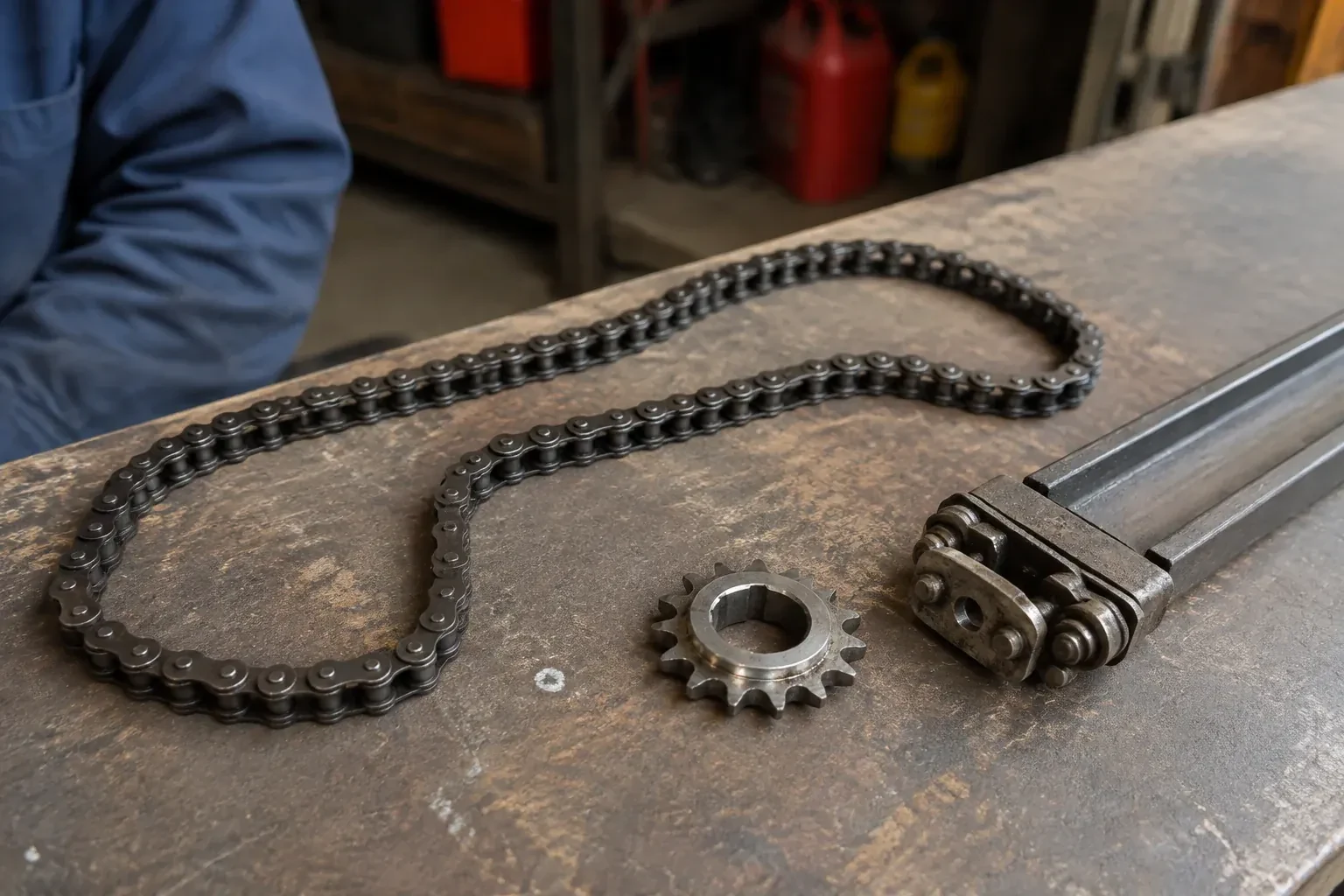
Emergency release repair puts the manual disconnect on an opener into working order. That disconnect is the red handle on a cord below the rail, the spring-loaded lever it pulls, and the trolley that lets go of the door when the lever is thrown and grips it again when the two are brought back together. When any of those parts is missing, bent, worn or set at the wrong height, moving the door by hand in an outage becomes a struggle and reconnecting it afterwards a puzzle. The technician fits parts made for that opener, sets the handle where it belongs, and proves the sequence from disconnect to reconnect.
How the visit goesThe power went out in the middle of an ice storm, the car is inside, and when you reach up for the red handle there is nothing there. A frayed stub of cord hangs from the trolley, well above your fingertips, and the door sits shut.
Emergency Release Repair
How the visit goes
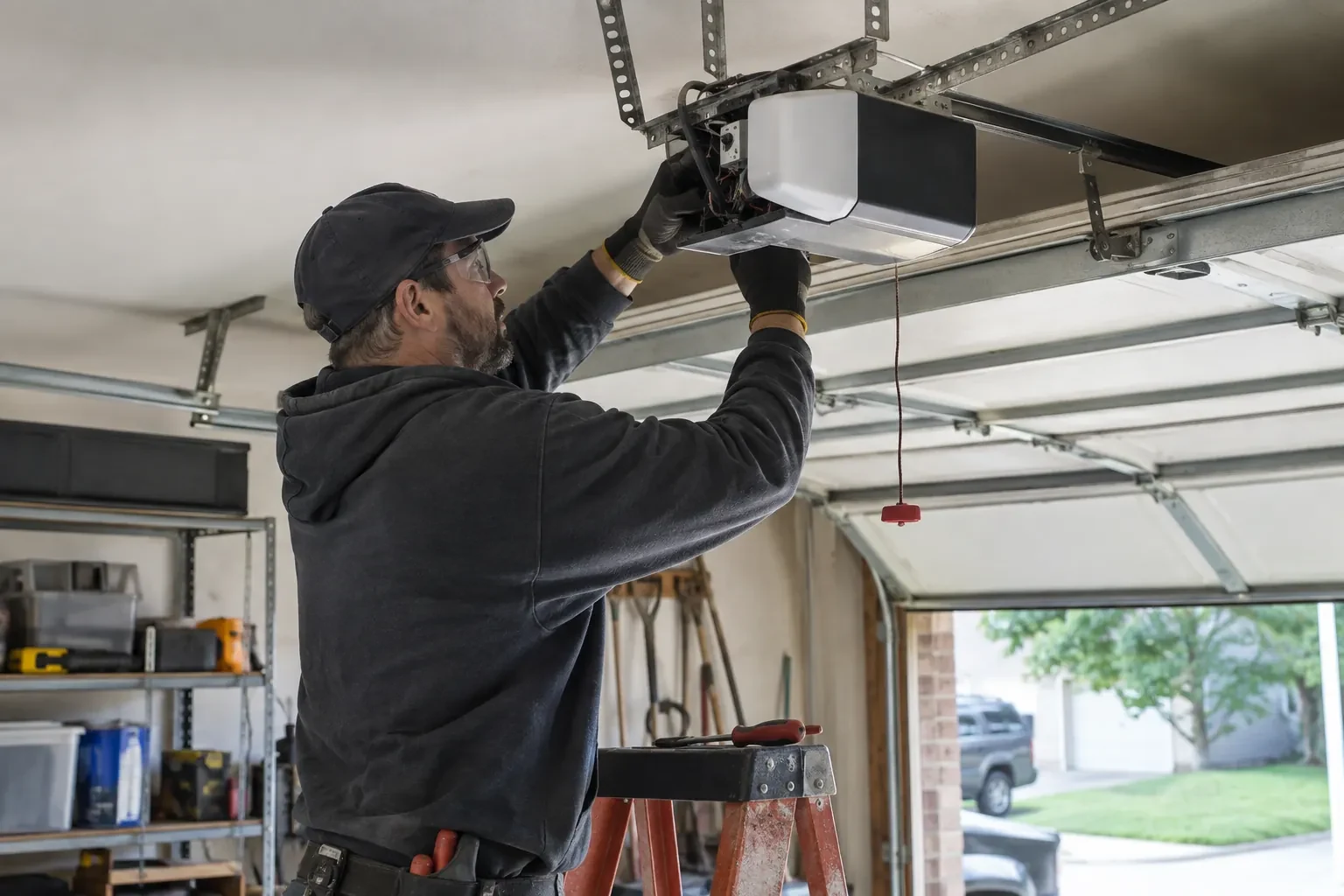
Door closed before anything is touched
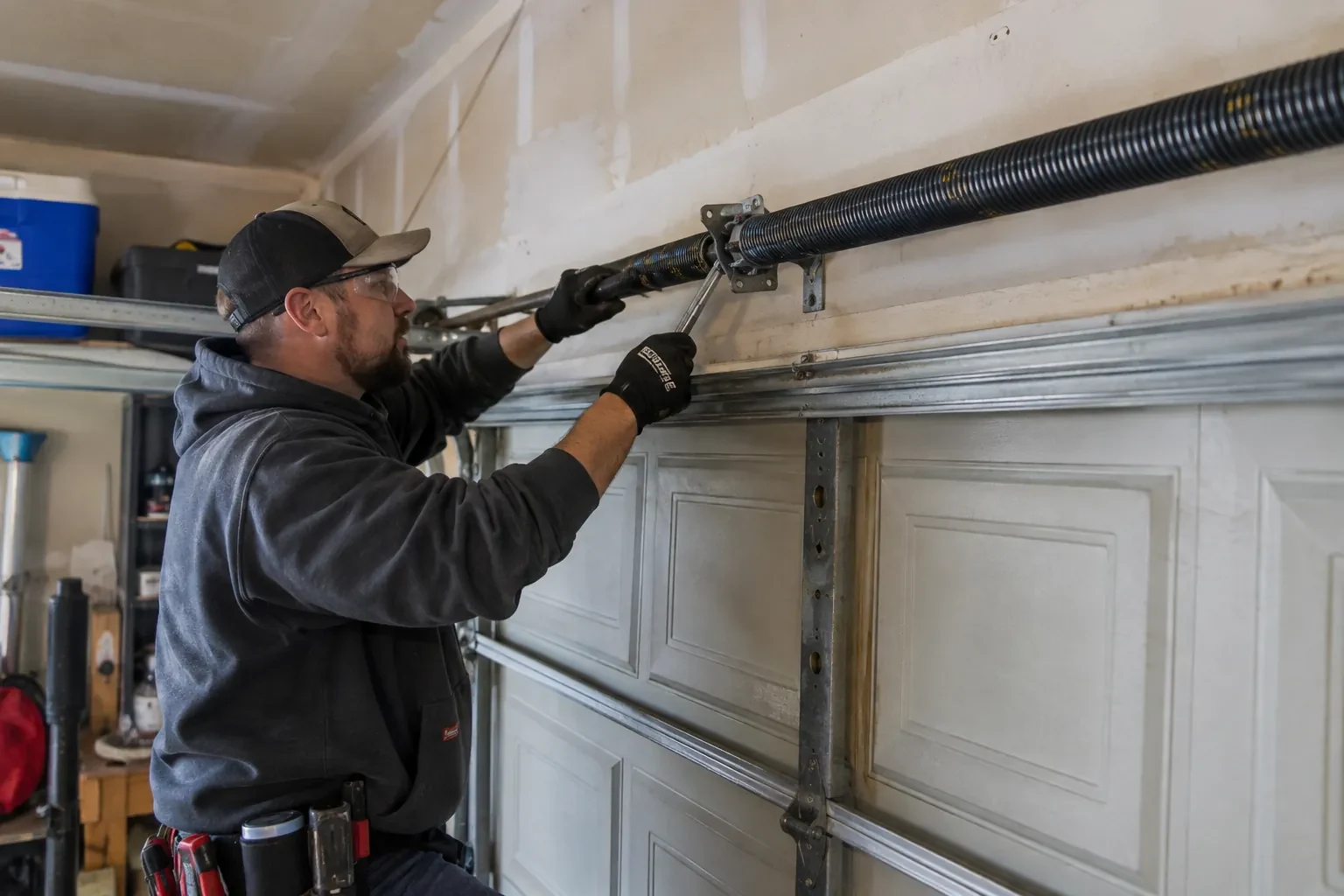
The first thing the technician does is get the door into a safe state. If it is closed, it stays closed while the release is examined. If it is stranded open or part-way, the door is supported and clamped, with the opener unplugged, before anyone reaches for the lever, because a door that is free of its opener is held only by its springs and an unbalanced one can move on its own. This is the same rule the industry checklist gives homeowners: disconnect with the door closed and keep the opening clear, since even a closed door can shift once free of the opener. Starting here keeps the risk low until someone decides to move the door.
A new cord and handle at the right height
A cord that has frayed, rotted in the sun or snapped is replaced with a rope and red handle kit made for openers. The rope is tied to the release lever with a knot that will not slip under a hard pull, then cut so the handle hangs no higher than about 1.8 metres above the floor and clears the vehicle roof. The handle sits where it can be seen from the door into the house, and any storage that crowded it is pointed out to you. A red handle that is easy to tell apart from everything else on the ceiling is what the standard asks for, and it is what the technician leaves behind.
A handle you can find in the dark
You are left with a red handle hanging at a height an adult can reach from the floor, clear of the car and visible from the door into the house. Nothing is tied around the rail, nothing is stacked beneath it. If the garage is dark in an outage, the handle is where your hand expects it. Keep it that way: when shelving, bikes or a storage platform go in, leave the space under the trolley open. Once a season, glance at the cord for fraying where it meets the lever, since sun through a window and winter cold both age rope.
Emergency Release Repair
In the van
Outside key release kit (lock, cable, keys)
Dry lock lubricant and de-icer
Track clamps to hold the door
Chain or belt tension hardware
Release lever and spring
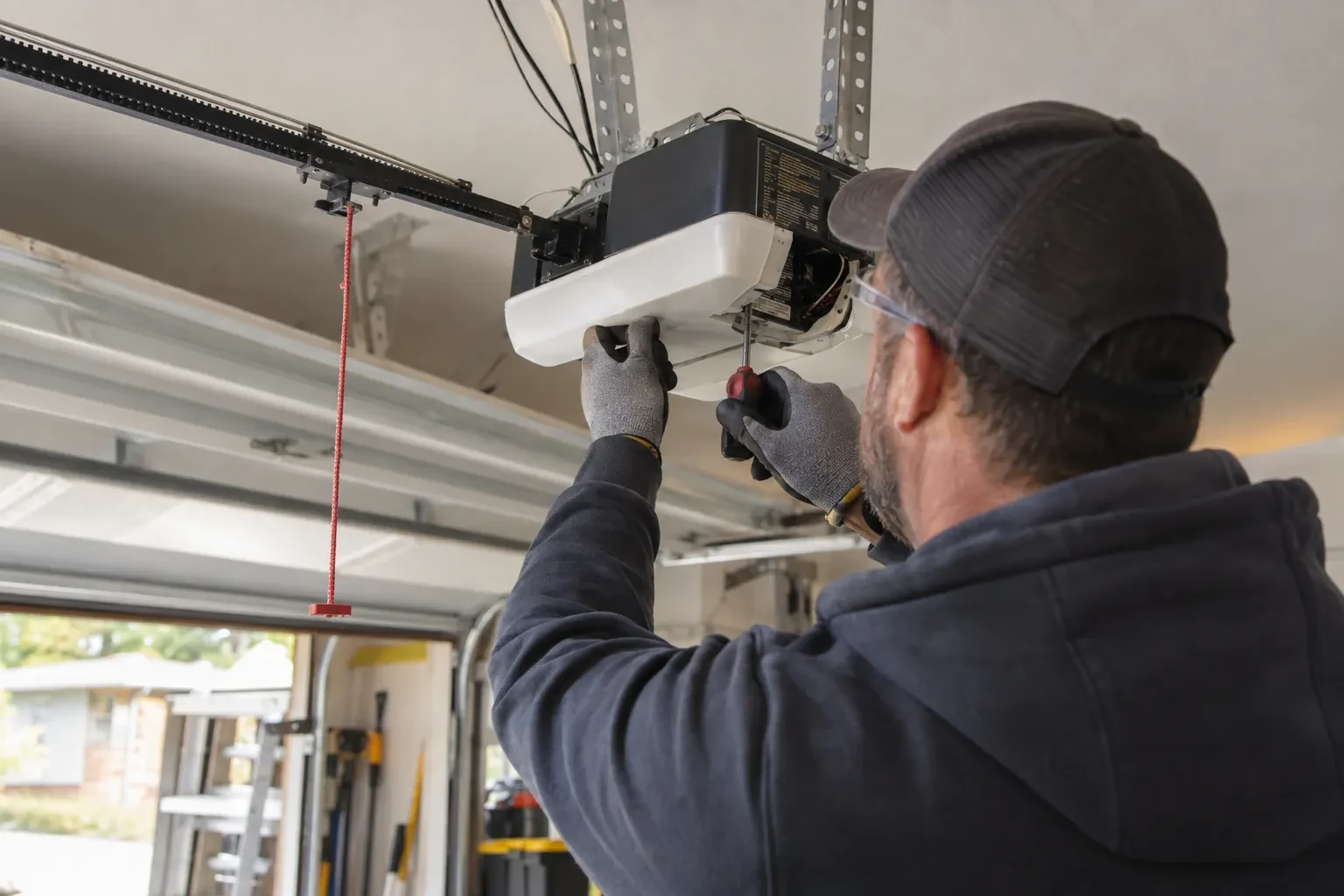
Emergency Release Repair
What affects the quote
Cord, lever or trolley
A rope and handle is the smallest item; a lever and spring sits in the middle; a complete trolley or carriage assembly is the larger part, and the diagnosis says which one you need.
Freeing versus replacing the trolley
A trolley jammed on the stop bolt is freed, adjusted and reused when its latch is sound. One with worn teeth or a cracked body is replaced, which changes both parts and labour.
Door work found by the balance test
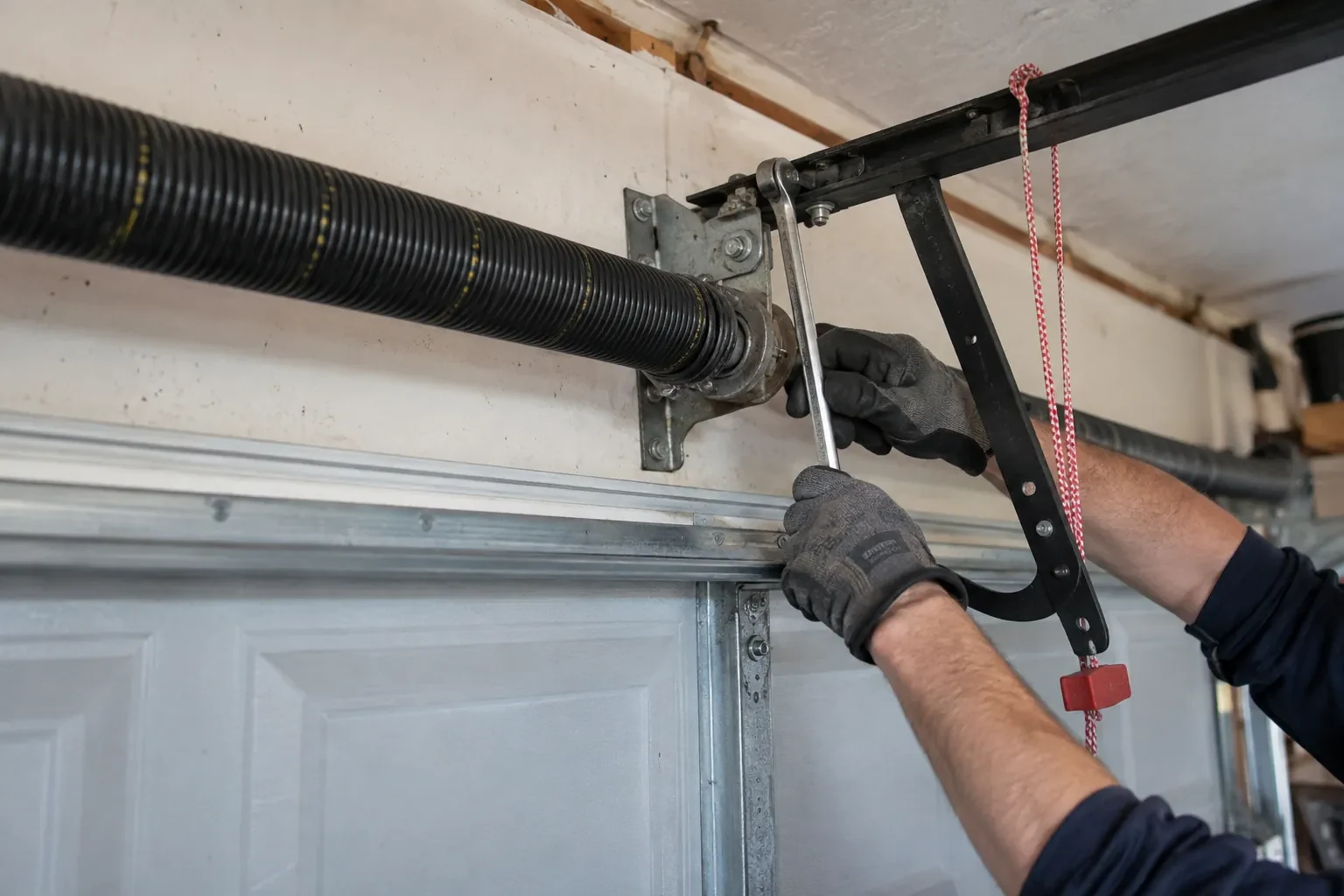
If the disconnected door proves heavy or drifting, spring, cable or roller work comes before the release is put back into use, and that door-side work is quoted as its own item.
What to have ready
- Has the trolley ever been left disconnected for a stretch of manual use?
- Has the door or the opener been replaced since the release was last used?
- Is anything stored under the rail or tied around the cord?
Emergency Release Repair: questions
QuestionsMy door lets go of the opener partway through travel. Why?
A release lever that is only half-latched will hold until the door's weight shifts, then drop out. That points to a weak or missing lever spring, a bent lever, or worn latch teeth on the trolley. It can also follow a hard pull on the cord that left the lever cocked. The fix is a new spring or lever, or a new trolley, and a check that the door is balanced so the trolley is not carrying more than it should.
How long does an emergency release repair take?
A cord and handle, a lever spring or a trolley freed from the stop bolt is a modest part of an hour, including the balance test and reversal tests. Replacing a trolley or fitting an outside key release takes longer, since the drive is slackened and re-tensioned or a hole is cut in the door. If the balance test finds the springs need work first, that is a separate piece of the visit, and you are told before it starts.
I pulled the release and the door was very heavy. Is the release broken?
The release did its job; the weight is the door telling you its springs are no longer carrying it. A balanced door lifts with modest effort and holds still at about a metre. A heavy one needs the counterbalance looked at, which is work with winding bars for a technician trained for tensioned hardware. During the visit the door side is corrected first, then the release is put back into use on a door that lifts as it should.