Springs · Toronto
Garage Door Roller Replacement
The door is the one the builder installed and has never had a part changed.
In plain words
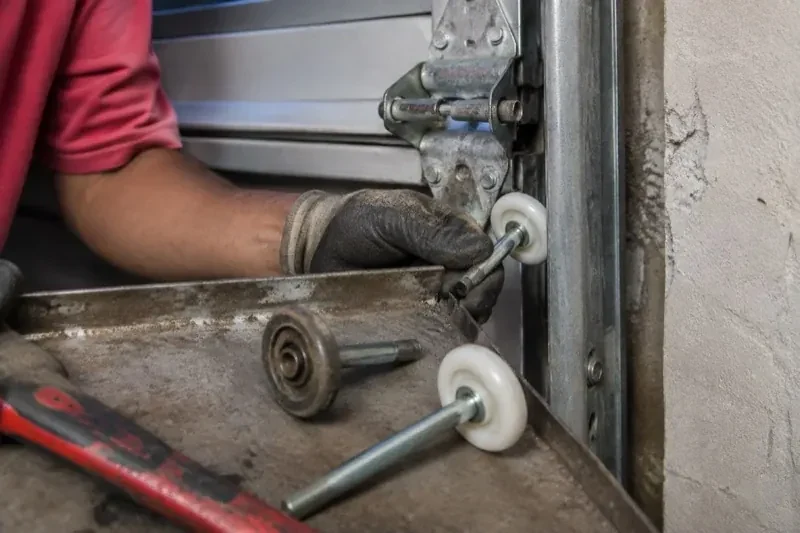
Not every roller suits every door. Wheel diameter has to match the track: two inches on residential track, and either two or three inches on commercial track, so the installed track is measured, not assumed. Stem length has to match the hinges: four inches through a single hinge, seven or ten inches where two hinges stack at the end of a heavier door. Bearing count and load rating have to suit the door's weight, with insulated steel and wood doors needing more than a light single-skin door. Measuring all of that before a set is chosen is part of the service, so the new rollers sit properly and last.
How the visit goesSince the cold snap the door has been stiff and noisy first thing, and after the last thaw the bottom corner began to judder. There is slush in the foot of the track and a bloom of rust on the lowest wheel.
Garage Door Roller Replacement
How the visit goes
What the winter left behind
In this climate the foot of the track is where trouble collects. Slush and salt carried in on the tires settle in the bottom few inches, freeze overnight into ridges and leave a brine that attacks steel. The technician looks for corrosion on the bottom rollers and their stems, rust on the bottom brackets, ice damage or flat spots on wheels that have been skidding rather than turning, and the state of the lifting cables that share that wet corner. Finding salt damage here steers the recommendation toward sealed-bearing rollers and a thorough track cleaning, and occasionally toward new bottom brackets as well.
The bottom rollers and the cable brackets
The lowest rollers live in the bottom brackets, and those brackets also anchor the lifting cables, which means they carry the counterbalance load whenever the door is closed. This is the one roller position that is never approached casually. Depending on the door, the technician either exchanges the roller while the bracket stays fastened and the cable stays put, or first takes the spring tension off with winding bars so the bracket can be unbolted and inspected. Either way the bracket, the cable end and the fastening into the section are examined, and a corroded or bent bracket is replaced while the door is already secured.
A door that runs quietly and squarely
The first thing most people notice is the quiet. A door on new nylon ball-bearing rollers moves with a low hum instead of a clatter, sections stay level as they rise, and the landing at the floor is soft rather than a thump. Because the top fixtures have been reset, the top section pulls snug to the header and the draught that used to come over the top of the door is reduced. Beneath the quiet is the structural benefit: every wheel is centred in its track with the right stem through the right hinge, so the door has far less tendency to wander toward the track lip.
Garage Door Roller Replacement
In the van
Replacement numbered hinges
Track clamps or locking pliers
Jamb bracket fasteners
Bottom brackets
Long-stem rollers for double hinges
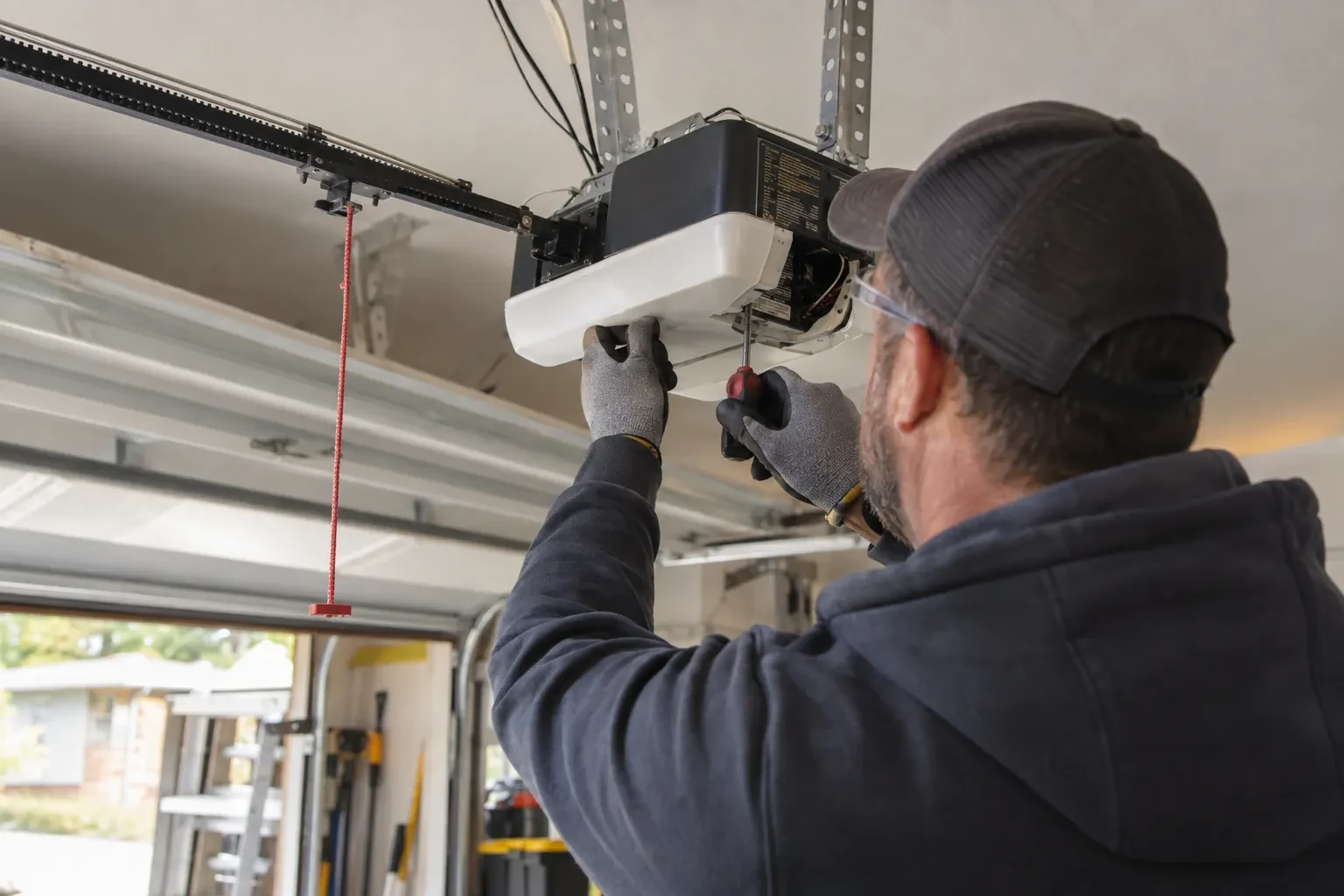
Garage Door Roller Replacement
What affects the quote
Balance adjustment first
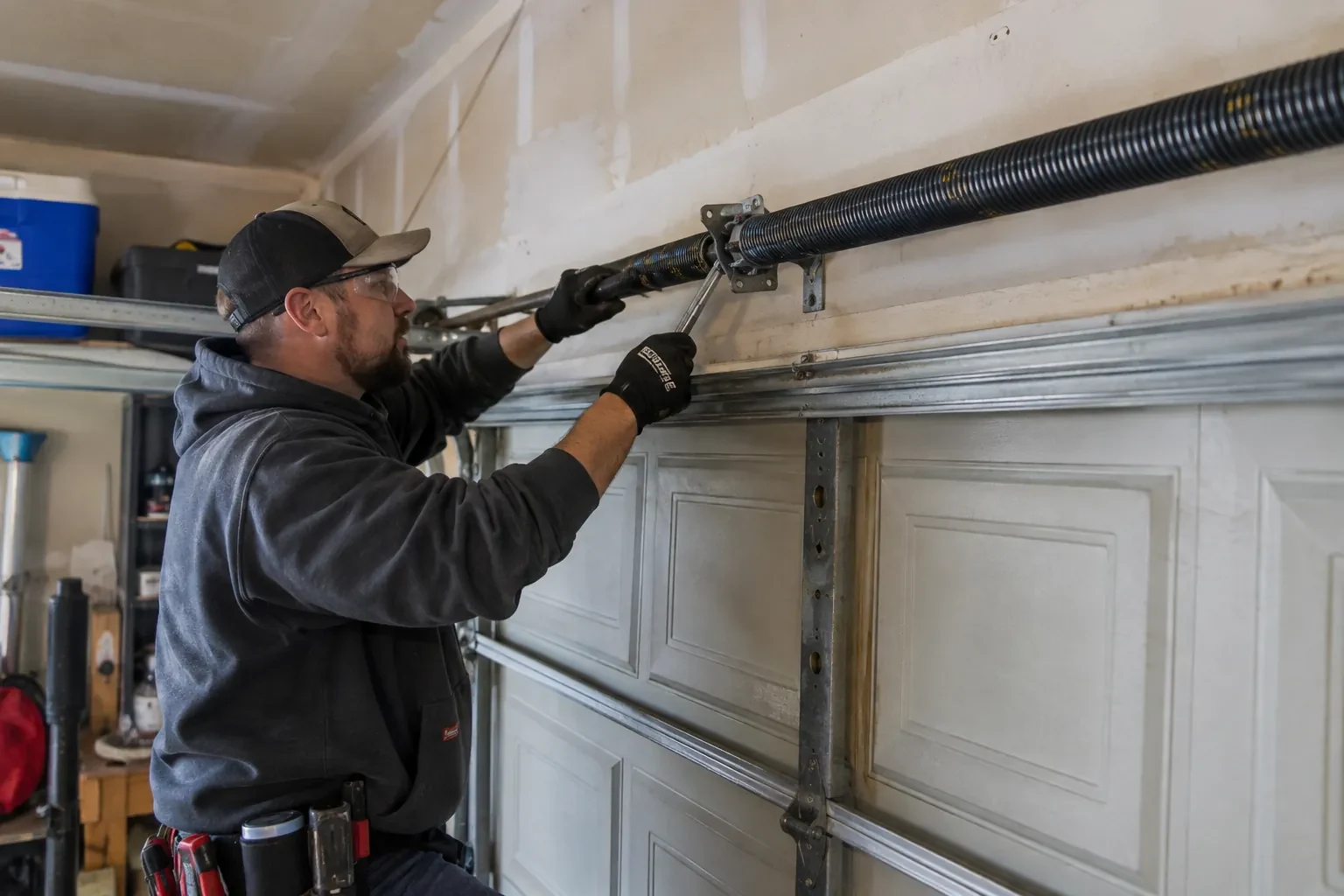
If the door drifts when released at halfway, the spring system needs adjusting before new rollers are fitted so they do not wear early; that adjustment is quoted as its own line.
Door height and high-lift track
Tall doors, and high-lift or follow-the-roof track, put the horizontal run high overhead, so ladder work and the extra sections lengthen the visit.
Top fixtures and bottom brackets
A top fixture that no longer adjusts, or a bottom bracket that has corroded or bent, is changed while the door is secured, and the quote names each piece.
What to have ready
- Is the track the two-inch residential size or a wider commercial track?
- Can we reach both tracks, or is there shelving or a car in the way?
- Does the door stay put at halfway when the opener is released?
Garage Door Roller Replacement: questions
QuestionsHow many ball bearings should a roller have?
More bearings spread the door's weight over more contact points, but count alone does not decide how smoothly, quietly or long a roller runs; the complete design matters more. Budget rollers carry six or seven, better residential rollers ten to thirteen, and premium rollers use a sealed cartridge with a dust and moisture seal. For an ordinary residential door, a nylon roller with ten or more bearings is a sound choice; for a damp or salty garage, or a door used constantly, sealed bearings are worth asking about.
My door is heavy insulated steel. Which rollers suit it?
A heavier door needs rollers with a load rating to match, generally ball-bearing rollers rated around seventy-five to one hundred pounds each rather than the light plastic wheels many doors ship with. It often needs long-stem rollers at the double hinges on the end stiles, and the top rollers, which travel furthest under load, deserve the sturdiest in the set. Nylon with ten or more bearings suits most insulated residential doors; very heavy or commercial-weight doors may still call for steel.
How does the technician tell rollers from hinges or track as the cause?
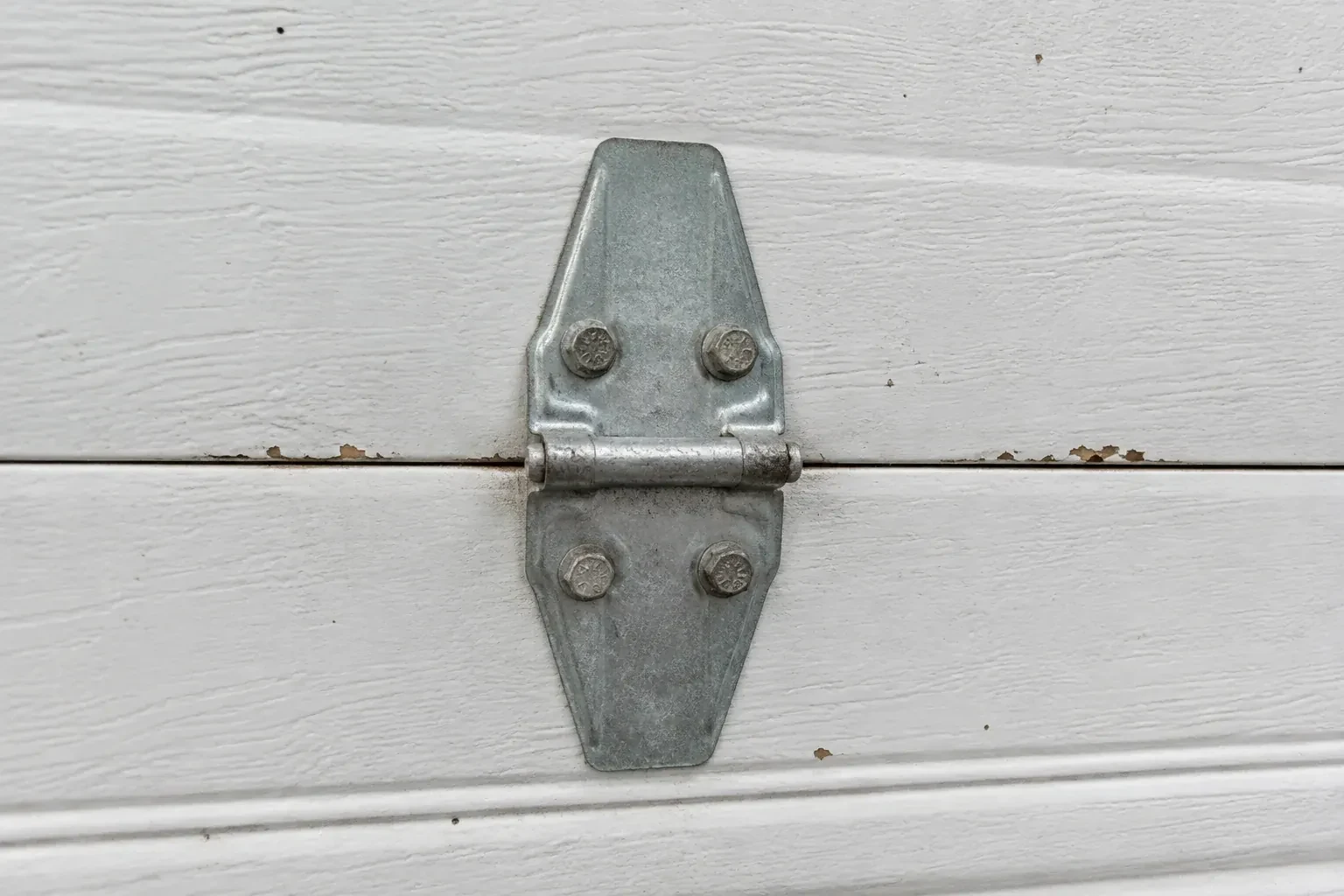
By watching where and when the trouble happens and then checking the parts in that spot. Rollers are spun and wiggled to reveal rough bearings and worn wheels; hinges are checked for cracks, elongated holes and loose bolts; tracks are checked for plumb, dents and spacing. A shudder at the curve tends to be rollers, a pop as sections pivot tends to be a hinge, and a rub the full height of the door tends to be track. Often more than one is involved, and the visit covers them all.
Related services
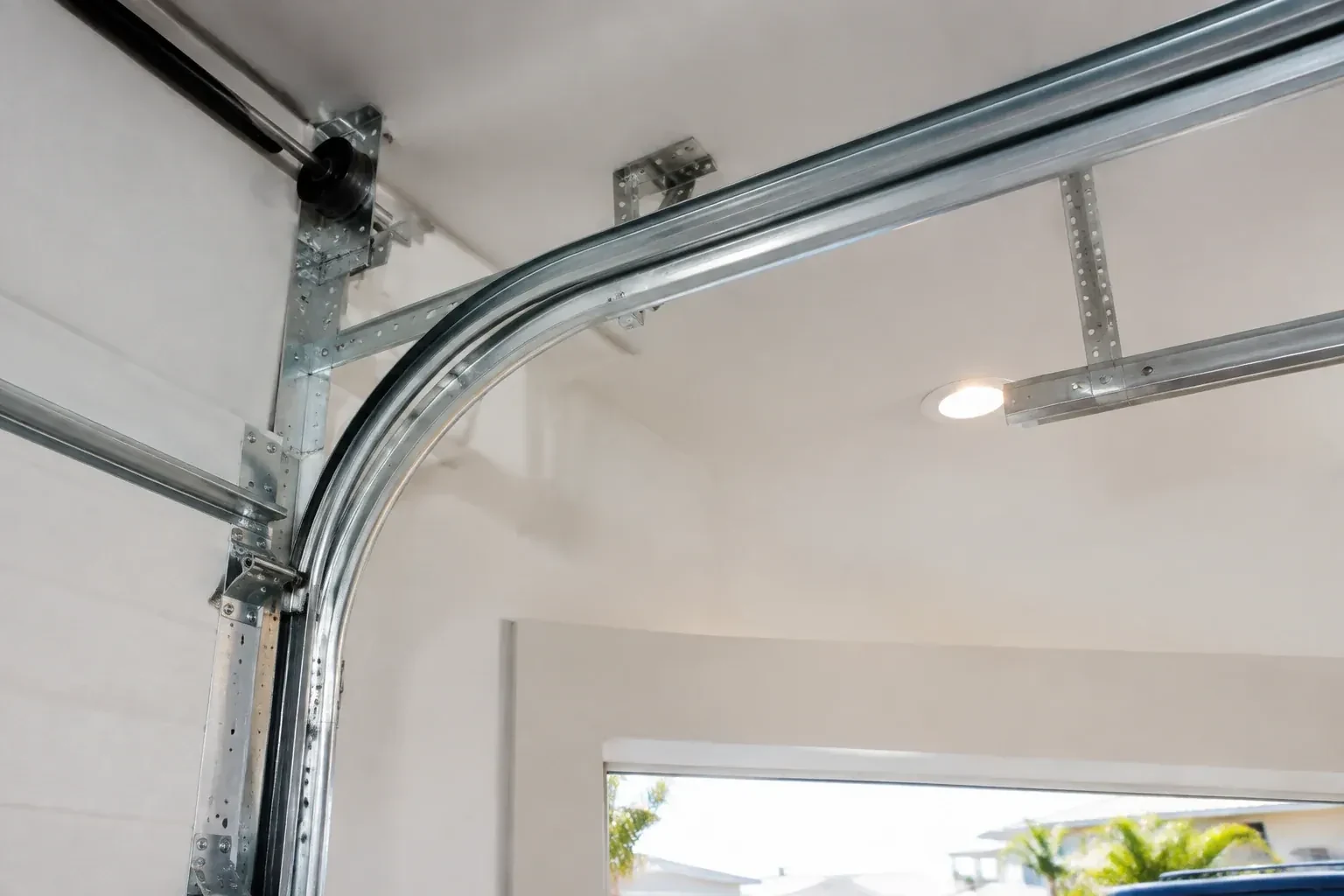
- Garage Door Track Repair or ReplacementHalfway up, the door lurches and one roller rides onto the lip of the channel.
- Garage Door Cable ReplacementThere was a sharp crack from the garage, and when you went to look the door had dropped on one side and jammed.
- Torsion Spring ReplacementYou heard a sharp bang from the garage, and now the opener hums for a second and gives up.