New Doors · Toronto
Commercial Sectional Door Repair
Each opening cycle brings a metallic knock followed by a shudder through the horizontal track.
In plain words
High-lift and vertical-lift doors need repair methods suited to their track geometry. Cable tension, drum selection, shaft condition, track support and the transition from vertical travel all affect whether the sections remain controlled. The technician records the configuration before disassembly, supports the door at a stable position and matches replacement components to the door weight and lift arrangement. After reassembly, level travel and cable seating are observed at several positions rather than judged only with the door closed.
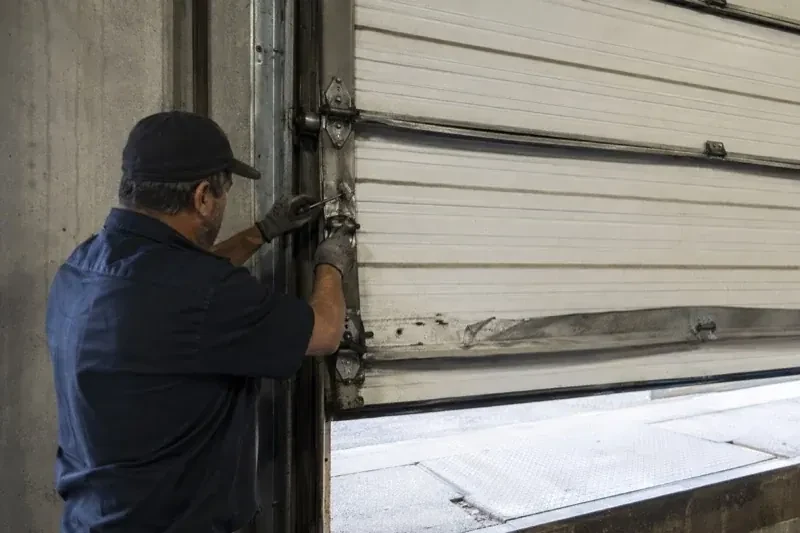
How the visit goesCold weather has exposed a widening gap below the closed door. The bottom retainer is bent, the rubber seal is split, and uneven seating lets drafts and slush enter the work area.
Commercial Sectional Door Repair
How the visit goes
Following sound to its source
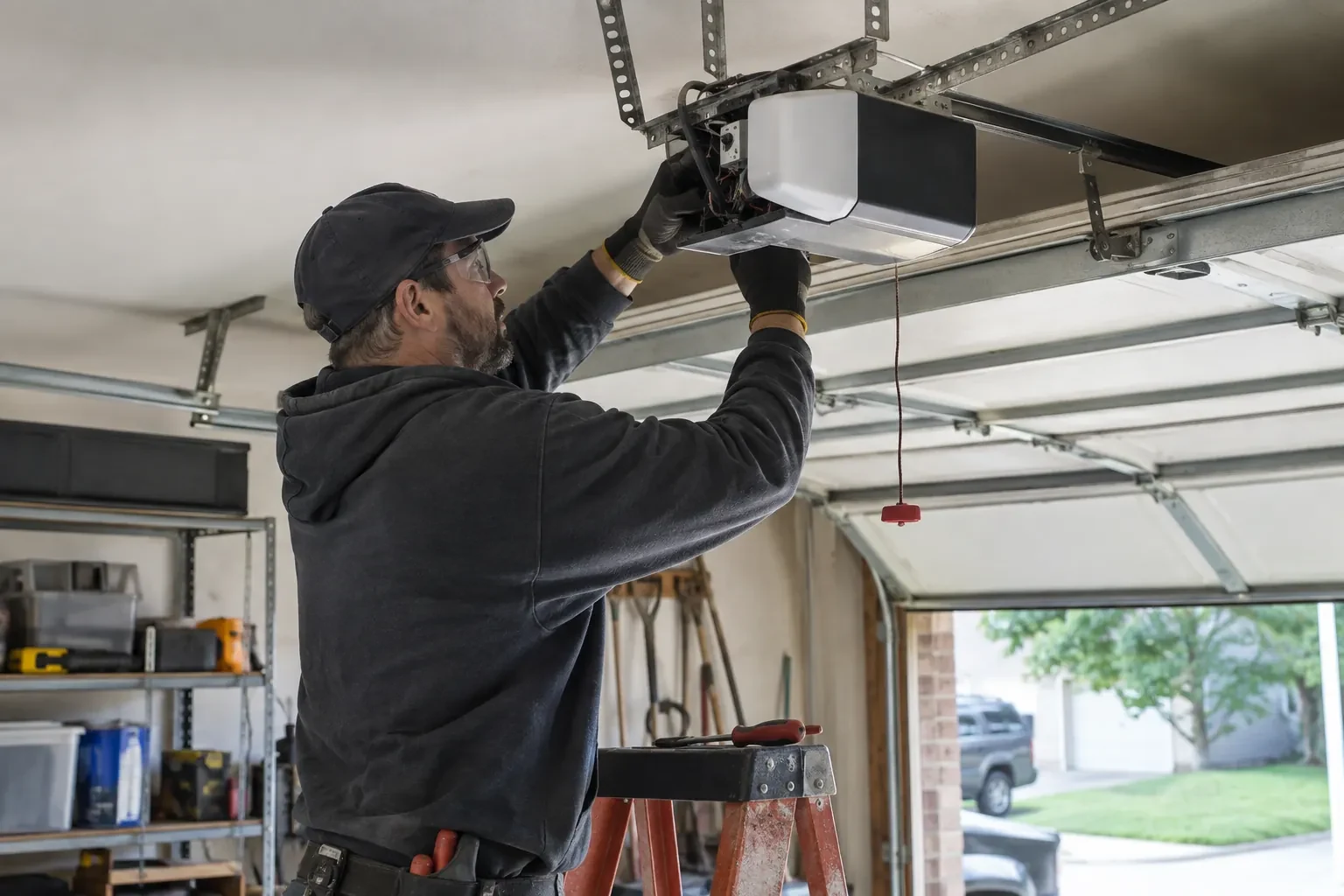
Noise is assessed by location, timing and character. A controlled cycle shows whether a knock occurs at a hinge, a roller entering the curved track, a bearing on the shaft or the operator drive. The technician watches for metal dust, polished rub marks, loose fasteners, roller play and track movement while listening. Door speed and vibration are compared through the vertical and horizontal portions of travel. This approach keeps several sounds from being treated as one problem and identifies the component producing each repeatable rattle, scrape or growl.
Restoring cables and counterbalance
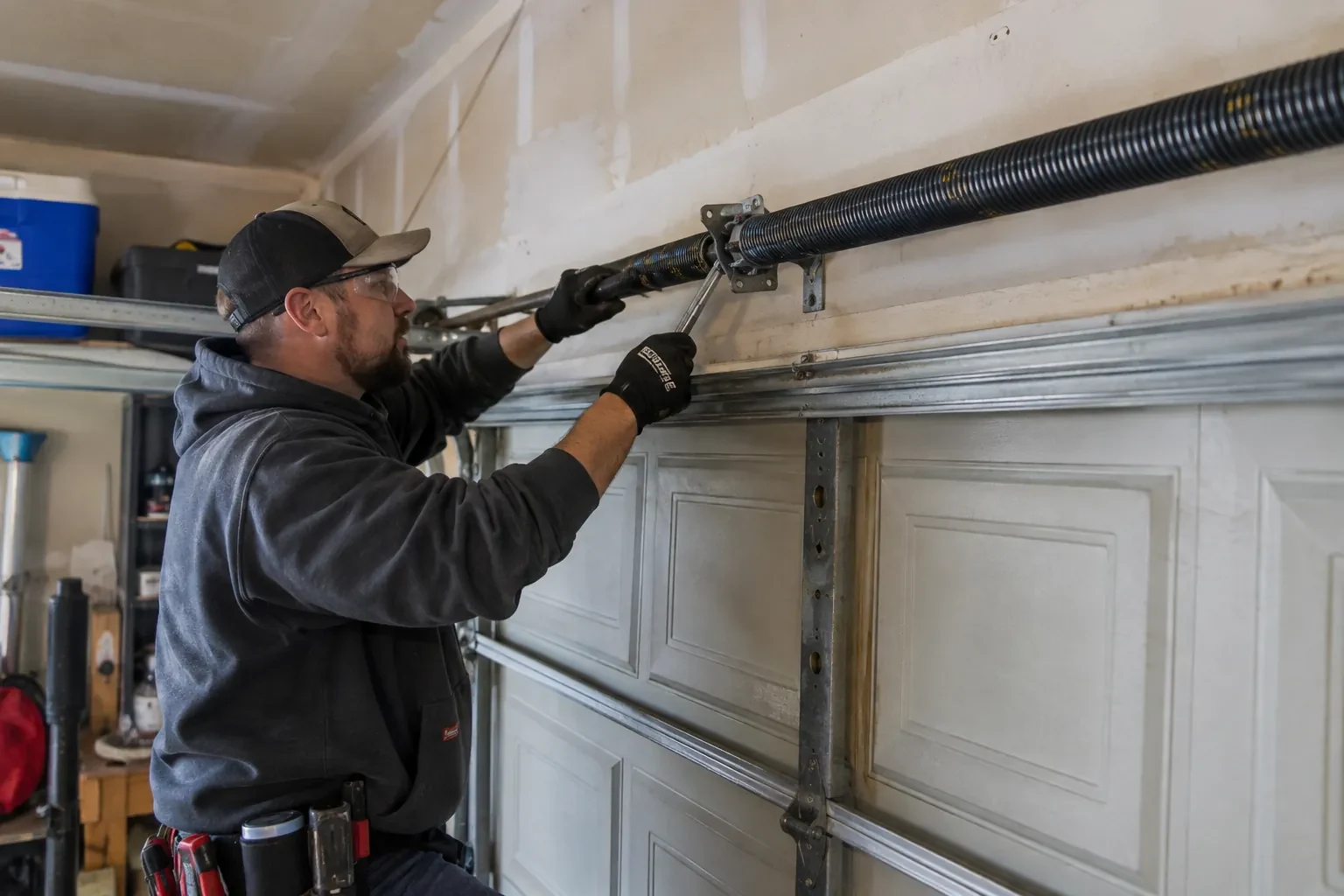
Cable and spring work is performed with the door secured and spring energy under deliberate control. Matched lift cables are routed from sound bottom fixtures to compatible drums, seated in their grooves and brought to equal tension. Bearings, shaft alignment and anchor points are checked before springs are set for the actual door weight and lift configuration. The technician then evaluates balance at several positions. A level bottom edge and stable movement show that both sides are sharing the load as intended rather than relying on the operator to pull the door straight.
Useful documentation for a busy facility
The finished record ties the complaint to the actual repair: door identification, parts changed, settings adjusted and functions tested. For properties with many similar openings, assigning a clear asset number to each door prevents service histories from becoming mixed. Cycle demand, collisions and recurring observations can then be logged against the correct bay. This information supports practical maintenance planning and helps the next technician arrive with relevant dimensions and system details, while staff retain a concise reference for normal sound, travel and control behaviour.
Commercial Sectional Door Repair
In the van
Track brackets and back hangs
Vertical and horizontal track
Bottom seal and retainer
Torsion springs
Reinforcement struts
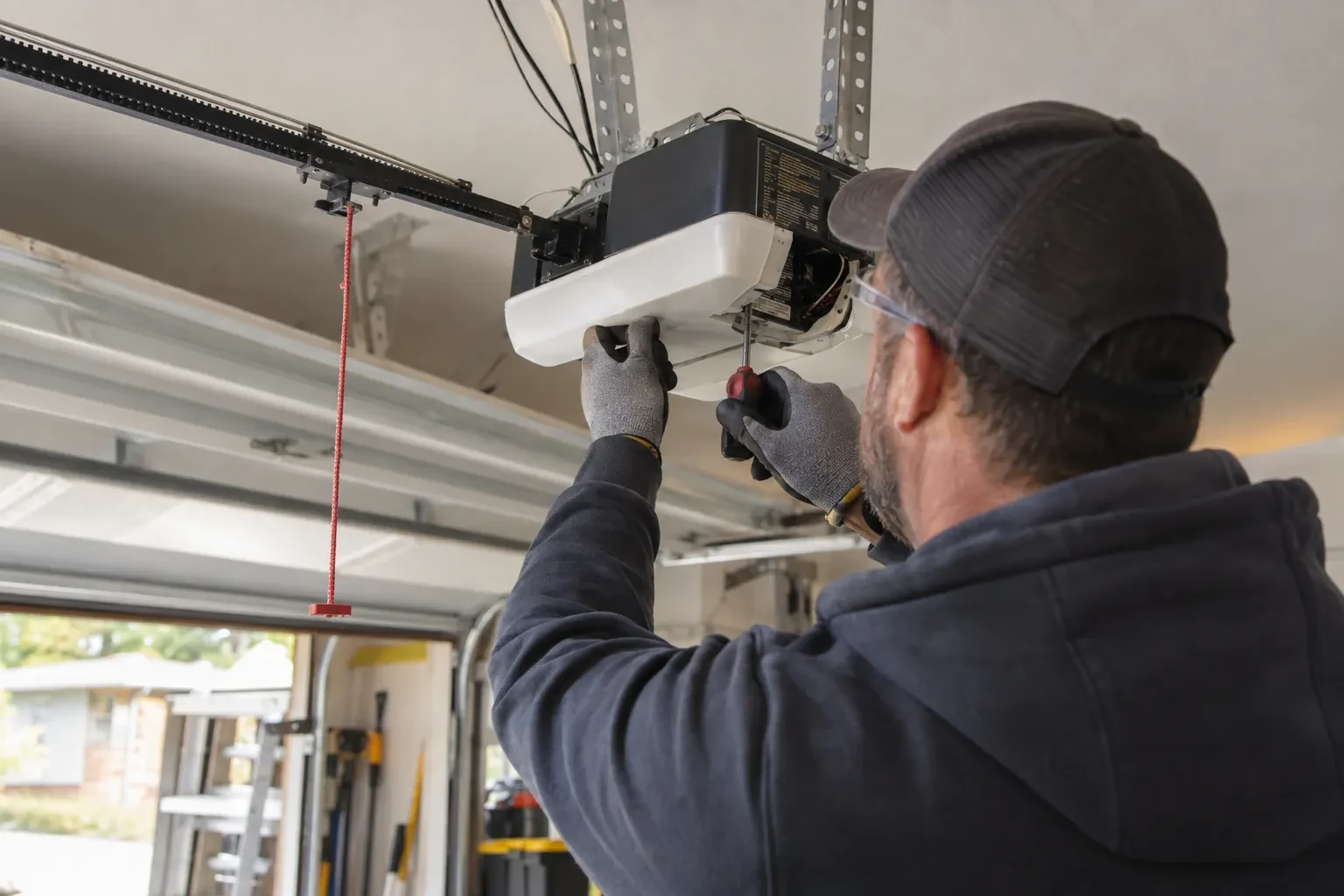
Commercial Sectional Door Repair
What affects the quote
Door size and moving weight
Opening dimensions, panel construction, reinforcement and overall door weight determine component ratings, handling methods and how much support is required during the repair.
Roller and hinge wear
One failed roller is a smaller scope than widespread bearing play, loose numbered hinges or damaged mounting holes across several door sections.
Parts identification and compatibility
Clear model data and current component markings simplify matching; altered assemblies or unavailable profiles may require additional measurement and an engineered compatible approach.
What to have ready
- Is the door operated electrically, by hoist or by hand?
- Is the door closed, open or stopped between positions?
- Was there a vehicle, forklift or load impact?
Commercial Sectional Door Repair: questions
QuestionsCan the opening stay in use while work is underway?
The repair area needs controlled access while the door is supported, tensioned components are handled and operational tests are performed. Facilities can redirect pedestrians, forklifts and vehicles to another route and keep stored goods clear of the tracks and threshold. Once tools and supports are removed, the technician completes the agreed tests before returning the bay to normal traffic.
Can one damaged section be replaced on its own?
Often it can, provided a compatible section is available and the surrounding panels, end stiles and hardware remain serviceable. Matching involves more than width and height: thickness, profile, insulation, joint shape, reinforcement and hinge pattern all matter. The technician also checks whether the impact shifted track or mounting points before deciding that a single-section repair is the right scope.
Why is the door lifting higher on one side?
Uneven travel commonly points to a lift-cable or drum issue, though a displaced roller, bent track or damaged bottom fixture can create a similar angle. The door is supported first, then both lifting sides are compared for cable condition, drum seating and hardware position. Correcting the cause and restoring equal tension brings the bottom edge back to level movement.
Related services
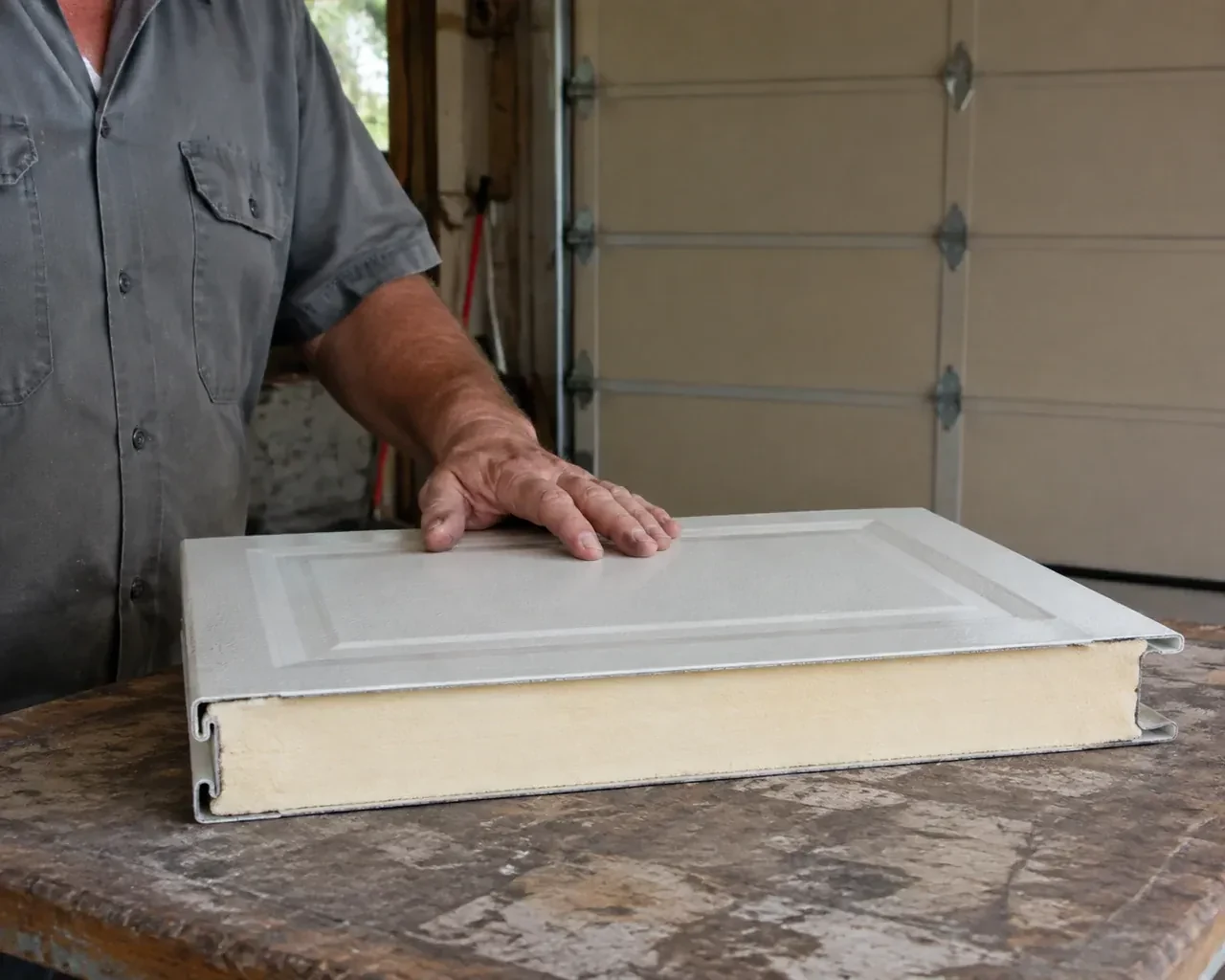
- Insulated Steel Garage Door InstallationThe opener strains as the heavy older door starts upward, and manual movement feels uneven.
- Wind-Rated Garage Door ReplacementYou are combining two narrow garage bays into one broad opening.
- Carriage-House Garage Door InstallationCold air is noticeable around the current door, especially near the floor and section joints.