Openers · Toronto
Belt-Drive Opener Repair
Someone tightened the belt last month to stop the sag.
In plain words
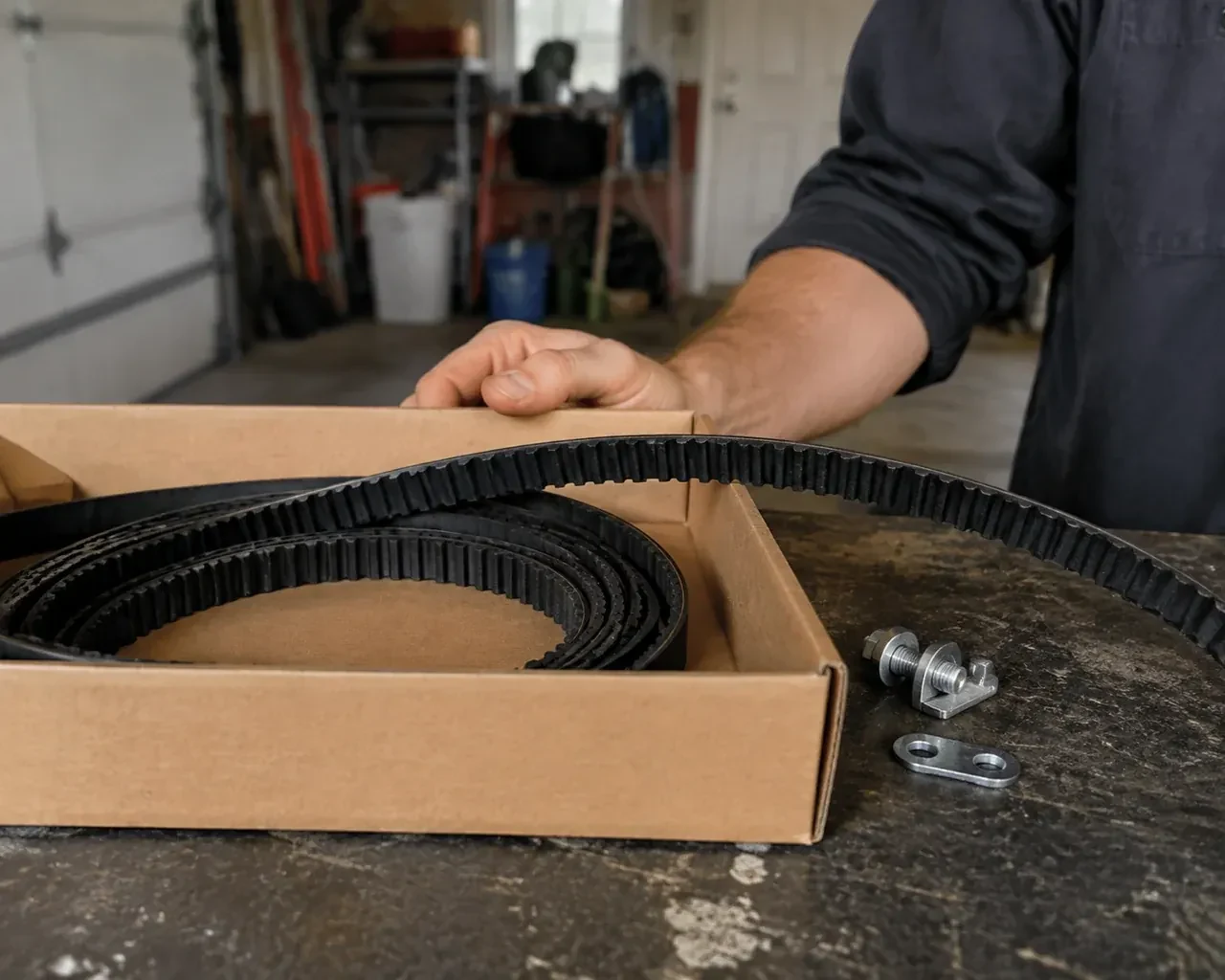
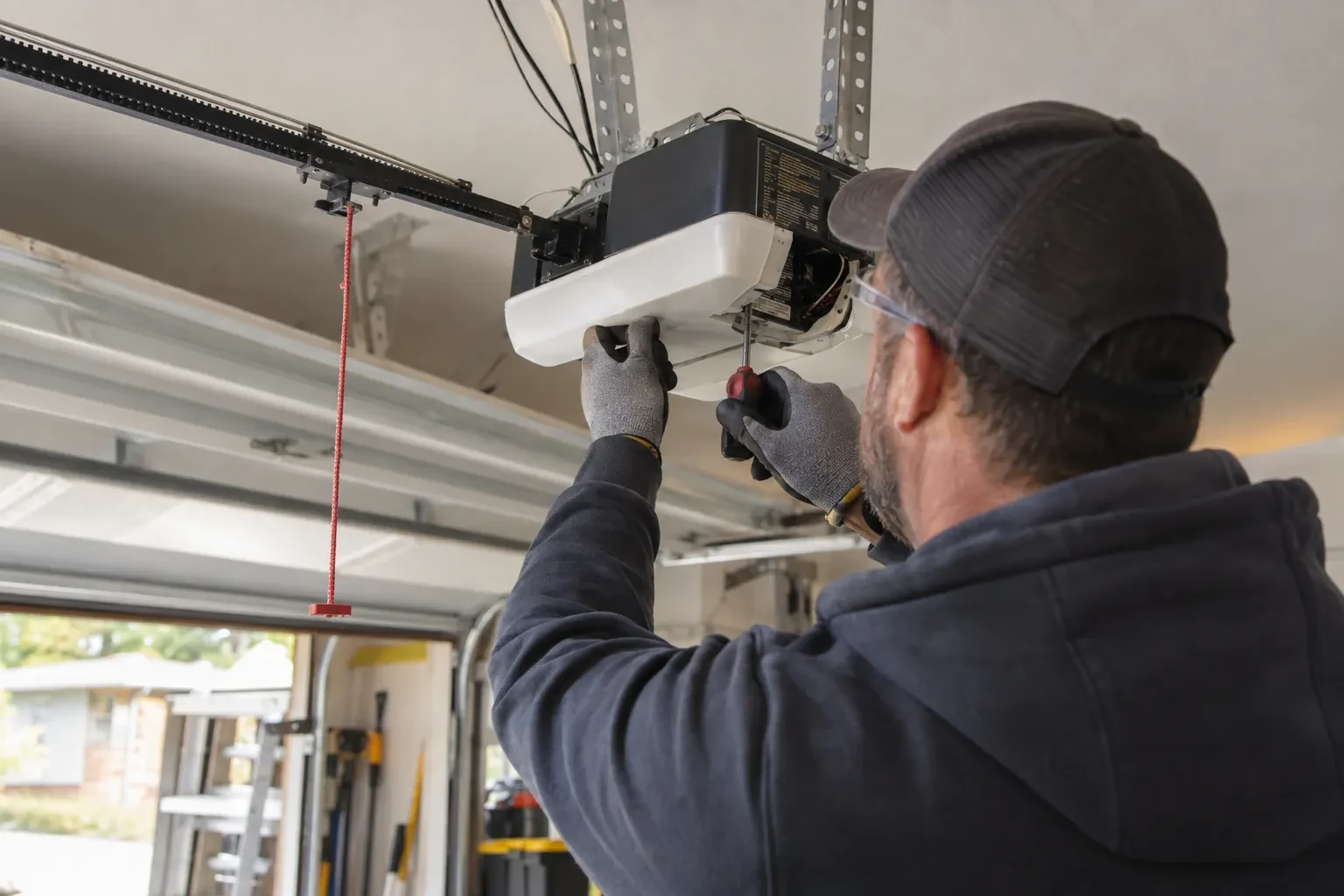
Belt-drive operators use a toothed belt reinforced with steel or fibre cords, and those belts wear in recognisable ways. Age and temperature swings make the rubber brittle, so it cracks across the back and eventually shows the cords. Rubbing on a bent rail or a misaligned joint frays one edge. A door that hits something can shear a stretch of teeth or throw the belt off the idler pulley. A small clip joins the belt to the trolley and takes every start and stop. Repair fits a belt of the right length and tooth pitch for that rail, a fresh clip, and sets the tension from scratch.
How the visit goesThe door used to glide up with a soft hum. Now there is a sharp clack every second or so, and if you stand underneath you can see the belt sagging below the rail and slapping it on the way up.
Belt-Drive Opener Repair
How the visit goes
What the operator thinks it is doing
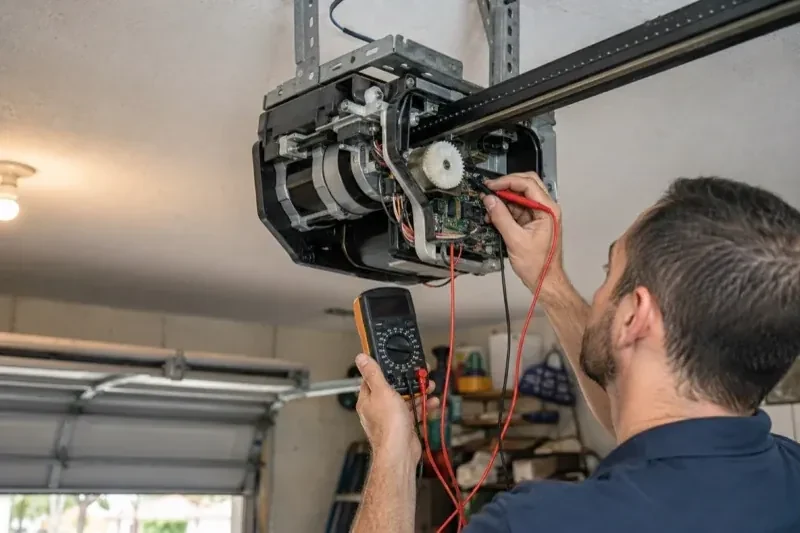
Before any part is changed, the technician runs the door from the wall control and watches what the operator thinks it is doing. Does it stop short of the floor and reverse, or drive the trolley into the stop bolt? Does the top section stop clear of the header bracket? Does the door come back up on meeting a 2x4 laid flat and when the beam near the floor is broken? The answers separate a drive fault from a settings fault, and settings will be relearned once the belt work is done anyway. The wall control height, the photo-eye height and where the red handle hangs are noted at the same time.
Relearning travel and force, then proving them
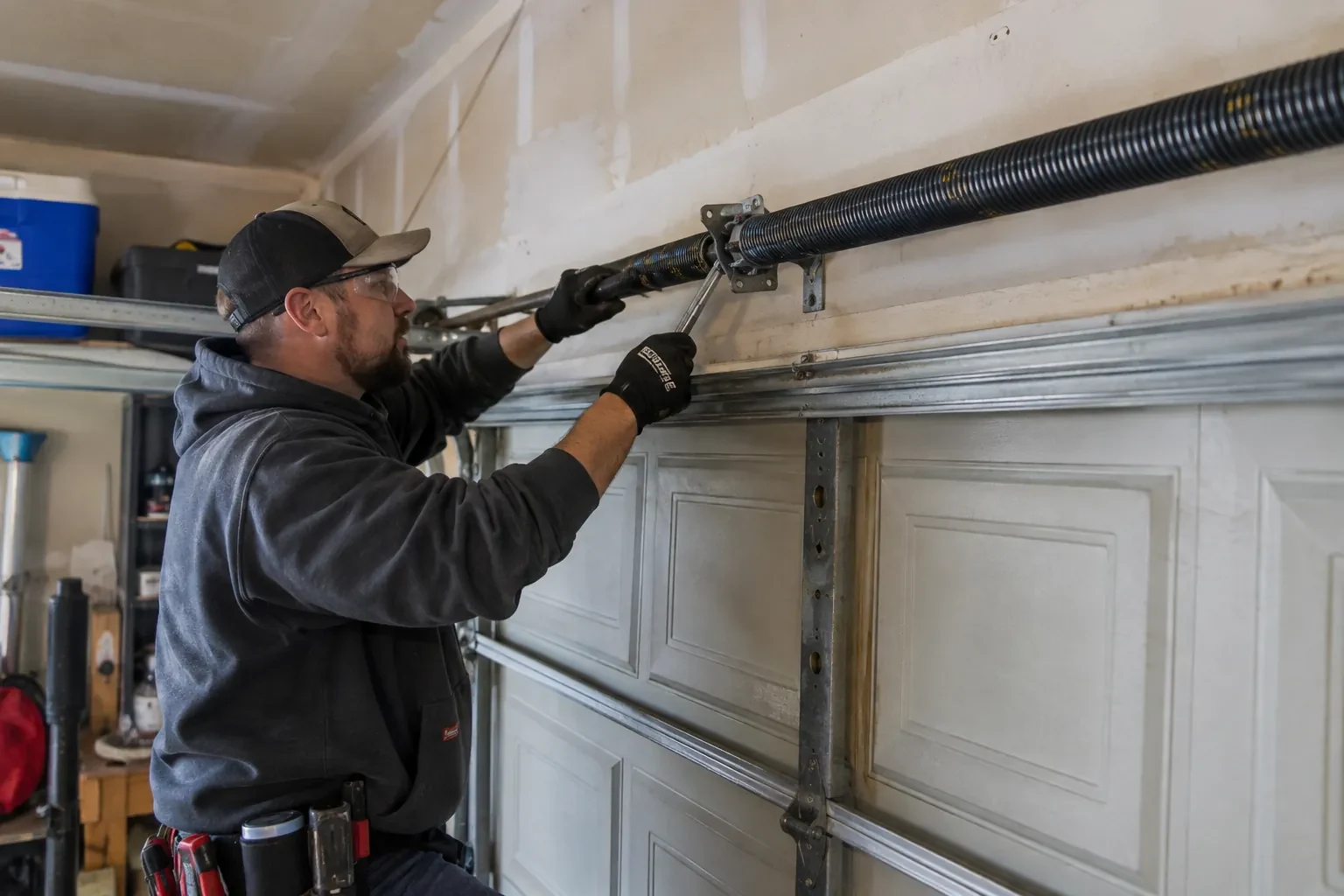
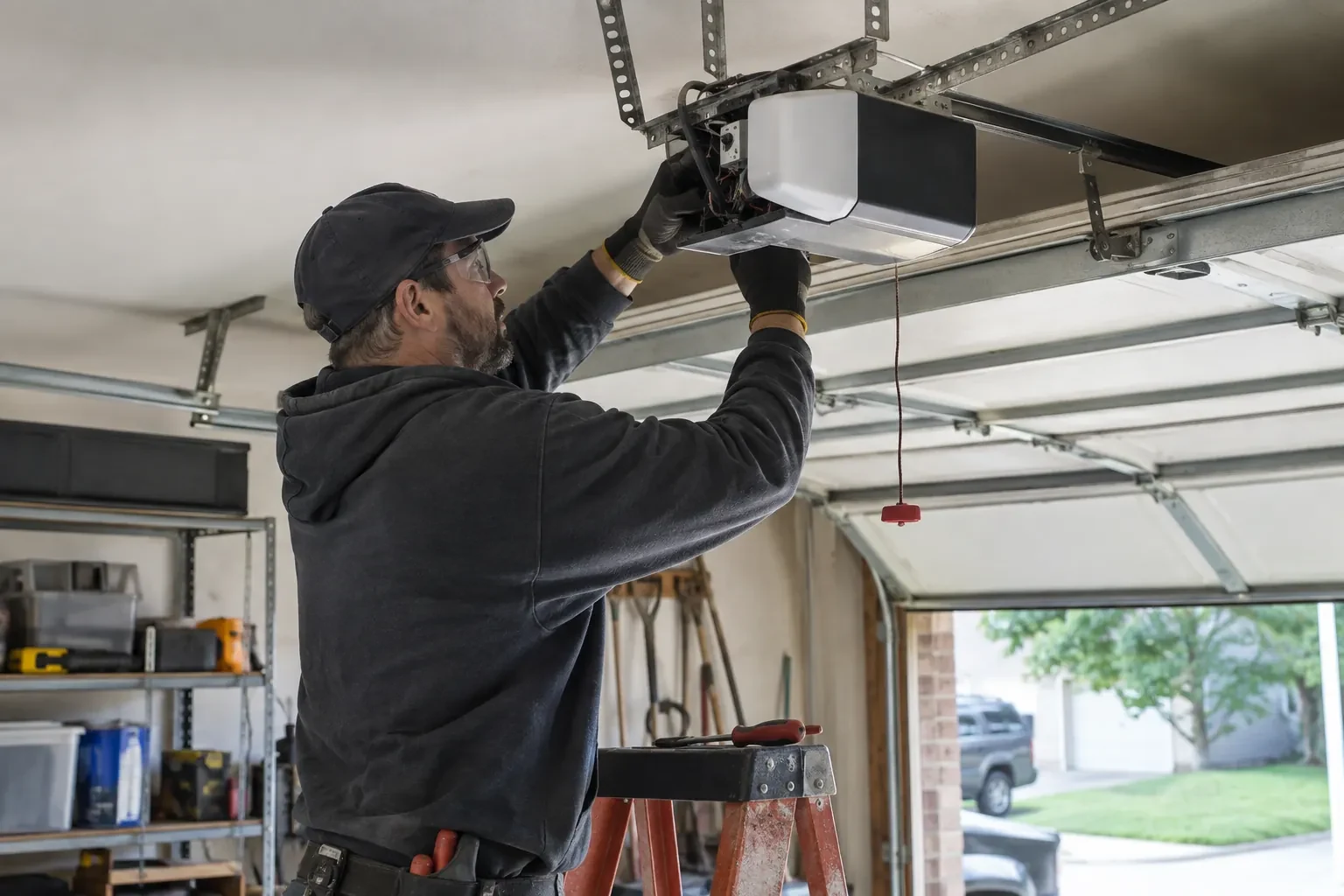
With the drive rebuilt and the door reconnected, the operator is taught its door again. Newer units run a learn cycle that records the full travel and the effort the door needs; older ones have limit screws and force dials set by hand. The close limit is set so the bottom seal meets the floor without the belt straining, and the open limit so the top section stops short of the header. Then the tests: a 2x4 laid flat under the door must send it back up on contact, and an object passed through the photo-eye beam must reverse it while closing. Any hesitation is adjusted and the tests are run again.
The red cord, and what to do after you pull it
You now know where the release handle hangs and what happens when you use it. A pull parts the trolley so the door can be lifted by hand through a power cut; running the motor, or a second pull, reconnects it. What matters after this repair is to pull it only with the door closed. Releasing a door that is open, or one whose springs are tired, can let it fall because the spring no longer carries its weight; the release itself disconnects the trolley from the belt, so the falling door lands on its tracks and hinges, not the belt the technician just corrected. Practise it once with the door down so the first real use is calm.
Belt-Drive Opener Repair
In the van
Garage-door lubricant for hinges and rollers
Drive gear and sprocket kit
Inner and outer trolley
Rail hanger straps and fasteners
Idler pulley and bearing
Belt-Drive Opener Repair
What affects the quote
Belt length and type
A belt for an 8 ft door rail is longer than one for a 7 ft rail, and belts differ by maker and tooth pitch, so the part named on the quote follows the operator's model.
Age and model of the operator
Parts for a current model are on the van. An older or less common operator may need a belt or trolley ordered to fit, which changes timing and sometimes the part.
Rail straightening or re-hanging
A bent rail, a sagging hanger or a misaligned rail joint that has been fraying the belt is corrected as part of the repair so the new belt runs clean, and the labour appears on the quote.
What to have ready
- Does the motor run while the door stays still, or does the door stop partway?
- What is the belt doing: sagging, slapping, clicking, frayed, or hanging loose?
- Has anyone tightened or adjusted the belt recently?
Belt-Drive Opener Repair: questions
QuestionsThe motor runs but the door stays still. What has happened?
Something between the motor and the door has let go. On a belt drive the usual suspects are a broken clip where the belt joins the trolley, a belt that has jumped off the sprocket or idler pulley, a trolley that failed to re-engage after the red cord was pulled, or a stripped drive gear inside the motor head, which leaves plastic shavings on the housing. Each is a specific repair.
What information helps when I book a belt-drive repair?
The make and model printed on the motor head, roughly how old the operator is, what the belt is doing and what it sounds like, when it started, whether the red cord has been pulled and whether anyone has adjusted anything. A photograph along the rail showing the belt, and one of the label, settle most questions before the visit.
What is the idler pulley and why does it squeal?
It is the wheel at the header end of the rail that the belt wraps around on its return. It spins on a small bearing, and when that bearing dries or fails the pulley squeals on every cycle and can let the belt wander to one side and fray. Replacing the pulley is a modest job done with the belt slack, followed by re-tensioning.
Related services
- Chain-Drive Opener RepairHalfway up, the door lurches.
- Garage Door Opener ReplacementPress the button and the motor hums, but the door stays exactly where it is.
- Photo-Eye Sensor Alignment or ReplacementYou press the remote, the door drops a few centimetres, then climbs straight back to the top while the opener light blinks.