Repairs · The Annex
Off-Track Garage Door Reset in The Annex
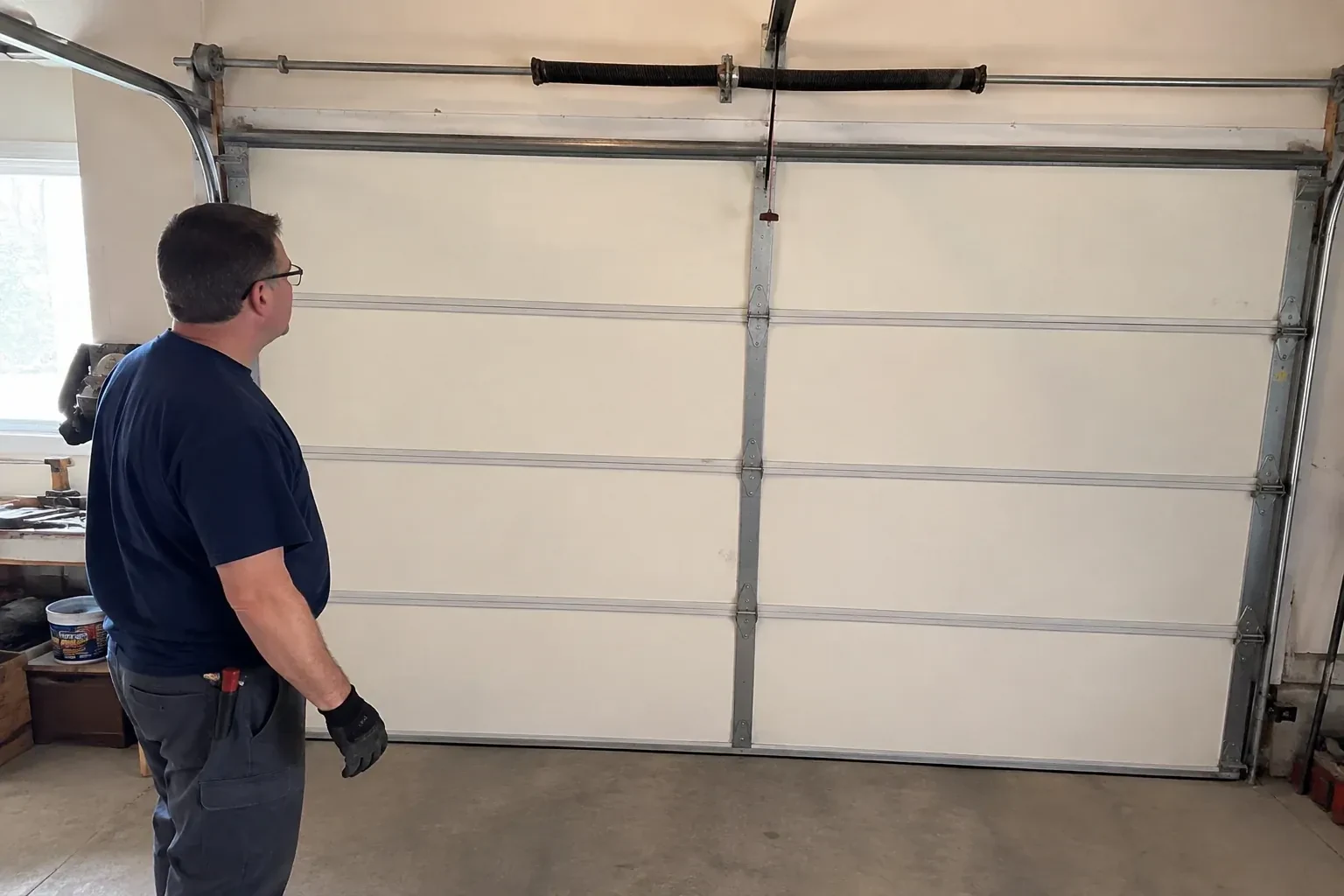
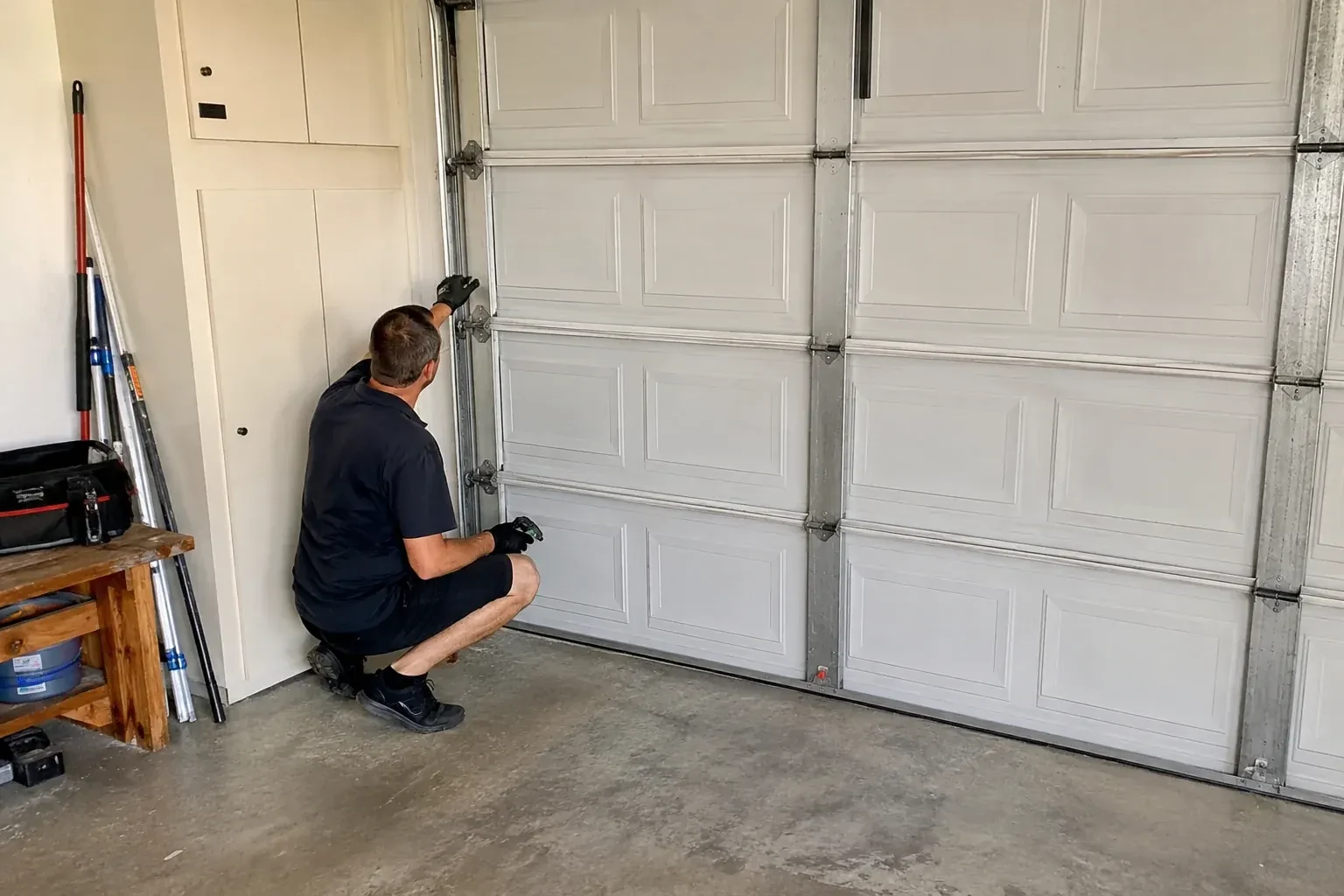
You tapped the door with the bumper while backing in, barely a nudge, and now the bottom corner has swung inward.
In plain words
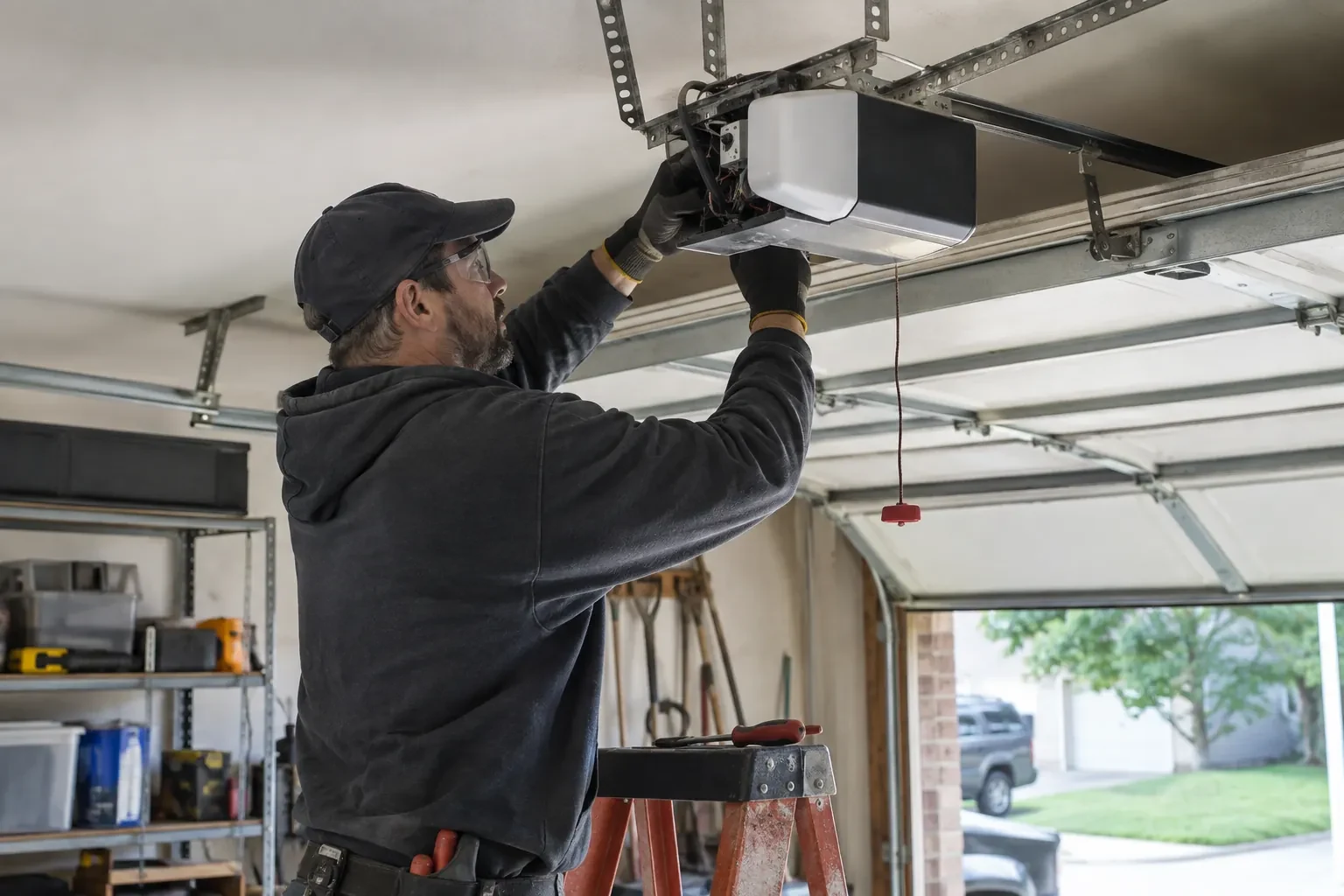
The reason to stop pressing the wall button is that an opener cannot tell a racked door from a heavy one. Each cycle drives the tilted sections harder into the rails, bending hinges, tearing the track from the jamb and stressing the cables that are already out of place. A reset begins by taking the opener out of the picture with the release cord and supporting the door where it sits. From that calm starting point the technician can re-seat rollers and cables in a controlled order, restore alignment and hand you back a door that the opener can move without fighting it.
How the visit goesThe morning after a thaw the opener groaned, the door stayed stuck to the icy floor for a second, then lurched up crooked. It stopped halfway with a grinding scrape and has not moved since.
Off-Track Garage Door Reset
How the visit goes
Sections, stiles and hinges after the twist
A racked door puts sideways force on parts that only ever expected to move up and down. The technician inspects each graduated edge hinge for bending, each end stile for cracks around the hinge screws, the bottom brackets for distortion and the top fixtures for a stem that has been pushed out of line. Steel sections are checked for creases at the roller positions and wood doors for splitting around hardware. This check separates a door that needs a straight reset from one that needs a hinge or bracket replaced first, so that the rollers go back into a section that can actually hold them.
Guiding the rollers home
With the door supported, each escaped roller is returned to its rail. Where the track lip has spread, it is eased open just enough with track pliers to admit the roller and then squeezed back to its original profile so the wheel sits captive again. Where the track is sound, the section is lifted by its safe gripping points and the roller stem slid into the rail at the open end of the curve or through the vertical track from below. Rollers are seated one section at a time, from the bottom up, checking that each section sits flush against the next before the one above is handled.
Lubricating the right parts, and not the track
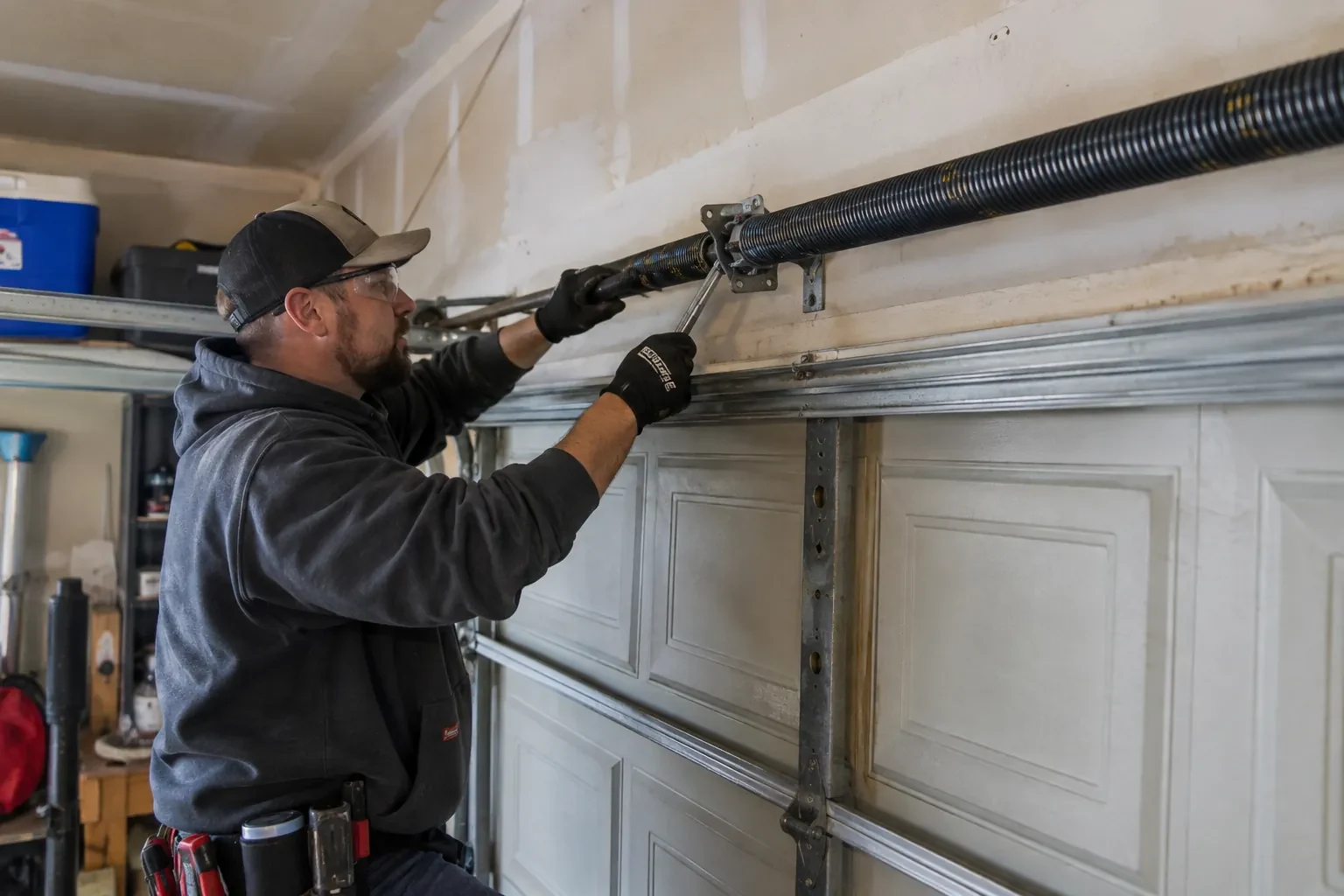
Twice a year, hinge pins, roller bearings and the coils of torsion springs get a light application of a garage-door silicone spray or white lithium grease, wiped so nothing drips. Nylon rollers without bearings are left dry. The tracks themselves are only ever wiped clean with a damp cloth: lubricant on the rail collects grit and lets the rollers skid rather than turn, which is a slow route back to a worn wheel and an escaped roller. Household penetrating oils are avoided because they attract dust. This small routine keeps the freshly reset door running as quietly as it does on the day of the visit.
Off-Track Garage Door Reset
In the van
Long lag screws or through-bolts
Jamb and flag brackets
Torsion spring winding bars
Bottom brackets
Replacement rollers, steel or nylon
Off-Track Garage Door Reset
What affects the quote
Access and a trapped vehicle
A car inside, a tight garage with shelving beside the tracks or a low ceiling around the horizontal rails all slow the work of supporting and moving the door, and the estimate allows for the working space available.
Older or unusual hardware
Low-headroom track, high-lift track, an old wood door with obsolete hinges or a commercial door with heavy-gauge rail may need parts that are ordered or adapted, which is explained in the estimate.
Spring condition found during the check
If the springs are broken, badly worn or mismatched to the door, they are quoted as their own job. You choose whether to do that in the same visit, and the reset itself stands on its own.
What to have ready
- Have you unplugged the opener or pulled the red release cord?
- Roughly how old is the door, and when was it last serviced?
- Is the door a single or a double, and is it steel, wood or insulated?
Off-Track Garage Door Reset: questions
QuestionsI only tapped the door with the bumper. Why is it off its track?
A sectional door is strong in the direction it travels and surprisingly easy to push sideways at a single roller. A light nudge on the bottom section can flex the track lip enough for the roller to slip out, after which the section twists and the rollers above follow. The good news is that this kind of event usually leaves the cables and springs alone, so the reset is often rollers, a re-formed track lip and a hinge check.
Why do rollers wear out, and how would I know?
Rollers turn thousands of times a year while carrying part of the door's weight, and their small ball bearings wear, fill with grit or fall out. Nylon tires can crack and steel wheels can wear flat spots or grind down to the stem. A worn roller squeals, wobbles in the rail or lets the door shudder at the curve. Replacing them as a set restores a quiet door and removes a common cause of a roller dropping out.
Can a door frozen to the floor really cause this?
Yes, and in winter it is one of the most common causes. Meltwater under the bottom seal refreezes overnight and bonds the door to the slab. The opener pulls, the door stays put, the cables go slack and unwind off their drums, and when the ice lets go the door lurches up unevenly. Freeing the seal by hand before using the opener on icy mornings prevents almost all of these calls.
Related services
- Garage Door Tune-UpSince the first cold snap the door has been sluggish.
- Garage Door Panel ReplacementAfter an overnight freeze the door stuck to the slab, the opener strained, and something gave.
- Garage Door Bottom Seal ReplacementAfter a spring rain there is a puddle inside the door that reaches the tires.