Repairs · Deer Park
Garage Door Tune-Up in Deer Park
Since the first cold snap the door has been sluggish.
In plain words
What you receive from a tune-up is a door that runs better and a written picture of its condition. The technician records what was tightened, lubricated and adjusted, how the balance and reversal tests came out, and which parts are still healthy, which are worth watching and which have reached the point of a separate repair quote. That record turns the next visit into a comparison instead of a fresh start, and it lets you describe a new sound precisely when it appears. Maintenance and repair stay two different decisions, and you make the second one with the facts in front of you.
How the visit goesOn windy nights the door rattles in its frame, there is a line of daylight along one side, and the bottom seal has gone hard and flat. Leaves and fine snow drift in underneath and the garage never seems to hold its temperature.
Garage Door Tune-Up
How the visit goes
Feeling the balance by hand
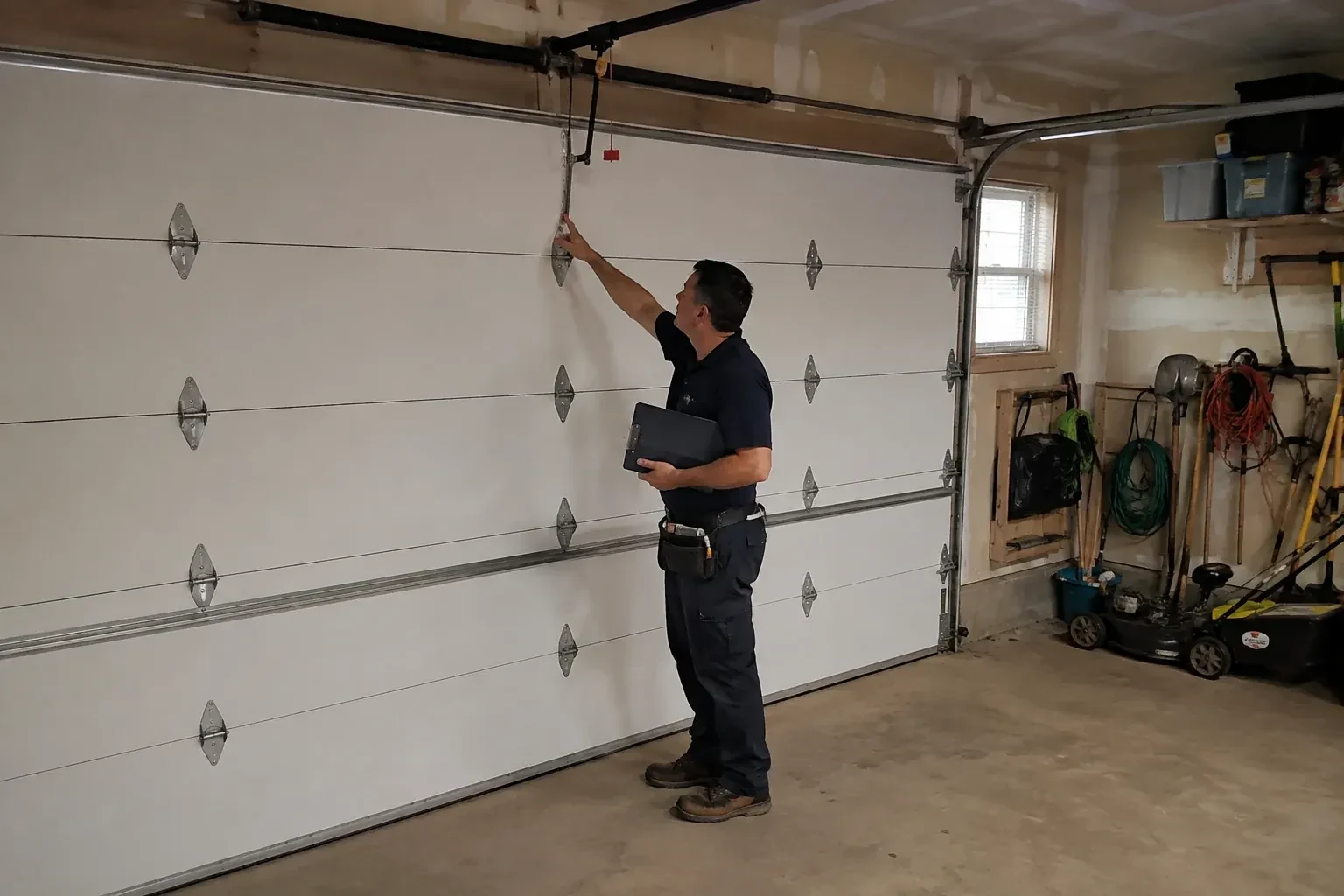
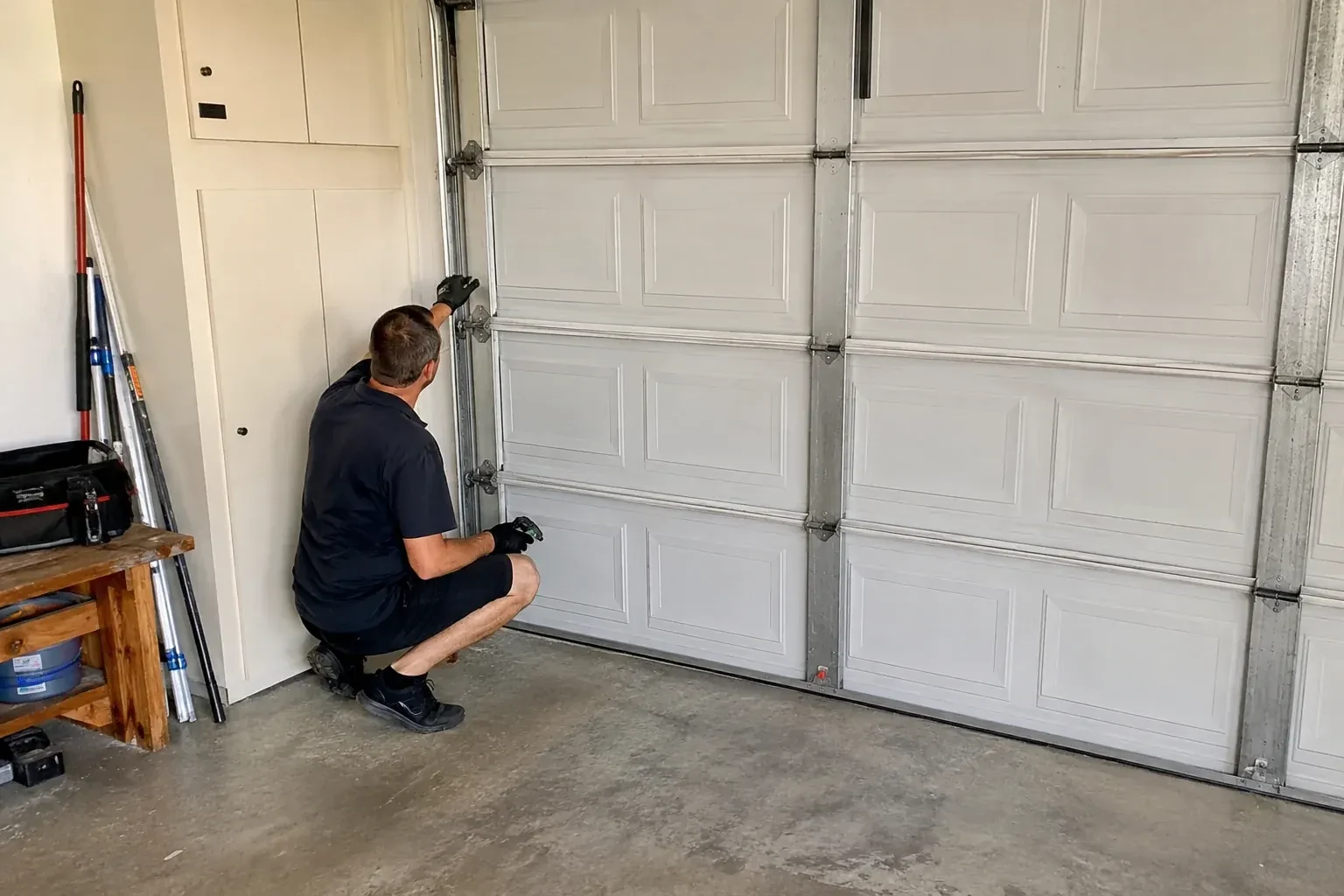
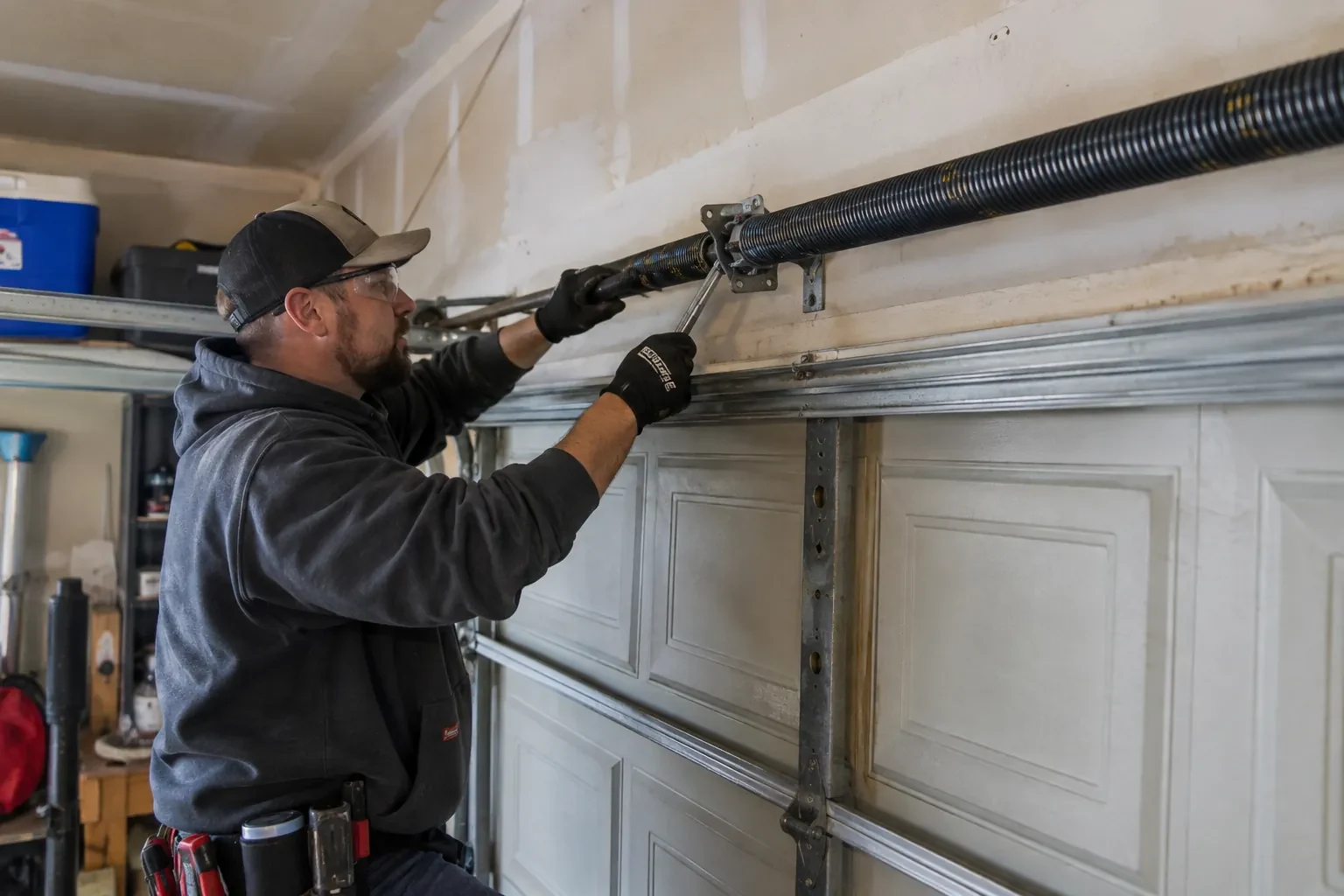
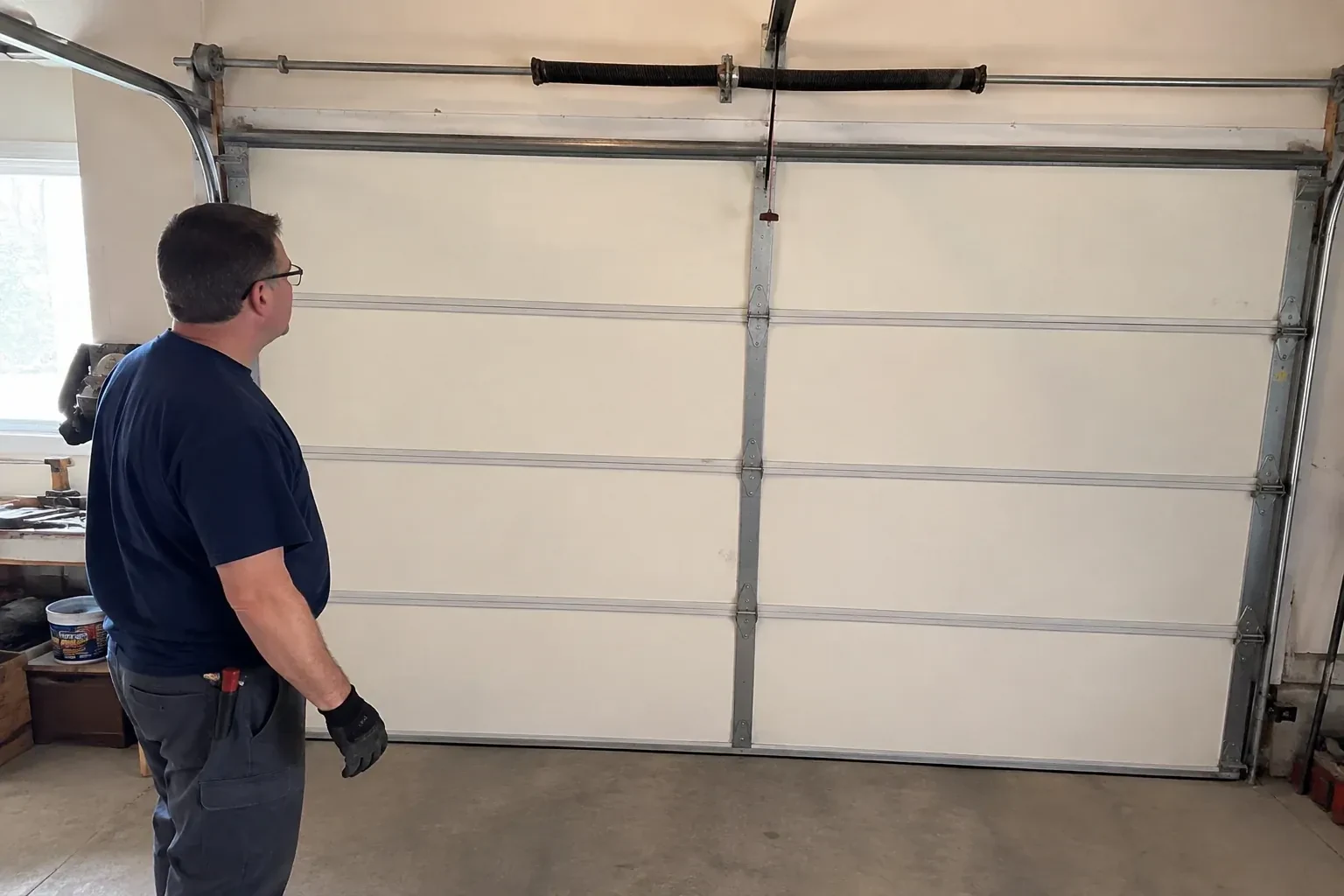
The door is disconnected from the opener with the red release handle, and the technician lifts it by hand, gripping only the handles or a safe edge. A properly balanced door rises with modest effort, stays fully open on its own and holds still when left about a metre off the floor. A door that sinks back down, or that takes real strength to raise, has springs that have lost tension and an opener that has been carrying weight it was not designed for. This check takes a minute and decides more than any other: it tells the technician whether the tune-up can proceed as maintenance or whether spring work needs to be quoted first.
Setting travel and force on the opener
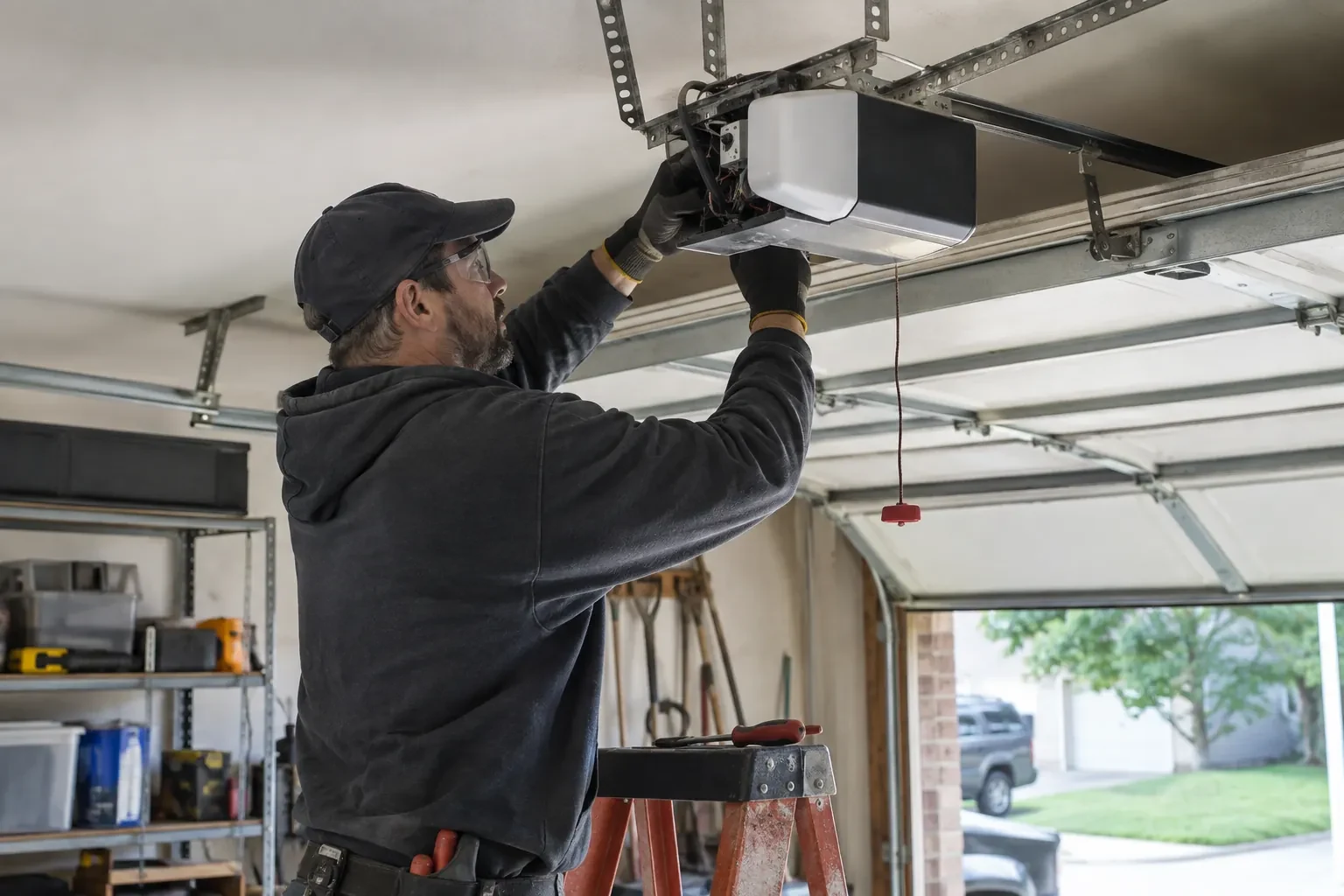
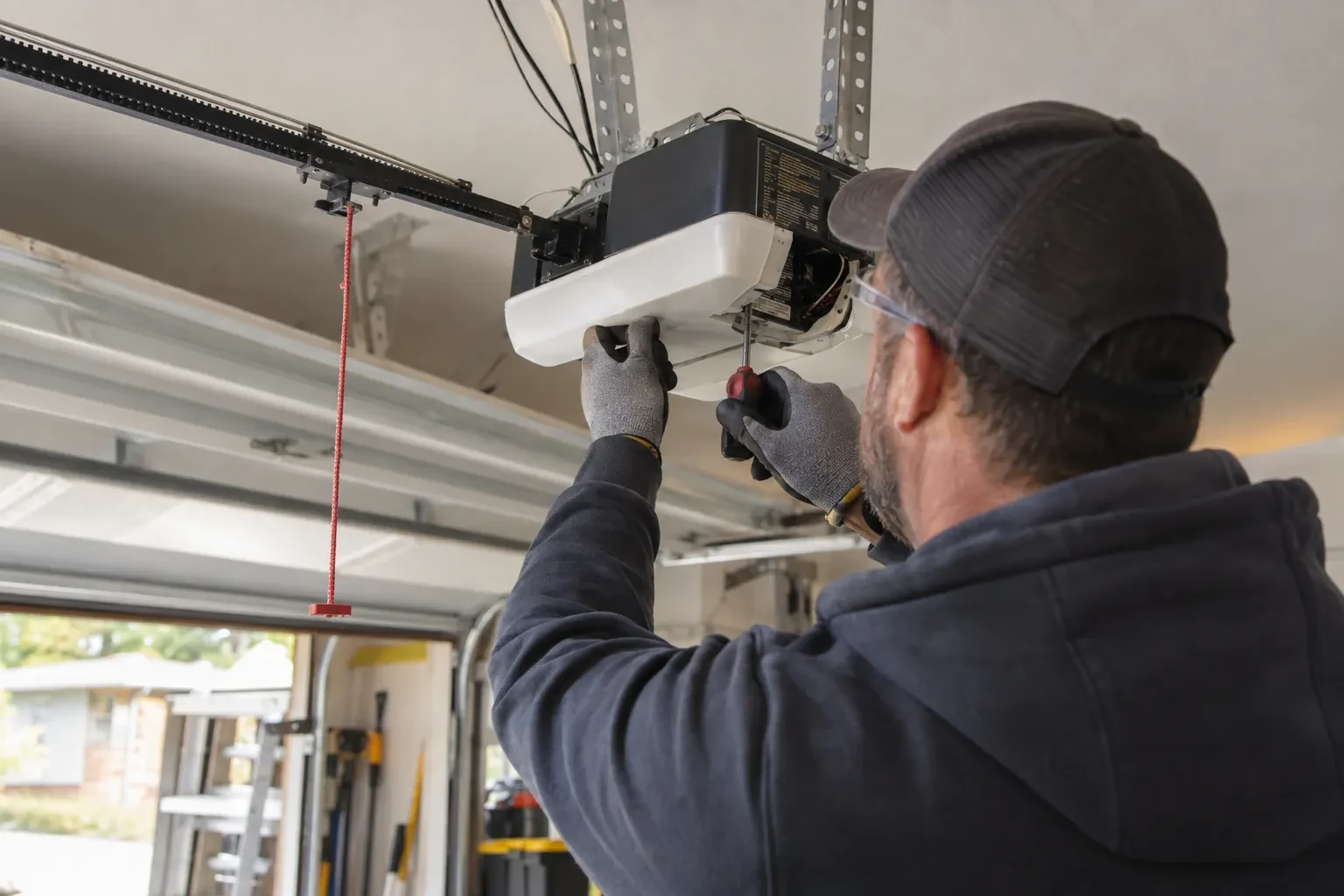
The opener has two settings that drift over time: how far the door travels, and how much force it applies before deciding something is in the way. The technician runs the door and adjusts the down travel so the door seals firmly on the floor without bowing the top section or crushing the seal, and the up travel so it stops fully open without the trolley hitting the stop. Force is set as low as will reliably close the door, because a low force setting is what lets the door reverse gently on contact. On a sectional door the arm is kept from passing straight up and down at the closed position, which protects the top section and the rail.
When to book the next one
How soon the door wants another visit depends on how hard it works. A door that cycles a few times a day, in an attached garage that sees salt, snow and meltwater every winter, does well with a tune-up once a year, usually in the fall before the cold arrives. A lightly used door in a detached garage can often go longer, with the monthly reversal tests and a little lubricant from you in between. The written record is your guide: if it lists parts to watch, the next visit checks those first; if everything was healthy, the interval can stretch. The technician will suggest a timing that fits your door rather than a blanket schedule.
Garage Door Tune-Up
In the van
Silicone spray for seals
Locking pliers or C-clamps
2x4 test block and tape measure
Replacement steel or nylon rollers
Hinge screws and track bolts
Garage Door Tune-Up
What affects the quote
Balance findings
If the balance test shows the springs have lost tension, spring adjustment or replacement is a separate job with its own quote rather than part of the maintenance visit.
Bottom seal and weatherstrip
Treating existing seals is part of the tune-up; replacing a torn bottom seal or renewing hardened jamb weatherstrip is additional material and time, quoted by the length involved.
Type of opener
Chain, belt, screw and wall-mounted jackshaft openers each have their own tension checks and lubrication points, and older units take longer to set for travel and force than newer ones.
What to have ready
- Can you lift the door by hand with the opener disconnected, and does it stay up?
- Are the remotes, wall button and keypad all working as expected?
- What have you noticed: noise, shaking, hesitation, slamming, or reversing on its own?
Garage Door Tune-Up: questions
QuestionsDoes road salt harm the door?
Salt carried in on tires and shovelled snow settles on the lowest hardware: the bottom brackets, the lower track, the bottom roller stems and fixture bolts. Those are the parts that carry the door's weight, so corrosion there matters. Rinsing the lower hardware and the inside face of the bottom section after winter, keeping the floor by the tracks swept, and having the bottom brackets looked at each spring keeps salt from becoming a structural problem.
Will the tune-up include replacing worn parts?
Small wear items found on the day, such as a roller or a hinge on a middle section, a bottom seal or a few fasteners, can often be replaced during the visit if you agree and the part is on the truck. Larger items, including springs, cables, drums, bottom brackets, a bent track or an opener gear, are written up as separate repairs with their own quote so you can decide with the facts in hand rather than under a raised ladder.
What does a garage door tune-up actually include?
A full cycle observed before any work, a hands-on inspection of hinges, rollers, tracks, springs, cables, drums, brackets and the opener's attachments, tightening of the accessible fasteners, lubrication of the moving points with a garage door lubricant, a balance check with the door disconnected from the opener, adjustment of the opener's travel and force, cleaning and alignment of the photo-eyes, both reversal tests, a look at the seals, and a written record of the findings.
Related services
- Off-Track Garage Door ResetYou tapped the door with the bumper while backing in, barely a nudge, and now the bottom corner has swung inward.
- Garage Door Panel ReplacementAfter an overnight freeze the door stuck to the slab, the opener strained, and something gave.
- Garage Door Bottom Seal ReplacementAfter a spring rain there is a puddle inside the door that reaches the tires.