Openers · Deer Park
Garage Door Opener Replacement in Deer Park
Press the button and the motor hums, but the door stays exactly where it is.
In plain words
Openers have changed more than most people realise. Many units from before the early 1990s relied on motor resistance alone, without a photo-eye pair near the floor, though some carried a sensing edge or a close control instead. Fixed-code remotes set by tiny switches were common then too, so the same setting could open more than one door. A modern operator adds a beam across the opening, a force limit that reverses on contact, a rolling code that changes with every press, and a lock button that switches remotes off at night. Replacement brings all of those at once, and the safety tests are run in front of you.
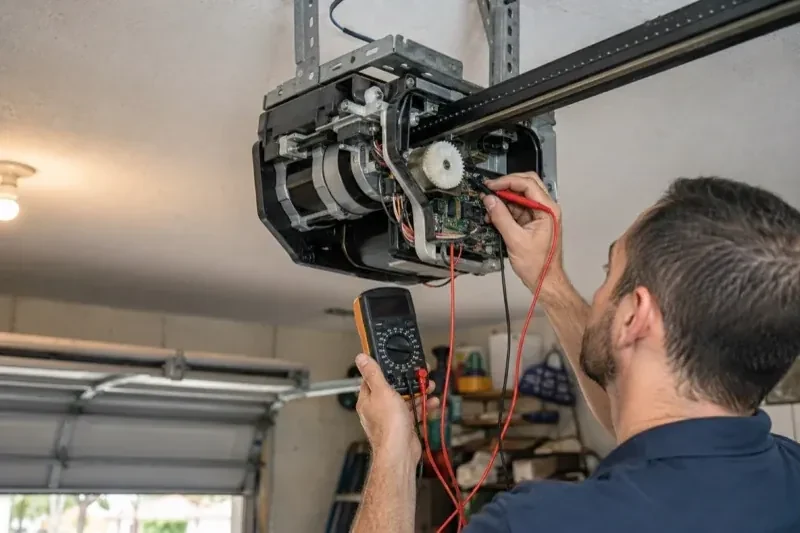
How the visit goesPress the button and the motor hums, but the door stays exactly where it is. Under the housing there is a dusting of white plastic shavings, the sign of a stripped drive gear, and this is the second time it has happened.
Garage Door Opener Replacement
How the visit goes
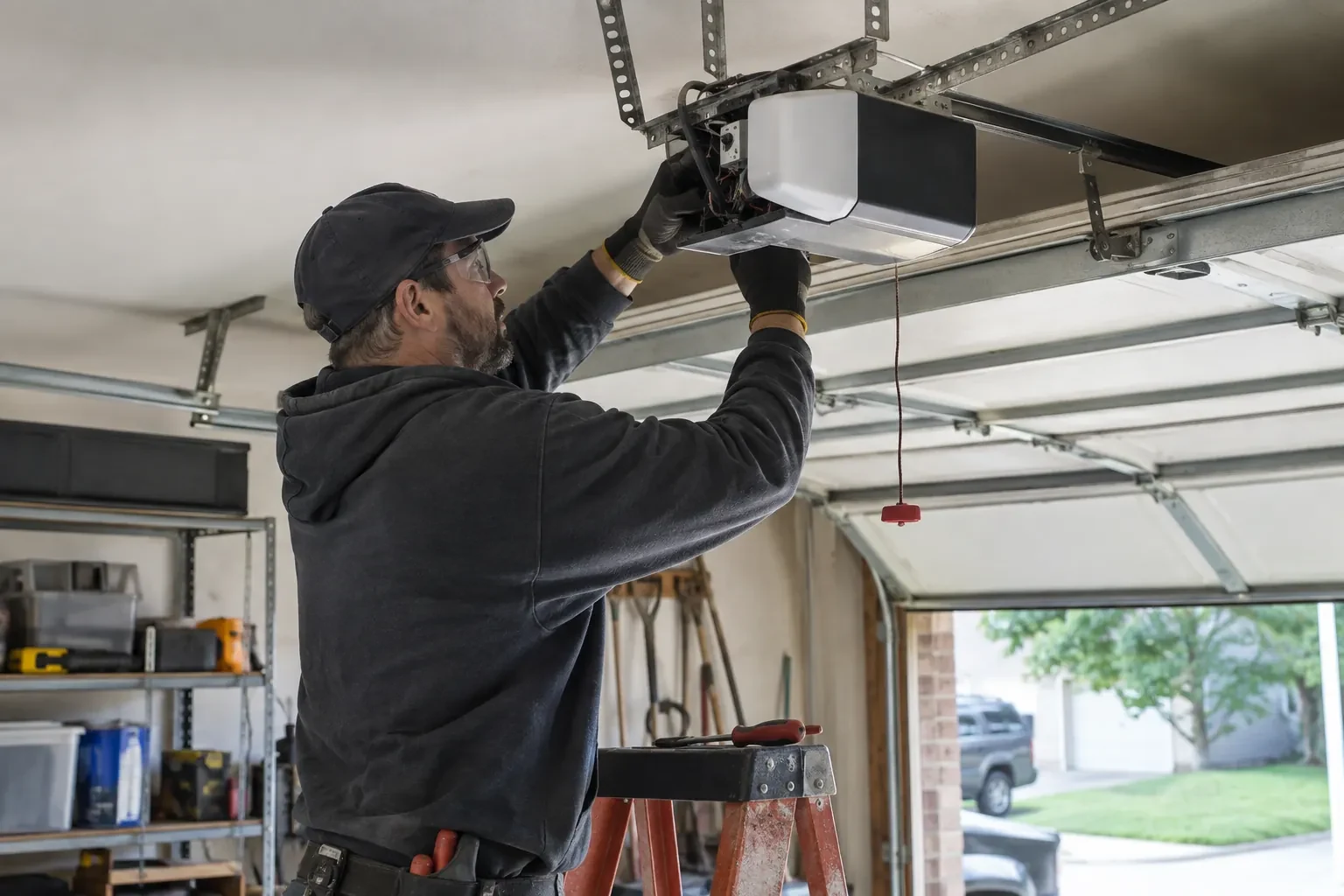
How your household uses the door
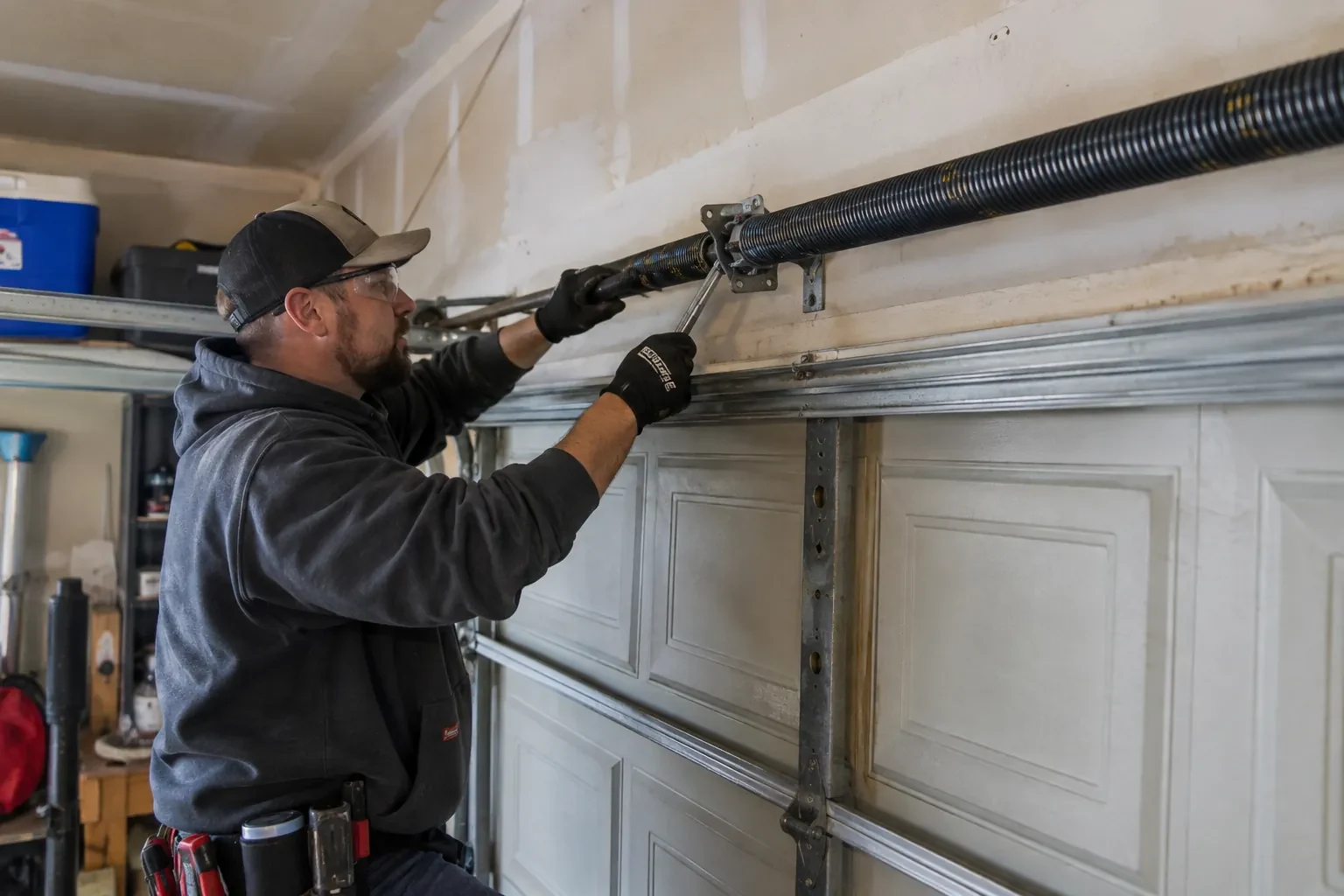
A few questions decide which operator and accessories suit you. How many vehicles need remotes, and do any of them have built-in transmitter buttons? Do children come home to an empty house and need a keypad? Is there a bedroom or home office above or beside the garage, which points toward a belt drive and a DC motor? Do you want to check the door from your phone, or have it close on a timer? Has a power outage ever left you stuck outside? The answers steer the technician toward a chain, belt or wall-mount unit and the right set of controls, so the recommendation fits how you actually live.
Setting travel and force
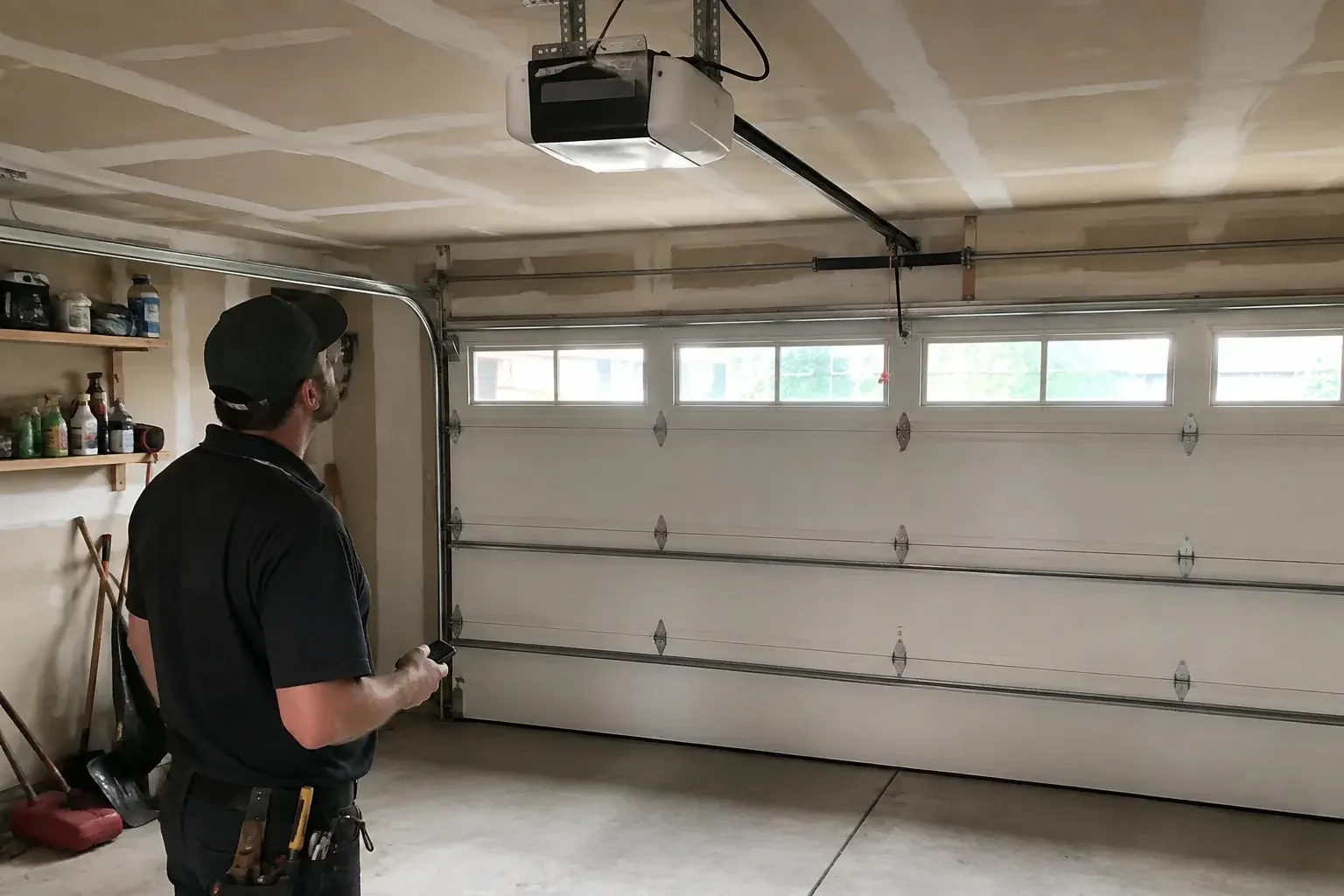
With power on, the technician teaches the operator where the door starts and stops. Newer units run a learn cycle that measures the travel and the effort the door needs; others have open and close limit screws and force dials that are set by hand. The close limit is set so the bottom seal compresses gently against the floor without the door straining, and the open limit so the top section stops short of the header bracket. Force is set to the lightest level that moves the door reliably in the garage's normal temperature, which is what lets the operator notice an obstruction and reverse rather than push through it.
Quieter mornings
A belt-drive or direct-drive operator with a soft-start motor changes the sound of the house. The door eases into motion instead of jolting, the rail stops rattling, and the room above the garage no longer announces every departure. To keep it that way, put a garage-door lubricant on the hinges, rollers and springs once a year, ideally in autumn before the cold arrives, and leave the belt dry. A chain rail takes a light film of the grease the manual names, and nothing more. If the door begins to rumble again, the noise is usually in a roller or hinge rather than the operator, and that is a simple hardware visit.
Garage Door Opener Replacement
In the van
Chain or reinforced belt
Remotes and wireless keypad
Backup battery
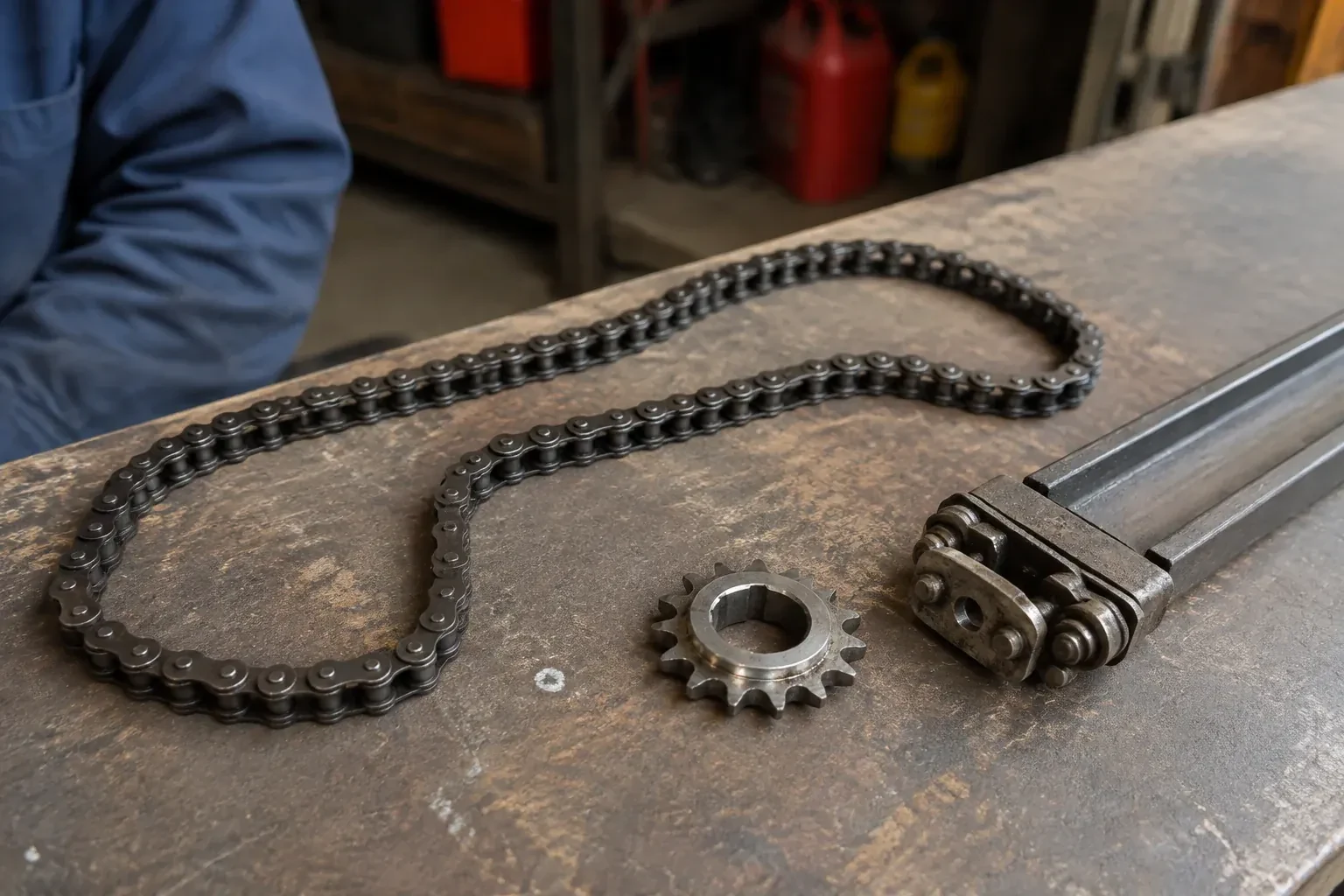
Rail sections and trolley
Perforated angle iron hangers
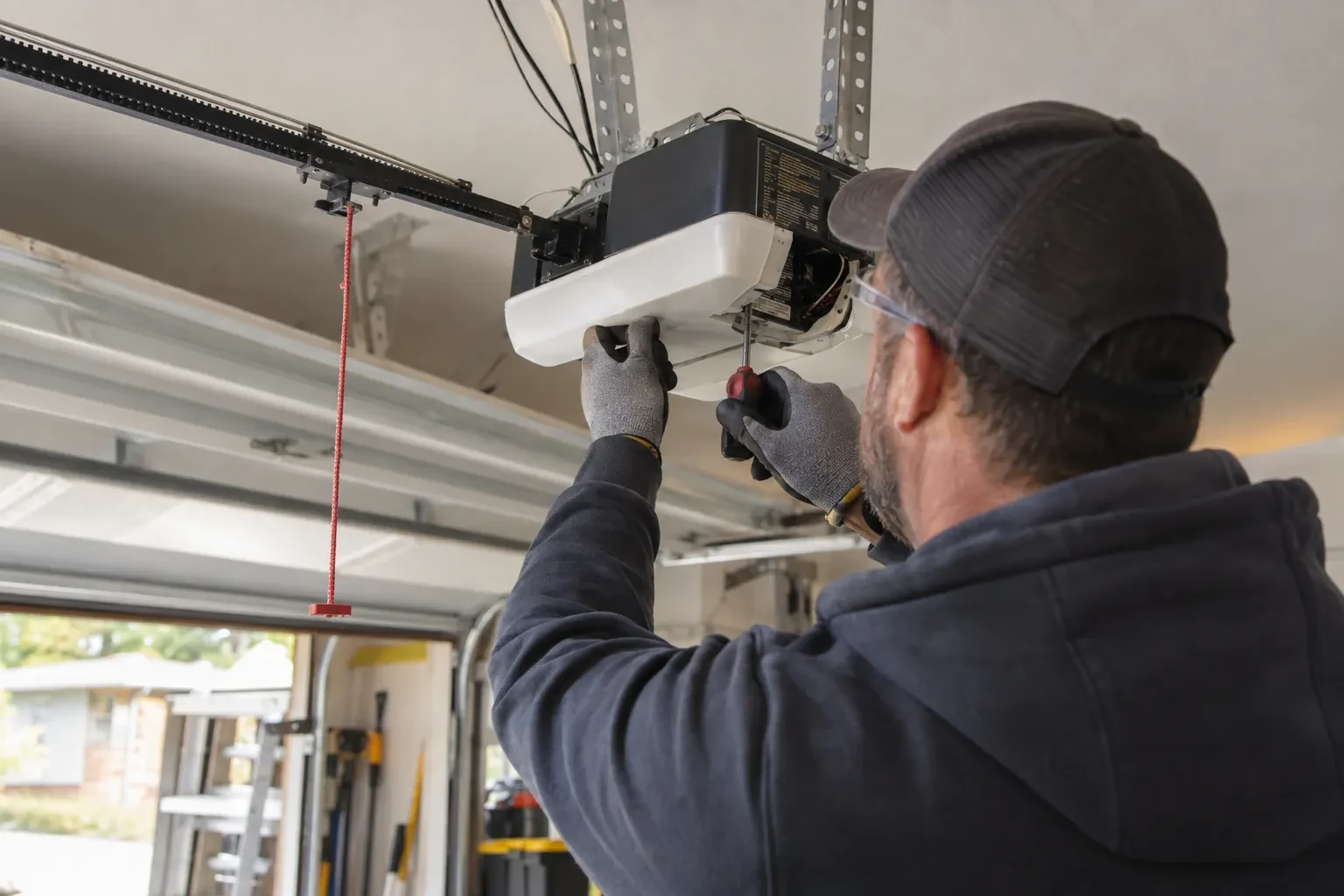
Garage Door Opener Replacement
What affects the quote
Ceiling height and mounting
A head unit hung from a high or cathedral ceiling needs longer angle iron and more time on the ladder than one mounted under a standard joist, and a finished drywall ceiling takes more care to fasten into.
Detached or unheated garage
An operator rated for deep cold, a cold-rated lubricant and sometimes a heavier battery are chosen for a garage that sees winter temperatures, and those choices show in the equipment list.
Drive type
A chain drive, a belt drive, a direct-drive unit and a wall-mount operator sit at different points on the equipment list, and the choice is shaped by noise, ceiling space and door weight.
What to have ready
- How wide and how tall is the door, and is it a single or a double?
- What make and model is printed on the old opener's label, and roughly how old is it?
- How many remotes do you need, and do any vehicles have built-in opener buttons?
Garage Door Opener Replacement: questions
QuestionsThe door is frozen to the floor. Why does the opener reverse?
Because the operator is protecting the door. Its force setting is tuned to the small effort a balanced door needs, so a seal glued to the concrete by ice registers as an obstruction and the door heads back up rather than ripping the rubber or bowing the top panel. Loosen the seal with a plastic scraper or a hair dryer along the sill, then try again; a shovelled threshold before a cold night keeps it from recurring.
Can my phone control the door?
Yes, with a Wi-Fi capable operator or a small add-on hub for a compatible unit. The app opens and closes the door, shows whether it is up or down, sends an alert if it has been left open and can close it on a schedule. The garage needs a usable Wi-Fi signal at the head unit, which the technician checks during the assessment; a range extender solves a weak signal in a detached garage.
Can the new opener use my old rail?
The rail, trolley and drive are designed as one system with the head unit, so a new operator comes with its own rail matched to its motor and drive type. Reusing an old rail would mix parts that were never meant to run together. The old rail, head and hangers come down and are recycled, and a fresh rail is assembled to suit your door's height.