Repairs · Cedarvale
Garage Door Manual Lock Repair in Cedarvale
It is a February morning and the key goes only halfway into the garage handle.
In plain words
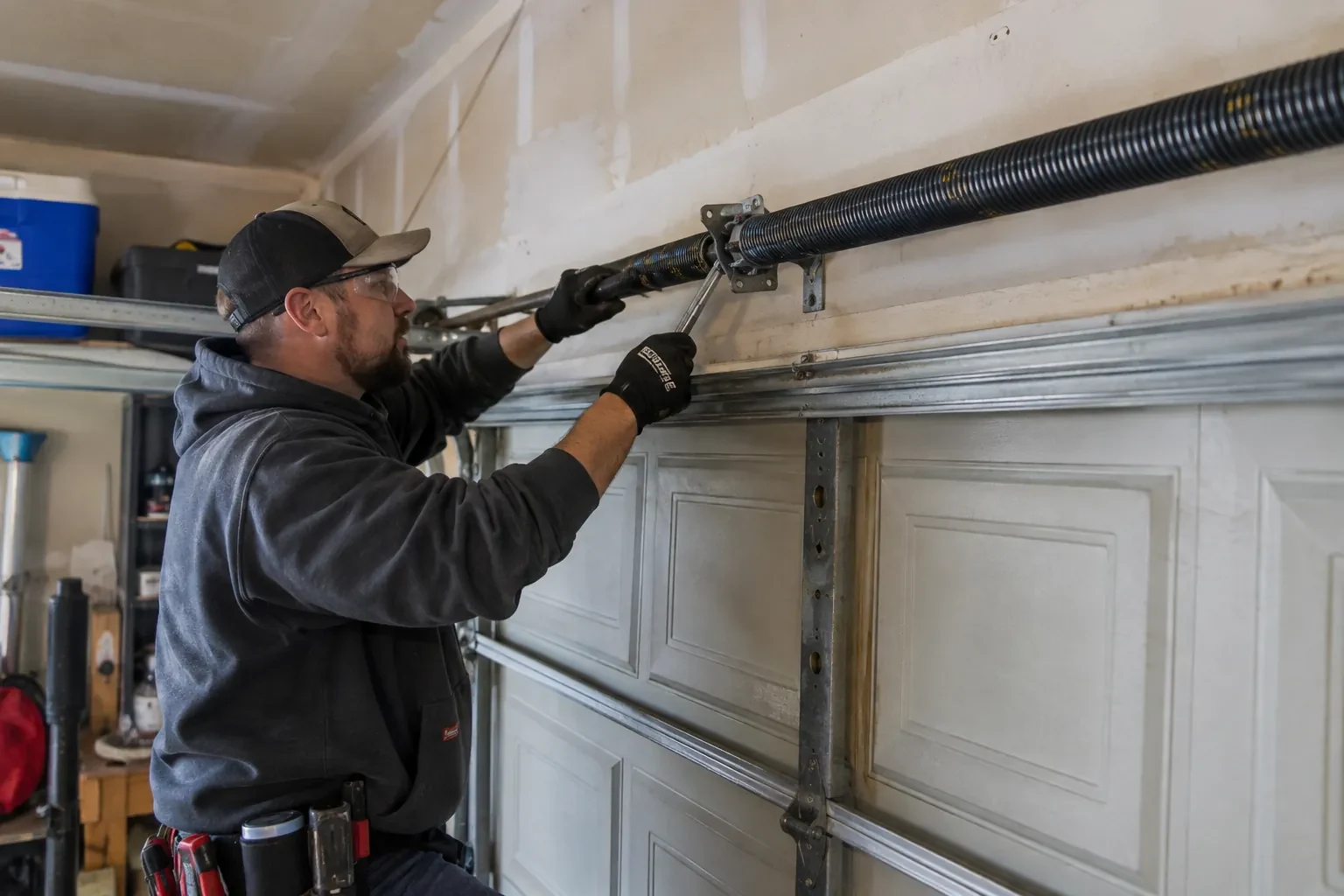
A keyed garage handle hides more than it shows. On the common bar-style handle, a spindle passes through a centre lock body, where a spring and cam convert the quarter turn into a push on two long bars, each riding in a guide and ending in a track slot; other models pull a cable to release spring latches instead. Any of these can wear: springs weaken, cams round off, spindles twist, guides rust, bars bend. The repair replaces whichever pieces have given up, matching spindle length to the door's thickness and bar length to the door's width, so the rebuilt lock throws and releases with a crisp action.
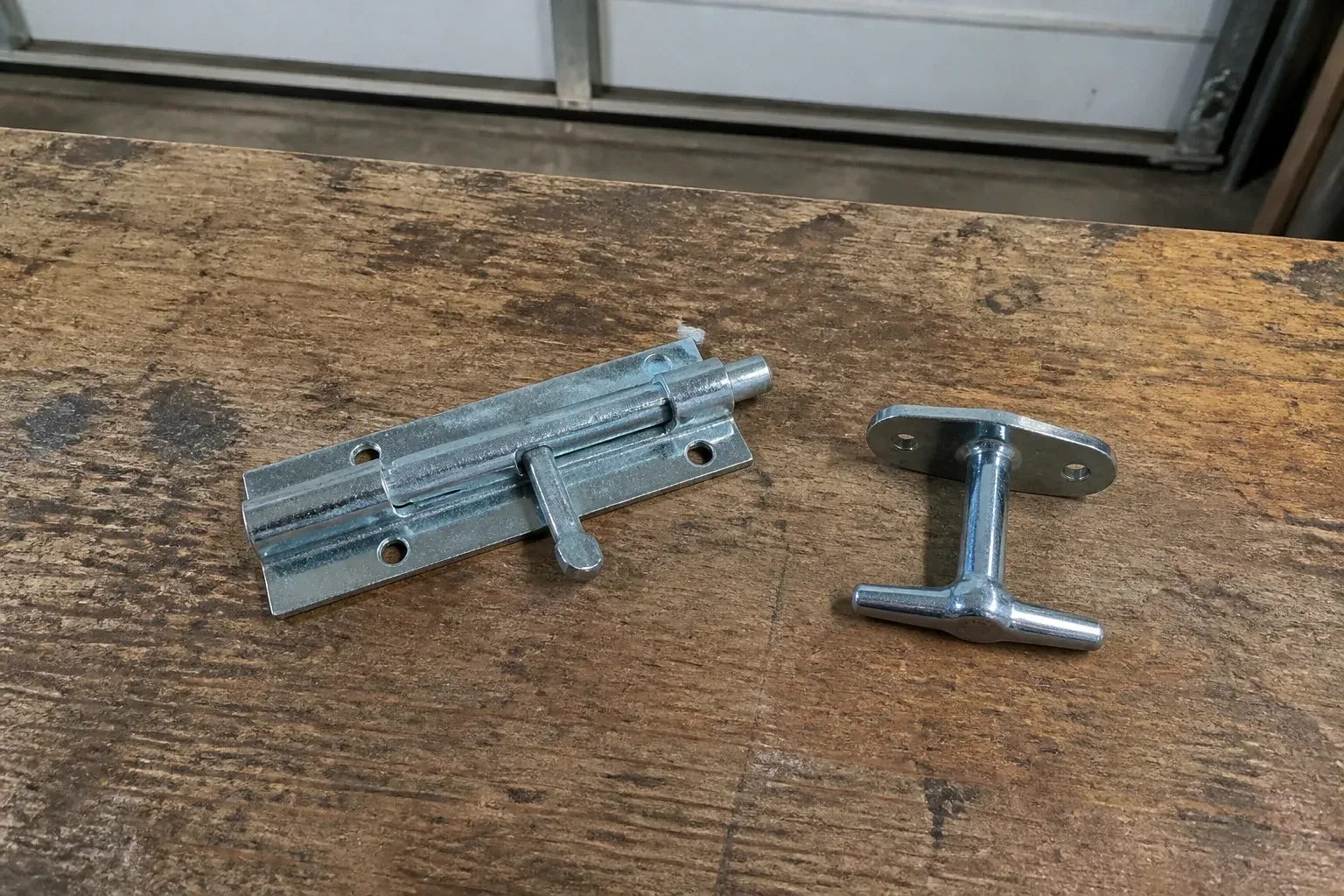
How the visit goesThe power is out in a storm, you pulled the red cord and lowered the door by hand, and now you want to lock it. The slide bolt on the inside edge is welded in place by years of rust and refuses to budge.
Garage Door Manual Lock Repair
How the visit goes
The cylinder and its key
A keyed handle gets the same attention a house lock would. The technician tries the key, feels for grit, ice or wear, and checks whether the cylinder is firm in the handle or has worked loose. A key that turns freely without unlocking anything means the tailpiece or cam at the back of the cylinder has broken or slipped. A key that will not enter or turn in cold weather usually means meltwater has frozen in the keyway. A key that needs a wiggle means worn pins or a worn key. Whether you hold a key at all is noted too, since a lost key shifts the plan from repair to rekeying or replacement.
Cylinder work and keys
A keyed garage handle uses a small pin-tumbler cylinder that can be rekeyed or replaced without changing the handle. To rekey, the cylinder is withdrawn, the plug slid out with a follower, the bottom pins swapped to a new combination and the plug returned, so the old key is retired and freshly cut keys operate it. Where the cylinder is worn or its tailpiece has broken, a new cylinder with the correct tailpiece is fitted. If your house locks share the same keyway, the garage cylinder can be pinned to match, so one key runs the property. Keys are cut from the new pinning, tested in the handle, and counted into your hand.
Getting the cylinder and bars through winter
The outside cylinder sits on a cold steel face where meltwater runs, so it gets a dry graphite or PTFE lubricant rather than oil, which would trap moisture and grit. A puff at the start of the cold season and another after the first thaw keeps the pins moving. A small tube of lock de-icer in the car is the answer to a keyway that has frozen; hot water is never poured on it. The bars and their guides, which live where salt spray collects, take a light silicone film in late autumn. Keep the threshold clear of packed snow so the door closes to its full depth and the bolt still finds its slot.
Garage Door Manual Lock Repair
In the van
Inside turn handle and spindle
Dry graphite or PTFE lubricant
Centre lock body and return spring
Key blanks and rekeying pins
Inside slide bolt or snap latch
Garage Door Manual Lock Repair
What affects the quote
Related hardware noticed on the way
Worn rollers, a loose track bracket or a tired bottom seal seen while the door is being aligned are pointed out and offered as optional items, since they are easy to do in the same visit.
Access along the door edges
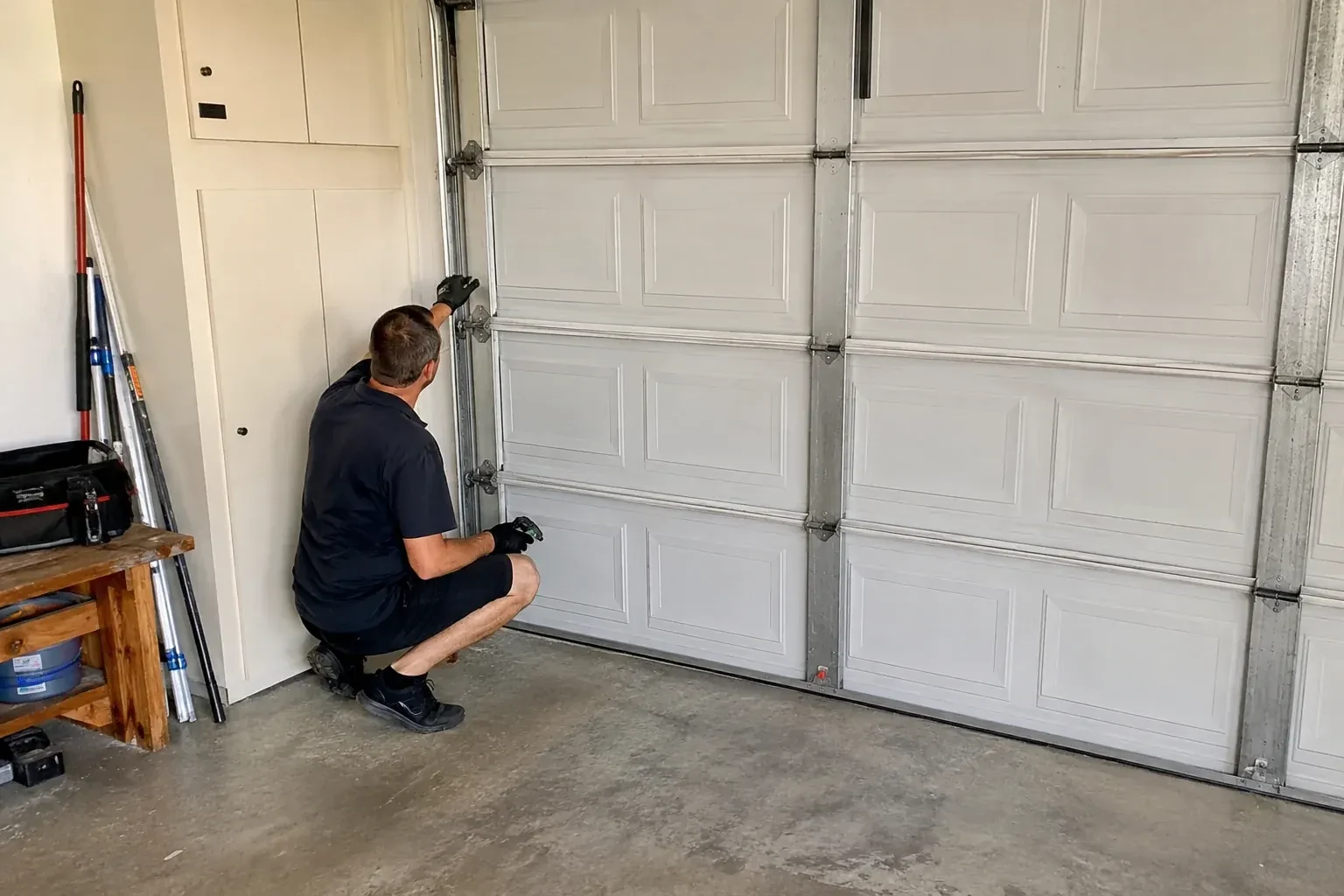
Shelving, bikes or storage against the vertical tracks and door edges slow the work at the guides and slots. Clearing a metre either side beforehand shortens the visit.
Slide bolt or keyed handle
An inside slide bolt is a simple piece of hardware with one moving part. A keyed T-handle has a cylinder, spindle, centre body, springs and two bars, and its repair takes more time and more parts.
What to have ready
- Does the handle turn, and does anything move inside the door when it does?
- Is the lock a sliding bar inside, a T-shaped handle outside with a key, or both?
- Does the key go in and turn, or is it stiff or spinning freely?
Garage Door Manual Lock Repair: questions
QuestionsI have no key for the outside handle. Can it be made to work?
Yes. The cylinder is removed and either rekeyed to a fresh combination, so any key held by a previous owner is retired, or replaced with a new cylinder carrying the correct tailpiece. New keys are cut and tested in the handle before the technician leaves. If a locked door has to be opened first, the technician confirms your connection to the property as a matter of course.
How long does a manual lock repair usually take?
An adjustment to a slide bolt or a guide is a short job, while a full T-handle replacement with new bars, a rekey and a door alignment fills a longer visit. Most calls sit somewhere between, and the technician gives you a realistic sense of the time once the door has been looked at, rather than guessing from the phone.
What kinds of manual locks are found on garage doors?
Two are common on sectional doors. An inside slide bolt sits on the door's edge and shoots sideways into a slot in the vertical track; some are spring-loaded snap latches that lock on their own when the door closes. An outside keyed T-handle turns a centre mechanism that throws a bar into each track, though some models pull a cable to release a spring latch instead. Some doors add a keyed cylinder on the side to work the slide bolt from outside.
Related services
- Garage Door Tune-UpSince the first cold snap the door has been sluggish.
- Off-Track Garage Door ResetYou tapped the door with the bumper while backing in, barely a nudge, and now the bottom corner has swung inward.
- Garage Door Panel ReplacementAfter an overnight freeze the door stuck to the slab, the opener strained, and something gave.