Cedarvale Door Specialists · Toronto
Garage Door Hinge Replacement: what the visit covers
Garage Doors · Toronto, Ontario
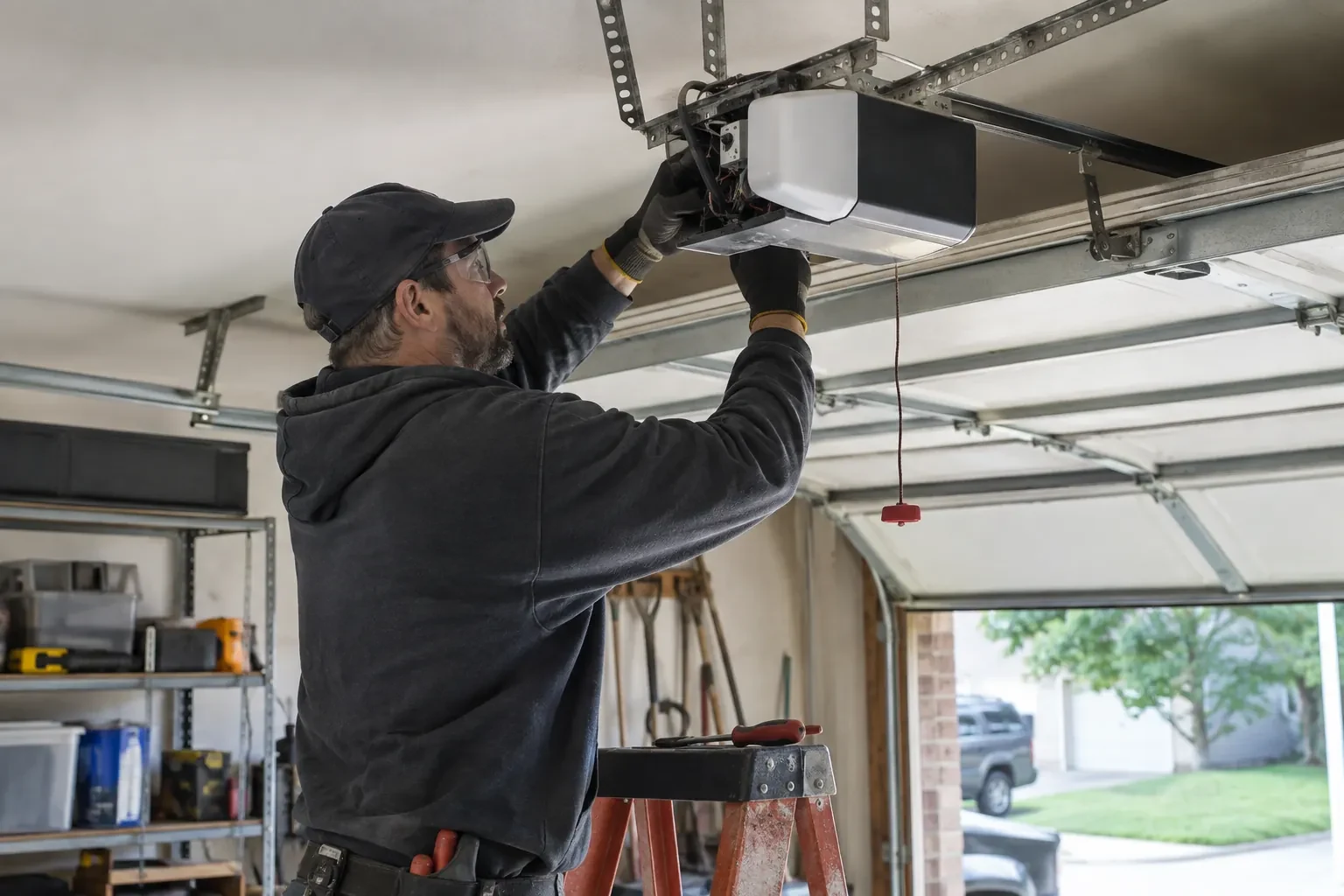
A hinge rarely fails on its own. A door that has drifted out of balance makes the opener drag it, and every hinge takes that strain on each trip. A roller whose bearing has seized twists the hinge that holds it. A track that has crept out of line makes the panels bind at the curve, and the hinge at that joint flexes until it cracks. Hinge replacement therefore begins with the whole door: rollers, track, balance and the panel edges around each hinge. The cause is corrected alongside the new hinge so the fresh part is not asked to absorb the same stress that finished the old one.
Panel stiffness, struts and the hinge count
Wide doors depend on their centre hinges and struts to keep each panel flat. The technician counts the hinges on each joint against the door's width, since a double door with only one centre hinge, or a wide panel with no strut, flexes on every cycle and pulls at its hinge screws. The steel around each hinge is checked for hairline cracks or oil-canning, and a wood door for splits along the grain near the fasteners. Where a strut is missing or a joint is short a hinge, adding one is discussed as part of the plan, because stiffening the panel is what keeps the new hinges tight.
Swapping a centre hinge
A centre hinge carries no roller, so its exchange is the simplest part of the day. The screws into the upper and lower panels are backed out, the old hinge lifted off, and the stile checked for damage around the holes. The new hinge, a 1 in most cases since centre hinges share that geometry, is placed on the same hole pattern, and new hex-head self-drilling screws are driven into the stile or the support plate behind it. If the old holes are tired, the technician moves the hinge slightly to fresh metal within the stile or bolts through with a nut and washer, then confirms the joint closes tight with no gap.
Learning the door's new sound
A well-hinged door has a sound, a steady rumble with no clicks, and it is worth getting to know it. A new pop or click at a fixed height points at a hinge or roller at that joint. A grinding note from one end suggests a roller bearing. A rattle when the door settles onto the floor is often a loose centre hinge screw. Because you now know what the door sounds like when everything is tight, a change stands out early, while it is a screw or a single hinge rather than a bent panel. A phone recording of the healthy door is a handy reference.