Springs · Forest Hill
Garage Door Balance Adjustment in Forest Hill
Since the new insulated panels went in, the door feels like a different animal.
In plain words
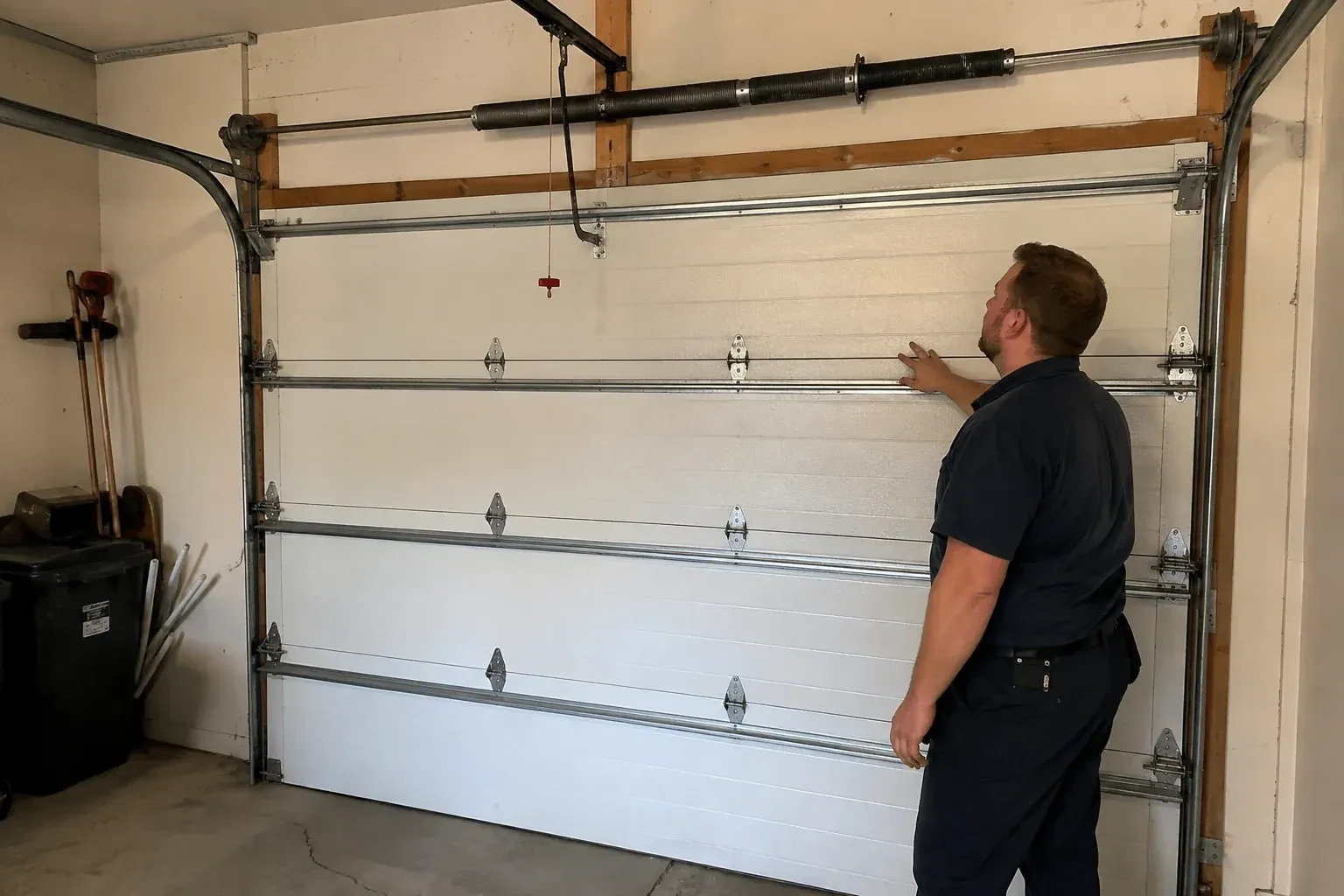
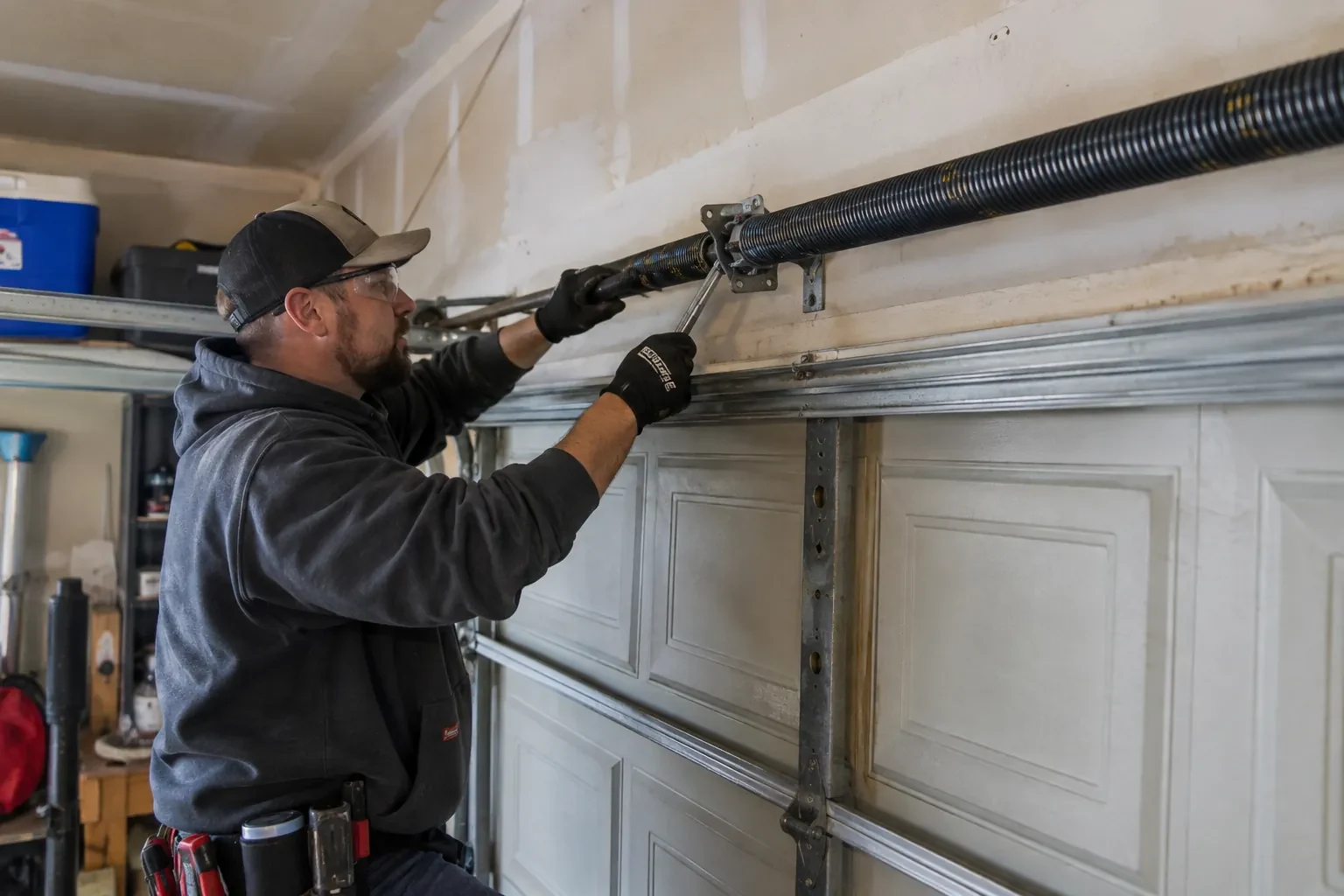
On a torsion door the springs sit on a shaft above the opening, and balance is set by how many turns of wind they carry. A seven-foot door typically needs a little over seven full turns; a quarter turn either way changes how the door feels. The technician clamps the door, fits winding bars into the cone, loosens the set screws, and adds or releases tension one quarter turn at a time, locking the cone again before each test. Both springs on a two-spring door are set alike so the shaft carries the load evenly. That precision is what makes the door hold wherever it is stopped.
How the visit goesThe opener has started to groan on the way up. The door climbs slowly, hesitates near the top, and on the way down it sometimes stops a hand's width above the floor and reverses, as if something were in the way when nothing is.
Garage Door Balance Adjustment
How the visit goes
Talking through what you have noticed
Your own observations complete the picture, because you have watched this door every day and the technician has watched it for ten minutes. When did the heaviness start, gradually or all at once? Is it worse on frosty mornings and easier by afternoon? Has anyone worked on the springs, changed the opener or added panels? Does it reverse at a particular point, and did that begin after the last power cut or a bump from the car? Each answer narrows the cause, and together they decide whether the day's work is a straightforward tension adjustment, a cable reset, some friction to remove, or a conversation about springs that have done their years.
Resetting the cables so the door sits level
If one corner of the door sat high, that is corrected before the final tension is set. The technician releases the spring tension enough to take the load off the drums, loosens the set screws on the drum on the low side, takes up or lets out cable until the door is level, and locks the drum again with the cable seated snugly in its groove. The bottom of the door is checked against the floor along its whole width, and both drums are confirmed to show the same number of wraps. Only then is the spring tension brought back up, because tension applied to a crooked door simply loads one side more.
Cables and level, checked with a glance
Once a month, with the door closed and the light on, look up at the drums and down at the bottom brackets. Each cable should wrap its drum in a single neat layer with the same number of turns on both sides, and hang taut without fraying or rust at the bottom loop. The gap under the door should be even from corner to corner. On an extension door, glance at the two springs for equal length and confirm the containment cable still runs through each. These take less than a minute and tell you the door is still level and the counterbalance still shares the load evenly.
Garage Door Balance Adjustment
In the van
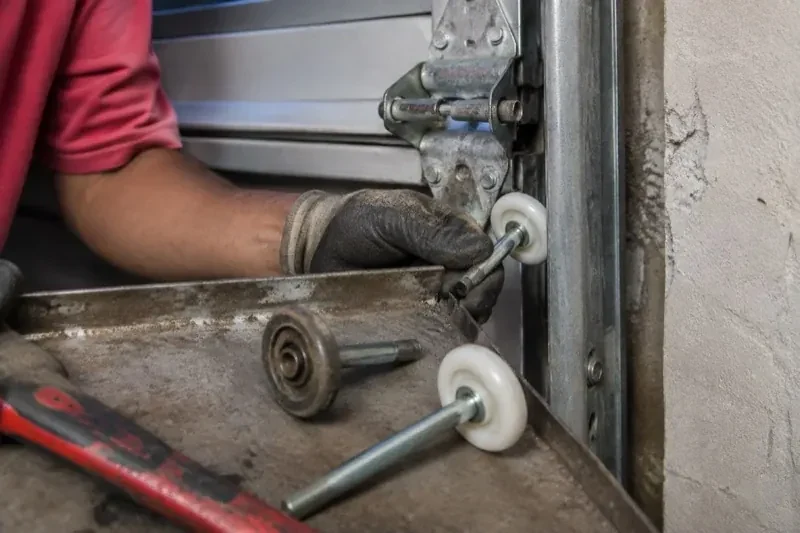
Replacement hinges
Door scale
Garage-door lubricant
Winding bars
Torsion springs, matched pair
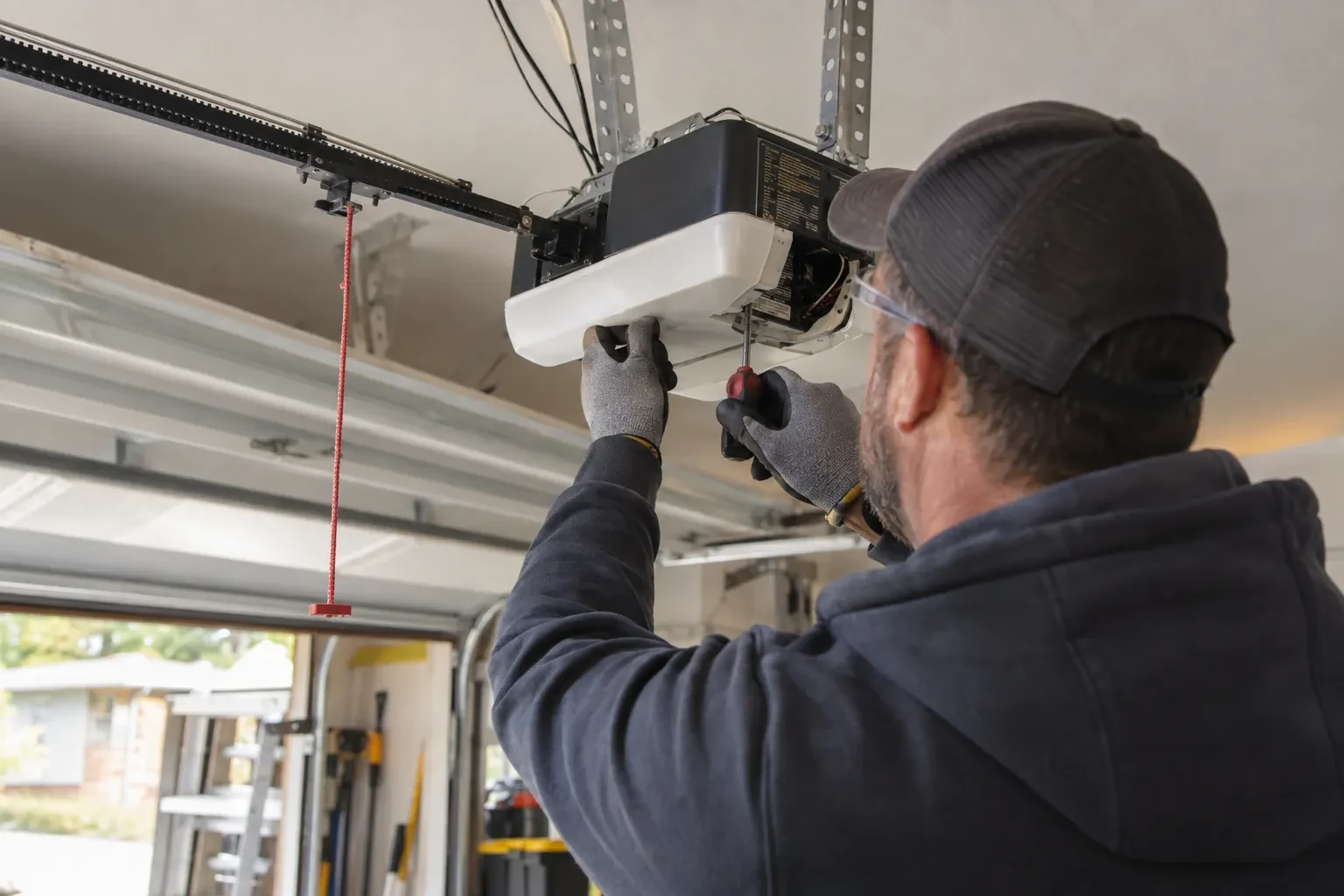
Garage Door Balance Adjustment
What affects the quote
Weight added to the door
Insulation kits, windows or replacement sections may have taken the door beyond what its springs can carry. Weighing the door and specifying new springs to suit is quoted separately from a simple adjustment.
Commercial or oversized doors
Doors wider or heavier than a standard residential opening use heavier springs, sometimes several on one shaft, and take longer to wind and test, which the quote reflects.
Corroded or seized fasteners
Set screws and cone screws that have rusted solid take time to free, and badly corroded hardware is replaced rather than reused, which shows in the parts list.
What to have ready
- Is it a single or a double door, and roughly how tall?
- Do you have the door or opener manual, or a label with the model?
- Has anything been added to the door, such as insulation, windows or a new section?
Garage Door Balance Adjustment: questions
QuestionsThe door was fine until a power cut. Why is it heavy now?
During a power cut the door is often released and moved by hand for the first time in years, and what people discover is a door that had already grown heavy while the opener quietly covered for it. The outage did not change the springs; it revealed them. A balance check confirms what the door weighs against what the springs give, and resets them to match.
Can the opener's force setting be turned up instead of adjusting the springs?
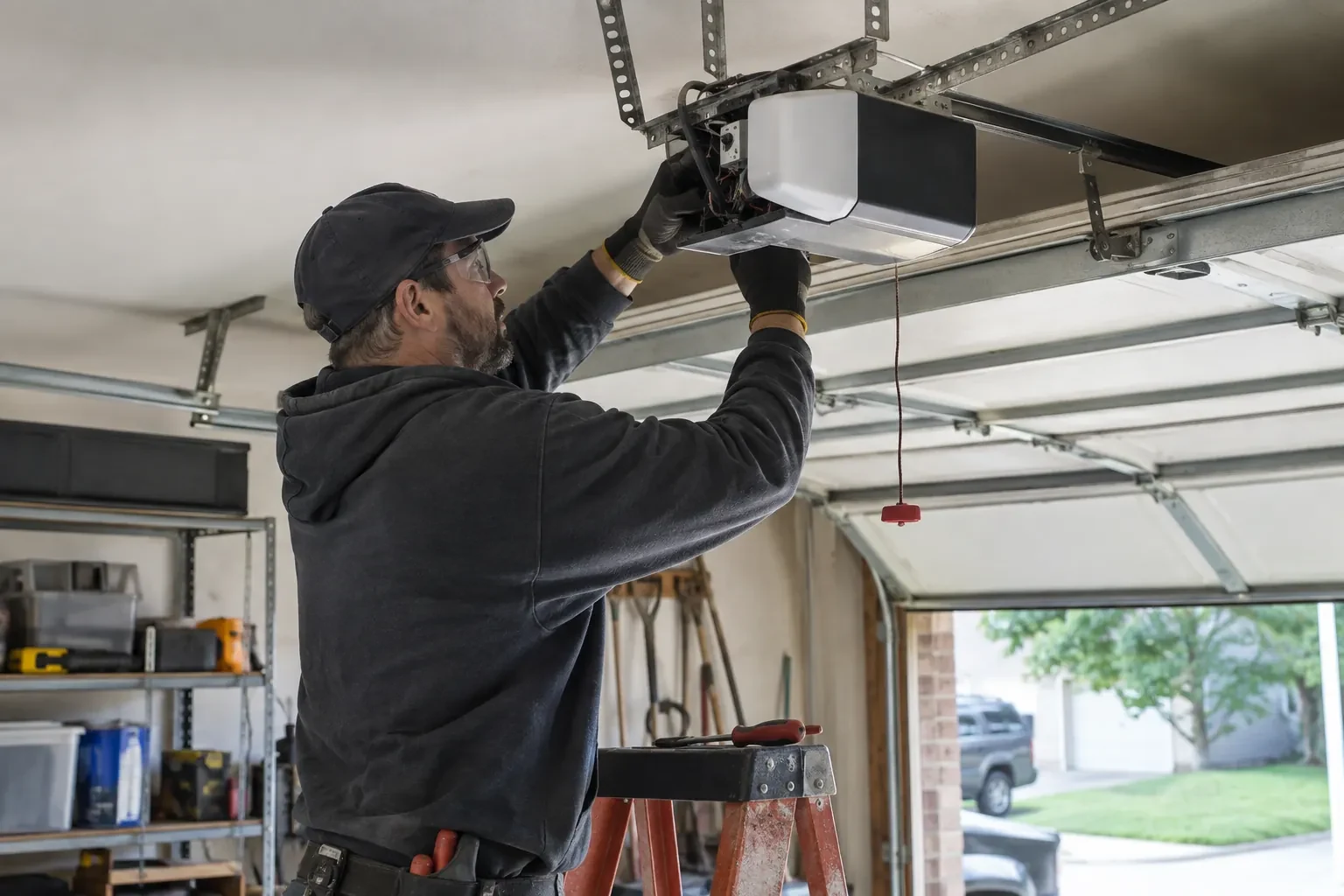
The opener is built to move a balanced door, and its force limit is what makes it stop and reverse on contact. Raising that limit to lift a heavy door pushes the safety behaviour out of its intended range and works the motor and gears hard. The sound order is to balance the door first, then set the opener to suit it. Both are done in the same visit.
How many turns does a torsion spring need?
As a starting point, roughly one full turn for every foot of door height, so a seven-foot door carries a little over seven turns and an eight-foot door a little over eight. The exact figure depends on the drum size and the spring's rating, so the technician winds to the estimate and then fine-tunes by quarter turns until the hand test passes at every height.
Related services
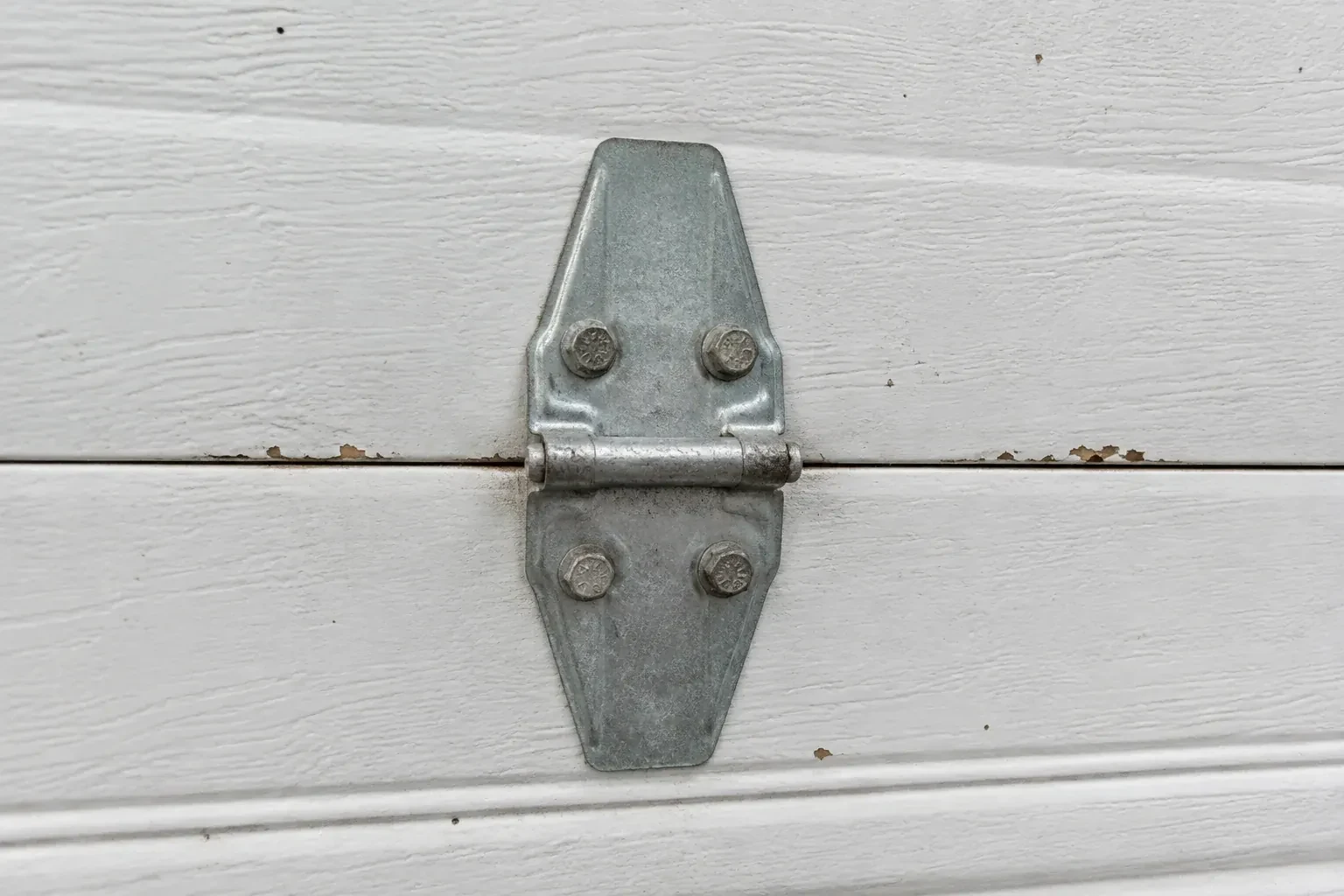
- Garage Door Hinge ReplacementOn the old wood door, one hinge has pulled away from the panel, dragging a screw and a chunk of soft timber with it.
- Garage Door Track Repair or ReplacementHalfway up, the door lurches and one roller rides onto the lip of the channel.
- Garage Door Cable ReplacementThere was a sharp crack from the garage, and when you went to look the door had dropped on one side and jammed.